

Somen is a beloved Japanese summer staple, offering a light, refreshing taste that goes down easily even on hot days. The cold, thin noodles pair perfectly with a savory dipping sauce, making for a light yet satisfying meal when the heat dulls your appetite.
Jump to:
What is Somen?
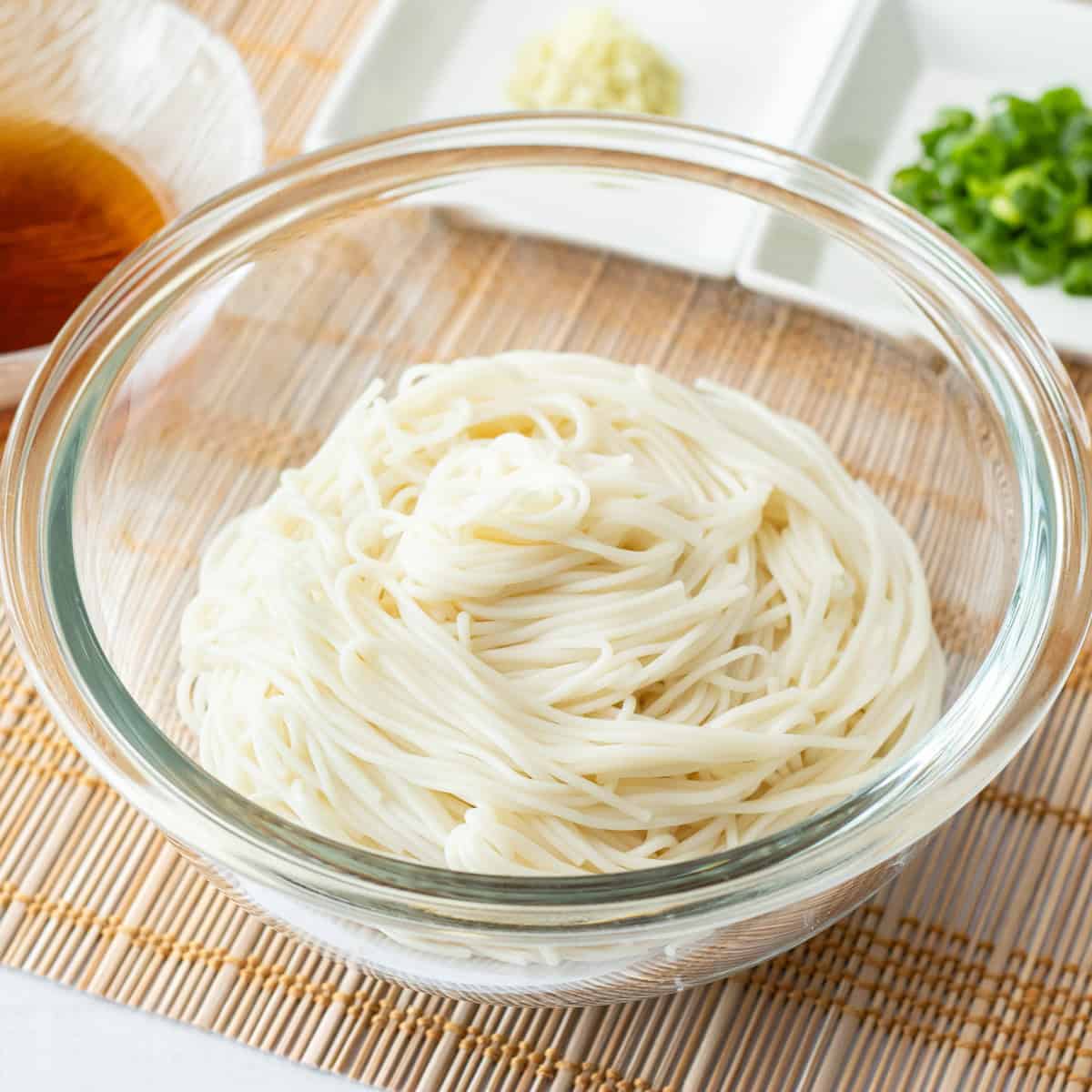
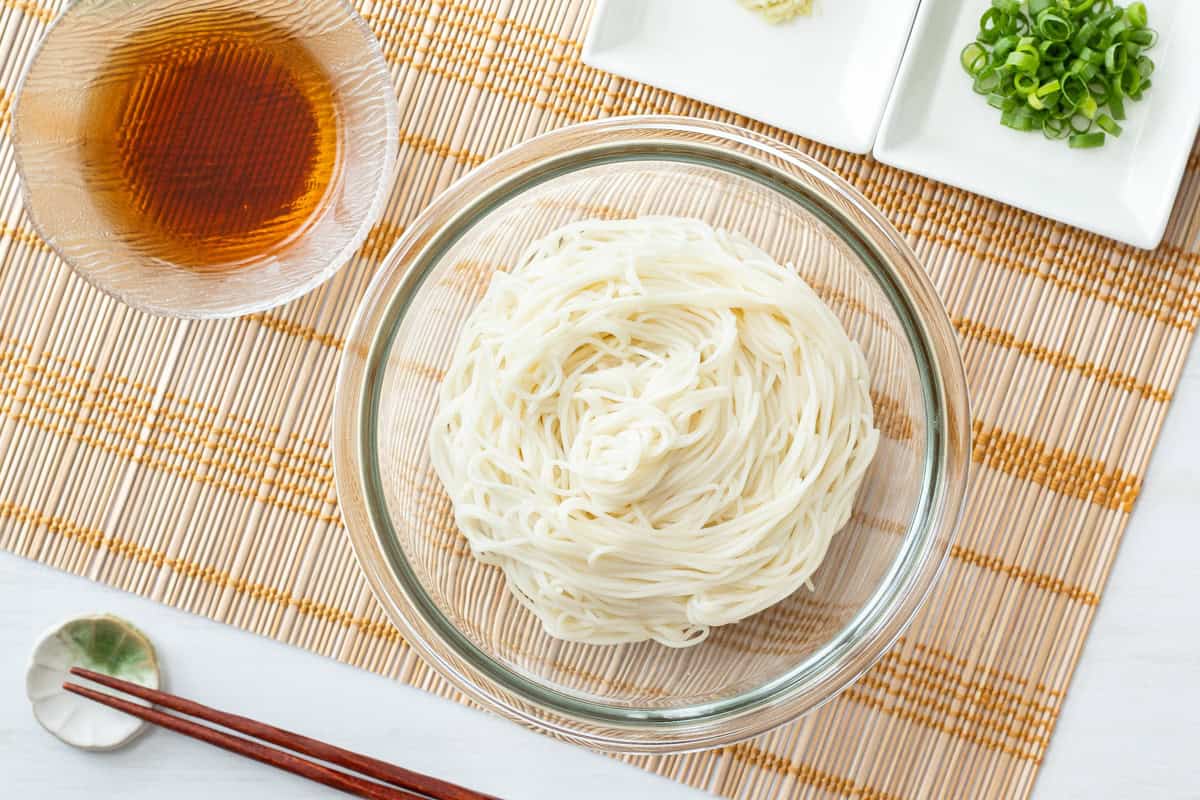
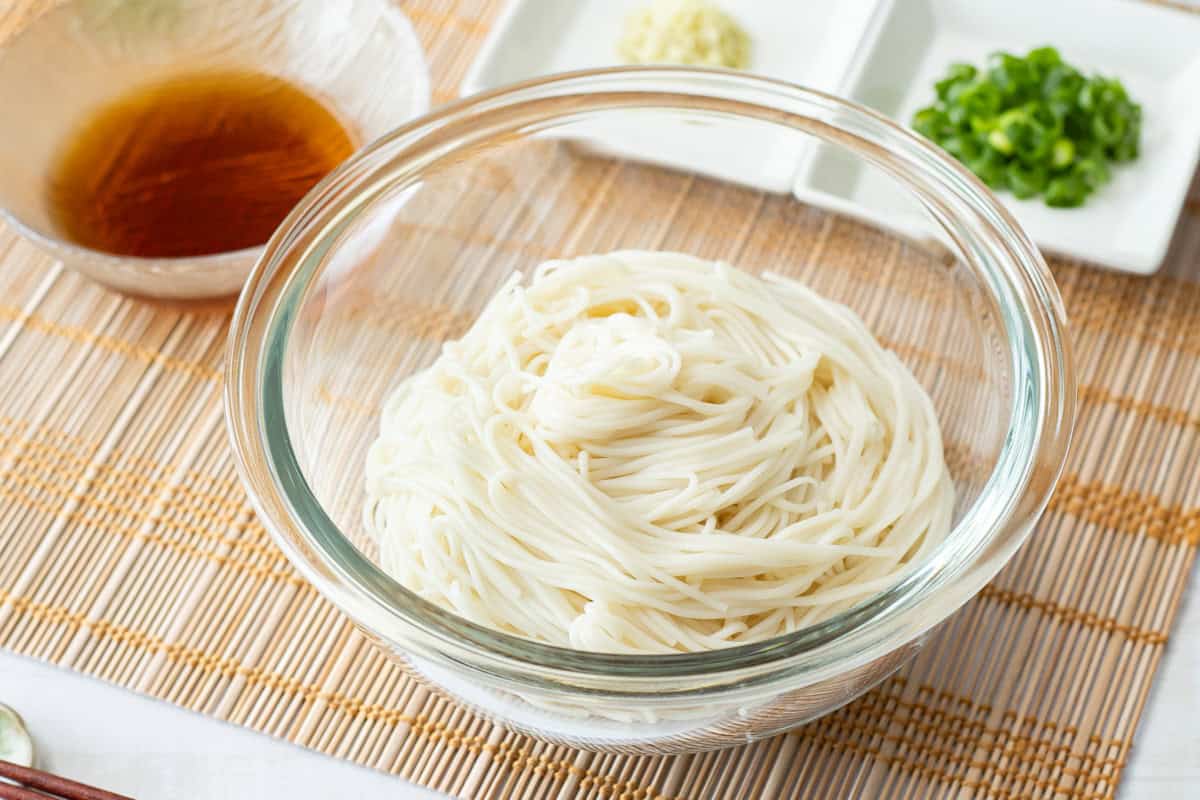
Somen (pronounced "sōmen") is a traditional Japanese noodle made from wheat flour dough, salt, and water, stretched into extremely thin strands before being dried. It is typically boiled, chilled under cold water, and then served with a savory, slightly sweet dipping sauce on the side. Known for its smooth texture and slippery mouthfeel, it is a beloved summer staple in Japan.
The appeal of somen lies in its simplicity. All it takes is a quick boil, a rinse in cold water, and a bowl of dipping sauce. By adding different condiments, you can enjoy it in various ways without getting tired of it. It is a perfect choice for an easy lunch or a light dinner at home.
In recent years, a wide variety of dipping sauces have become available, but this recipe features the classic flavor that most Japanese people associate with somen. I hope you enjoy it.
How Somen differs from Udon
When people think of Japanese noodles made from wheat flour, udon is probably the first thing that comes to mind. There are several differences between somen noodles and udon noodles, as follows:
| Noodles | Somen | Udon |
|---|---|---|
| Thickness | Less than 1.3 mm | 1.7 mm or more |
| Texture | Smooth and silky | Chewy |
| Cooking time | 90 seconds to 2 minutes | 3 to 15 minutes |
| How to eat | Typically served chilled and dipped in sauce before eating | Can be served hot or cold |
| Preparation method | The dough is stretched into extremely thin strands using oil | The dough is rolled out and then cut into strips with a knife |
By far the most significant difference between the two is thickness. Somen noodles look and taste similar to very thin udon noodles.
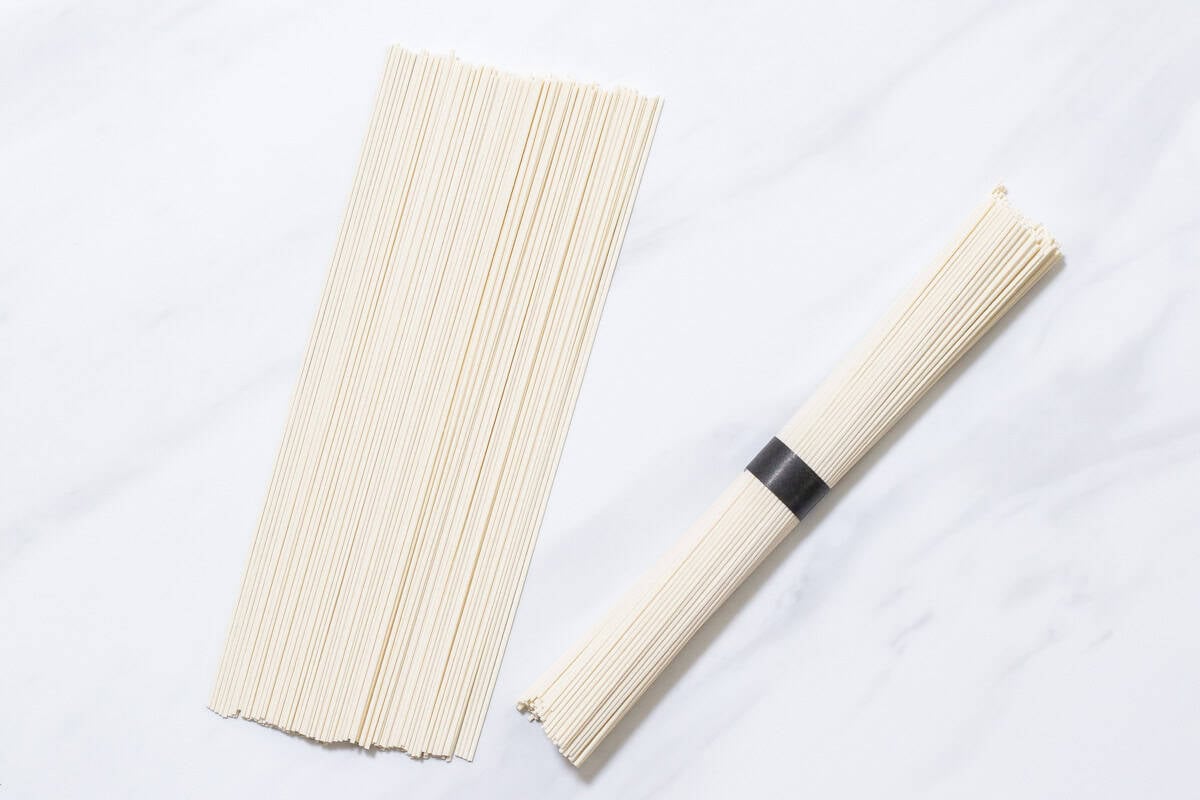
Because of their extreme thinness, they tend to soften and lose their firm texture quickly in hot broth, so they are often served cold. (There is also a dish called nyumen, in which somen noodles are served in hot broth, though they are much more commonly served chilled.)
Incidentally, wheat noodles with a thickness between 1.3 mm and 1.7 mm are called hiyamugi in Japan. In hand-stretched varieties, if the thickness falls within that range, they may be classified as either somen or hiyamugi. Since thickness has a significant impact on texture and mouthfeel, it might be interesting to compare them if you ever get the chance.
How to get the perfect texture for somen noodles
When cooking somen noodles, there are two key things to keep in mind.
The first is to boil the noodles for the right amount of time. Depending on the brand, somen noodles typically need only about 90 seconds to 2 minutes to cook. If you overcook them, they will lose their smooth, silky texture, so be sure to follow the cooking time indicated on the package. After cooking, don't leave them sitting in the colander, as the residual heat will continue to cook them.
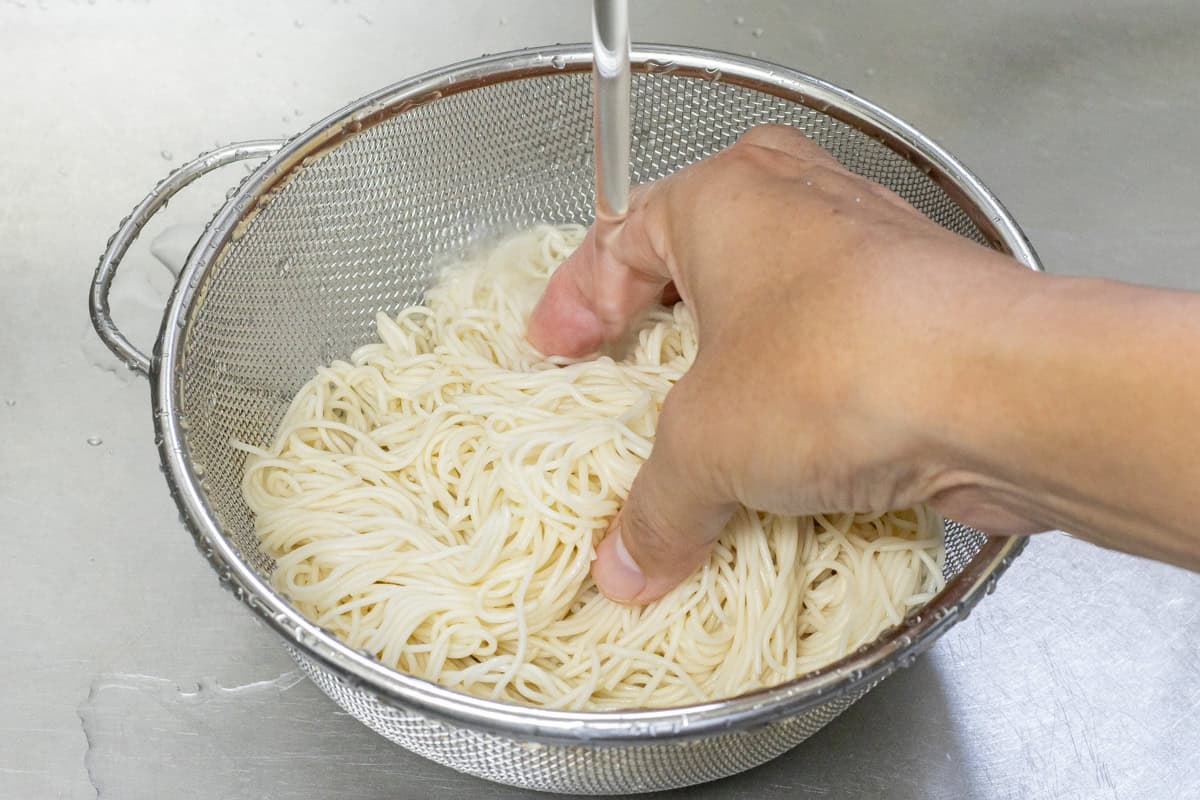
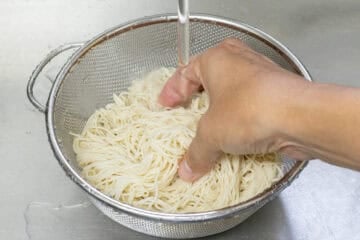
The second is to rinse the cooked noodles thoroughly under cold running water. The surface of cooked noodles is coated with a slimy layer of wheat starch, along with traces of salt and oil from the manufacturing process. Rinse them well, gently rubbing them with your hands, until that coating is completely removed. This not only brings out their smooth, silky texture but also helps prevent them from sticking together.
Just by following these two tips, your somen will turn out significantly better. Both steps are easy, so give them a try when making this recipe.
Somen dipping sauce
Let’s also talk about the dipping sauce for somen.
This way of eating may seem unusual for those who aren’t used to dipping noodles into sauce, but in Japan, there is a tradition of serving freshly cooked noodles chilled in cold water and then dipping them into sauce before eating. Typical examples include somen, zaru soba, zaru udon, and tsukemen. If noodles are left sitting in broth, they absorb the liquid and become soft over time; this is one of the main reasons why the practice of dipping noodles into sauce just before eating developed.
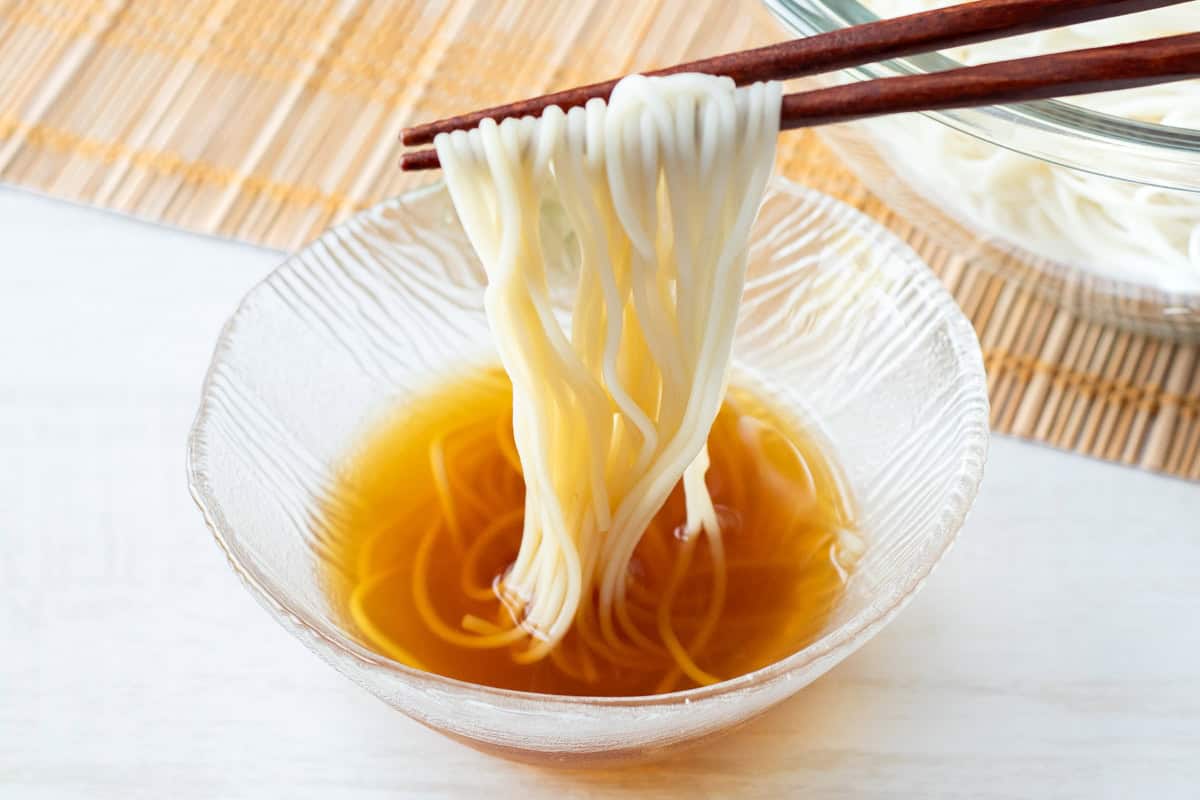
Today, there are many different kinds of dipping sauce, but the classic version is a savory, slightly sweet dashi-based sauce made with the following ingredients:
- Dashi stock
- Mirin
- Soy sauce
- Sugar
These ingredients are simmered to develop a mellow flavor, then chilled in the refrigerator until ready to serve. By following my recipe, you can easily prepare an authentic and delicious dipping sauce. That said, there is also an easier way to prepare it.
If you have store-bought mentsuyu (Japanese noodle soup base), you can use that instead. Depending on the product, you can use it as is or dilute it with water before serving. Either way, making the dipping sauce takes almost no effort.
Condiment options
Once the dipping sauce is ready, prepare the condiments you'd like to add. While they are completely optional, they add extra flavor to the sauce. You can also add them during your meal to vary the flavor.
Some of the most common condiments for somen dipping sauce include:
- Green onions (scallions)
- Ginger
- Myoga (Japanese ginger)
- Shiso leaves (perilla)
- Sesame seeds
Green onions and ginger are especially popular in Japan. Feel free to experiment with different combinations and discover your own favorite.
📋Step-by-step recipe
Ingredients
- 4 bundles somen noodles (about 1.76 oz/50 g each)
Dipping sauce:
- ½ cup dashi stock (Please refer to the linked page for instructions on how to make it. For plant-based options, see the pages on Kombu Dashi and Shiitake Dashi.)
- 1 Tbsp mirin
- 2 Tbsp soy sauce
- ½ tsp sugar
Condiments (optional, add to taste):
- chopped green onions / scallions
- grated ginger
- shredded myoga (Japanese ginger)
- shredded shiso leaves (perilla)
- toasted sesame seeds
Instructions
🕒 Total: 45 mins
If you are using store-bought mentsuyu (a Japanese noodle soup base), you can start from step 2.
Step 1
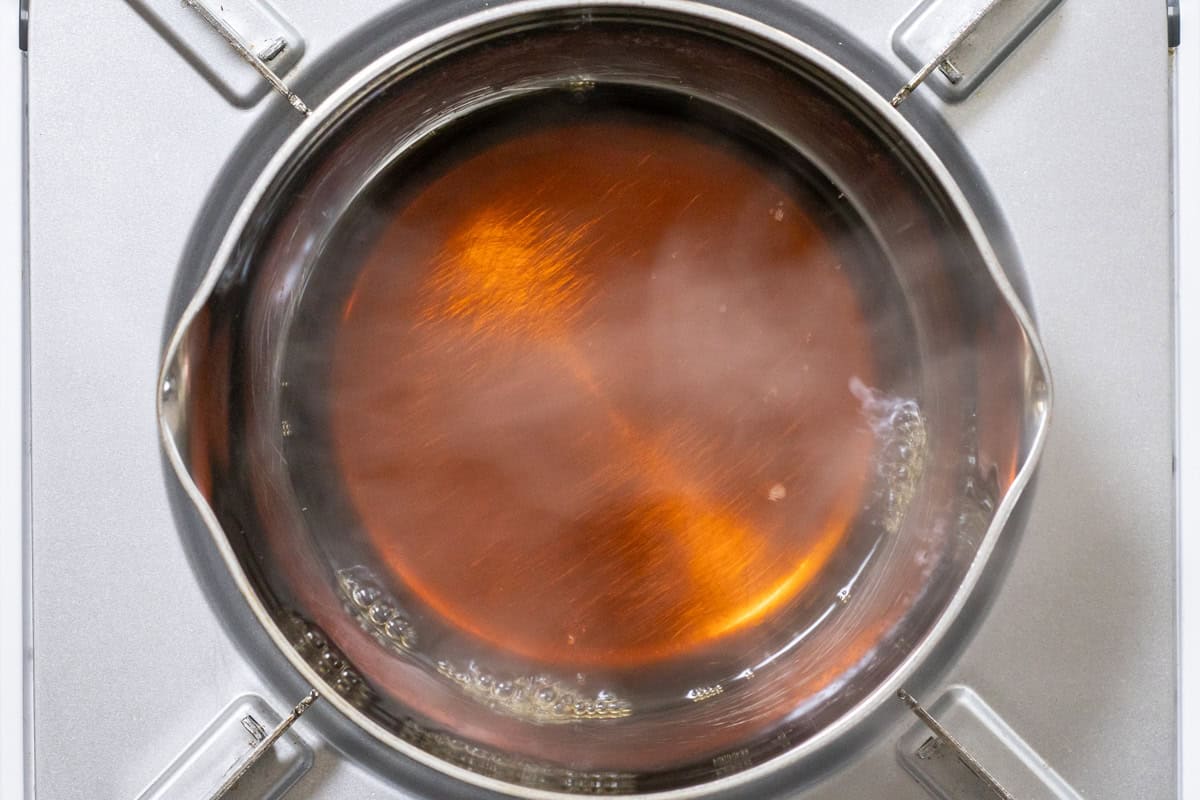
Combine the ingredients for the dipping sauce (dashi stock, mirin, soy sauce, and sugar) in a pot and bring it to a boil over medium heat. Once boiling, reduce the heat to low and let it simmer for about 30 seconds before removing it from the heat. After it cools down, transfer the sauce to a container (or leave it in the pot) and chill it in the refrigerator.
Step 2
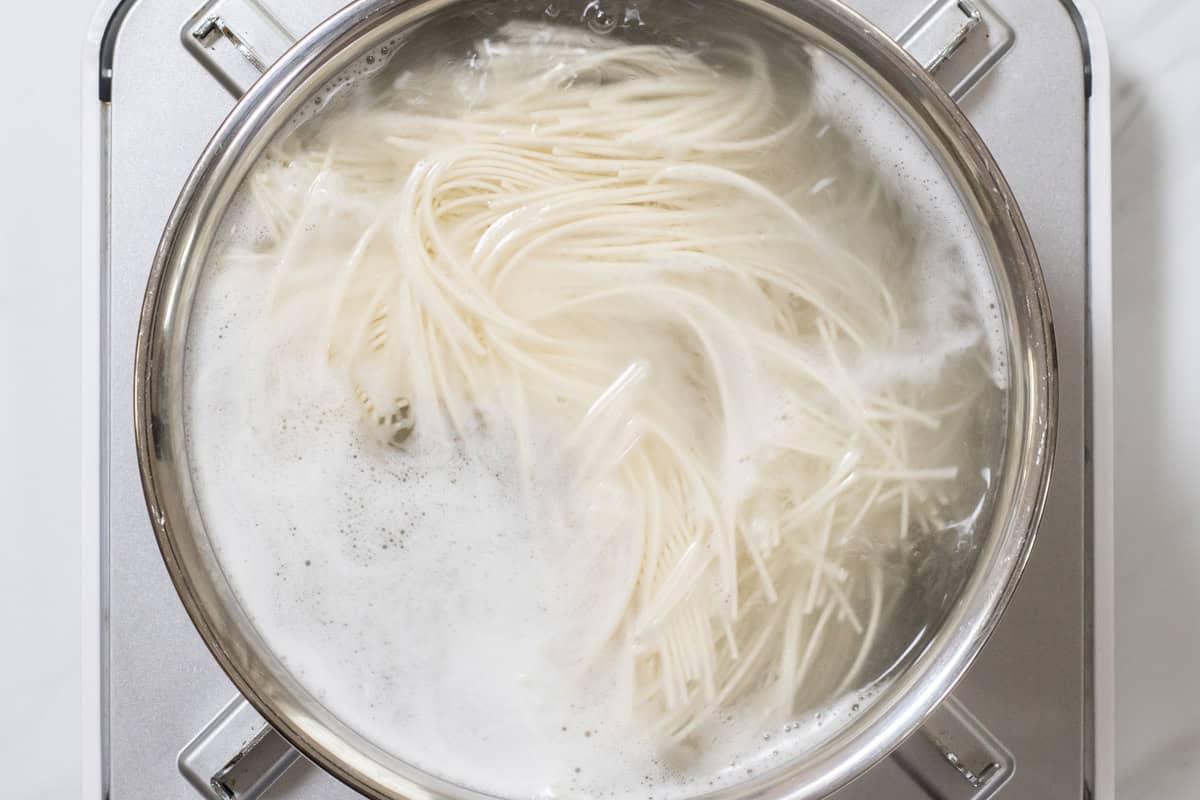
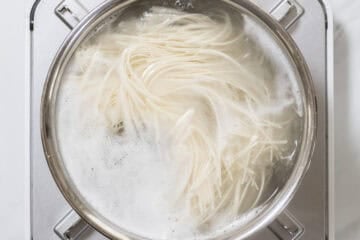
Bring a large pot of water to a boil and cook the somen noodles according to the package instructions (typically 90 seconds to 2 minutes).
Step 3
Drain the noodles in a colander and rinse them thoroughly under cold running water, gently rubbing them with your hands until the starchy coating is completely removed.
Step 4 (optional)
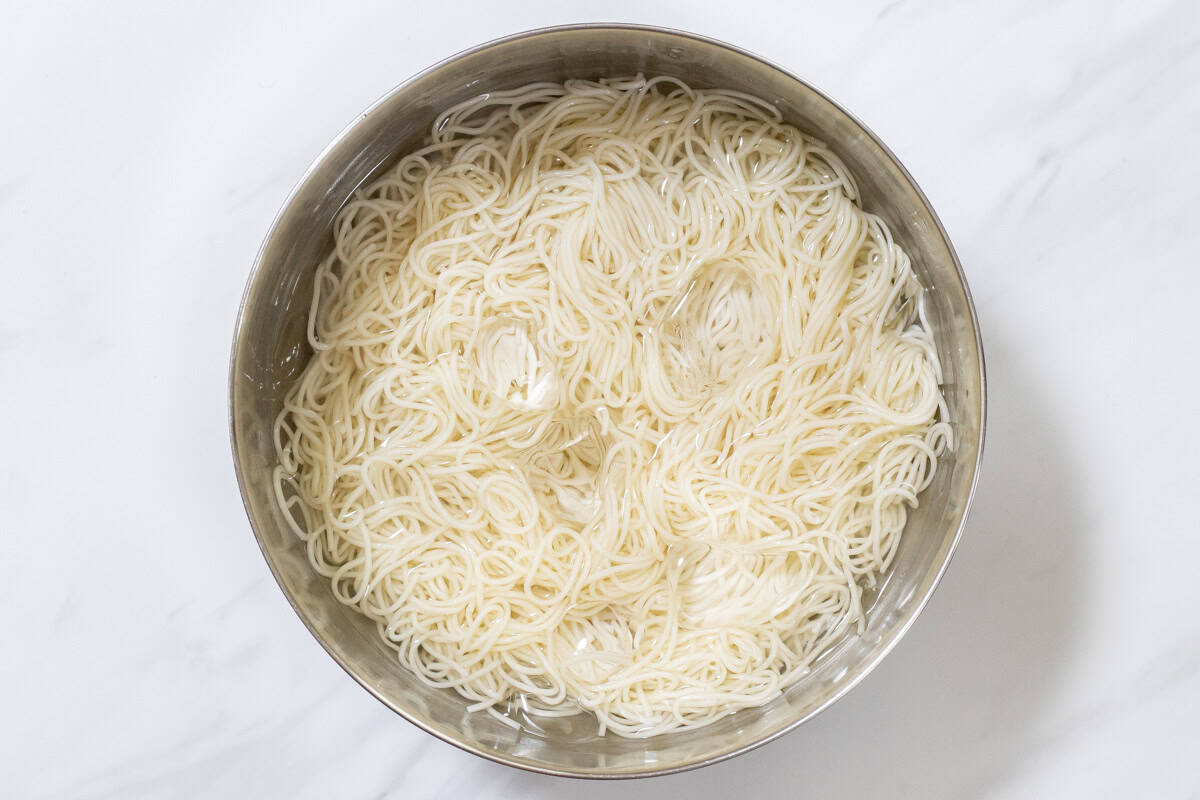
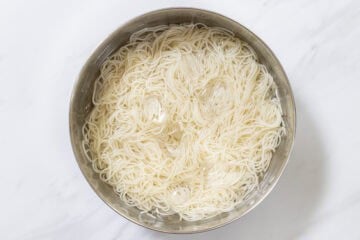
For even better results, transfer the noodles to a bowl of ice water and chill thoroughly, then drain again. This step is optional, but it helps firm up the noodles and improves their texture.
Step 5
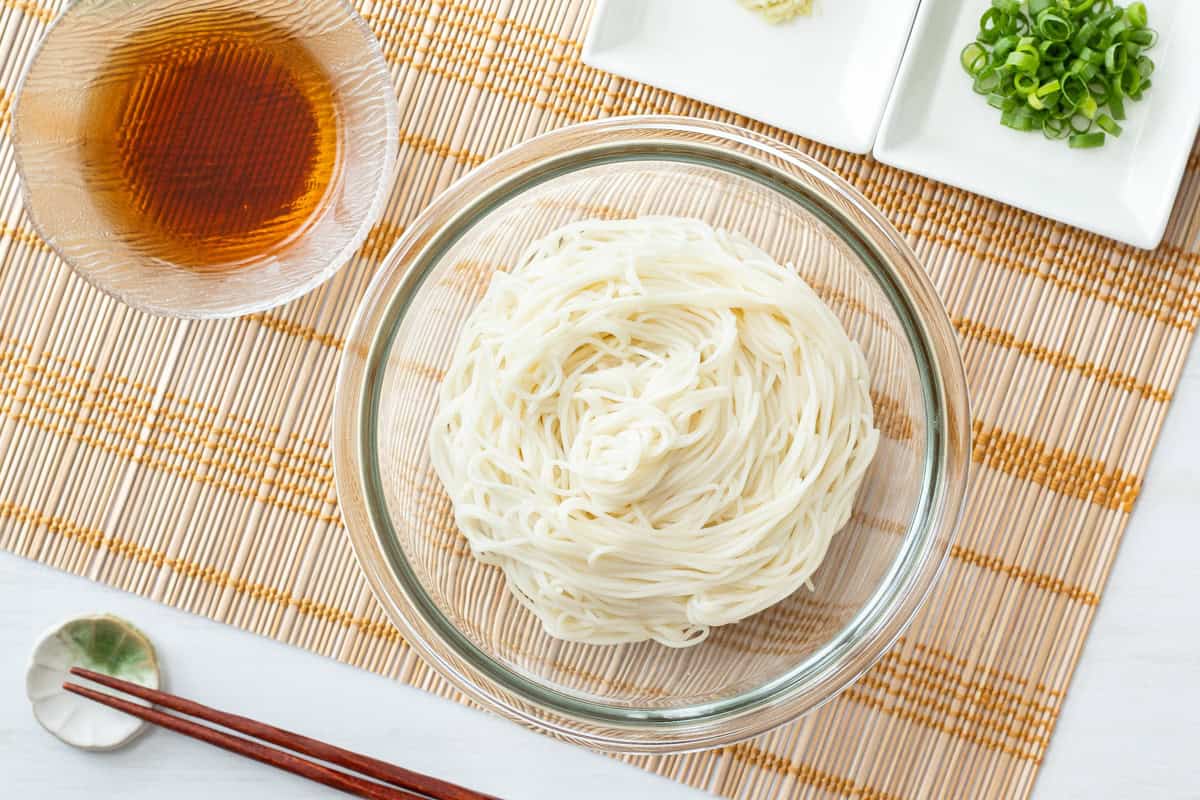
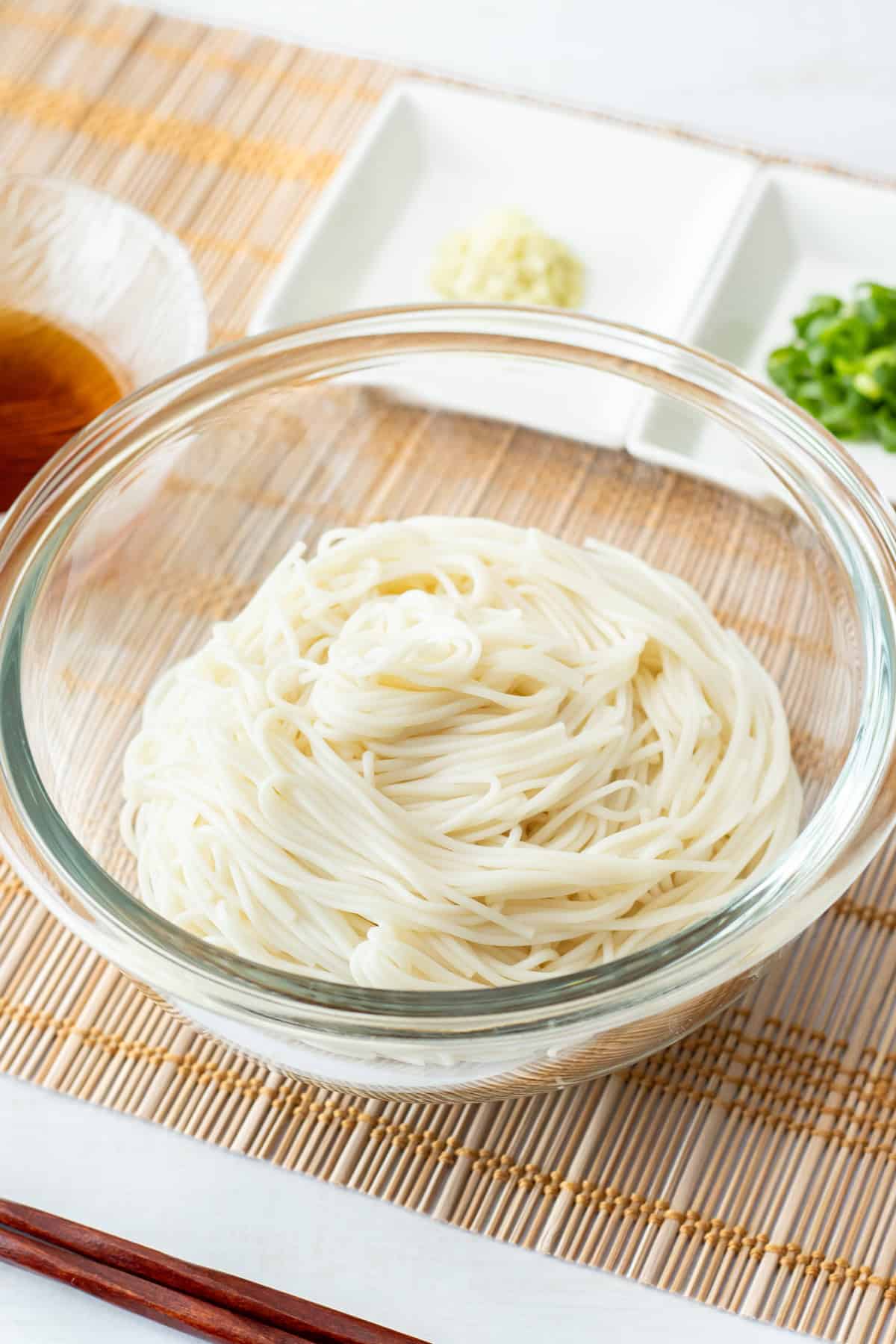
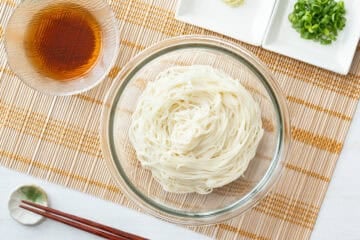
Serve the noodles on a plate or in a bowl. Fill small serving bowls with the chilled dipping sauce, and arrange the condiments on a separate plate according to your preference.
How to store
This dish is not suitable for storage (although it remains edible), as moisture evaporates from the somen noodles, causing them to become dry and sticky over time. For the best texture, it is recommended to enjoy the dish as soon as possible. However, the dipping sauce itself can be stored for up to 3 days.
Cooking tips
- Boil the noodles for the right amount of time.
- Rinse the cooked noodles thoroughly under cold running water.
How to eat Somen
For those who are unfamiliar with the style of eating noodles with dipping sauce, here's a guide on how to enjoy somen. Follow these steps:
- Hold your chopsticks with your dominant hand and the bowl of dipping sauce in your other hand.
- Pick up a bundle of somen noodles with your chopsticks and dip them into the sauce.
- While bringing the bowl closer to your mouth, lift the noodles and eat them.
Keep holding the noodles with your chopsticks throughout the process. Since the dipping sauce has a strong flavor, a quick dip is enough to coat the noodles. If you would like to enjoy more of the somen’s natural flavor, you can dip only about 70-90% of the noodles into the sauce, leaving the rest undipped.
While enjoying this dish, avoid drinking the dipping sauce directly. After finishing the noodles, some sauce will remain in your bowl, and it should be discarded. It is not recommended to drink it due to its high salt content.
If you're having a second helping of somen noodles, you can continue using the same dipping sauce in your bowl. However, keep in mind that with each refill, the sauce may become diluted as the moisture clinging to the noodles mixes in.
I hope you enjoy this recipe!
If you try it, I’d love to hear how it turned out. Please leave a review 💬 and a star rating ⭐ in the comment below. Your support and feedback means so much to me!
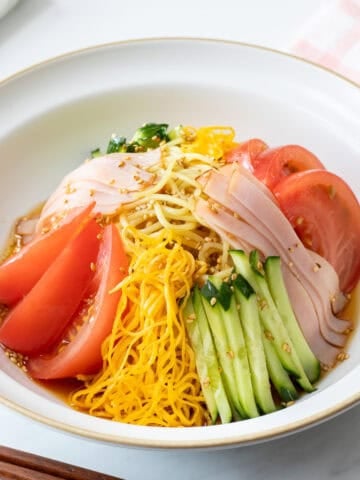
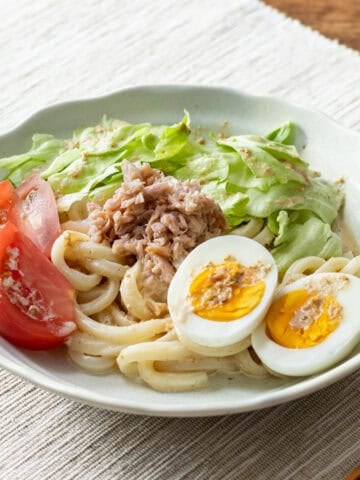
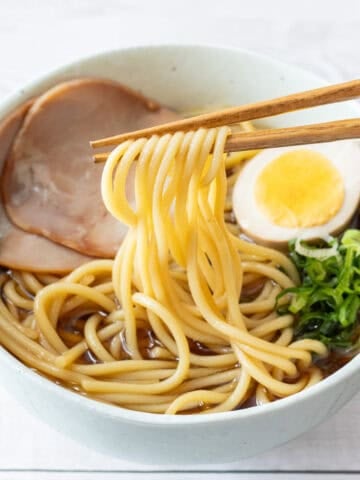
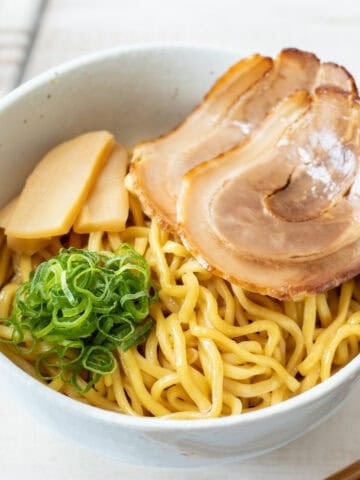
More Japanese cold noodle recipes you'll love
Printable Recipe Card
Somen (Cold Thin Noodles with Dipping Sauce)
Ingredients
- 4 bundles somen noodles (about 1.76 oz/50 g each)
Dipping sauce:
- ½ cup dashi stock (Please refer to the linked page for instructions on how to make it. For plant-based options, see the pages on Kombu Dashi and Shiitake Dashi.)
- 1 Tbsp mirin
- 2 Tbsp soy sauce
- ½ tsp sugar
Condiments (optional, add to taste):
- chopped green onions / scallions
- grated ginger
- shredded myoga (Japanese ginger)
- shredded shiso leaves (perilla)
- toasted sesame seeds
Instructions
- Combine the ingredients for the dipping sauce (dashi stock, mirin, soy sauce, and sugar) in a pot and bring it to a boil over medium heat. Once boiling, reduce the heat to low and let it simmer for about 30 seconds before removing it from the heat. After it cools down, transfer the sauce to a container (or leave it in the pot) and chill it in the refrigerator.

- Bring a large pot of water to a boil and cook the somen noodles according to the package instructions (typically 90 seconds to 2 minutes).
- Drain the noodles in a colander and rinse them thoroughly under cold running water, gently rubbing them with your hands until the starchy coating is completely removed.
- (Optional) For even better results, transfer the noodles to a bowl of ice water and chill thoroughly, then drain again. This step is optional, but it helps firm up the noodles and improves their texture.
- Serve the noodles on a plate or in a bowl. Fill small serving bowls with the chilled dipping sauce, and arrange the condiments on a separate plate according to your preference.

Notes
- If you are using store-bought mentsuyu (a Japanese noodle soup base), you can start from step 2.
- This dish is not suitable for storage (although it remains edible), as moisture evaporates from the somen noodles, causing them to become dry and sticky over time. For the best texture, it is recommended to enjoy the dish as soon as possible. However, the dipping sauce itself can be stored for up to 3 days.
Leave a Rating and a Comment