
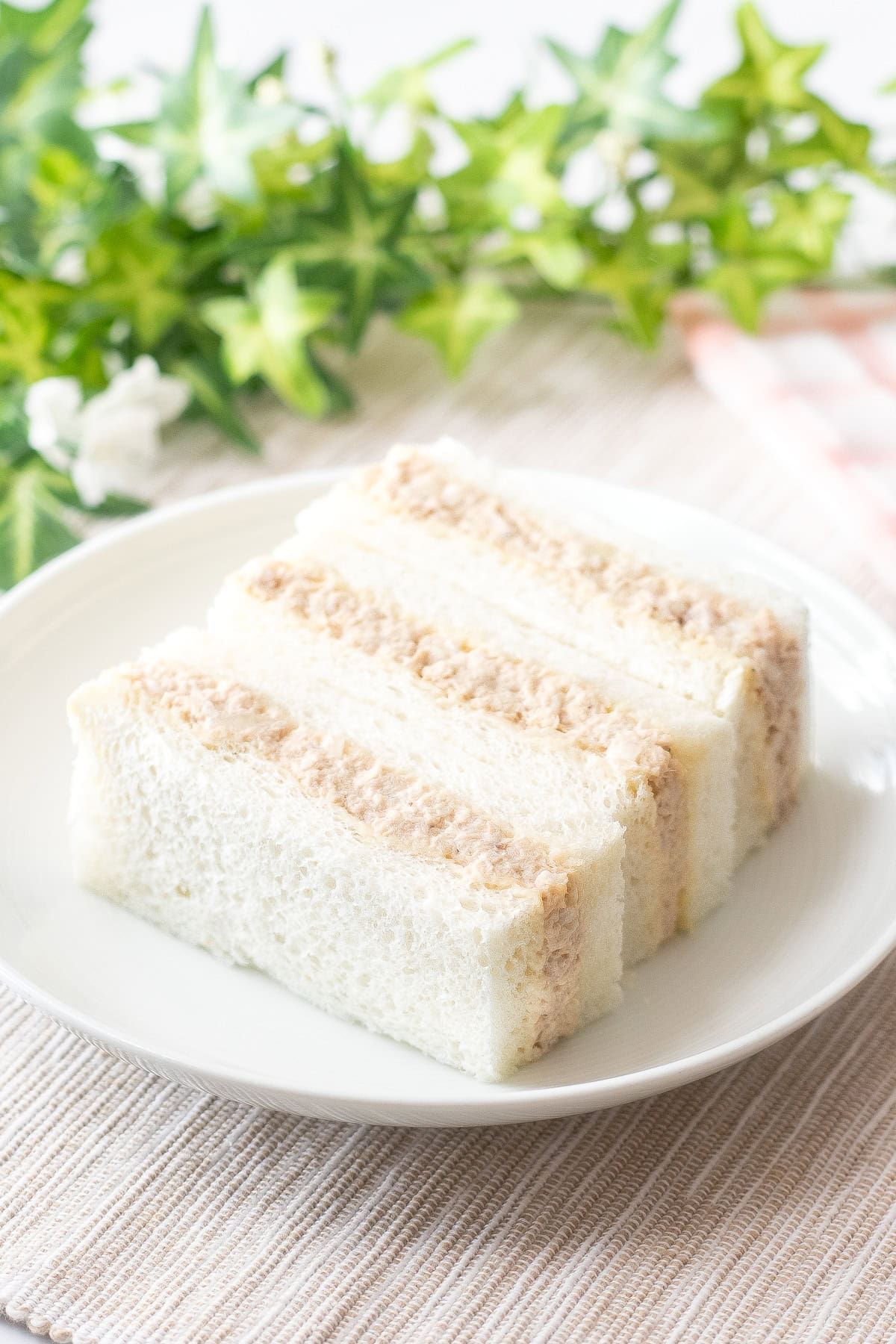
Tuna sandwiches are enjoyed worldwide, but the Japanese tuna sandwich, known as Tuna Sando, offers a slightly different charm that has made it a favorite. The comforting flavor created by combining tuna with Japanese mayonnaise provides a simple yet satisfying balance, making it one of the most classic sandwiches in Japan.
Jump to:
What is Tuna Sando?
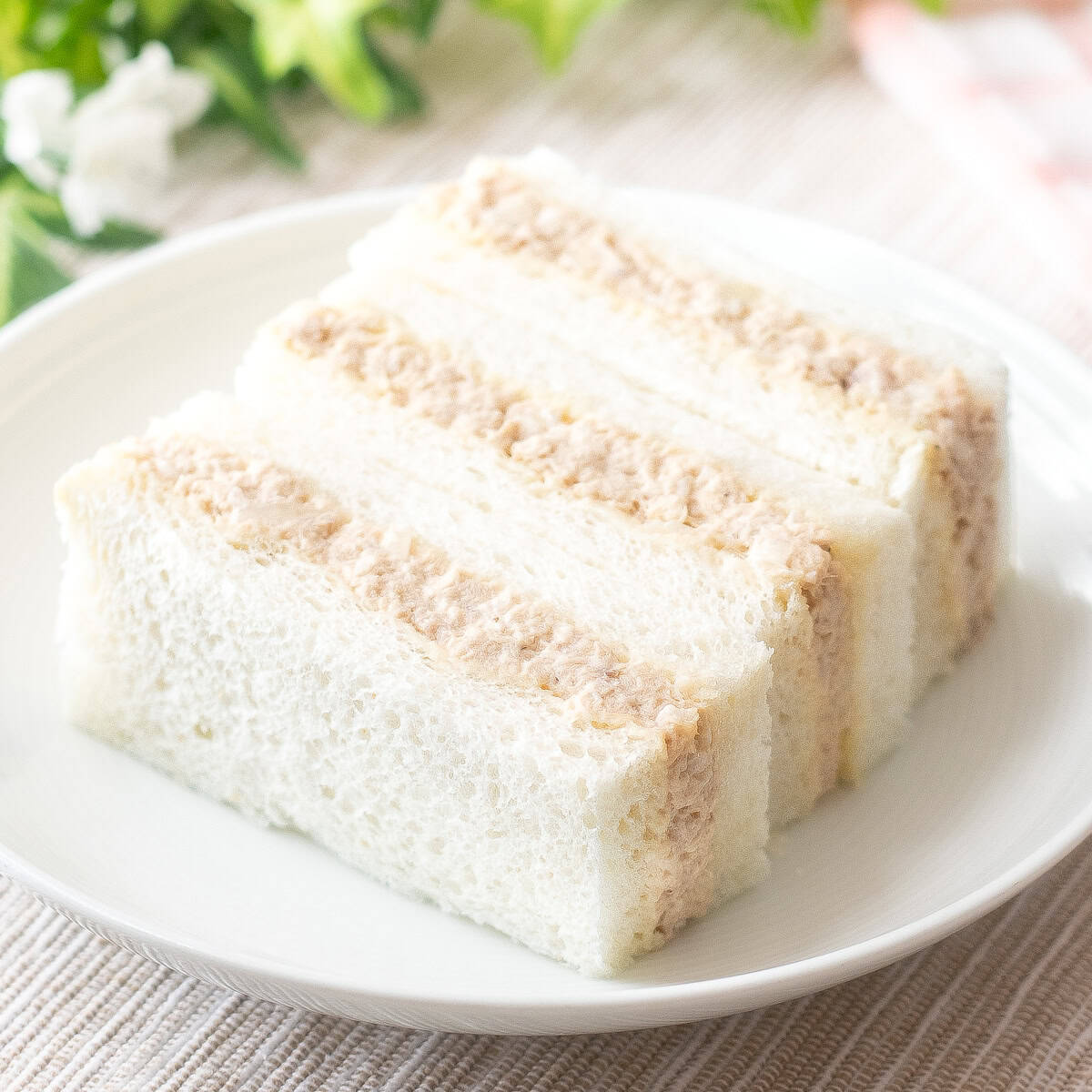
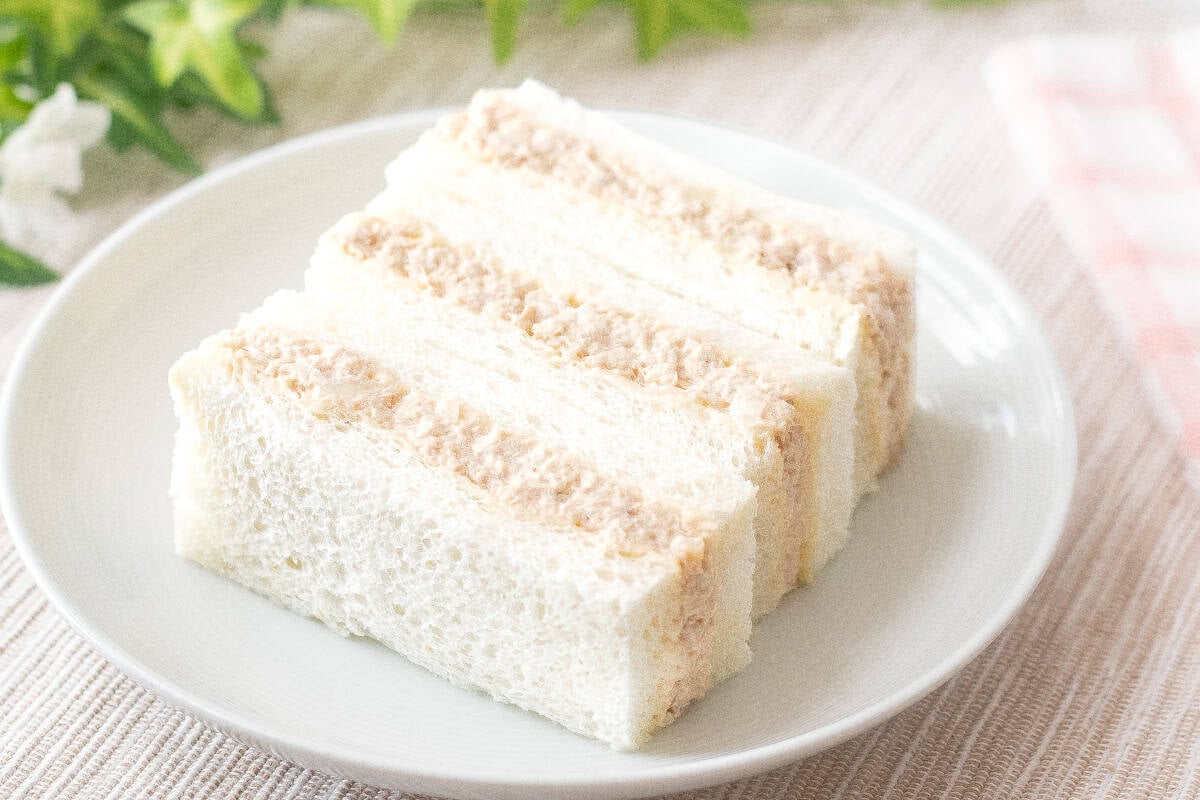
Tuna Sando is a Japanese sandwich made with a filling of tuna mixed with Japanese mayonnaise. "Sando" is a shortened form of sandwich in Japanese. It is typically prepared with soft, fluffy white milk bread known as shokupan, which enhances the flavor and texture of the filling.
What sets this Japanese tuna sandwich apart from others around the world is its mild, comforting taste. The creaminess and mildness of Japanese mayonnaise take center stage, allowing the natural flavor of the tuna to shine through. With little to no spice or acidity, it has a light, delicate mouthfeel. Experience this beloved flavor, enjoyed by people of all ages in Japan.
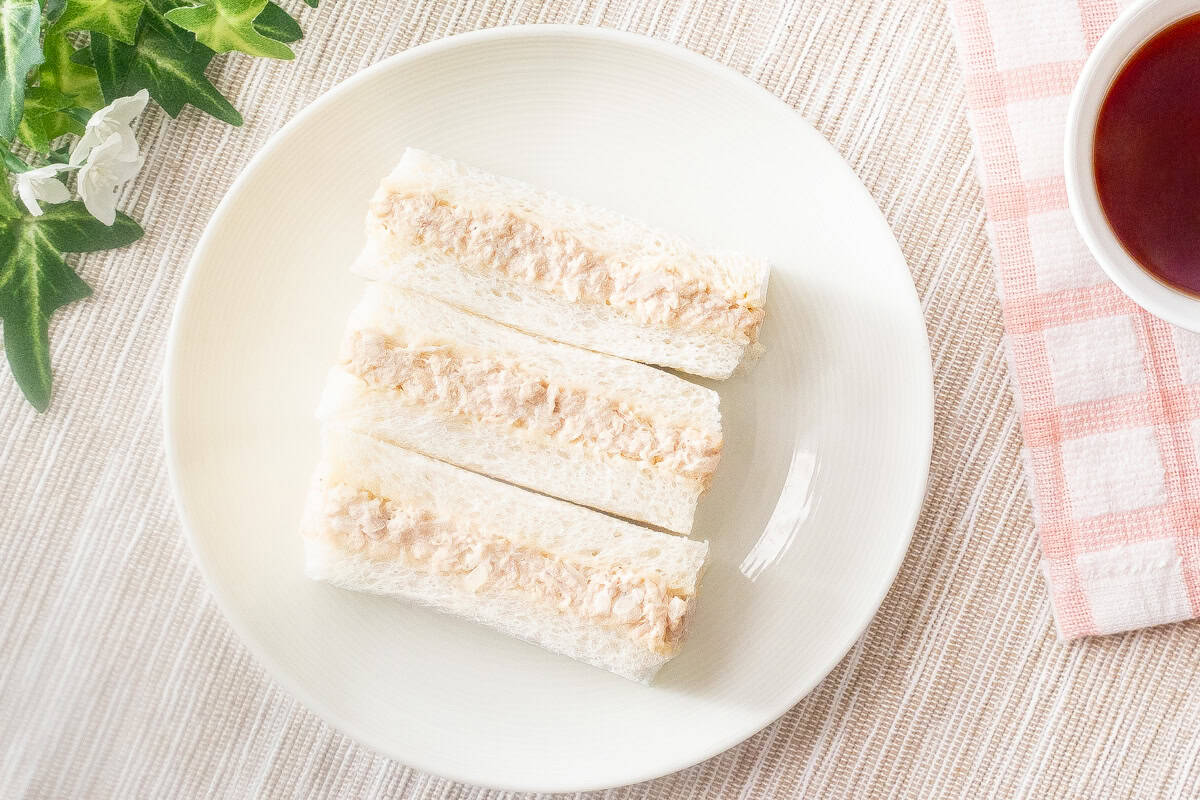
The filling: Japanese-style tuna salad
The filling for the tuna sando uses Japanese-style tuna salad. This salad is typically prepared by mixing canned tuna with Japanese mayonnaise and vegetables.
Tuna: Canned tuna packed in oil is most commonly used, though tuna packed in water can also be substituted.
Japanese mayonnaise: Japanese mayonnaise differs from most Western mayonnaise in that it is characterized by a less acidic, creamier texture and a milder flavor. If you don’t have it, try looking for Japanese brands, such as Kewpie Mayo, at your local grocery store or Asian market. Alternatively, you can make your own Japanese mayonnaise from scratch at home.
Vegetables: Finely chopped or thinly sliced onions and cucumbers are commonly used. While vegetables are not strictly necessary, adding them brings extra flavor and texture to the salad. If using onions, it is essential to squeeze out excess moisture before adding them to prevent the mixture from becoming watery.
Combine all the ingredients and season with salt and pepper to complete your Japanese tuna salad. Soy sauce, sugar, or rice vinegar can be added as secret ingredients, but to let the tuna's flavor shine, I personally recommend keeping the seasoning as simple as possible.
Why shokupan matters
Simply spread the tuna salad you made between two slices of shokupan bread, and you will have your tuna sando. One of the appeals of this simple sandwich lies in the bread itself.
Shokupan is one of the most common types of bread in Japan. When eaten on its own, it has a soft, fluffy, marshmallow-like texture, and its mild flavor and delicate consistency don't overpower the filling. For this reason, it has become a staple choice for Japanese sandwiches.
A standard loaf is 4.92 inches (12.5 cm) square, and pre-sliced loaves are available in packs containing 4, 5, 6, 8, 10, or 12 slices. Among these, loaves with 8 slices or more are considered best for sandwiches. The thickness varies depending on the number of slices:
- 4 slices: 1.23 inches (3.1 cm)
- 5 slices: 1 inch (2.5 cm)
- 6 slices: ⅘ inch (2 cm)
- 8 slices (for sandwiches): ⅗ inch (1.5 cm)
- 10 slices (for sandwiches): ½ inch (1.2 cm)
- 12 slices (for sandwiches): ⅖ inch (1 cm)
For an authentic texture, you should use shokupan sliced to the appropriate thickness, or slice each of the 4-6 thicker slices in half horizontally. If using an unsliced loaf, cut it to a thickness of about ½ inch (1-1.5 cm). Alternatively, if you don't mind the thickness, you can use 4-6 slices as they are.
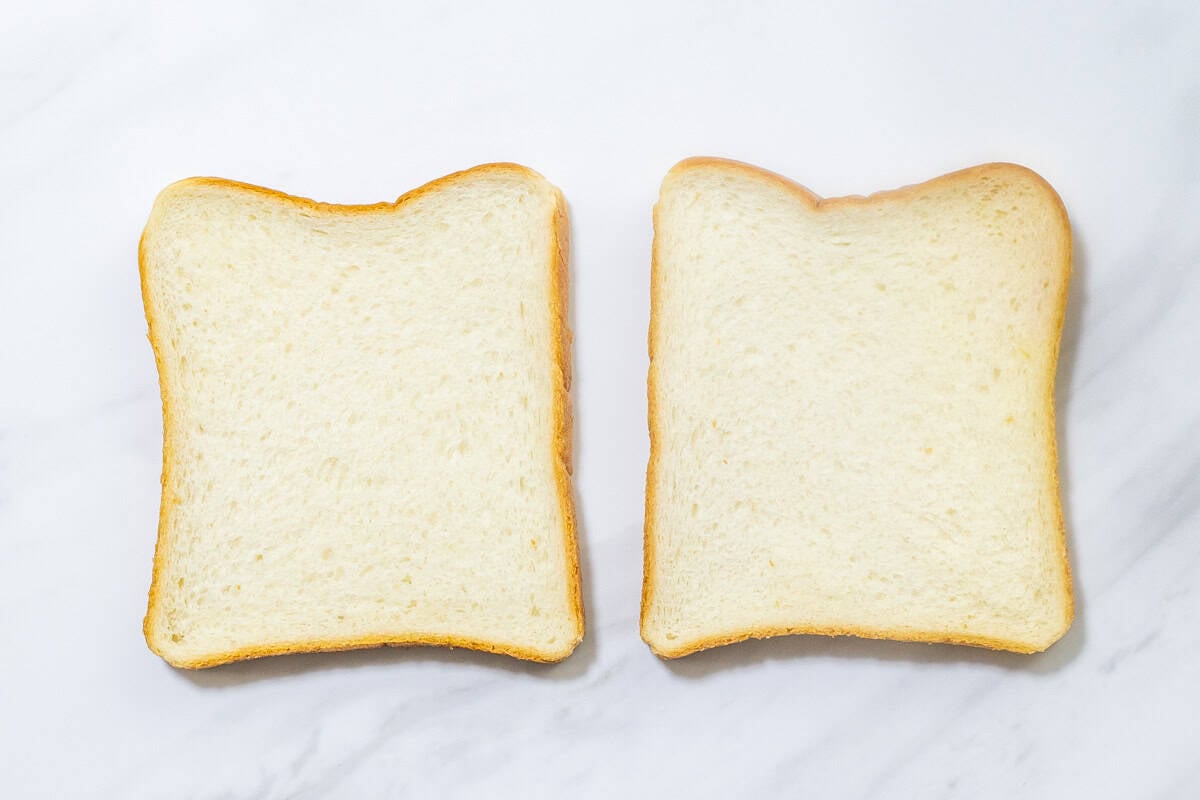
You can make tuna sando with bread other than shokupan, but it truly shines when made with soft, light-textured shokupan. Try looking for a Japanese-style bakery or an Asian market in your area.
Cooking tips
To make a delicious tuna sando, keep these two things in mind:
- Drain any excess moisture from the onions.
Onions are one of the most commonly used ingredients in tuna sando fillings. Adding them to the filling after finely chopping gives a nice crunch and makes the sandwich more satisfying. However, onions contain a lot of moisture, and if you add them without preparation, they can make the sandwich soggy. To avoid this, sprinkle them with salt, gently rub them, and let them sit for a bit, then squeeze out any excess moisture before using.
- Spread butter on the shokupan.
Using butter not only enhances the flavor but also creates a thin layer of fat that helps prevent the shokupan from absorbing moisture from the filling. Even if your filling isn't very moist, the bread tends to absorb moisture easily, so it is best to spread butter on it. If you don’t have butter on hand, you can use Japanese mayonnaise as a substitute.
By following these tips for managing moisture, you will create a much tastier tuna sando. These tips are easy to incorporate, so be sure to give them a try in my recipe.
📋Step-by-step recipe
Ingredients
- 4 slices shokupan (Use shokupan loaves cut into 8, 10, or 12 slices. If using loaves sliced into 4, 5, or 6 thicker slices, cut each slice in half horizontally beforehand. If using an unsliced loaf, slice it to a thickness of about ½ inch (1-1.5 cm).)
- 1 Tbsp salted butter (0.5 oz/14 g per Tbsp, melted before use)
For the filling (tuna salad):
- 5 oz canned tuna in oil (Canned tuna in water can be substituted.)
- 2 oz onion
- ⅛ tsp salt (for sprinkling the onion)
- 3 Tbsp Japanese mayonnaise (such as Kewpie Mayo; 0.53 oz/15 g per Tbsp. For a homemade version, please refer to the linked article.)
- a pinch of salt
- a pinch of ground black pepper
Instructions
🕒 Total: 20 mins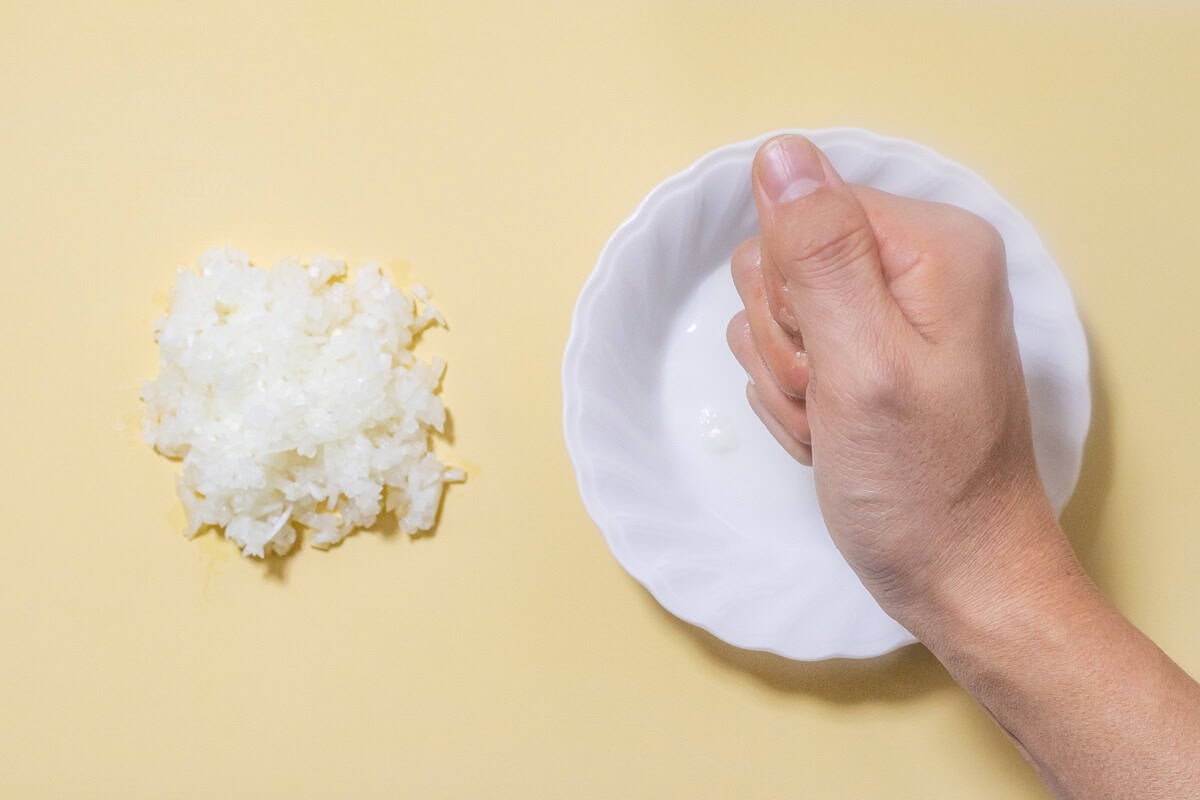
Step 1
Finely chop the onion, sprinkle it with salt, gently rub it, and let it sit for about 10 minutes. Squeeze out the excess moisture by hand, then transfer it to a bowl.
Step 2
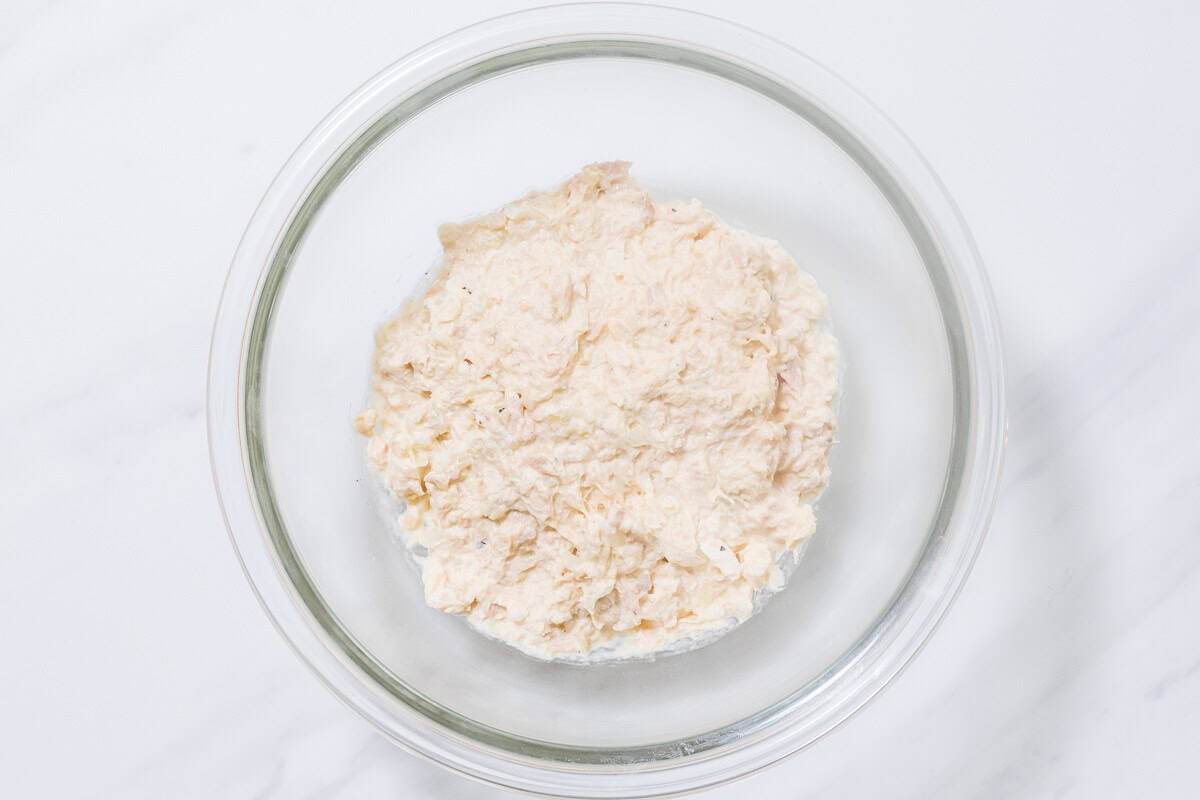
Lightly drain the oil from the canned tuna and add it to the bowl, breaking it into flakes with a fork or chopsticks. Add Japanese mayonnaise, salt, and pepper, then mix everything together well.
Step 3
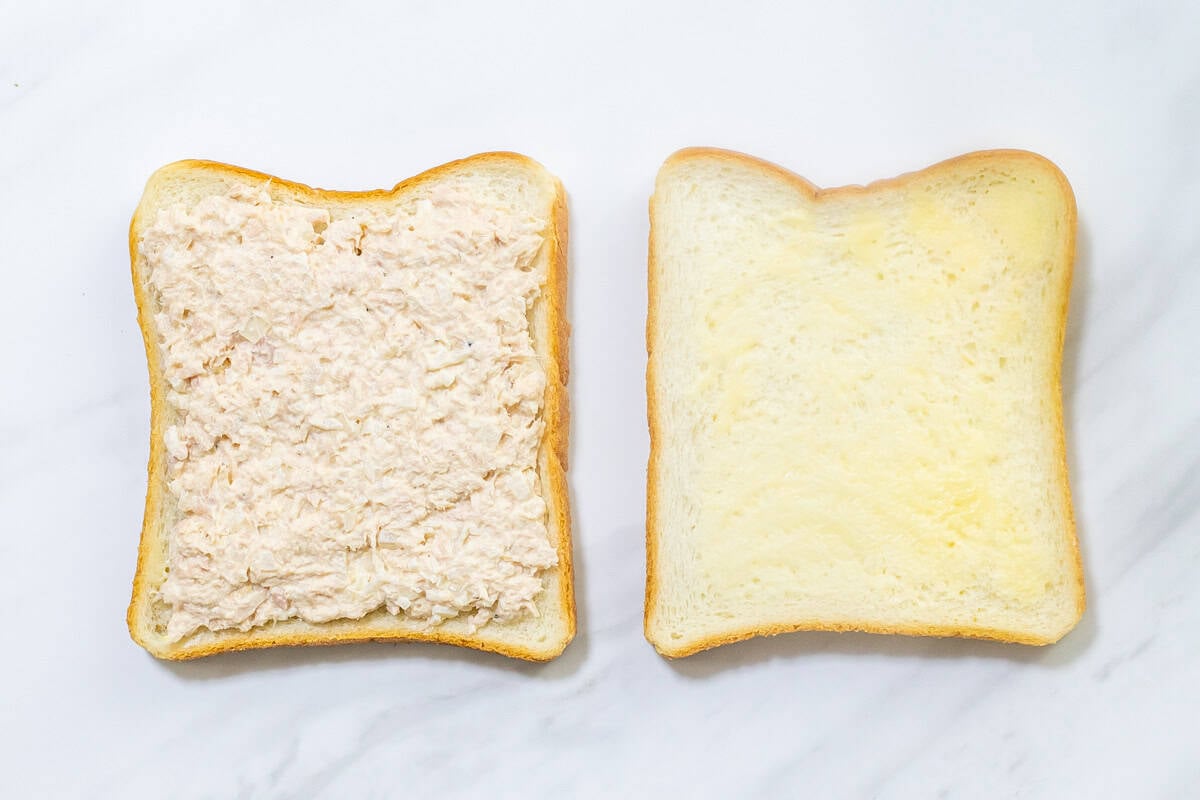
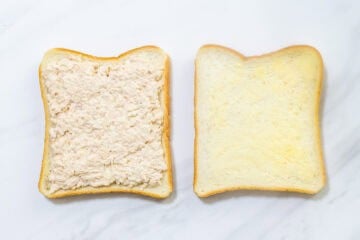
Spread butter on one side of each slice of shokupan. Evenly spread the tuna mixture on the buttered side of one slice, then top it with another slice of shokupan, buttered side facing down. Repeat this process to make the desired number of tuna sando.
Step 4
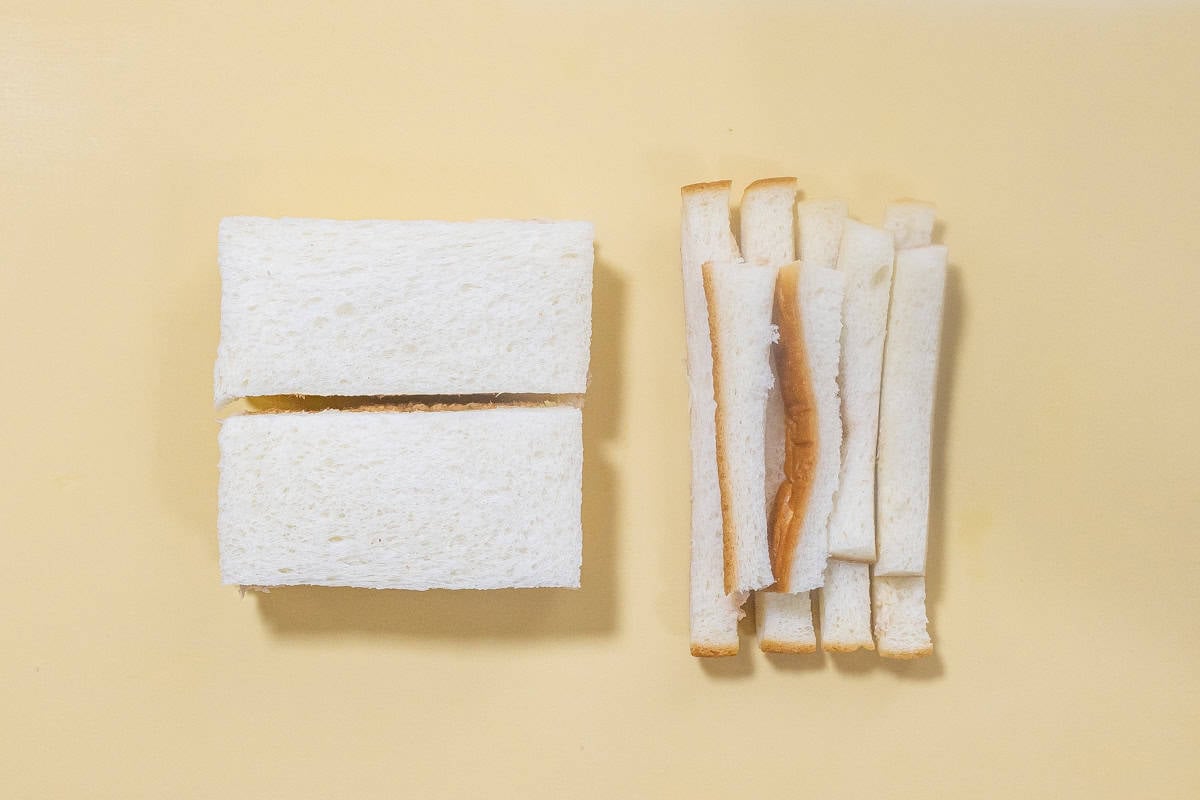
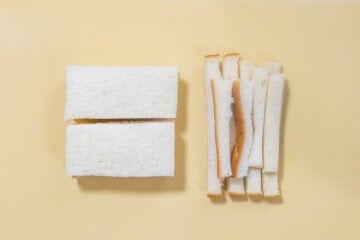
Cut off the crusts and slice the sandwiches diagonally or horizontally. For cleaner cuts, it is best to wipe the knife with a paper towel between each cut.
To store
You can store it in the refrigerator for up to one day. To keep the shokupan from drying out, it is best to wrap each sandwich in plastic wrap before storing. As for the filling alone, it can be stored in the refrigerator for up to 2 days.
If you try this recipe, I’d love to hear what you think. Please consider leaving a review and star rating in the comments below. If you enjoyed it, I’d really appreciate it if you shared it with your friends.
Transforming leftover shokupan crusts
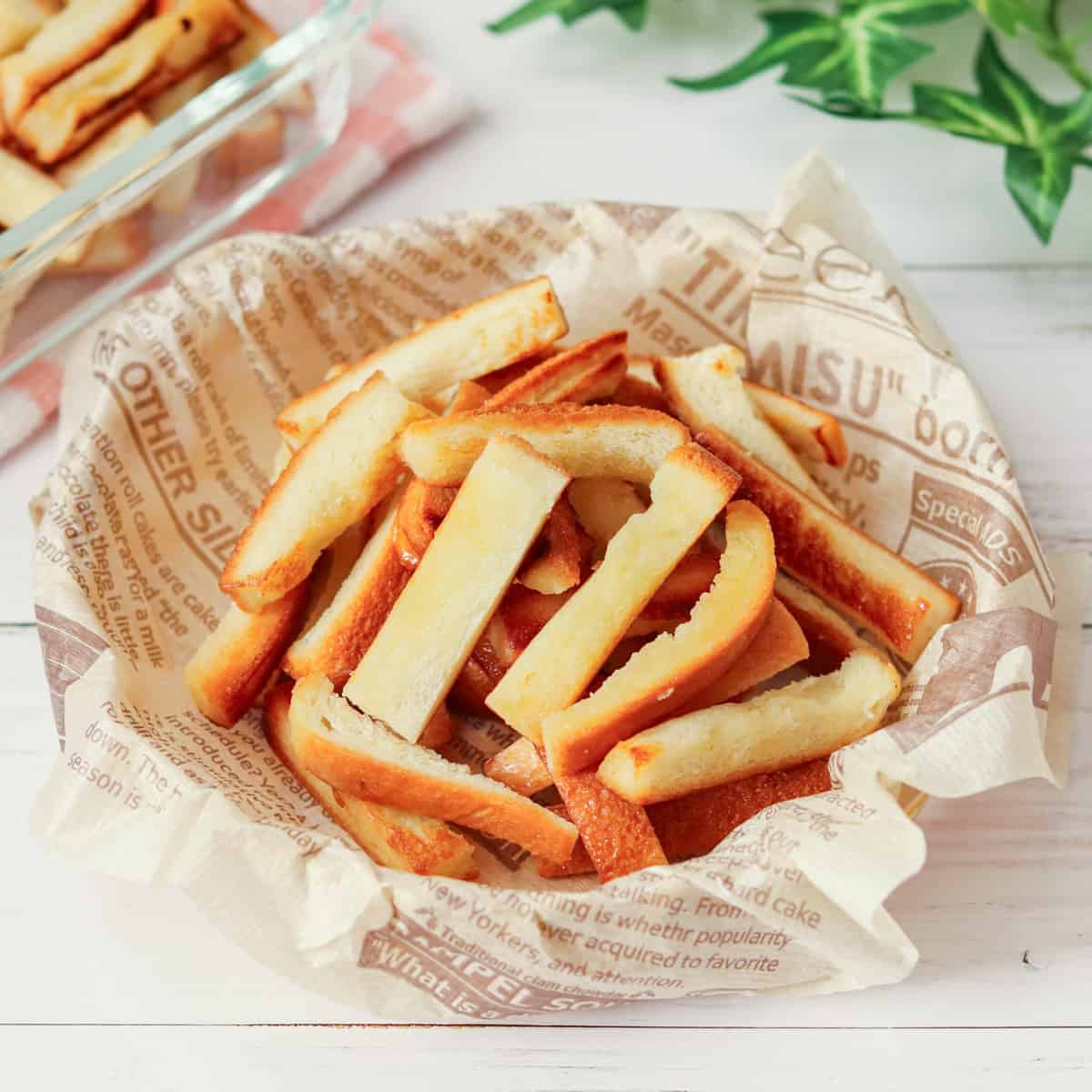
While the leftover shokupan crusts can be enjoyed on their own, you can also turn them into a sweet treat. After trying this tuna sando recipe, be sure to try the Sweet Shokupan Crust Snacks recipe as well.
Another recipe you'll love
Recipe card
Tuna Sando (Japanese Tuna Sandwich)
Ingredients
- 4 slices shokupan (Use shokupan loaves cut into 8, 10, or 12 slices. If using loaves sliced into 4, 5, or 6 thicker slices, cut each slice in half horizontally beforehand. If using an unsliced loaf, slice it to a thickness of about ½ inch (1-1.5 cm).)
- 1 Tbsp salted butter (0.5 oz/14 g per Tbsp, melted before use)
For the filling (tuna salad):
- 5 oz canned tuna in oil (Canned tuna in water can be substituted.)
- 2 oz onion
- ⅛ tsp salt (for sprinkling the onion)
- 3 Tbsp Japanese mayonnaise (such as Kewpie Mayo; 0.53 oz/15 g per Tbsp. For a homemade version, please refer to the linked article.)
- a pinch of salt
- a pinch of ground black pepper
Instructions
- Finely chop the onion, sprinkle it with salt, gently rub it, and let it sit for about 10 minutes. Squeeze out the excess moisture by hand, then transfer it to a bowl.

- Lightly drain the oil from the canned tuna and add it to the bowl, breaking it into flakes with a fork or chopsticks. Add Japanese mayonnaise, salt, and pepper, then mix everything together well.
- Spread butter on one side of each slice of shokupan. Evenly spread the tuna mixture on the buttered side of one slice, then top it with another slice of shokupan, buttered side facing down. Repeat this process to make the desired number of tuna sando.
- Cut off the crusts and slice the sandwiches diagonally or horizontally. For cleaner cuts, it is best to wipe the knife with a paper towel between each cut.
Notes
- You can store it in the refrigerator for up to one day. To keep the shokupan from drying out, it is best to wrap each sandwich in plastic wrap before storing. As for the filling alone, it can be stored in the refrigerator for up to 2 days.
- While the leftover shokupan crusts can be enjoyed on their own, you can also turn them into a sweet treat. After trying this tuna sando recipe, be sure to try the Sweet Shokupan Crust Snacks recipe as well.
Leave a Rating and a Comment