
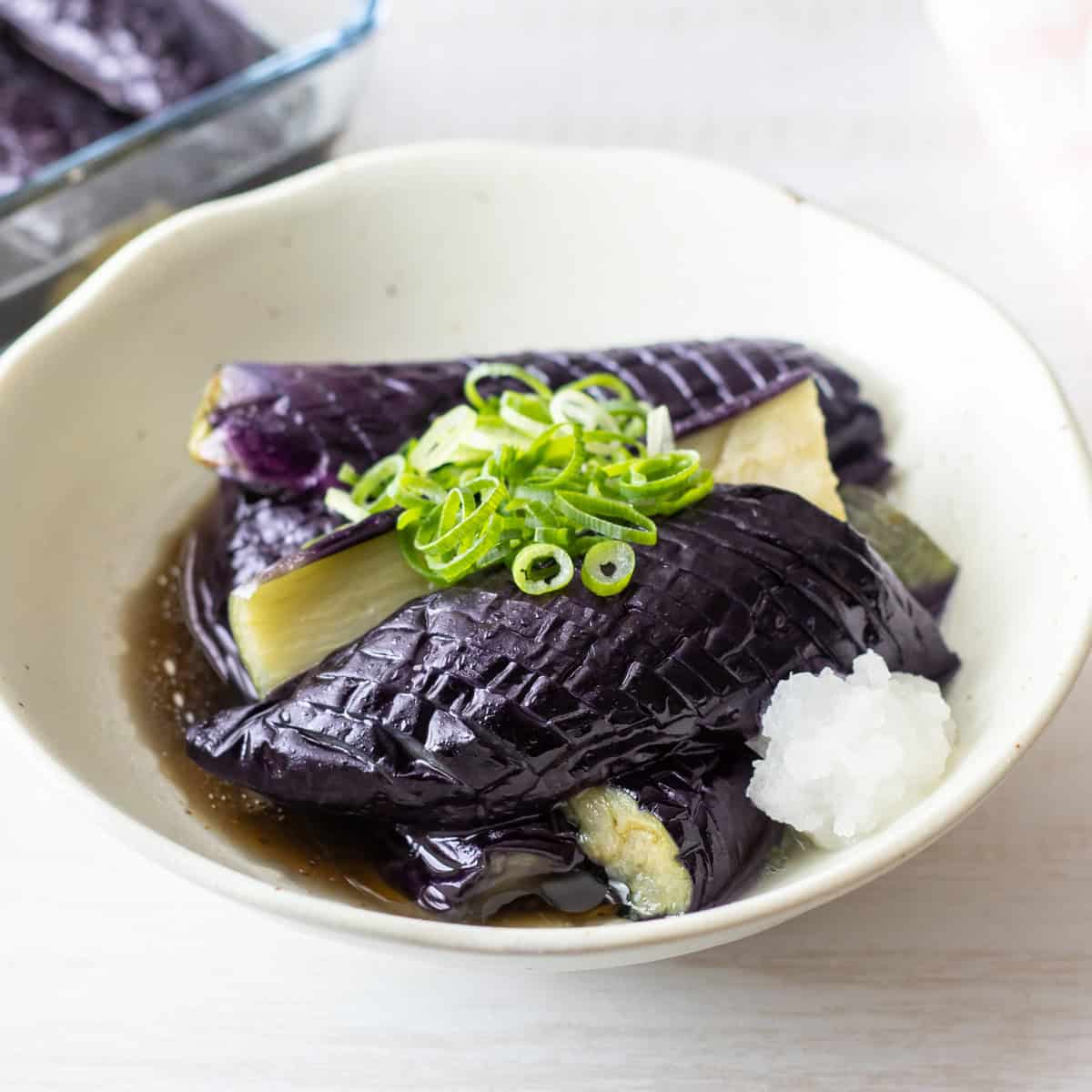
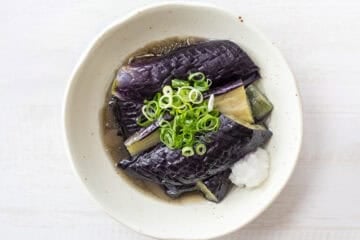
Eggplant Agebitashi is one of the most beloved eggplant dishes in Japan, celebrated for its perfect balance between lightly deep-fried, silky-soft eggplant and delicate Japanese flavors. The smooth texture of the eggplant, its deep, glossy purple hue, and the umami-rich flavor of the dashi broth that bursts with each bite create a taste experience that is sure to make you crave it again and again.
Jump to:
What is Eggplant Agebitashi?
Eggplant Agebitashi is a traditional Japanese dish made by deep-frying eggplant and then soaking it in seasoned dashi broth. In the term "agebitashi," “age” means deep-frying, while “bitashi” refers to soaking. As the eggplant absorbs both the oil and delicate Japanese flavors, each bite releases an umami-rich, savory juiciness.
In Japan, there is a culinary tradition of soaking ingredients in seasoned dashi broth, and among these dishes, eggplant agebitashi is especially popular for its depth of flavor. Those familiar with Japanese cuisine might imagine it as something like eggplant tempura dipped in tentsuyu (tempura dipping sauce), but that comparison doesn't quite capture it. The flavor that develops when the dashi fully soaks into the unbattered, fried eggplant is unique to this dish and truly one of a kind.
The preparation process isn't complicated, and as long as you keep a few key tips in mind, it is hard to mess up. Give this traditional Japanese dish a try and enjoy the beautiful fusion of eggplant and umami-packed flavors at your table.
Key tips for perfectly deep-frying eggplant
The process of making eggplant agebitashi can be broadly divided into the following four steps:
- Prepare a seasoned dashi broth.
- Cut the eggplants.
- Deep-fry the eggplants.
- Soak the eggplants in the dashi to absorb the flavor.
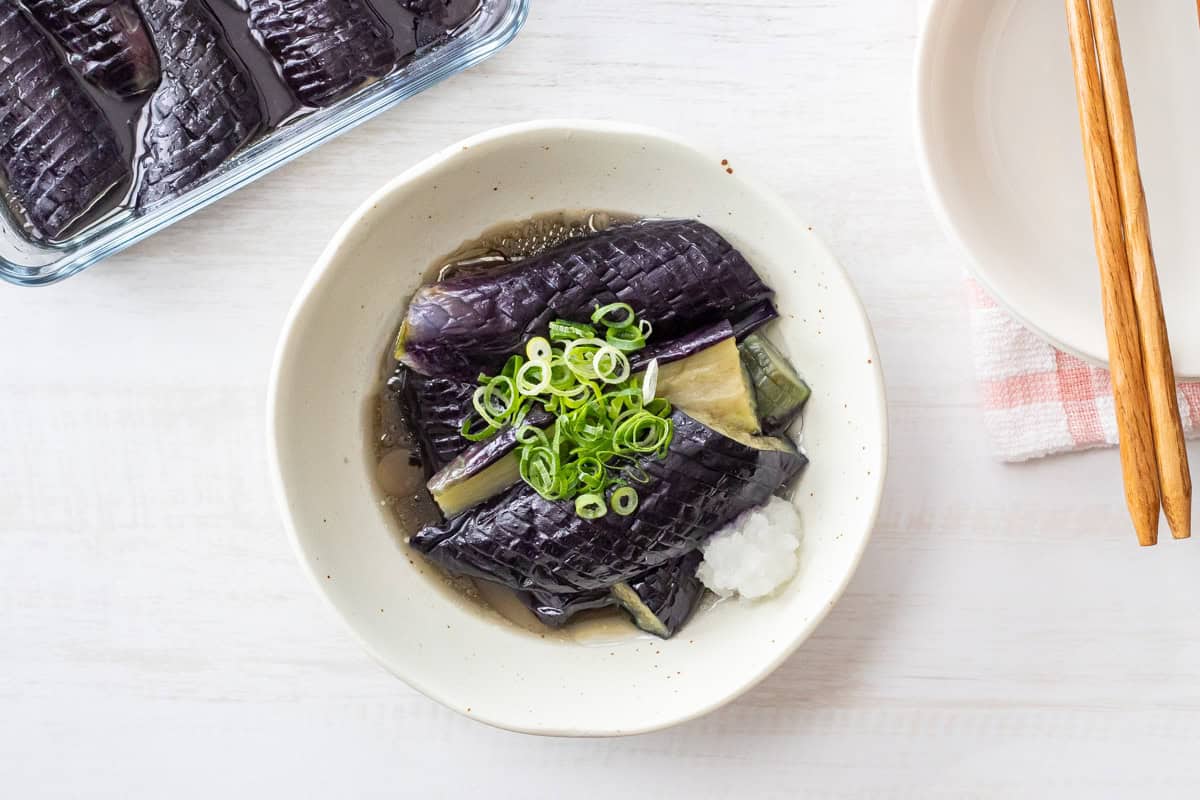
Among these, the deep-frying step is particularly crucial in influencing the final result. It determines the eggplant’s tenderness, oil absorption, and color. The key to making this dish delicious is to keep the eggplant from absorbing too much oil and becoming greasy. During this step, keep the following points in mind:
- Deep-fry the eggplants with the skin side down at 170°C (340°F) for 1 minute.
- Flip the eggplants over and continue frying until they become soft enough to indent easily when pinched with chopsticks or tongs (about 1 minute, depending on the size of the eggplants you use).
Deep-frying with the skin side down helps bring out the eggplant's deep, glossy purple color, while keeping the total frying time to about 2 minutes helps prevent it from absorbing excess oil. Be careful not to over-fry, as doing so will cause the eggplants to soak up too much oil.
The role of broth temperature
In addition to the tips for deep-frying, there is another point to keep in mind: the temperature of the seasoned dashi broth in which the fried eggplant is soaked.
The seasoned dashi is made by bringing dashi stock, mirin, and soy sauce to a brief boil. When the fried eggplant is placed in the broth, the flavors seep into it, but if you let the broth cool, the flavors will penetrate the eggplant even more deeply. This is because a greater temperature difference between the freshly fried eggplant and the broth increases the eggplant’s ability to absorb flavors.
For this reason, it is best to prepare the broth in advance. Chilling it in the refrigerator is ideal, but simply letting it cool to room temperature is also effective. With this simple trick, you can improve the final result, so be sure to incorporate this tip into your cooking process.
Garnish options
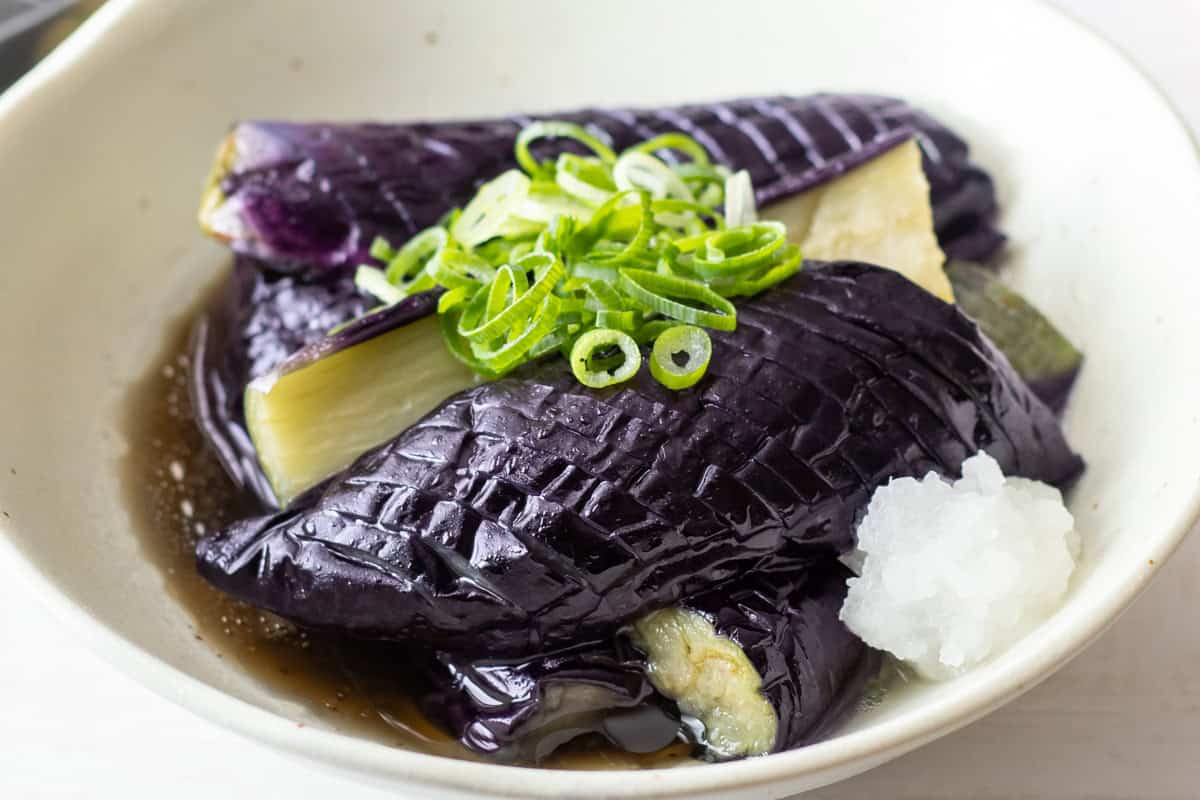
The eggplant agebitashi you made is delicious on its own, but in Japan, it is often served with the following garnishes:
- Grated daikon radish
- Grated ginger
- Shredded shiso leaves (perilla)
- Chopped green onions (scallions)
Adding one or more of these garnishes can give the dish a refreshing touch. While they are not strictly necessary, they help balance the richness of the eggplant, so feel free to prepare them based on your preference.
Common ingredients for Agebitashi besides eggplant
When it comes to agebitashi, eggplant is by far the most popular choice in Japan, but you can also use other ingredients:
- Shishito peppers
- Kabocha squash
- Zucchini
- Lotus root
These are all common ingredients for agebitashi in Japan, and each pairs well with oil, resulting in a delicious dish. Alternatively, you might have fun experimenting with ingredients from your own region.
📋Step-by-step recipe
Ingredients
- 2 Japanese or Chinese eggplants
- about 1 inch (3 cm) of neutral oil in a pot (for deep-frying)
For the seasoned dashi broth:
- ½ cup dashi stock (Please refer to the linked page for instructions on how to make it. For plant-based options, see the pages on Kombu Dashi and Shiitake Dashi.)
- 1 ½ Tbsp mirin
- 1 ½ Tbsp soy sauce
Garnishes (optional):
- grated daikon radish
- grated ginger
- shredded shiso leaves (perilla)
- chopped green onions (scallions)
Instructions
🕒 Total: 1 hr 15 mins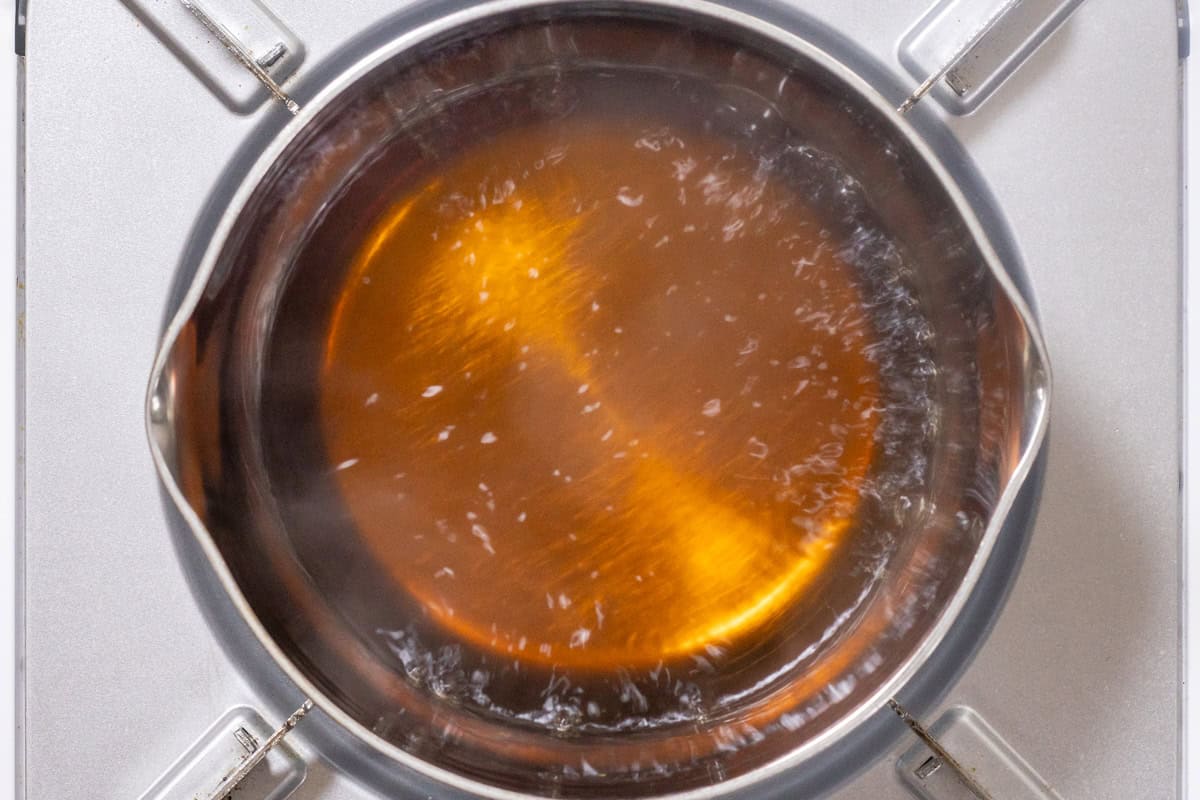
Step 1
In a pot, combine dashi, mirin, and soy sauce, and bring it to a boil. Once boiling, let it simmer for about 30 seconds, then remove from the heat. Transfer the broth to a heatproof container and let it cool to room temperature (chilling in the refrigerator is ideal).
Step 2
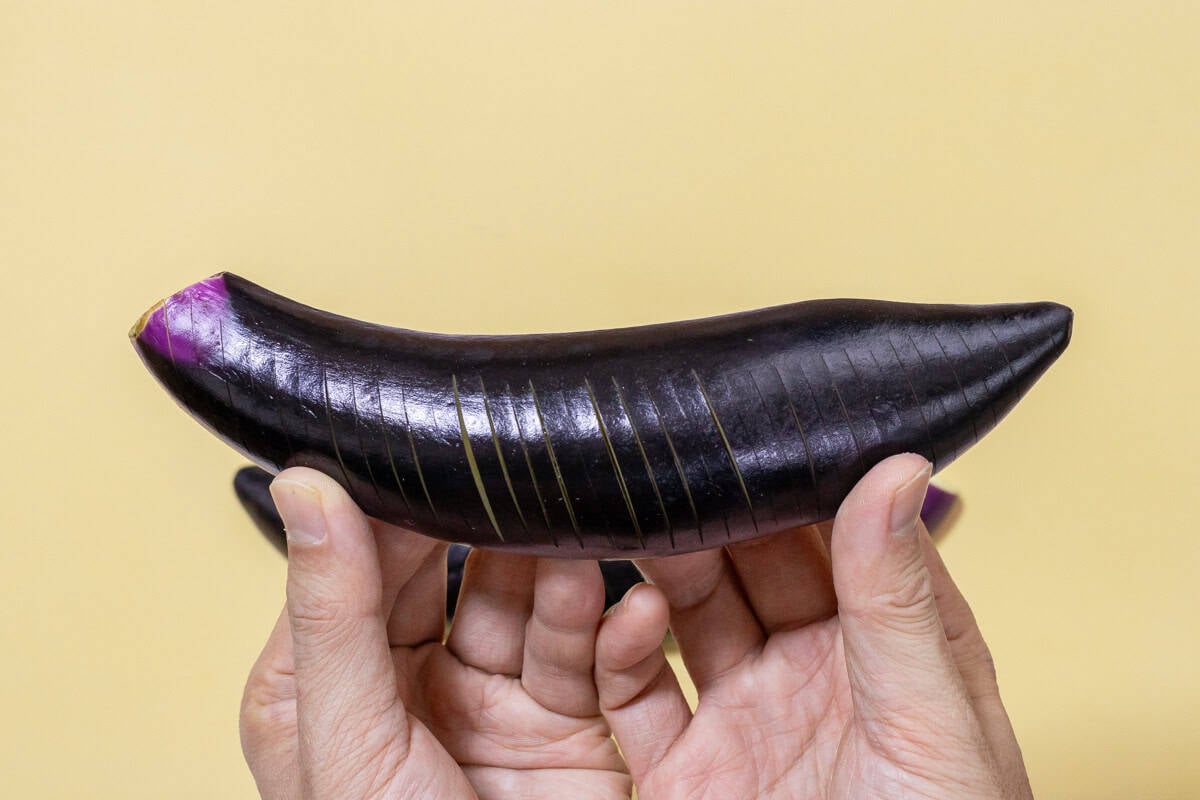
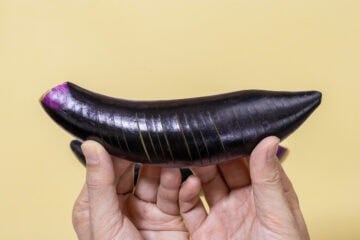
Cut the eggplants in half lengthwise, removing the stems first. Make shallow cuts at short, even intervals on the skin. If the eggplants you are using are larger than the pot for deep-frying, cut them horizontally into halves or thirds as well. (Since eggplants brown quickly after cutting, it is best to do this step just before deep-frying in the next step.)
Step 3
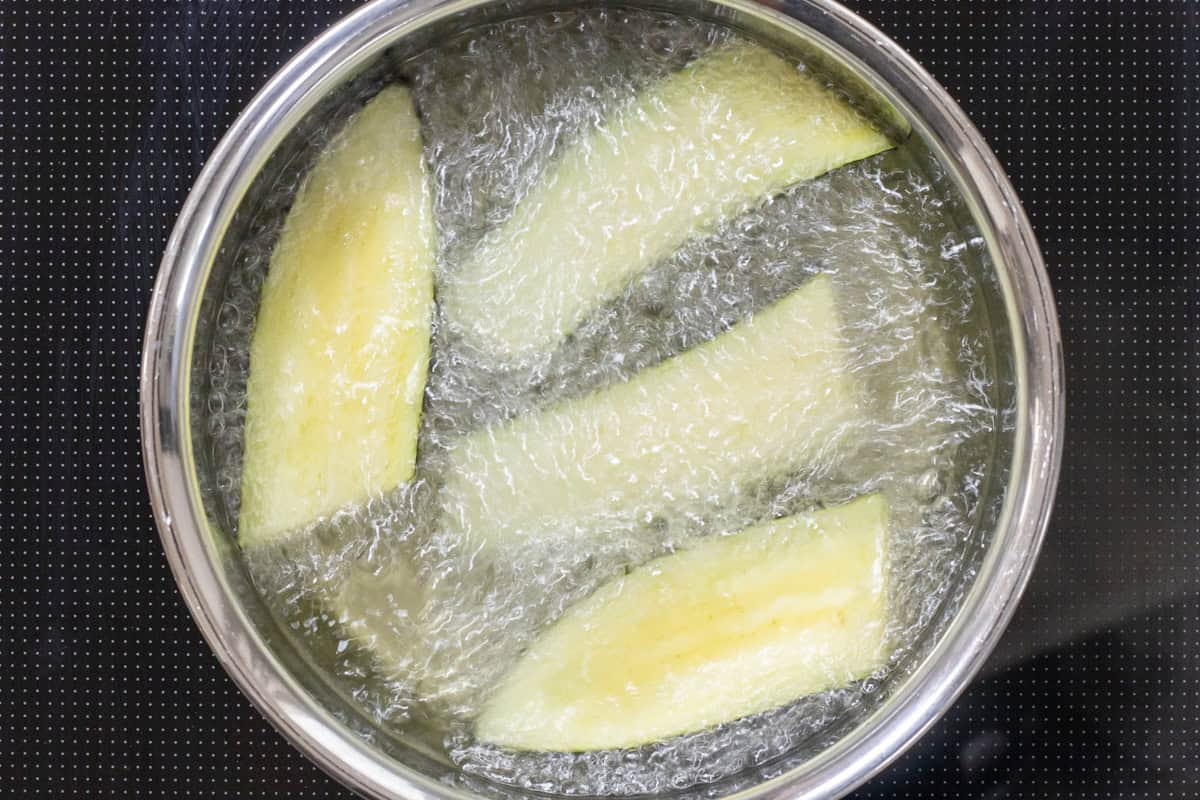
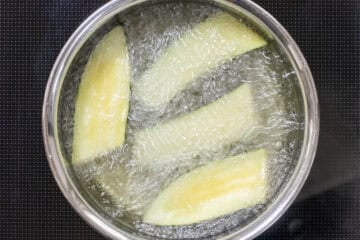
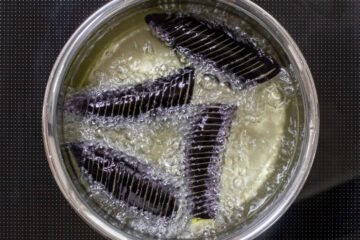
Heat oil in a pot to 340℉ (170℃). Once the oil is hot, carefully add the eggplants one at a time, skin side down. Deep-fry them for 1 minute.
Be careful not to add too many pieces at once, as this can cause the oil temperature to drop significantly. The eggplants should occupy no more than about two-thirds of the oil’s surface area.
Step 4
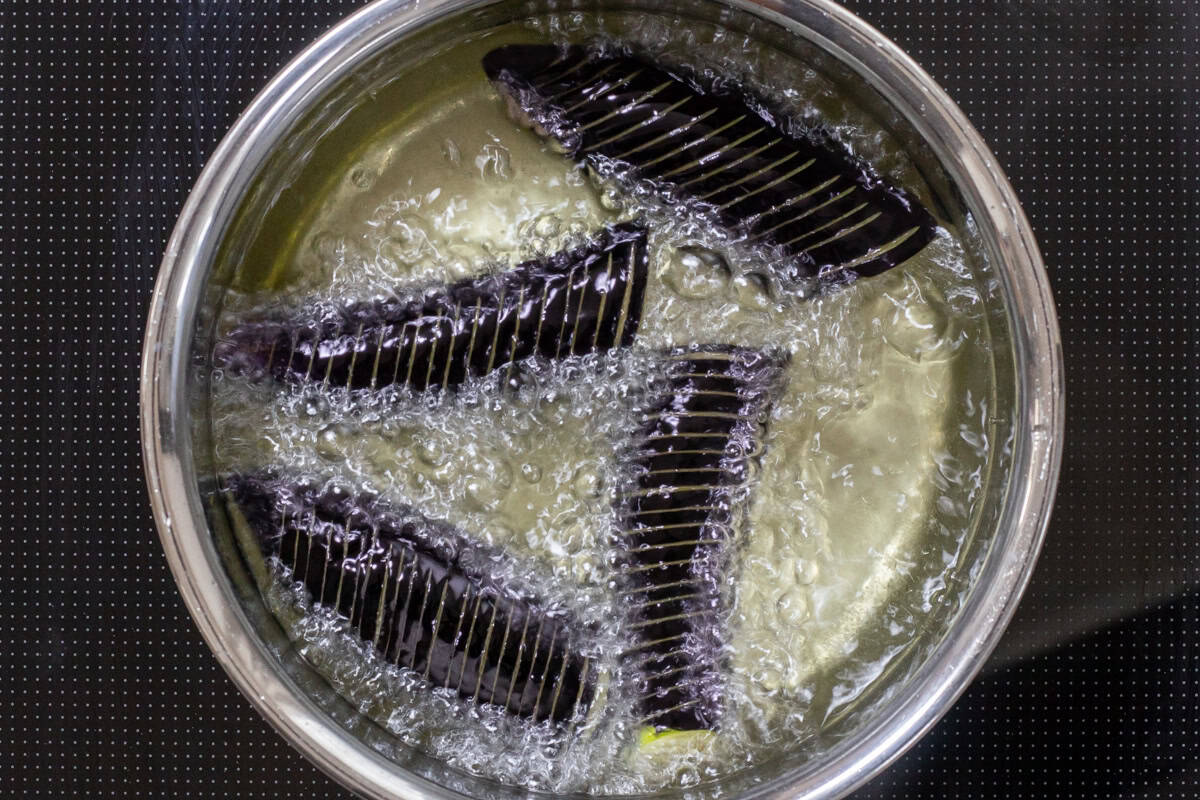
Flip the eggplants over and continue frying until they become soft enough to indent easily when pinched with chopsticks or tongs (about 1 minute, depending on the size of the eggplants you use).
Step 5
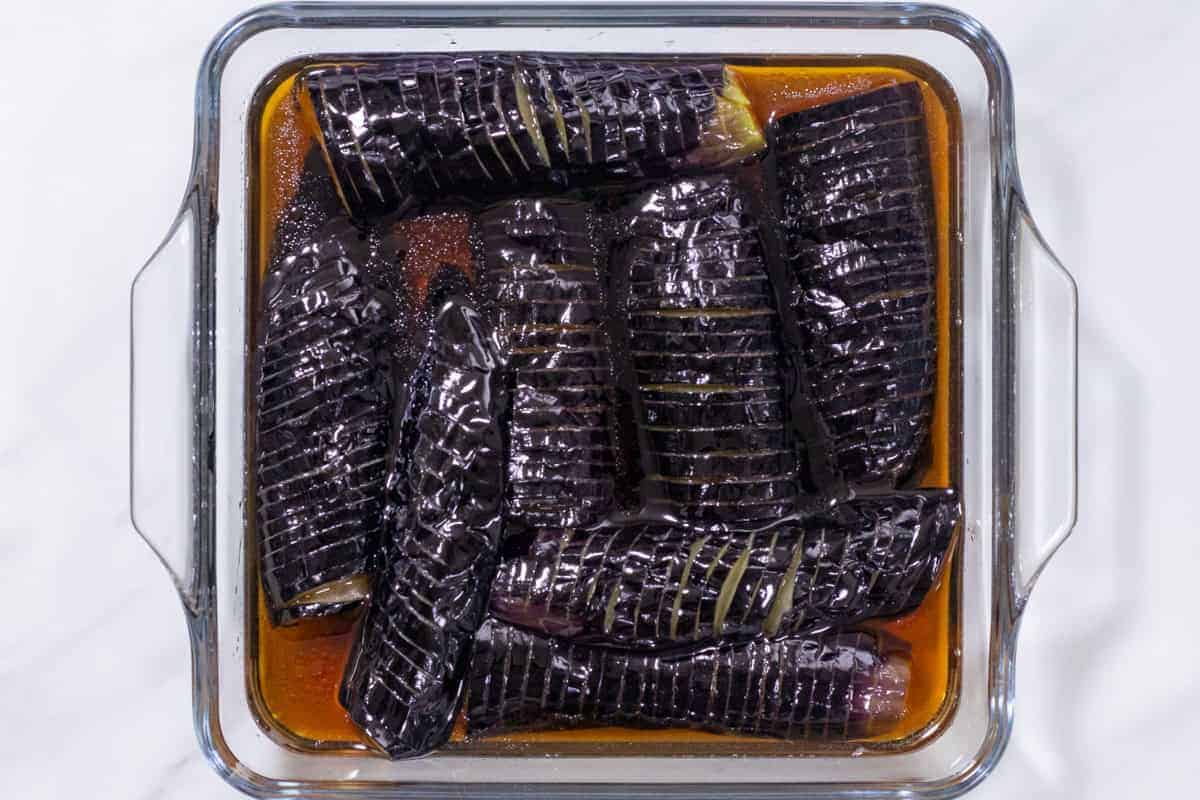
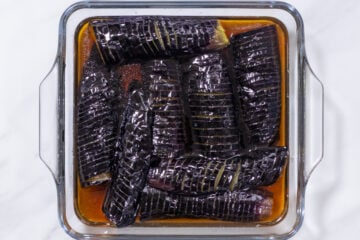
Remove the eggplants from the oil and let them drain on a wire rack. While still hot, transfer them to the container with the broth, skin side up. Repeat the frying and soaking process (steps 3 to 5) until all the eggplants are soaked. Let the eggplants soak in the container at room temperature or in the refrigerator for at least an hour to allow the flavors to meld.
Step 6
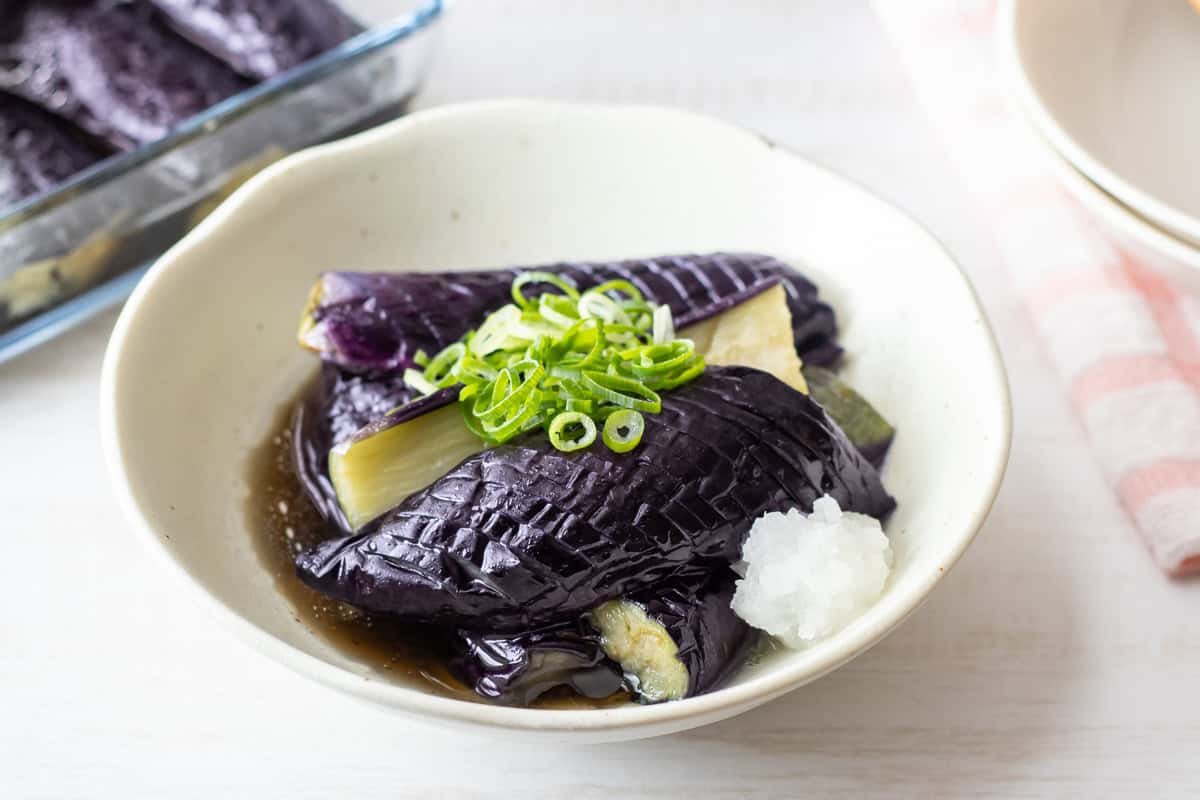
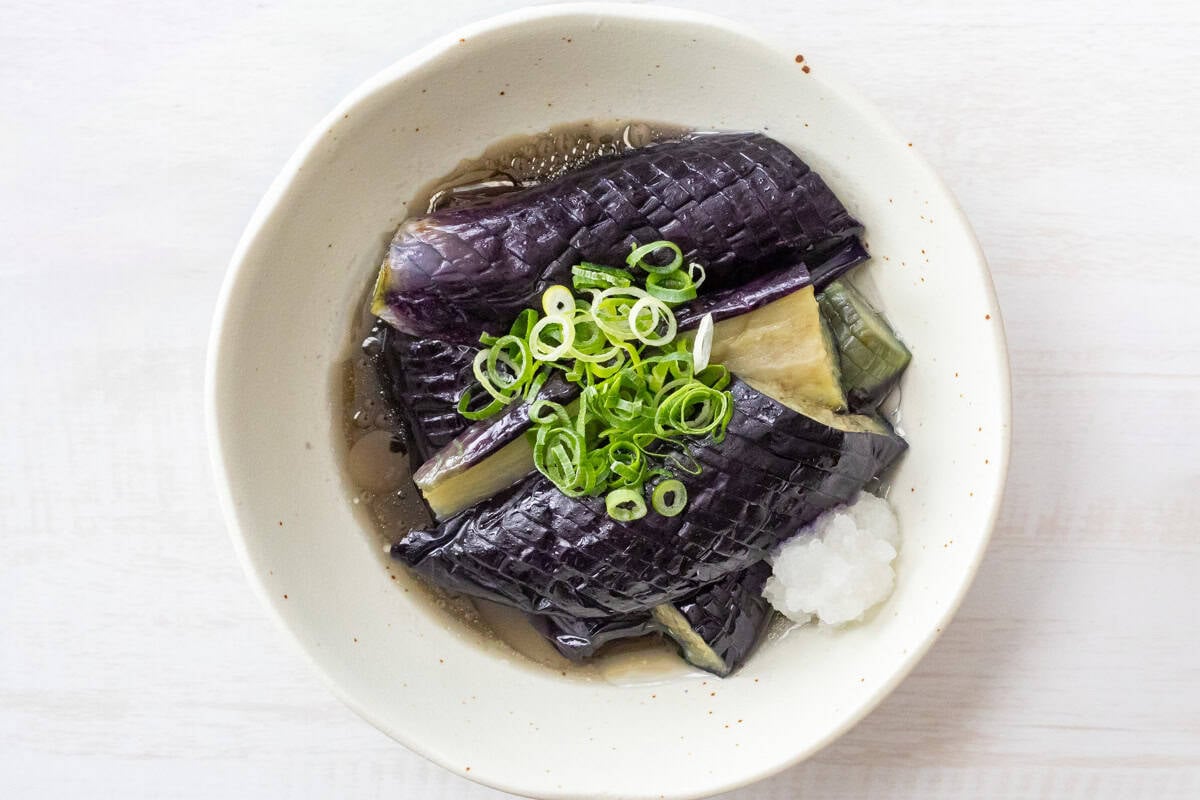
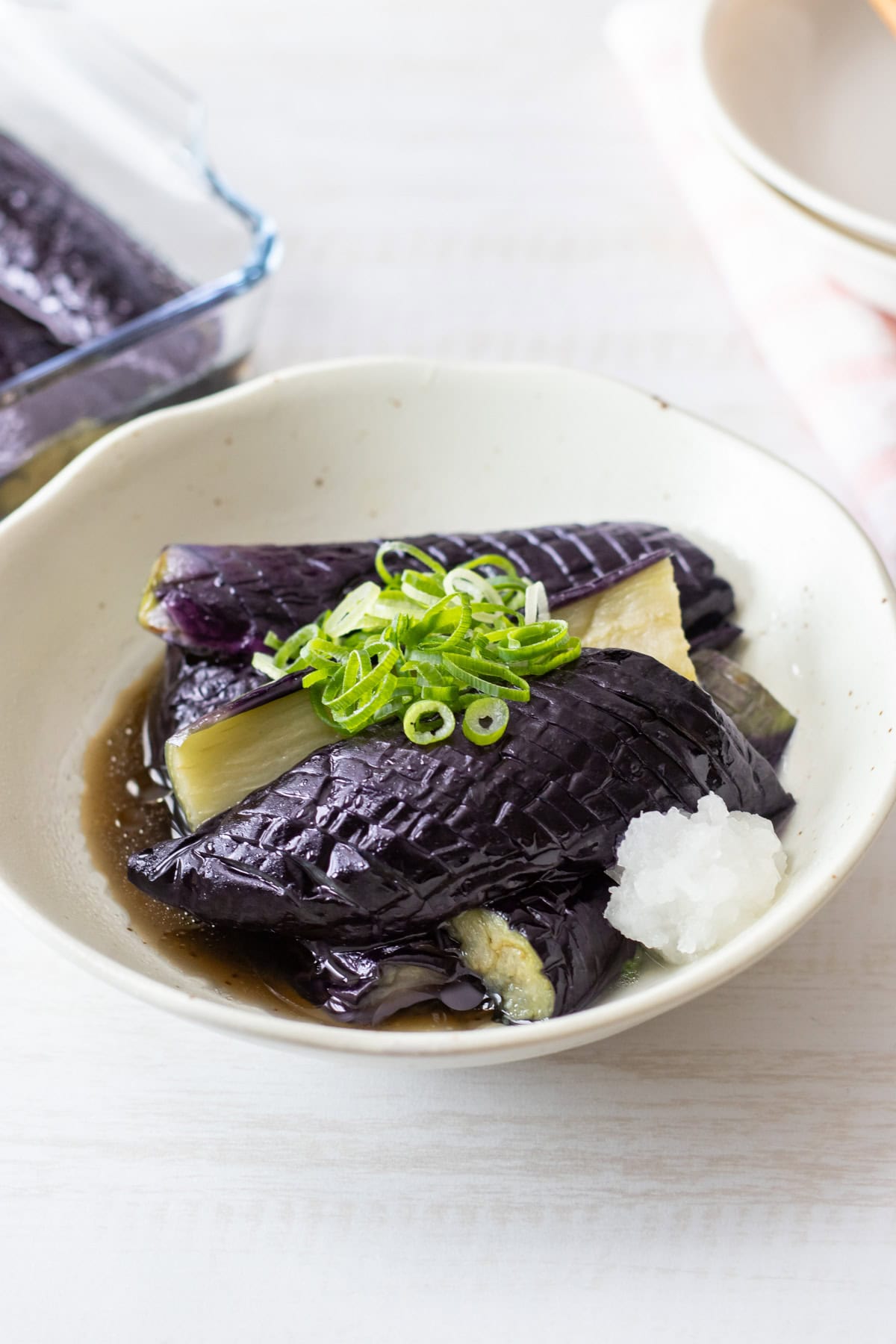
They are delicious on their own, but you can also serve them with garnishes, such as grated daikon radish, grated ginger, shredded shiso leaves, and chopped green onions for a refreshing touch, if desired.
To store
You can store it in the refrigerator for up to 3 days.
Differences from 'ohitashi,' 'nibitashi,' and 'yakibitashi'
In Japan, there are various dishes similar to agebitashi, known as 'ohitashi,' 'nibitashi,' and 'yakibitashi.' Here are the differences:
- Ohitashi: Boiled ingredients are drained and then soaked in seasoned dashi broth.
- Nibitashi: Ingredients are briefly simmered in seasoned dashi broth.
- Yakibitashi: Grilled ingredients are soaked in seasoned dashi broth.
- Agebitashi: Deep-fried ingredients are soaked in seasoned dashi broth.
While 'nibitashi,' 'yakibitashi,' and 'agebitashi' can be broadly considered as variations of 'ohitashi,' they are generally recognized as distinct dishes in Japan due to their different cooking methods, as described above.
All of these are traditional Japanese dishes with unique flavors. Try making them and see how they compare.
If you try this recipe, I’d love to hear what you think. Please consider leaving a review and star rating in the comments below. If you enjoyed it, I’d really appreciate it if you shared it with your friends.
More recipes you'll love
FAQ
No, it's not necessary because any bitterness is removed during deep-frying. Soaking the eggplants in water beforehand to remove bitterness can actually cause oil to splatter while frying, so it’s better not to do that.
Recipe card
Eggplant Agebitashi (Fried Eggplant in Dashi Broth)
Ingredients
- 2 Japanese or Chinese eggplants
- about 1 inch (3 cm) of neutral oil in a pot (for deep-frying)
For the seasoned dashi broth:
- ½ cup dashi stock (Please refer to the linked page for instructions on how to make it. For plant-based options, see the pages on Kombu Dashi and Shiitake Dashi.)
- 1 ½ Tbsp mirin
- 1 ½ Tbsp soy sauce
Garnishes (optional):
- grated daikon radish
- grated ginger
- shredded shiso leaves (perilla)
- chopped green onions (scallions)
Instructions
- In a pot, combine dashi, mirin, and soy sauce, and bring it to a boil. Once boiling, let it simmer for about 30 seconds, then remove from the heat. Transfer the broth to a heatproof container and let it cool to room temperature (chilling in the refrigerator is ideal).

- Cut the eggplants in half lengthwise, removing the stems first. Make shallow cuts at short, even intervals on the skin. If the eggplants you are using are larger than the pot for deep-frying, cut them horizontally into halves or thirds as well. (Since eggplants brown quickly after cutting, it is best to do this step just before deep-frying in the next step.)
- Heat oil in a pot to 340℉ (170℃). Once the oil is hot, carefully add the eggplants one at a time, skin side down. Deep-fry them for 1 minute.Be careful not to add too many pieces at once, as this can cause the oil temperature to drop significantly. The eggplants should occupy no more than about two-thirds of the oil’s surface area.
- Flip the eggplants over and continue frying until they become soft enough to indent easily when pinched with chopsticks or tongs (about 1 minute, depending on the size of the eggplants you use).
- Remove the eggplants from the oil and let them drain on a wire rack. While still hot, transfer them to the container with the broth, skin side up. Repeat the frying and soaking process (steps 3 to 5) until all the eggplants are soaked. Let the eggplants soak in the container at room temperature or in the refrigerator for at least an hour to allow the flavors to meld.
- They are delicious on their own, but you can also serve them with garnishes, such as grated daikon radish, grated ginger, shredded shiso leaves, and chopped green onions for a refreshing touch, if desired.
Notes
- You can store it in the refrigerator for up to 3 days.
- The Nutrition Facts label assumes that the amount of oil absorbed by the eggplant is approximately 14% of its weight.

Leave a Rating and a Comment