
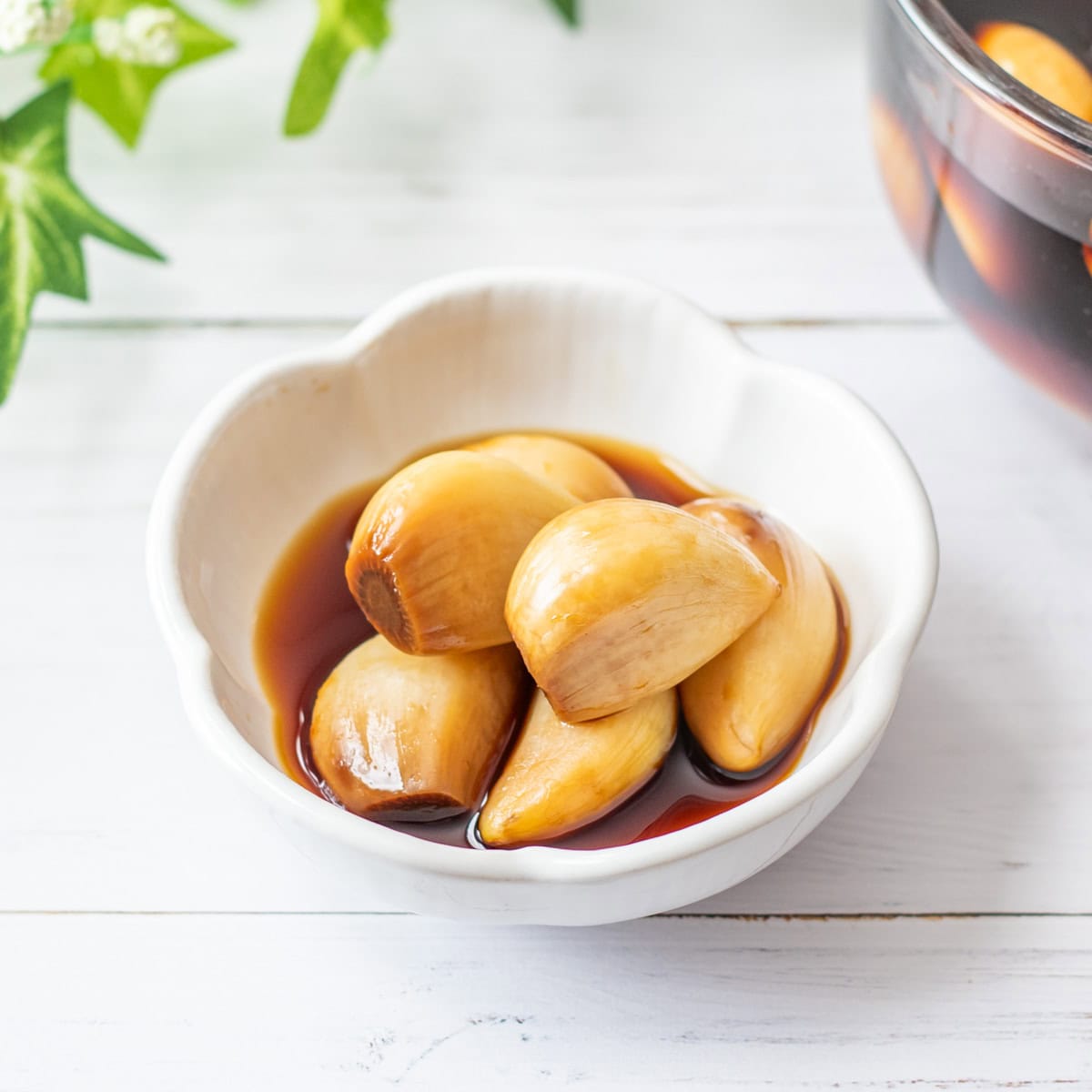
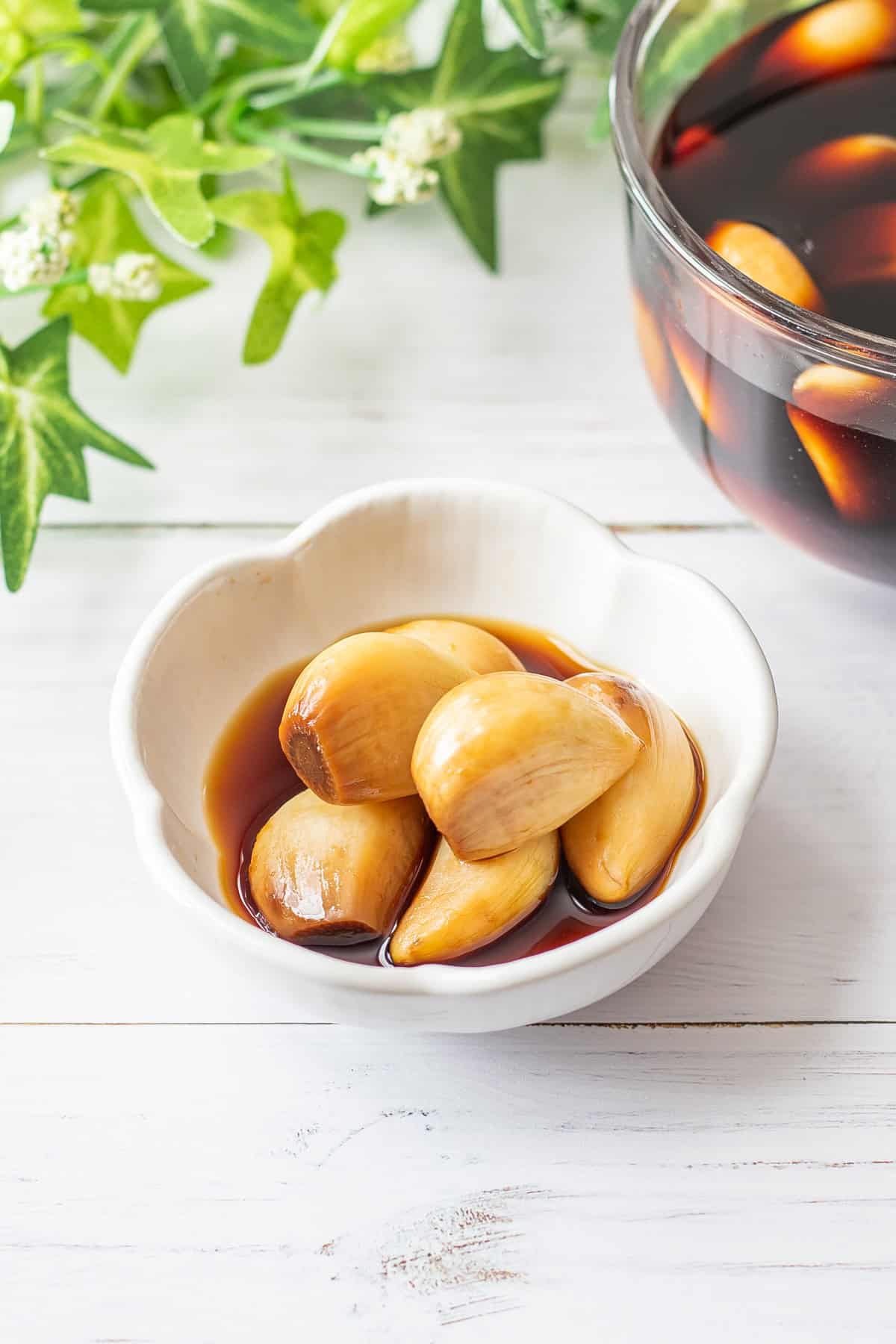
Japanese Soy Sauce Pickled Garlic is a small dish in which the rich flavor of soy sauce infuses the garlic, creating a mellow, savory taste. You can enjoy it on its own, or chop it and add it to stir-fries for extra depth of flavor.
Jump to:
What is Japanese Soy Sauce Pickled Garlic?
Japanese Soy Sauce Pickled Garlic, as the name suggests, is a small Japanese dish made by soaking garlic cloves in soy sauce for an extended period. Raw garlic can be quite sharp and pungent, but pickling it in soy sauce softens its harshness and allows the savory flavor of the soy sauce to gradually permeate. While it does take some time to be ready to eat, the process itself is very simple, and the actual preparation time is minimal.
What makes this dish especially appealing is how easily you can enjoy garlic in a delicious way whenever you want. The fusion of garlic and soy sauce creates a mellow, savory flavor that makes you want to reach for more. Since it can be stored for a long time, it makes an ideal pantry staple to keep on hand. Whether as a small side dish for rice, a snack with drinks, or an accent to various meals, it is a versatile addition to many dishes.
Food safety guidelines
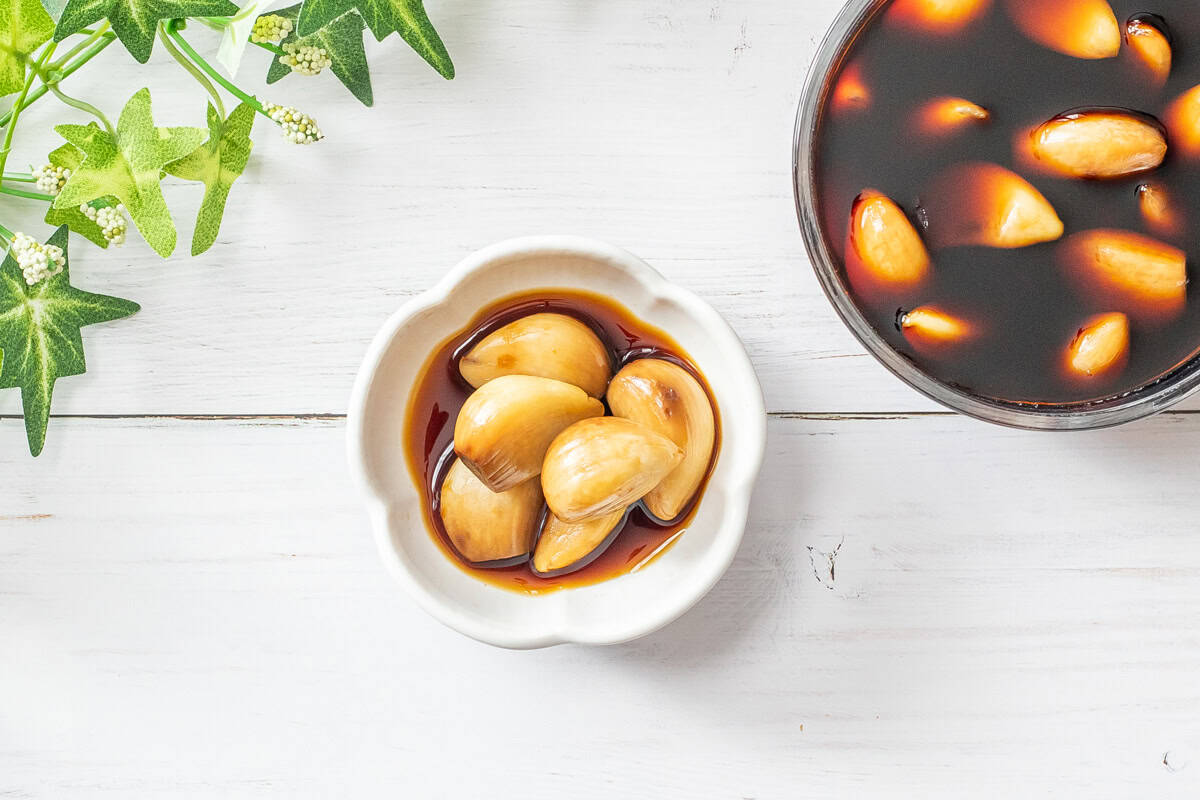
To make Japanese garlic pickled in soy sauce, you only need two ingredients: garlic and soy sauce. When these ingredients are combined and left to sit for a long period, the sharpness of the garlic mellows, resulting in a rounded flavor.
Although it is simple to make with just a few ingredients, there is one important precaution to keep in mind—food safety. The utmost care must be taken to prevent the growth of mold or harmful bacteria such as Clostridium botulinum, which can cause food poisoning, while the garlic is pickling.
To enjoy this dish safely, be sure to include the following steps during preparation.
- Sterilize the container
It is essential to use a clean container for this dish. To ensure the container is sterilized, place a heatproof container (such as a jar) in a pot of boiling water and let it boil for at least 5 minutes. After boiling, remove the container with tongs or similar utensils, and let it air-dry completely until no moisture remains inside.
- Blanch the garlic
Garlic can carry bacteria from the soil on its surface. Blanching helps remove this. Place the garlic in boiling water and cook for about 30 seconds to 1 minute. Be careful not to overcook it; boiling it for too long can reduce the garlic’s aroma and make its texture too soft. Aim for a blanching time of no longer than 1 minute.
- Thoroughly pat the garlic dry
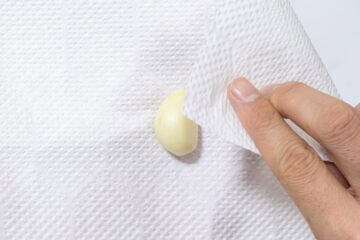
Any excess moisture left on the garlic during pickling can encourage bacterial growth. After blanching, carefully pat each clove dry with paper towels.
- Avoid using low-sodium soy sauce
Regular soy sauce works well for pickling garlic, as do light soy sauce and tamari soy sauce. However, using low-sodium soy sauce can create an environment where mold and bacteria are more likely to grow due to its lower salt concentration. Therefore, be sure to avoid using low-sodium soy sauce.
- Store in the refrigerator
Clostridium botulinum does not grow well in environments below 40℉ (4℃). For this reason, it is best to store this pickled garlic toward the back of the refrigerator, where temperature fluctuations are minimal. Never store it at room temperature, as this greatly increases the risk of bacterial growth.
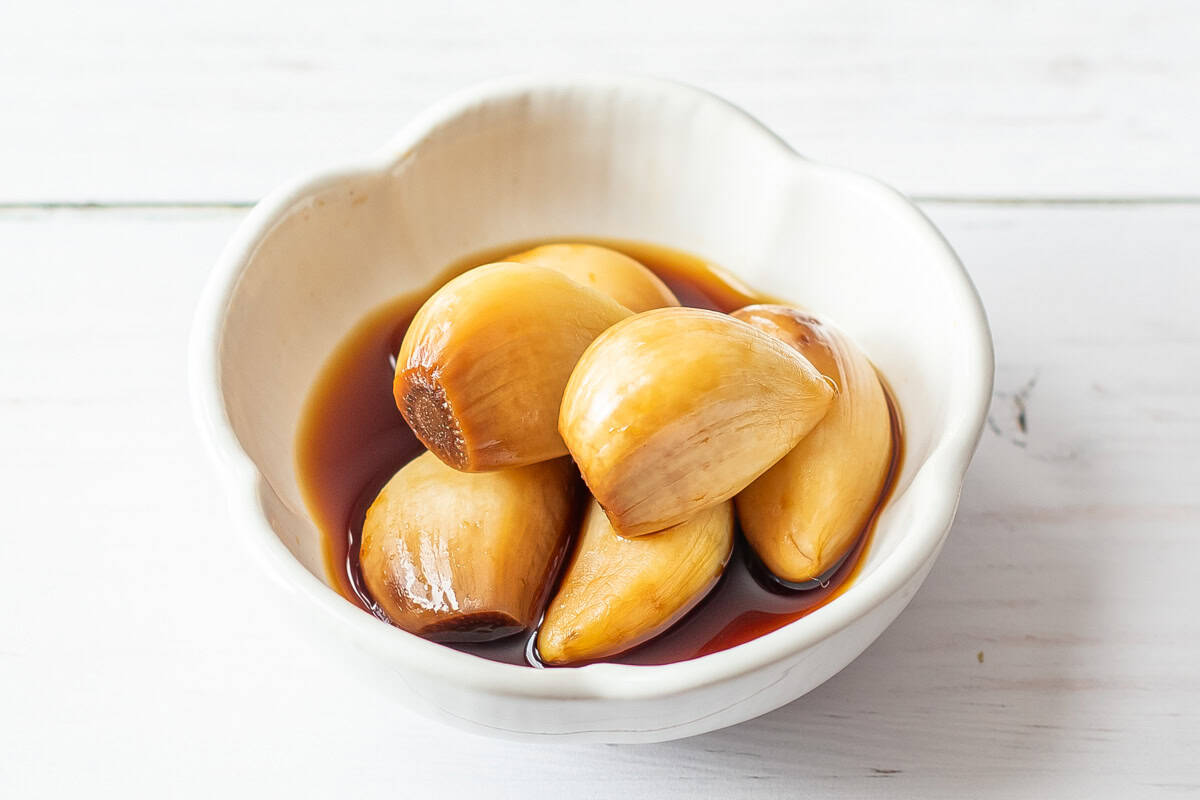
Garlic pickled in soy sauce sold at convenience stores in Japan is often slightly sweet, as sugar or mirin is added. While you can create a similar taste at home, homemade versions typically don't contain preservatives, which increases the risk of bacterial growth. Therefore, it is recommended to avoid adding sugar when making it at home.
Natural reactions in garlic when pickled in soy sauce
As mentioned above, even if you prepare Japanese garlic pickled in soy sauce with food safety in mind, you might notice bubbles forming on the surface of the soy sauce or the garlic turning blue-green. While these might seem like signs of failure, they are not a problem in most cases.
- Bubbles forming on the surface of the soy sauce
After the garlic is pickled in soy sauce, air inside the garlic may be released, or compounds in the garlic may react with the soy sauce, causing small bubbles to appear. If you notice a sour smell or white cloudiness, the garlic could be spoiling and should be treated with caution; however, as long as none of these signs are present, there is generally no cause for concern.
- The garlic turning blue-green
This is a natural color reaction caused by the garlic's compounds reacting with the acids and amino acids in the soy sauce. Although the appearance may change, the flavor remains unaffected, and it is safe to consume.
Both of these are natural occurrences, so if you encounter them, there is no need to panic. You can continue making your dish without worry.
📋Step-by-step recipe
Equipment
- a heat-resistant container with a lid (such as a jar)
Ingredients
- garlic (as much as you like; as a guideline, about 3 heads or 36 cloves will fit in a 10 fl oz / 300 ml container)
- soy sauce (enough to cover the garlic in the container; about ½ cup / 120 ml for 3 garlic heads or 36 cloves)
Instructions
🕒 Total: 30 mins (excluding the time spent pickling the garlic)
Preparation:
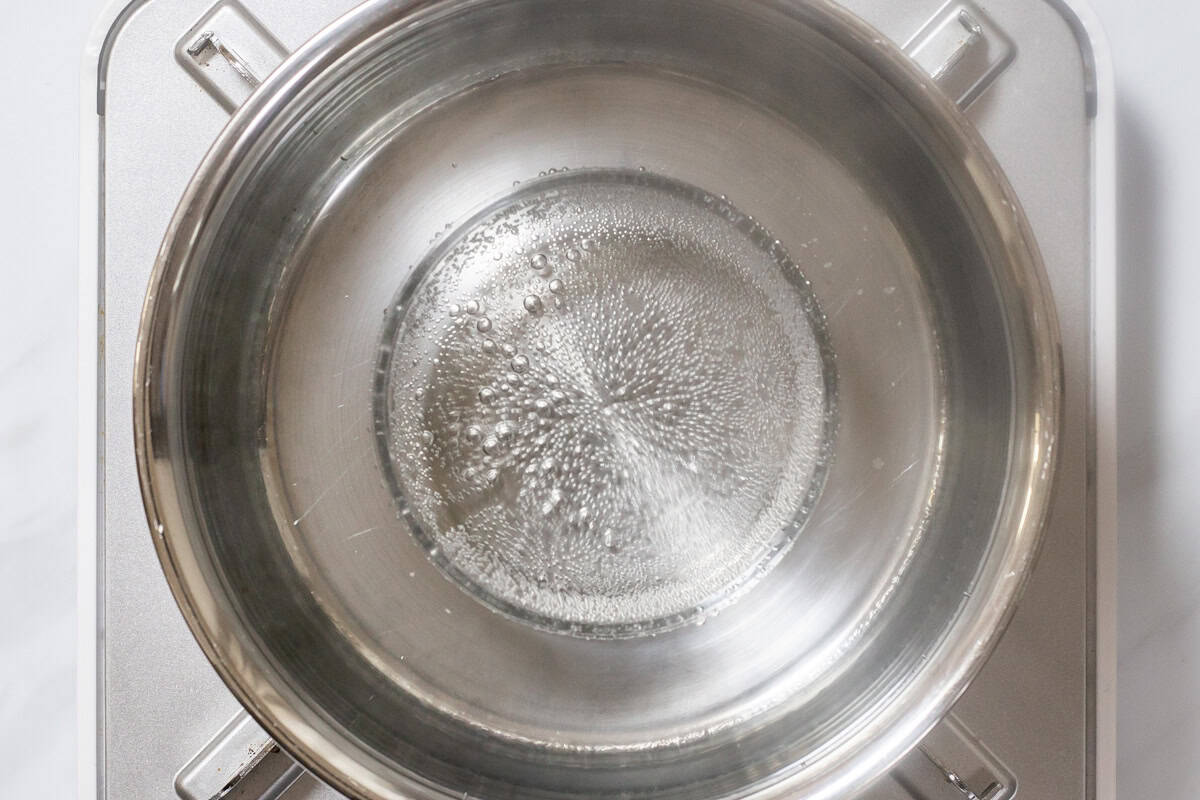
Bring a pot of water to a boil. Place a heat-resistant container (that you will use for pickling garlic) into the pot and sterilize it by boiling for at least 5 minutes. Then, remove it using tongs or a similar utensil, and let it air-dry completely. (If you already have a sterilized container, you can skip this step.)
Step 1
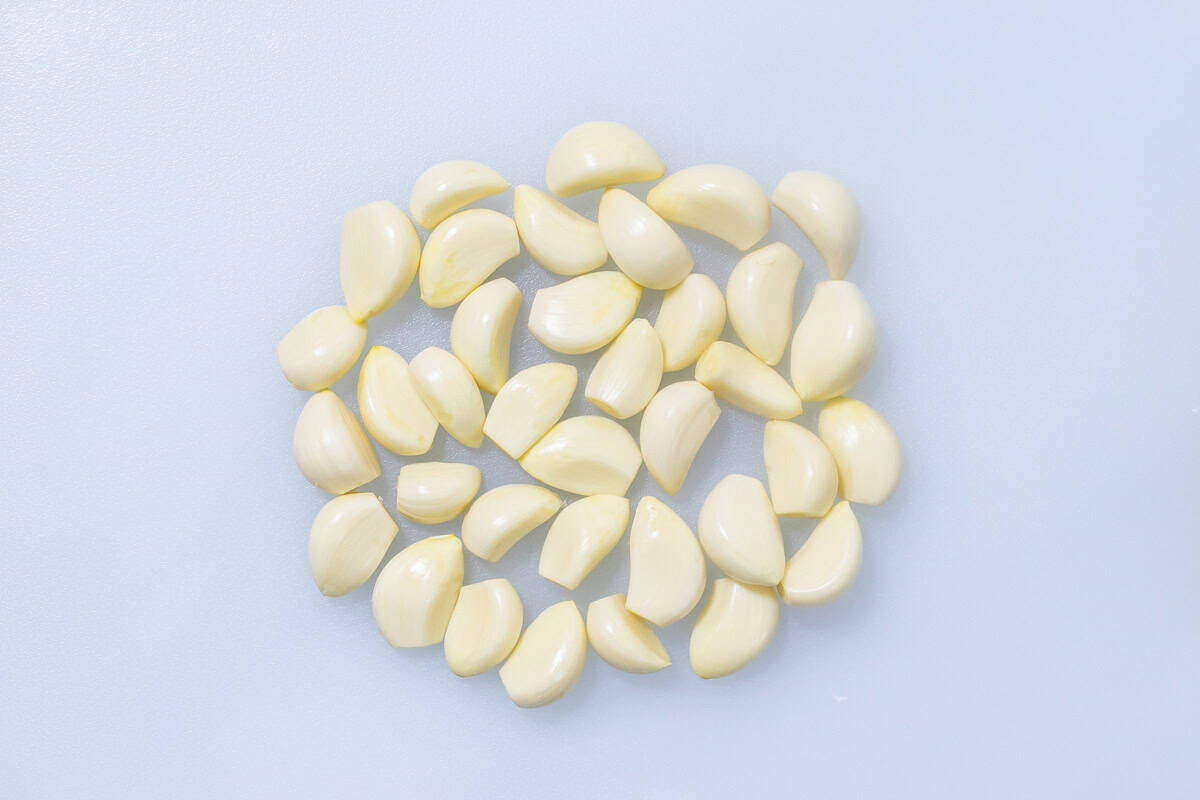
Peel the garlic cloves and trim off the tough ends.

Step 2
Bring a pot of water to a boil. Once boiling, add the garlic and blanch for 30 seconds to 1 minute.
Step 3
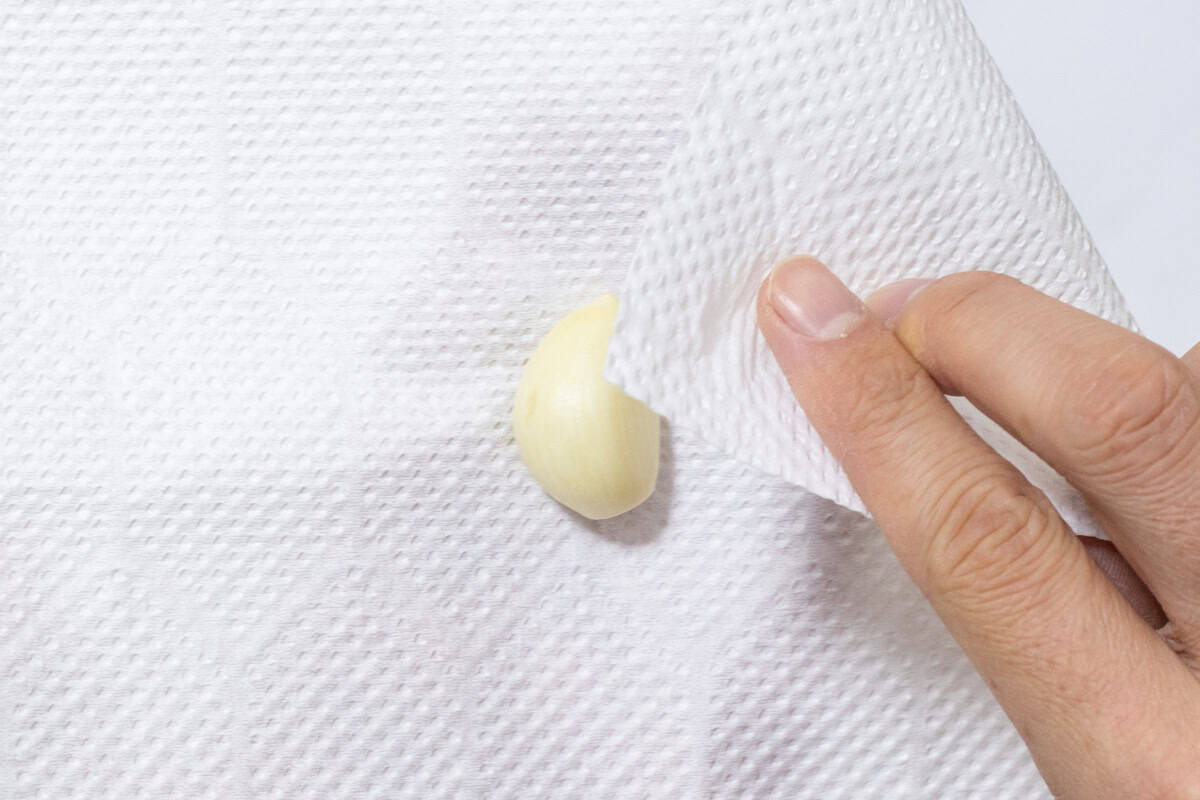
Drain the garlic in a colander and let it cool to room temperature. Then, using paper towels, pat each clove completely dry.
Step 4
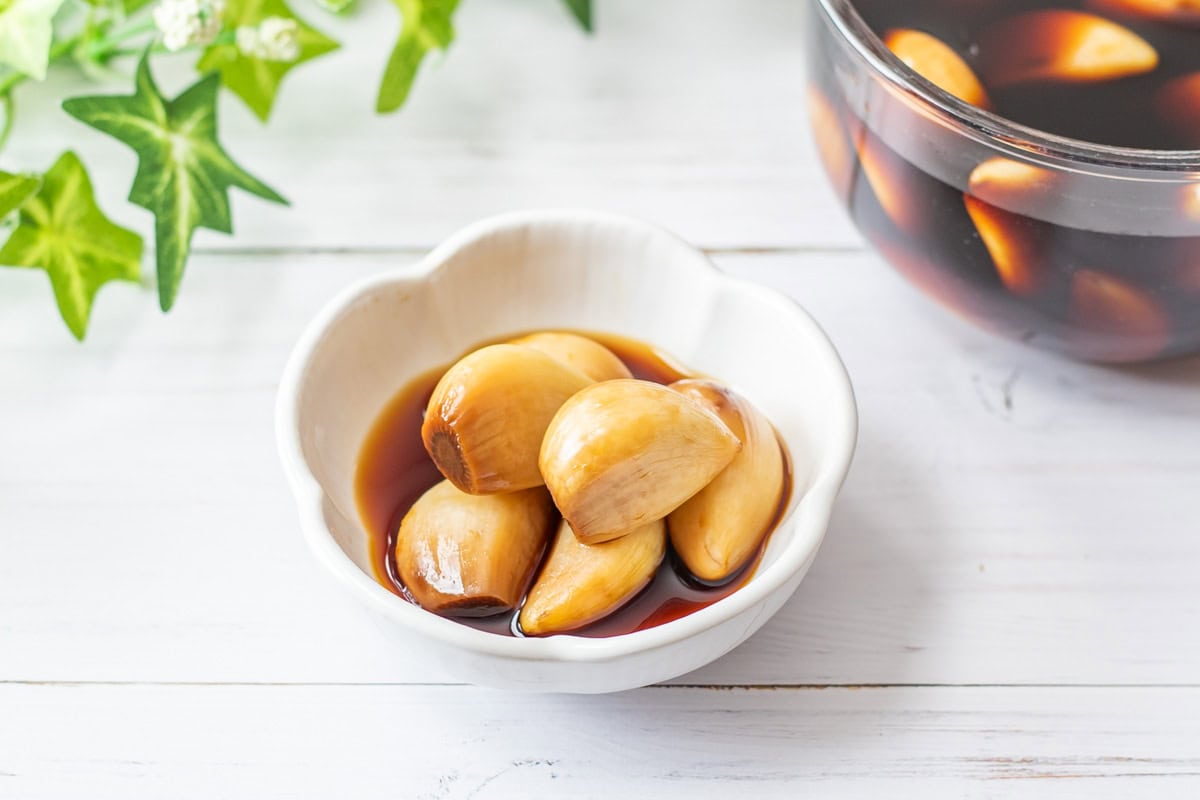
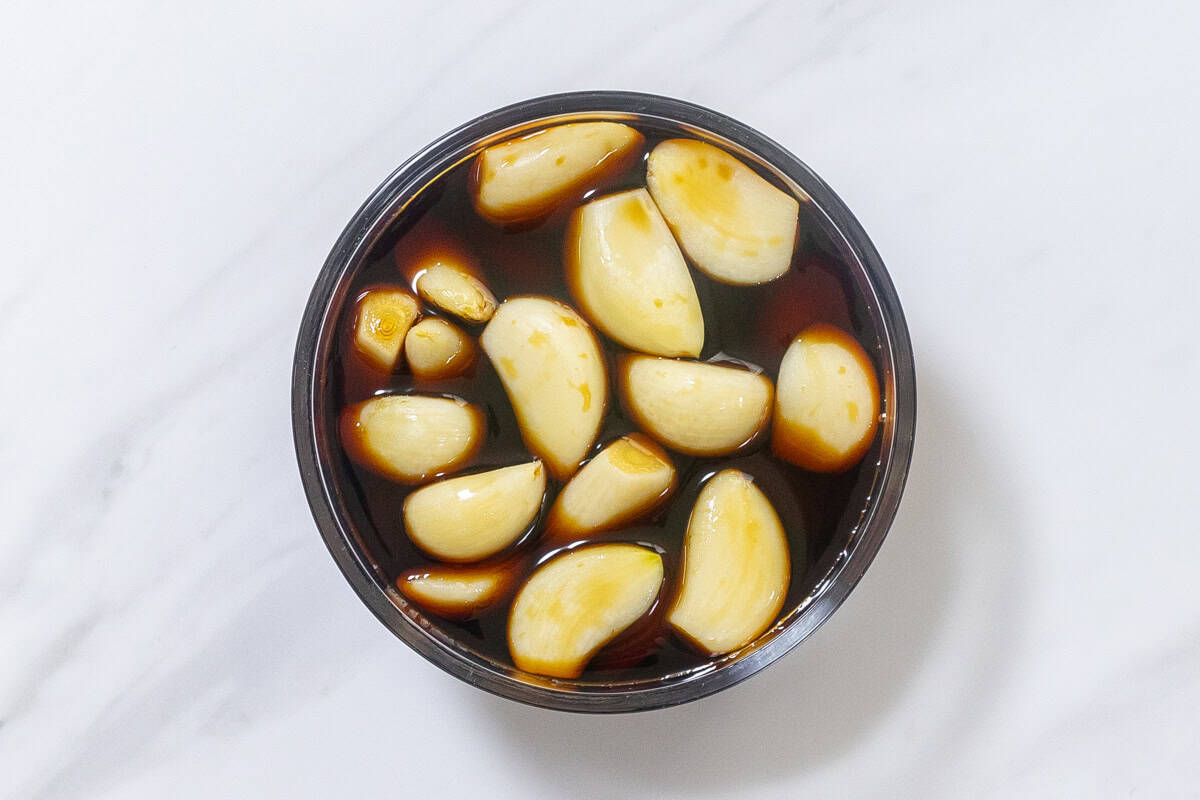
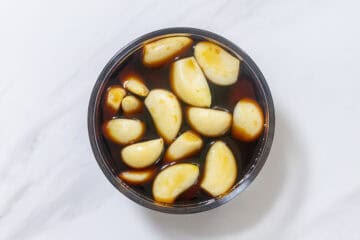
Place the garlic in the clean, sterilized container and add enough soy sauce to cover the cloves. Seal the container and store it toward the back of the refrigerator. After about a month, the sharpness of the garlic will mellow, and it will be ready to eat.
To store
You can store it in the refrigerator in a clean, airtight container for over 6 months. To ensure long-term storage, always use clean chopsticks or a clean spoon when taking out the garlic—never use utensils that have been in your mouth. If the container wasn't properly sterilized or if excess moisture remains, there is a risk of bacterial growth. If you notice anything unusual, such as a sour smell or white cloudiness, do not consume it.
Notes and usage tips
- The flavor of Japanese garlic pickled in soy sauce changes over time. The longer it is pickled, the milder it becomes, which adds to its appeal.
- It is said that eating too much garlic can cause digestive discomfort. For this reason, it is recommended to limit consumption to about three cloves per day.
- The soy sauce used to pickle the garlic absorbs its flavor, turning into garlic soy sauce. It can be used in a variety of dishes, such as stir-fries.
If you try this recipe, I’d love to hear what you think. Please consider leaving a review and star rating in the comments below. If you enjoyed it, I’d really appreciate it if you shared it with your friends.
More Japanese pickling recipes you'll love
Recipe card
Japanese Soy Sauce Pickled Garlic
Equipment
- a heat-resistant container with a lid (such as a jar)
Ingredients
- garlic (as much as you like; as a guideline, about 3 heads or 36 cloves will fit in a 10 fl oz / 300 ml container)
- soy sauce (enough to cover the garlic in the container; about ½ cup / 120 ml for 3 garlic heads or 36 cloves)
Instructions
Preparation:
- Bring a pot of water to a boil. Place a heat-resistant container (that you will use for pickling garlic) into the pot and sterilize it by boiling for at least 5 minutes. Then, remove it using tongs or a similar utensil, and let it air-dry completely. (If you already have a sterilized container, you can skip this step.)

To make Japanese soy sauce pickled garlic:
- Peel the garlic cloves and trim off the tough ends.
- Bring a pot of water to a boil. Once boiling, add the garlic and blanch for 30 seconds to 1 minute.
- Drain the garlic in a colander and let it cool to room temperature. Then, using paper towels, pat each clove completely dry.
- Place the garlic in the clean, sterilized container and add enough soy sauce to cover the cloves. Seal the container and store it toward the back of the refrigerator. After about a month, the sharpness of the garlic will mellow, and it will be ready to eat.
Notes
- The cooking time doesn't include the time needed to pickle the garlic.
- You can store it in the refrigerator in a clean, airtight container for over 6 months. To ensure long-term storage, always use clean chopsticks or a clean spoon when taking out the garlic—never use utensils that have been in your mouth. If the container wasn't properly sterilized or if excess moisture remains, there is a risk of bacterial growth. If you notice anything unusual, such as a sour smell or white cloudiness, do not consume it.
- The Nutrition Facts label is based on a single clove of garlic, and assumes that the amount of soy sauce absorbed by the garlic is approximately 10% of its weight.
Leave a Rating and a Comment