

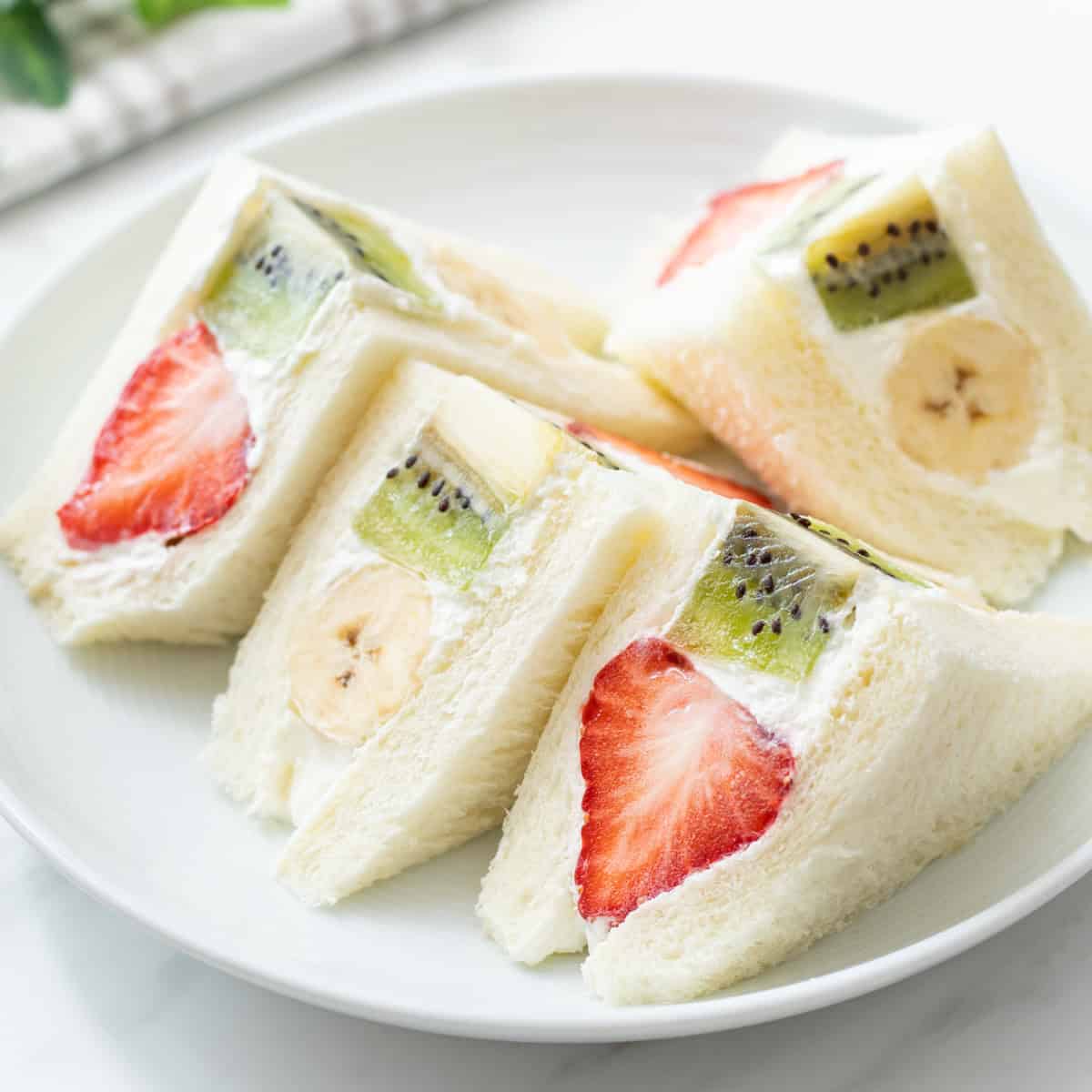
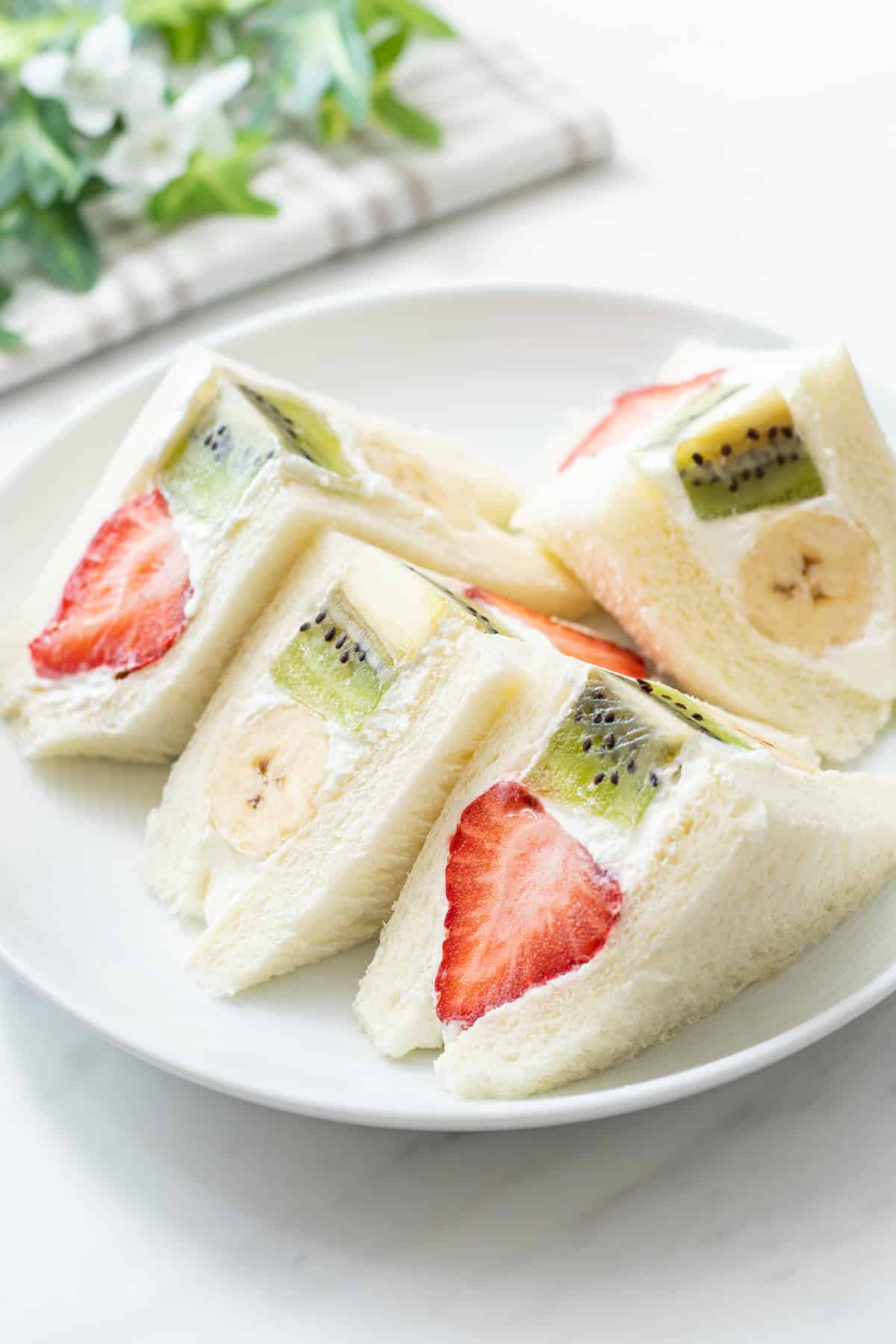
Fruit Sando—a Japanese fruit sandwich made with fluffy milk bread, fresh fruit, and sweet cream—has now become a popular treat in Japan. Its stunning appearance and perfect balance of flavors make it truly exceptional, and just one bite is sure to bring a smile to your face.
Jump to:
What is Fruit Sando?
Fruit Sando is a Japanese sandwich filled with fresh fruit and whipped cream. "Sando" is a shortened form of sandwich in Japanese. It is prepared with soft, fluffy white milk bread known as shokupan, which enhances the flavor and texture of the filling.
In Japan, this sandwich is a popular treat often found in specialty fruit shops and convenience stores. The combination of the natural sweetness of the fruit and the whipped cream, all wrapped in fluffy shokupan, makes it feel almost like a slice of cake.
For those unfamiliar with it, it might seem unusual, but once you try it, you will love its delightful taste. Try making it with your favorite fruits and experience the perfect balance of gentle sweetness and texture.
Why shokupan matters
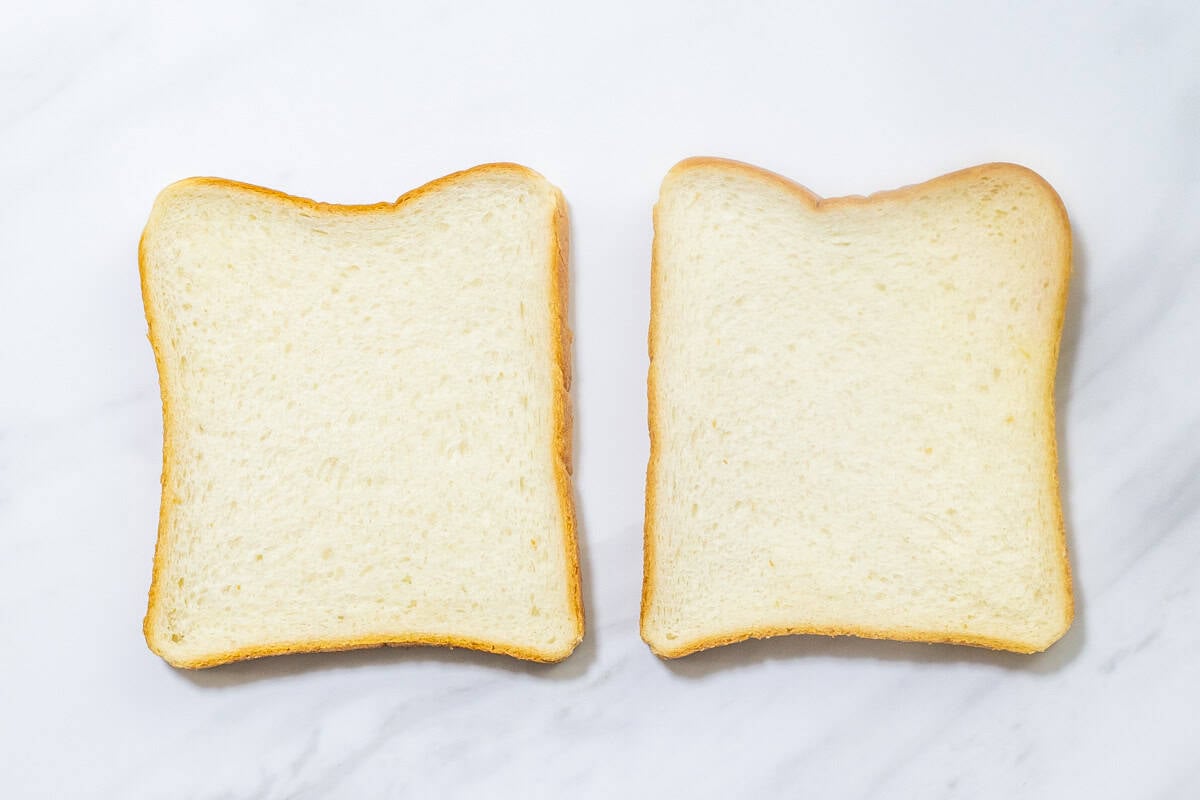
Making fruit sando starts with preparing shokupan bread.
It is one of the most common types of bread in Japan. When eaten on its own, it has a soft, fluffy, almost marshmallow-like texture, and its mild flavor and delicate consistency don't overpower the filling. It’s no exaggeration to say that the fruit and whipped cream—the key ingredients of this sandwich—truly shine thanks to the soft, fluffy milk bread.
A standard loaf is 4.92 inches (12.5 cm) square, and pre-sliced loaves are available in packs of 4, 5, 6, 8, 10, or 12 slices. The thickness varies depending on the number of slices:
4 slices: 1.23 inches (3.1 cm)
5 slices: 1 inch (2.5 cm)
6 slices: ⅘ inch (2 cm)
8 slices: ⅗ inch (1.5 cm)
10 slices: ½ inch (1.2 cm)
12 slices: ⅖ inch (1 cm)
Among these, an 8-slice loaf is generally considered the best for fruit sando. Slices thicker than this make the bread too dominant, making it harder for the fruit and cream to shine. On the other hand, slices that are too thin may not be able to support the weight of the filling.
If you can’t find an 8-slice loaf, I recommend either slicing a 4-slice loaf in half horizontally or cutting an unsliced loaf into slices about ⅗ inch (1.5 cm) thick. Try looking for a Japanese-style bakery or an Asian market in your area.
Choosing the right fruits
You can use any fruit you like to make fruit sando. In Japan, the following fruits are commonly used:
- Strawberries
- Kiwi
- Bananas
- Mandarin oranges
- Seedless grapes
- Pineapple
- Peaches
You can make a "strawberry sando" or a "kiwi sando" using just one type of fruit, or combine several fruits to create a "mixed fruit sando." Feel free to experiment with fruits not listed here as well. It might be fun to try using fruits available in your local area.
No matter which fruit you choose, keep in mind that the fruit is the star of the sandwich, so it is best to use fresh, properly ripe fruit. Unripe fruit tends to be firm and lack sweetness, while overripe fruit can cause the sandwich to fall apart easily. Additionally, if there is excess moisture on the fruit, the sandwich can turn soggy, so be sure to pat the fruit dry with a paper towel before assembling it.
How to make the perfect whipped cream
Let’s also talk about the cream to use.
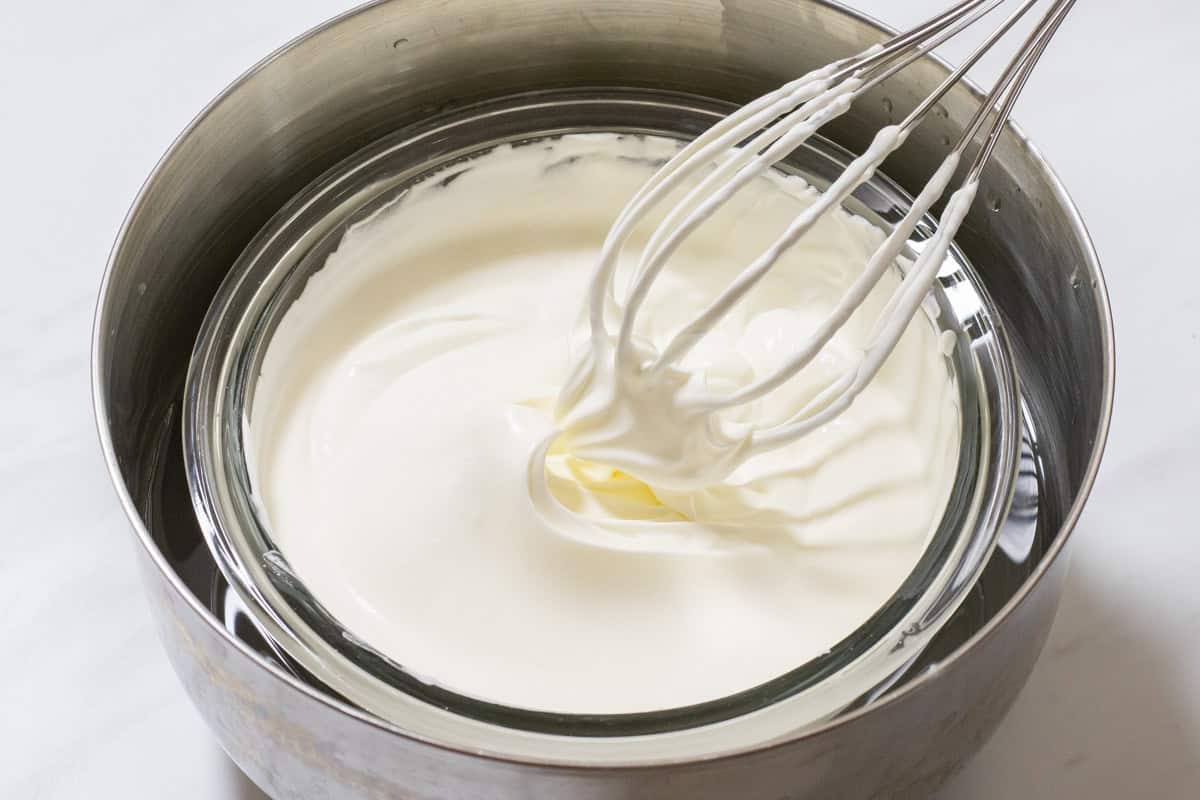
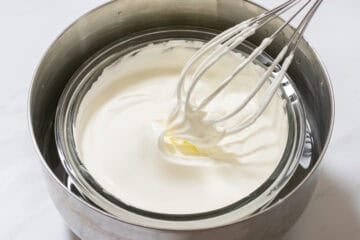
For fruit sando, firmer whipped cream works best. Add sugar to heavy cream with at least 40% milk fat, and whip it until it forms medium-stiff peaks (about 80-90% of the way to stiff peaks). Since lower-fat cream won’t hold up well, it is not suitable for fruit sando. If the cream gets too warm while whipping, the texture can become grainy, so it is best to keep the bowl chilled in an ice bath.
You can adjust the amount of sugar depending on how sweet your fruit is. My recipe uses a sweetness level typical in Japan, but feel free to adjust it to your taste.
📋Step-by-step recipe
Ingredients
- 1 cup heavy cream (at least 40% milk fat)
- 2 Tbsp granulated sugar
- 6 slices shokupan (Japanese milk bread) (Use a loaf with 8 slices. If you can’t find an 8-slice loaf, I recommend either slicing a 4-slice loaf in half horizontally or cutting an unsliced loaf into slices about ⅗ inch (1.5 cm) thick.)
- 6 strawberries
- 1 ½ kiwis
- 2-3 bananas
Instructions
🕒 Total: 1 hr 25 mins
Step 1
Prepare an ice bath in a large bowl. Set a slightly smaller bowl inside it, then add heavy cream and sugar. Whip the mixture until it forms medium-stiff peaks (about 80-90% of the way to stiff peaks).
As a guideline, it takes about 5 minutes with a hand mixer or 15-20 minutes with a whisk. The ideal temperature range for whipping cream is around 40-45℉ (4-8℃). Note that if the temperature falls outside this range, the cream can become grainy or may not hold its shape.
Step 2
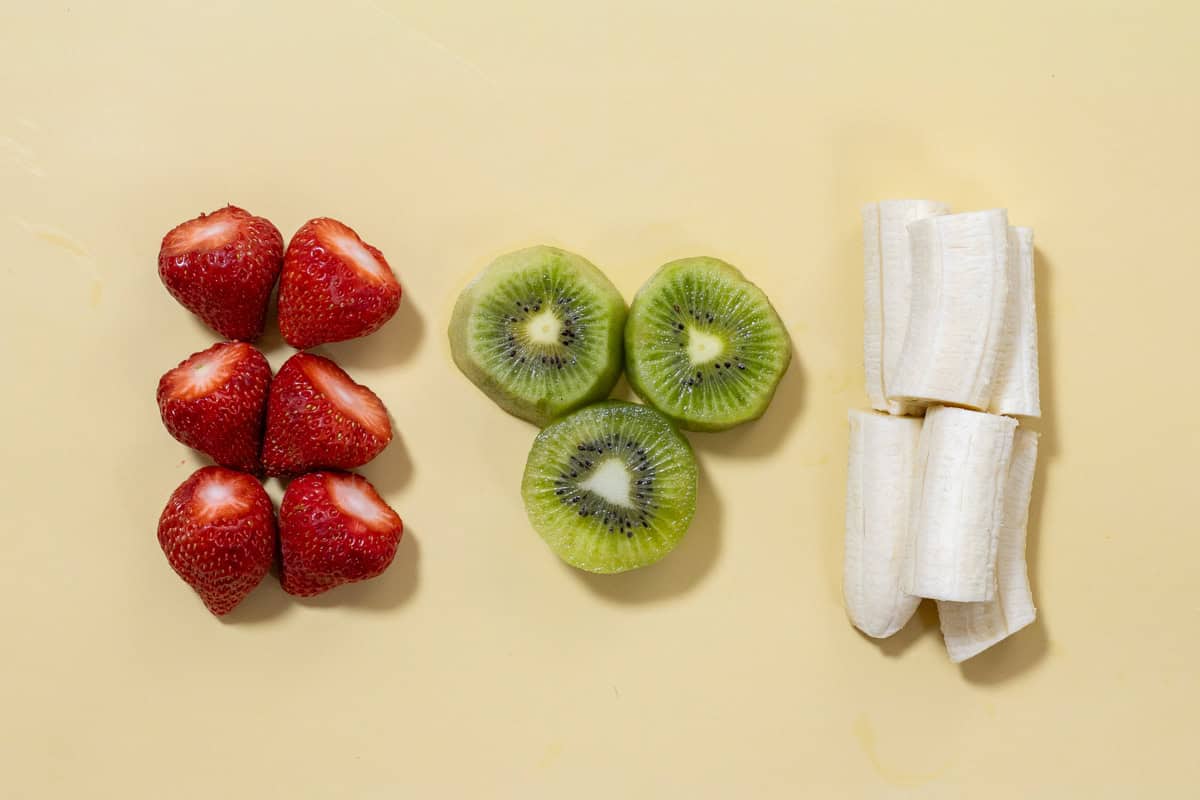
Remove the stems from the strawberries. Peel the kiwis and cut them in half crosswise. Cut the bananas in half or into thirds, depending on their size. If there is any moisture on the surface of the fruit, pat it dry with a paper towel.
Step 3
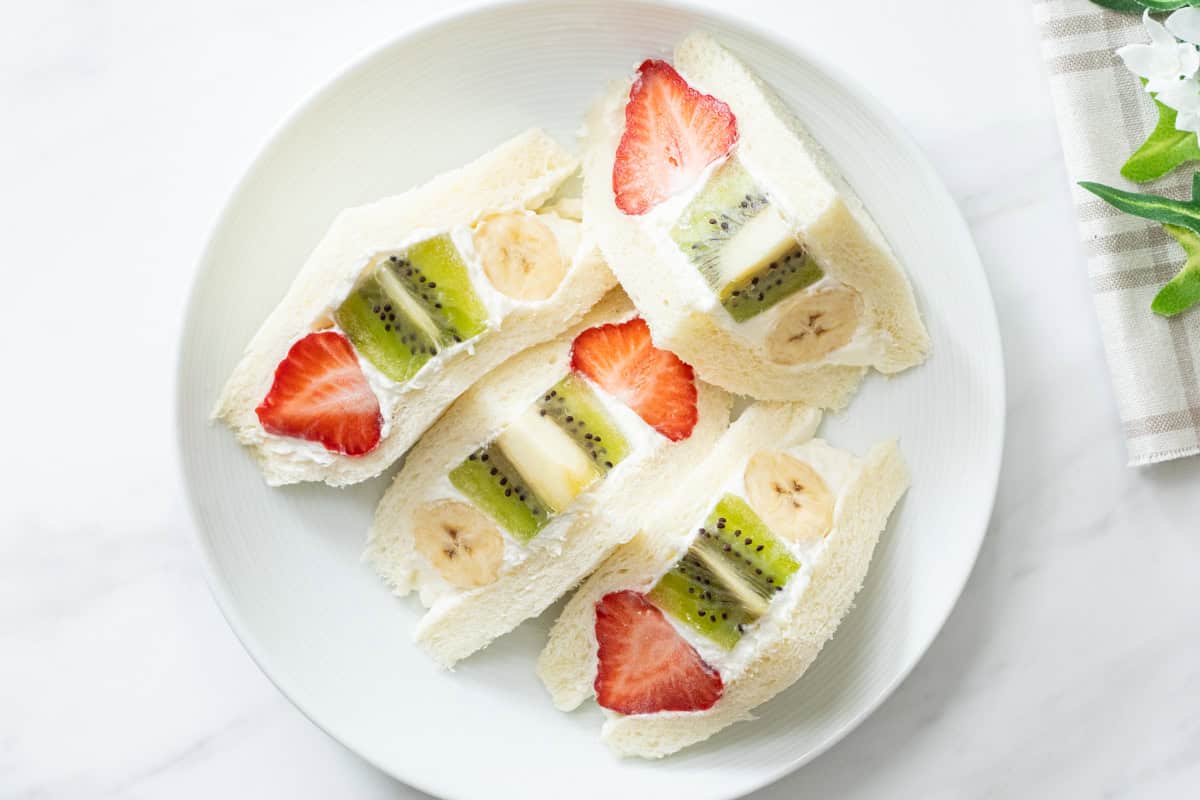
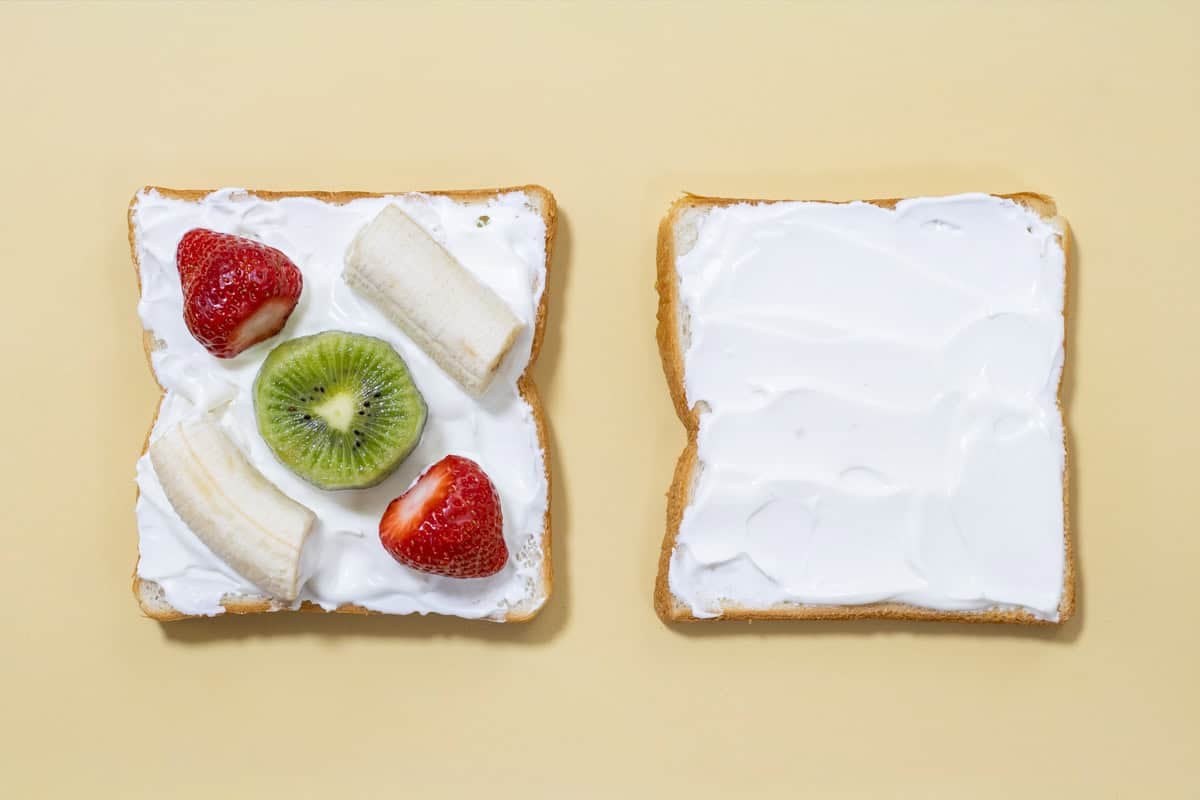
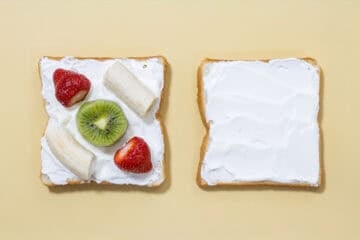
Spread the whipped cream on one side of each slice of shokupan bread. Pair the slices and arrange the fruit diagonally over the cream on one slice.
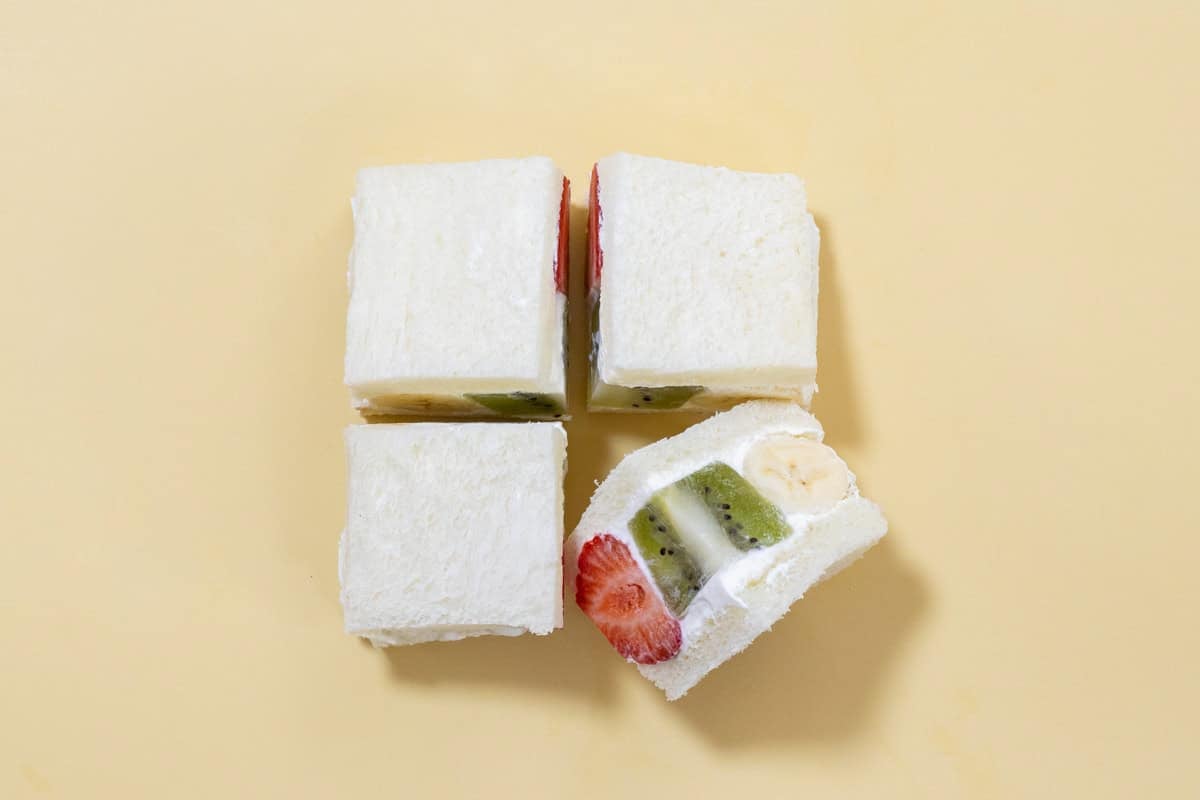
When placing the fruit, keep in mind how the cross-section will look so that it appears attractive once cut.
Step 4
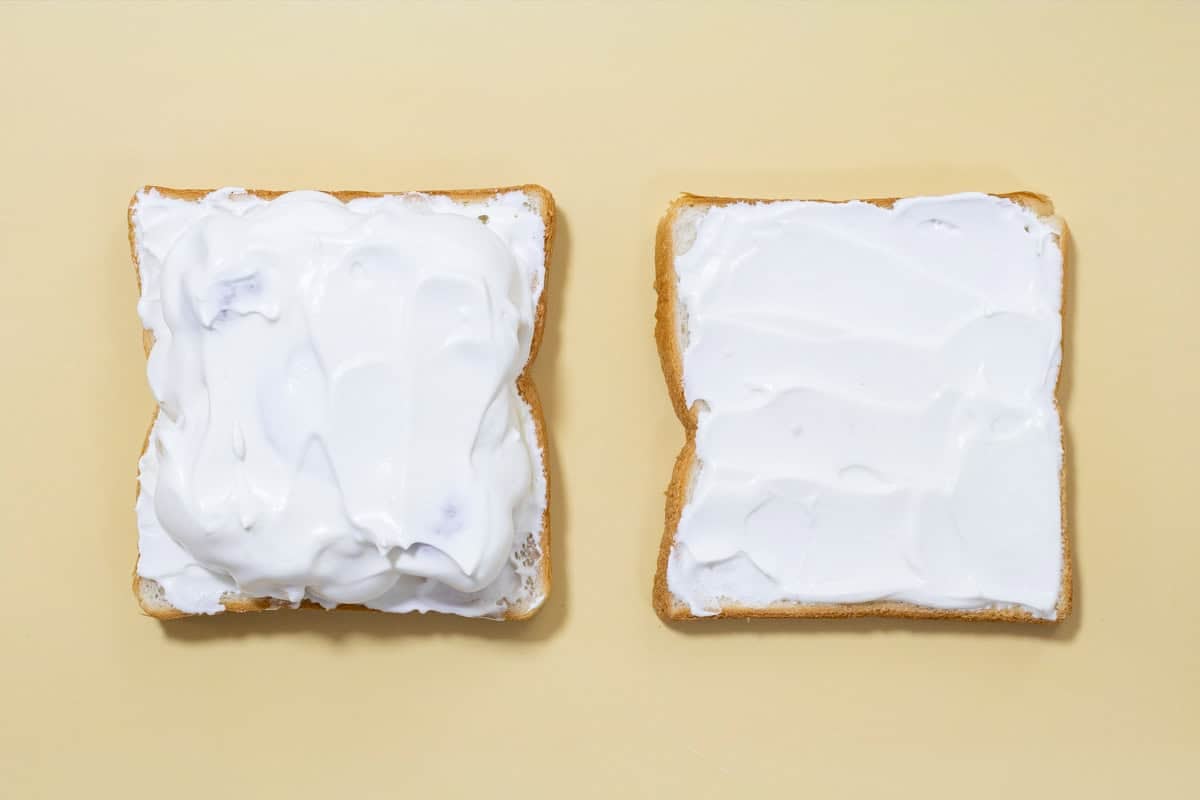
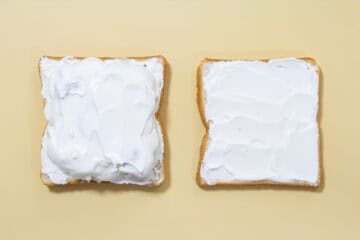
Spread more cream over the fruit until it is completely covered, then place the other slice on top, cream side down, to make a sandwich.
Step 5
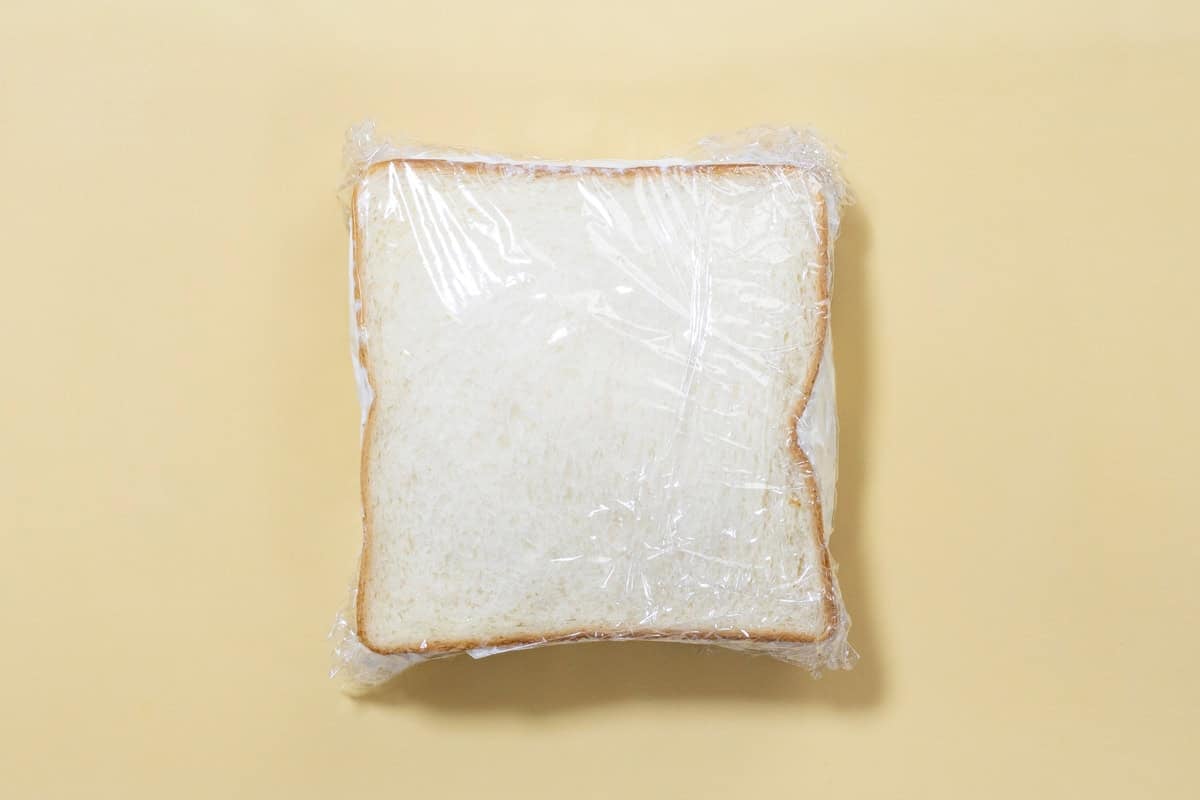
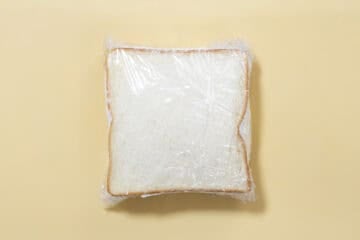
Wrap each sandwich snugly in plastic wrap. Then, let the sandwiches rest in the refrigerator for at least an hour.
This step helps the cream set properly, resulting in a clean, attractive cross-section when cut. Some cream may squeeze out while wrapping, but that’s fine.
Step 6
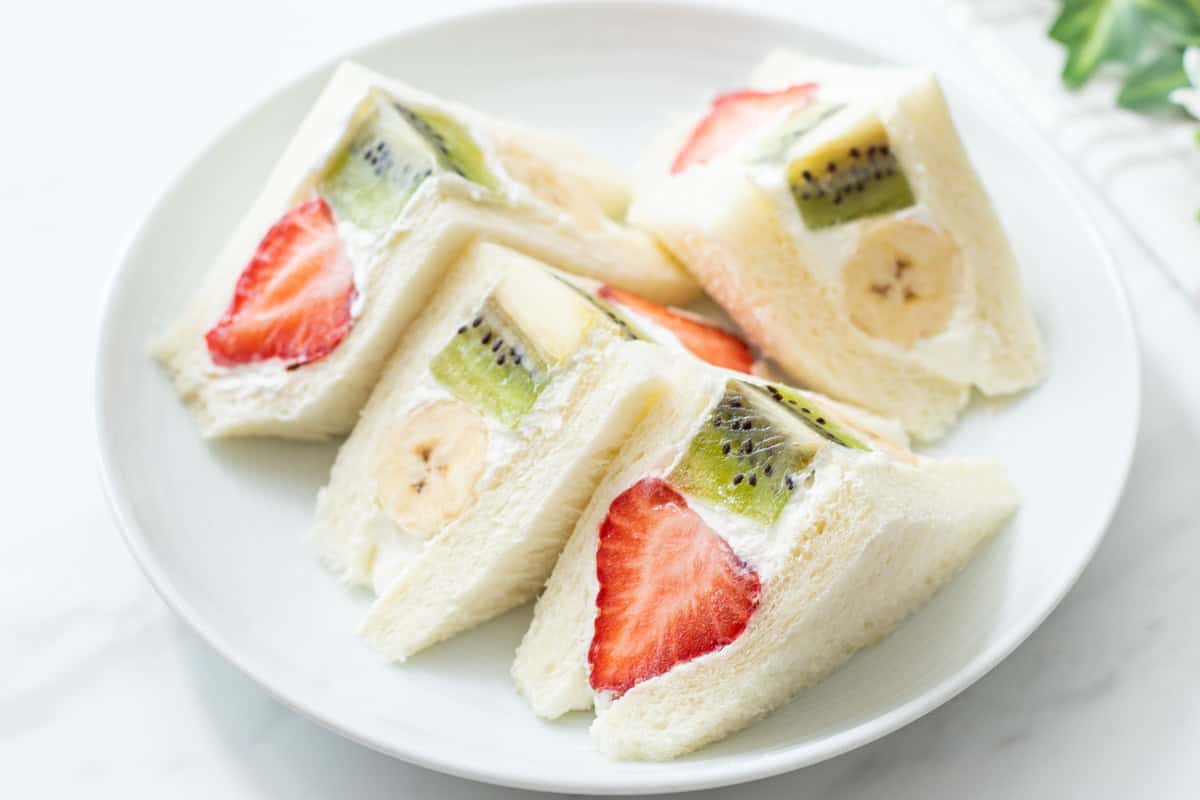
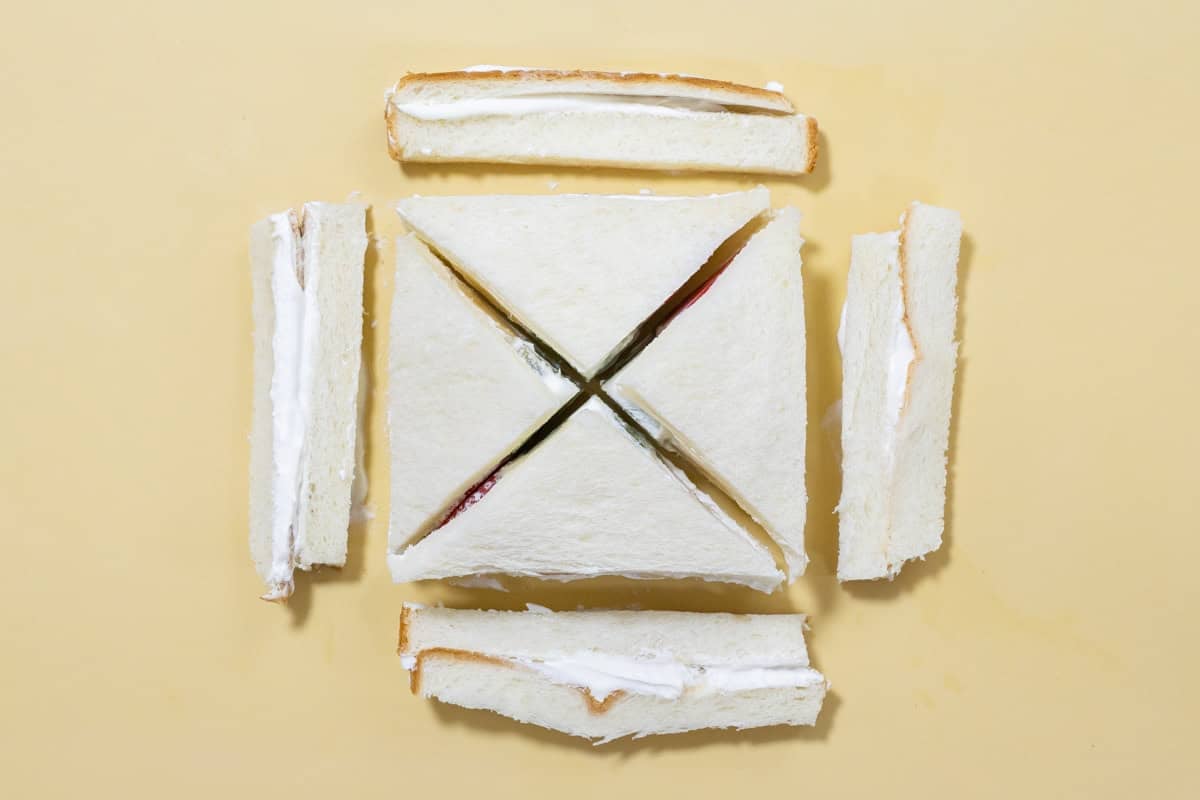
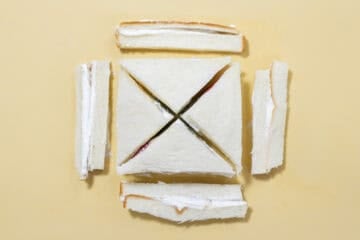
Remove the plastic wrap from each sandwich, then trim off the crusts. Cut each sandwich diagonally, then cut each half diagonally again. For cleaner cuts, it is best to wipe the knife with a paper towel between each cut.
How to store
The dish will keep in the refrigerator for up to 1 day.
Different ways to cut Fruit Sando
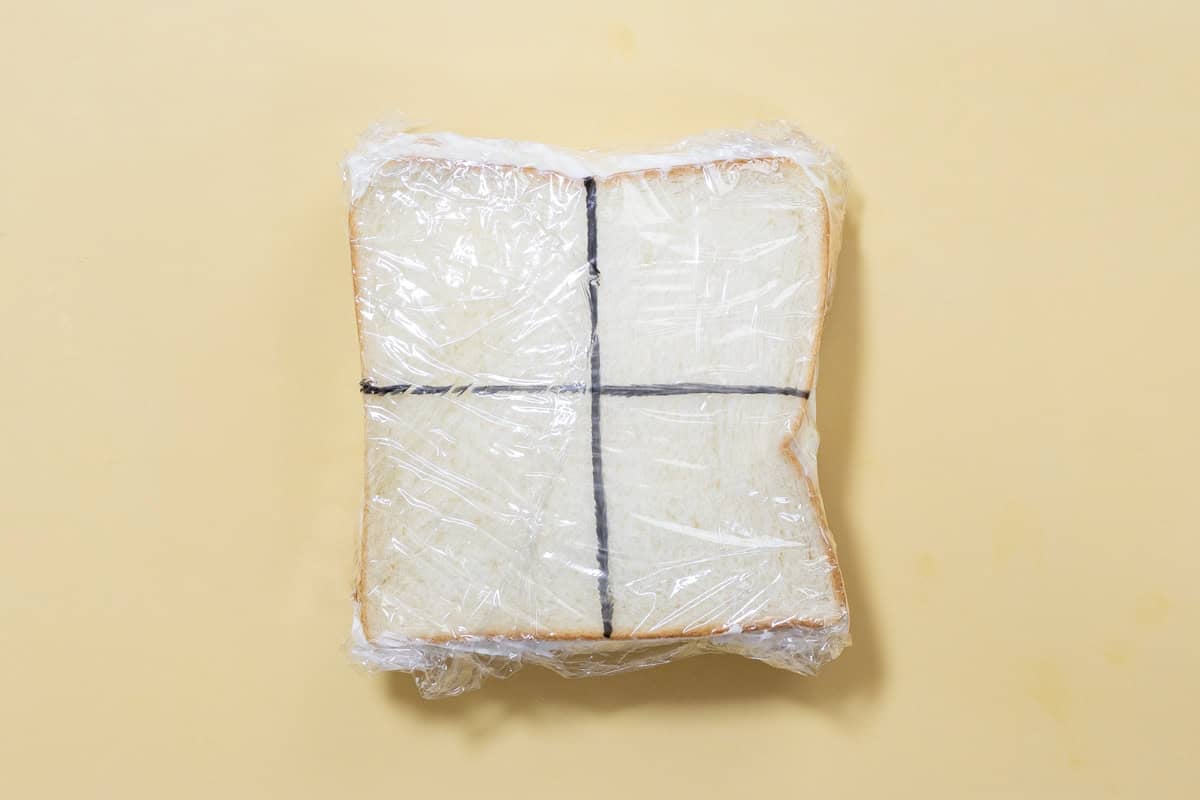
In this recipe, I cut the sandwich diagonally into four pieces, but you can also cut it in half or slice it crosswise if you prefer. In that case, imagine the cross-section you want, and mark a line on the plastic wrap first to make sure it turns out just right. Feel free to cut it however you like and enjoy your fruit sando!
I hope you enjoy this recipe!
If you try it, I’d love to hear how it turned out. Please leave a review 💬 and a star rating ⭐ in the comment below. Your support and feedback means so much to me!
More recipes you'll love

FAQ
Yes, you can. However, please note that the texture may be different. I recommend using bread that is as soft as possible.
Printable Recipe Card
Fruit Sando (Japanese Fruit Sandwich)
Ingredients
- 1 cup heavy cream (at least 40% milk fat)
- 2 Tbsp granulated sugar
- 6 slices shokupan (Japanese milk bread) (Use a loaf with 8 slices. If you can’t find an 8-slice loaf, I recommend either slicing a 4-slice loaf in half horizontally or cutting an unsliced loaf into slices about ⅗ inch (1.5 cm) thick.)
- 6 strawberries
- 1 ½ kiwis
- 2-3 bananas
Instructions
- Prepare an ice bath in a large bowl. Set a slightly smaller bowl inside it, then add heavy cream and sugar. Whip the mixture until it forms medium-stiff peaks (about 80-90% of the way to stiff peaks).As a guideline, it takes about 5 minutes with a hand mixer or 15-20 minutes with a whisk. The ideal temperature range for whipping cream is around 40-45℉ (4-8℃). Note that if the temperature falls outside this range, the cream can become grainy or may not hold its shape.

- Remove the stems from the strawberries. Peel the kiwis and cut them in half crosswise. Cut the bananas in half or into thirds, depending on their size. If there is any moisture on the surface of the fruit, pat it dry with a paper towel.
- Spread the whipped cream on one side of each slice of shokupan bread. Pair the slices and arrange the fruit diagonally over the cream on one slice.When placing the fruit, keep in mind how the cross-section will look so that it appears attractive once cut.
- Spread more cream over the fruit until it is completely covered, then place the other slice on top, cream side down, to make a sandwich.
- Wrap each sandwich snugly in plastic wrap. Then, let the sandwiches rest in the refrigerator for at least an hour.This step helps the cream set properly, resulting in a clean, attractive cross-section when cut. Some cream may squeeze out while wrapping, but that’s fine.
- Remove the plastic wrap from each sandwich, then trim off the crusts. Cut each sandwich diagonally, then cut each half diagonally again. For cleaner cuts, it is best to wipe the knife with a paper towel between each cut.

Notes
- The dish will keep in the refrigerator for up to 1 day.

Leave a Rating and a Comment