
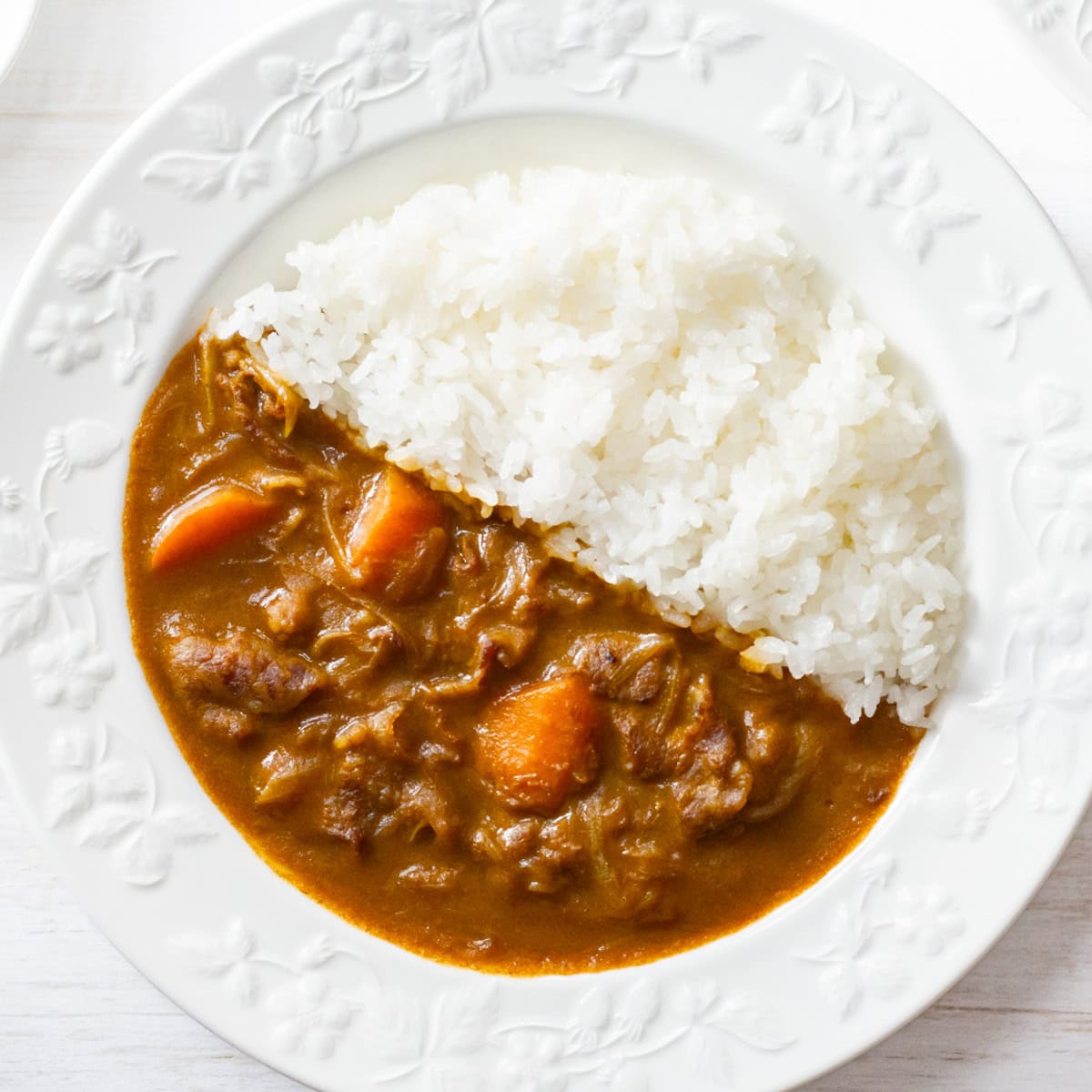
Japanese Curry, known for its thick consistency and rich flavor, is a very popular and beloved dish enjoyed by people of all ages in Japan. Simply following the instructions on a store-bought curry roux package will yield satisfying results, but with a few thoughtful tweaks, you can make it even more delicious. Here, I’d like to share some tips and a recipe I have developed over the years while growing up in Japan to help you make your curry taste better than ever.
Jump to:
- What is Japanese Curry?
- Choosing the right curry roux
- Meat options and their impact on curry flavor
- Enhancing flavor with slowly sautéed onions
- Add the meat near the end for better flavor
- Should you mix different curry roux?
- Secret ingredients to elevate the flavor
- Does resting Japanese curry enhance its flavor?
- Balancing vegetables and curry flavor
- Quick summary
- 📋Step-by-step recipe
- More recipes you'll love
- FAQ
- Recipe card
What is Japanese Curry?
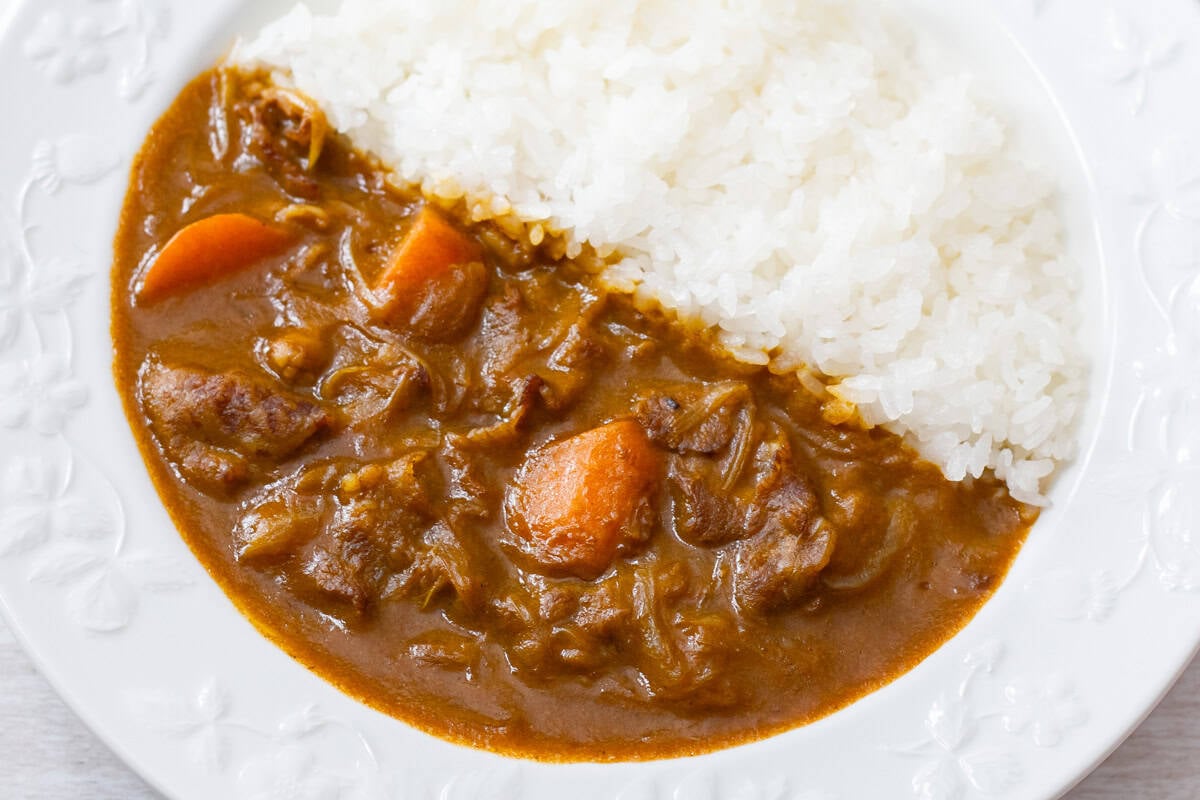
Japanese Curry is a dish made by sautéing meat or seafood and vegetables, then simmering them before adding curry roux. Curry roux refers to a solid mixture made by slowly cooking flour, fat, spices, and seasonings until the moisture has evaporated. The defining characteristic of Japanese curry lies in the use of this roux. Since it contains flour, the dish becomes rich, thick, and creamy.
Japanese curry made with curry roux offers a different flavor profile from spicy Indian or Thai curries. It features a mild heat alongside a subtle sweetness, with less assertive spices. While it can be enjoyed with bread or naan, in Japan, it is typically served with sticky, short-grain rice. For this reason, when people in Japan say “curry,” they are usually referring to curry and rice.
You can make a reasonably tasty Japanese curry simply by following the instructions on a store-bought curry roux package, but by using the right ingredients and adding a few small touches, you can create a flavor that rivals restaurant-quality curry in Japan. Let’s make your perfect curry, tailored to your taste!
Choosing the right curry roux
To make delicious Japanese curry at home, it all starts with a good curry roux.
It is no exaggeration to say that the quality of Japanese curry largely depends on the roux you use. Japanese manufacturers produce exceptionally well-crafted curry roux, and I have even tried making my own roux by combining multiple spices in an attempt to surpass their flavor, but I couldn’t match them. They are truly excellent.
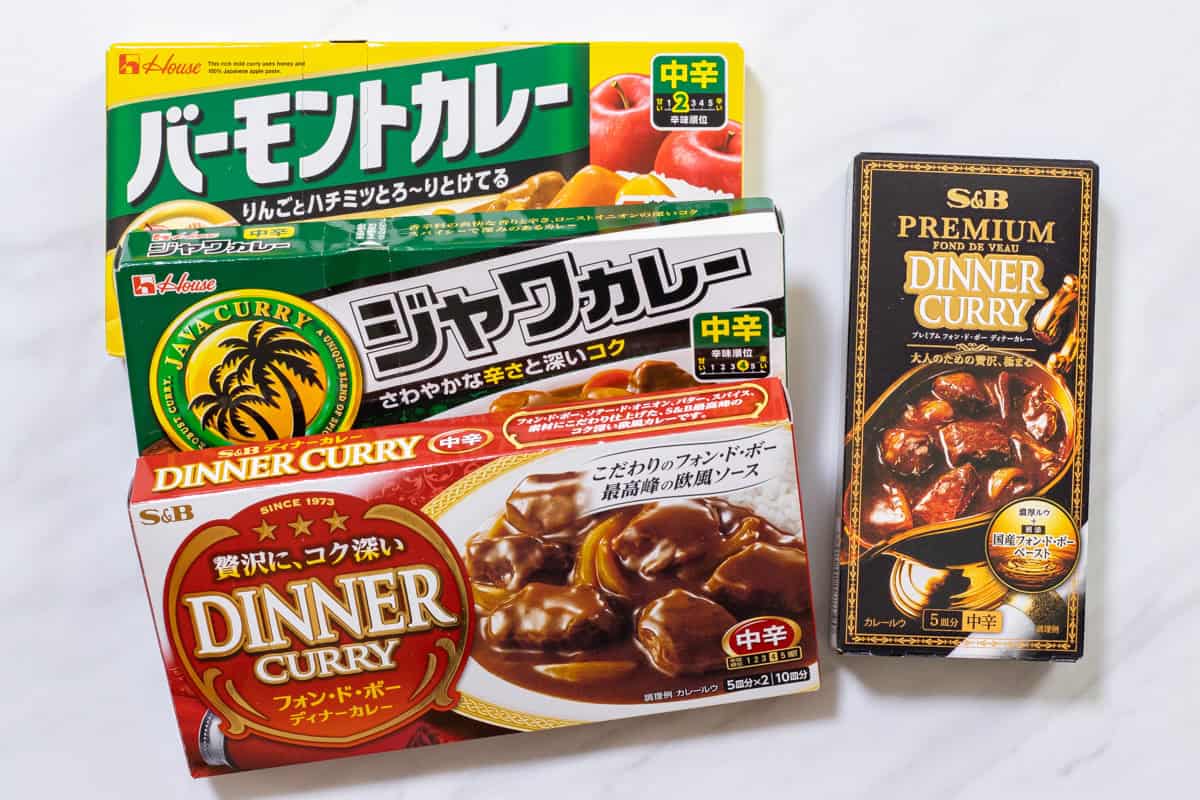
Two particularly popular curry roux products in Japan are “Vermont Curry” and “Java Curry.” Together, they account for more than 30% of the curry roux market in Japan. They are typically sold at a relatively low price, and within that price range, I also think they stand out in terms of flavor. Either one is perfect for making everyday curry. While Vermont Curry is on the mild side, Java Curry is spicier.
On the other hand, higher-end curry roux such as "Premium Fond de Boeuf Dinner Curry" and "Platinum Excellent Curry Roux" are more expensive, but they offer a richer, deeper, and more complex flavor than the two mentioned above. Above all, the fats used in these roux are of higher quality, so the curry feels less heavy and is easier on the stomach after eating. They often contain ingredients like fond de boeuf, bouillon, and chutney, which are not found in lower-priced roux, contributing to a mellow and deep flavor. Beyond these specific products, any curry roux that highlights the use of fond de boeuf, bouillon, or chutney is likely to be delicious.
Depending on where you live, the curry roux available to you may be limited. However, if possible, I highly recommend trying the ones mentioned above—or at least curry roux made by Japanese brands. They will surely help you make a satisfying curry at home.
Meat options and their impact on curry flavor
The type of meat you use is another major factor in determining the flavor of Japanese curry, second only to the curry roux.
In Japan, beef, pork, and chicken are the most commonly used meats. The name of the curry changes depending on the type of meat, and they are typically called “beef curry,” “pork curry,” and “chicken curry.” In addition to these, other variations include “Japanese-style keema curry,” which uses ground meat, and “seafood curry,” which uses seafood instead of meat.
You can use any kind of meat you like, but the fat content has a significant impact on the curry's flavor. For this reason, using well-marbled or fatty cuts is generally recommended. For beef or pork, short ribs, short plate, chuck, or pork belly work well, and for chicken, thighs are a great choice. Of course, the better the quality of the meat, the better the final result will be. If you don’t mind the cost, try using well-marbled wagyu beef. It makes an incredibly delicious curry. It's my go-to choice when I want to indulge!
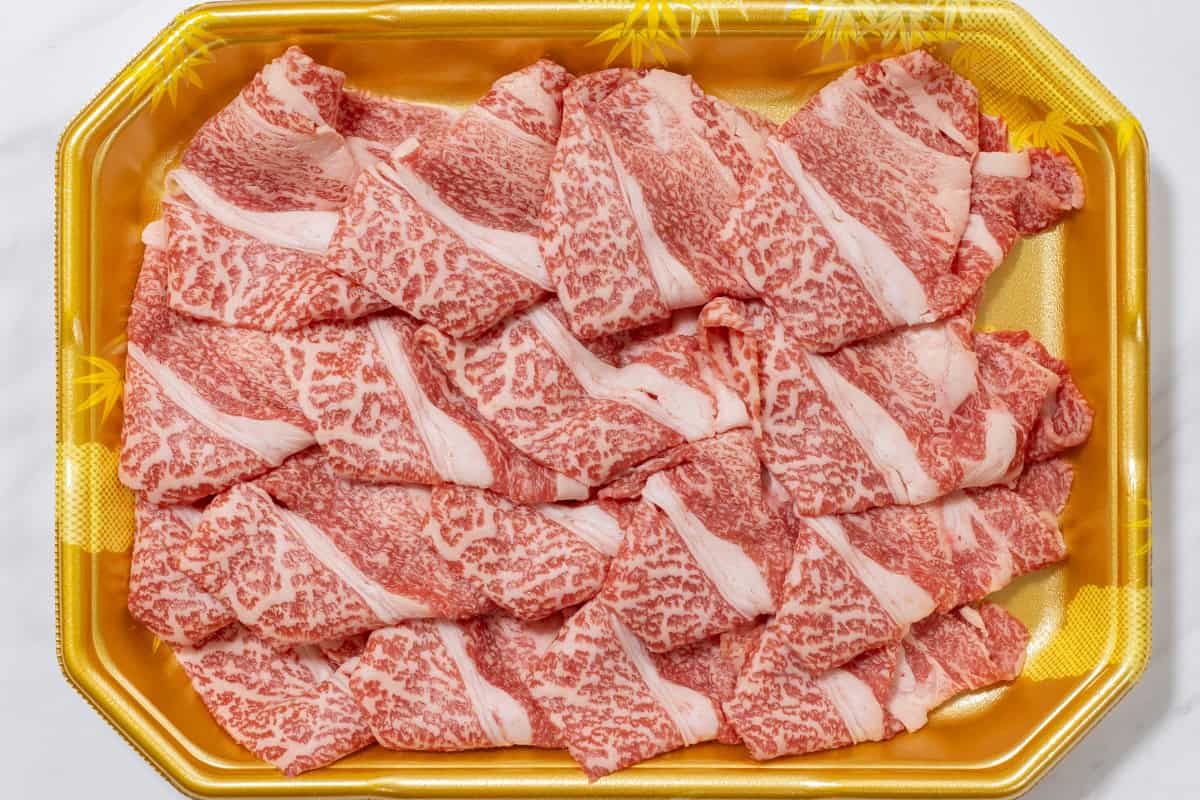
As for the thickness of the meat, use whatever you prefer. In Japan, when using beef or pork, the most common choice is thinly sliced meat. Thin slices allow the meat’s flavor to blend more easily into the curry, though the meat’s texture becomes less noticeable. Chunks of meat are the opposite: less flavor infuses into the curry, but the meat has a more satisfying bite. It's all up to your personal preference.
Enhancing flavor with slowly sautéed onions
Japanese curry can be made even more delicious with a few small tweaks during cooking. One step you should definitely try is "slowly sautéing the onions."
Onions naturally contain a lot of sugar, and when sautéed, their moisture evaporates, concentrating the sugars. At the same time, the heat causes these sugars to caramelize and undergo the Maillard reaction, transforming them into a deeper, sweeter flavor. This savory sweetness blends into the curry, adding depth and richness to the overall taste.
The method is very simple: thinly slice the onions, add them to the pot, and sauté over medium heat until they become translucent or lightly browned. This step alone can take your curry to the next level.
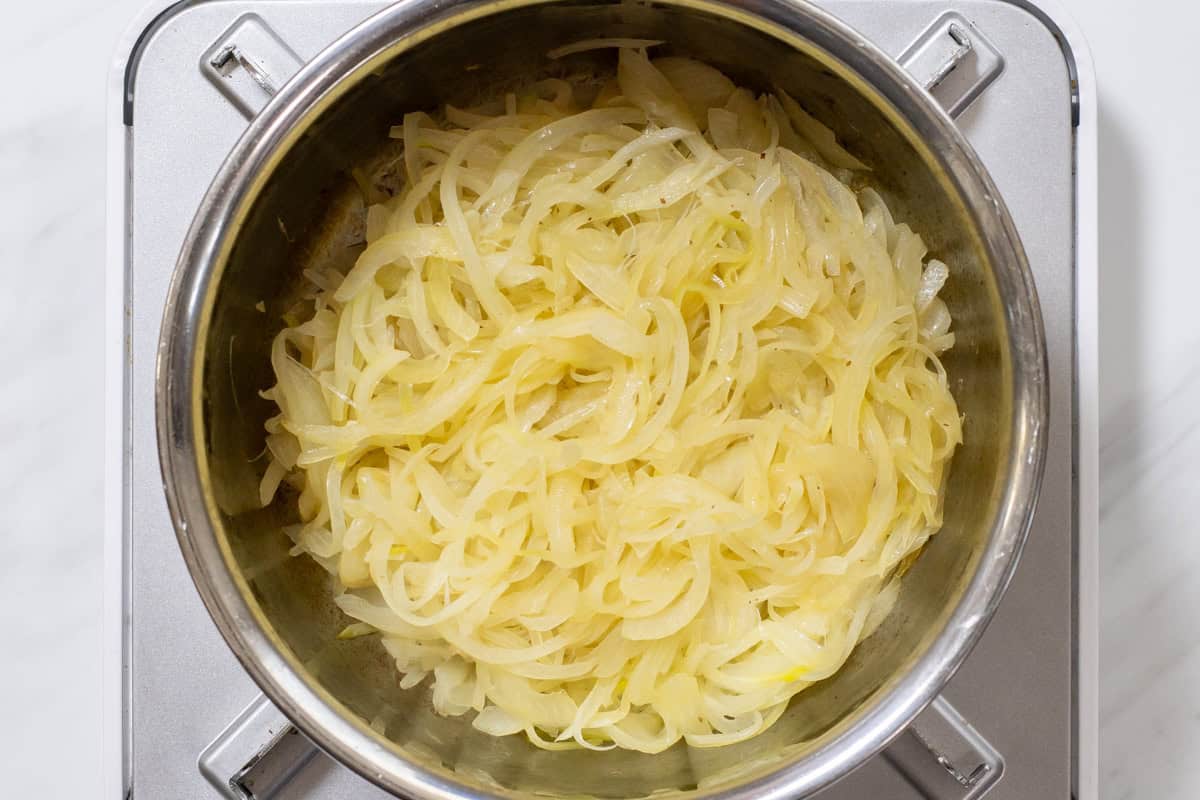
Some people in Japan, who are particularly passionate about making curry, go even further and cook the onions until they turn a deep amber color, rather than stopping at the translucent or light brown stage. In this case, the onions develop not only a strong sweetness but also a slight bitterness and additional umami from the deeper caramelization.
However, this approach takes quite a bit of time and requires constant attention to avoid burning them, so in my opinion, it is not necessary to go this far for home cooking. Additionally, whether the deeper caramelization tastes better is a matter of personal preference.
Add the meat near the end for better flavor
Along with slowly sautéing the onions, there is another step I strongly recommend when making Japanese curry: adding the meat near the end of the cooking process.
If you look at store-bought curry roux packages, you might see instructions to sauté the meat and vegetables, then simmer them together. However, if you want to enhance the flavor of your curry, I suggest ignoring those instructions. The reason is that these instructions are designed so that anyone can make Japanese curry successfully, prioritizing convenience over flavor. While this method allows you to make Japanese curry with minimal effort, the meat tends to contribute little flavor because it is simmered for too long.
So, when should you add the meat for the best results? The ideal time is right after you add the curry roux. After simmering the vegetables in a pot, turn off the heat before adding the roux and stirring it in to prevent lumps. Once the roux has dissolved, that is when you add the meat. After that, let it simmer for about 5 minutes to allow the flavors to meld. This short amount of time is enough to cook the meat.
For this method, the meat should be sautéed beforehand to develop a savory flavor. In other words, at the beginning of the process, you should sauté the meat and set it aside before adding it back later. While this step requires a little extra effort, it significantly enhances the meat's flavor. The difference is noticeable, not subtle, so it is an approach well worth trying.
Note: If you are using cuts that become tender through long simmering—such as beef shank, beef tendon, or chicken drumettes—this approach is not suitable. In those cases, follow the instructions on the curry roux package and simmer the meat with the vegetables.
Should you mix different curry roux?
If you are familiar with Japanese curry, you may have heard about using different kinds of curry roux together. That is true, and many households in Japan mix different roux to create a flavor that suits their preferences. My mother used to do this as well.
That said, to get straight to the point, there is basically no need to mix multiple curry roux when making Japanese curry. Store-bought roux is well-crafted and already offers a fully developed flavor on its own. If combining them really made it better for everyone, manufacturers would likely sell pre-mixed versions.
Therefore, think of mixing curry roux as an option for those who want to customize the flavor that suits their personal taste. For example, using Vermont Curry as a base and adding Java Curry can create a spicier version of Vermont Curry. Similarly, by combining a medium-hot roux with a hot one, you can adjust the level of spiciness to suit your taste.
If you are making Japanese curry for the first time, there is no need to worry about mixing roux. Once you get familiar with the basic flavor of the roux, combining different roux can be an option worth considering to achieve a taste better suited to your preference.
Secret ingredients to elevate the flavor
Mixing different kinds of curry roux isn’t the only way to achieve your preferred flavor. Adding various secret ingredients can also bring out a unique and original taste in your curry. Here are some examples of secret ingredients commonly used in Japanese curry:
- Coffee
- Chocolate
- Miso
- Worcestershire sauce
- Red wine
- Ketchup
- Apples (grated)
- Bananas (grated)
- Honey
- Jam
- Yogurt
- Chutney
By adding one or more of these ingredients, you can make a curry that better suits your taste. That said, these additions are merely options for personalizing the flavor—they are not essential. I rarely add any of these myself when I make curry.
Chutney, however, might be an exception. Regardless of personal preference, it has the potential to enhance the flavor. This is because higher-end curry roux products often contain chutney. Even so, when I tried adding chutney to a lower-priced roux, it didn’t improve the flavor much. I believe the key to making it work lies in the quality of the chutney and how well it balances with the curry roux, but it is not as simple as it sounds. It really makes me realize how deep and complex the world of curry is.
Does resting Japanese curry enhance its flavor?
Just like mixing different kinds of curry roux, if you are familiar with Japanese curry, you may have heard that letting it rest overnight can enhance its flavor. This is something most Japanese people have probably heard at some point, but it is actually not entirely accurate—part of it is a misunderstanding.
The reason curry can taste better after resting is that, during that time, the salt, fat, and umami compounds gradually distribute more evenly throughout the dish. This helps even out any inconsistencies in flavor and gives the curry a more harmonious, mellow taste.
On the other hand, the spices in curry roux contain volatile aromatic compounds that tend to dissipate over time. This means that while the taste of rested curry might improve, its aroma may become less pronounced.
Overall, both freshly made curry and rested curry have their own merits, and neither is objectively better than the other. It ultimately comes down to personal preference.
Therefore, rather than treating resting the curry as a required step in the cooking process, it is better to think of it as an option: if you have leftover curry, store it in the refrigerator and enjoy it the next day with a slightly different flavor.
Balancing vegetables and curry flavor
When it comes to ingredients in Japanese curry, onions, carrots, and sometimes potatoes are staples, but you can also add a variety of other vegetables. Since you only need to chop the vegetables and toss them into the pot, it doesn’t take much extra effort. In Japan, it is also common to use seasonal vegetables to make “summer vegetable curry” or “winter vegetable curry,” allowing you to enjoy the flavors of the season.
However, keep in mind that while adding a lot of vegetables increases the nutritional value, it can also dilute the flavor of the curry itself. Having too many vegetables can overpower the curry more than expected. So, if you want to enjoy the true flavor of the curry, it is best to stick to the classic vegetables. On the other hand, if you prioritize nutritional value over taste, feel free to add other vegetables to boost the health benefits.
In some Japanese restaurants, you may find boiled or simply deep-fried vegetables served alongside the curry. This method allows you to enjoy the curry with vegetables without compromising its flavor. While this approach is better suited to restaurants due to the extra effort involved, it can be a great way to balance the taste of the curry with the nutritional benefits of the vegetables. If you don’t mind putting in a little extra work, it is definitely worth trying.
Quick summary
Since the article has gotten a bit long, here is a quick summary of the key points.
For preparation:
- Use a high-quality Japanese curry roux, such as Vermont Curry, Java Curry, Premium Fond de Boeuf Dinner Curry, or Platinum Excellent Curry Roux.
- Choose well-marbled or fatty cuts of meat, preferably high-quality ones.
During the cooking process:
- Sauté the onions slowly until they become translucent or lightly browned.
- Sauté the meat, set it aside, and then add it back once the curry roux has completely dissolved.
Other considerations:
- Mixing different kinds of curry roux, adding secret ingredients, or letting the curry rest overnight are all options if you want to customize the flavor to your liking.
- If you want to emphasize the curry flavor itself, avoid using too many unconventional vegetables. On the other hand, if you want to prioritize nutrition over flavor, feel free to include a wider variety of vegetables.
This recipe incorporates these tips. You should be able to make Japanese curry that tastes much better than what you usually make, so be sure to give it a try!
📋Step-by-step recipe
Ingredients
- 5 servings cooked Japanese short-grain rice (about 5.6 oz / 160 g per serving)
- 0.66 lb thinly sliced beef or beef chunks (You can also use other types of meat, such as chicken or pork. Well-marbled or fatty cuts are recommended.)
- 0.9 lb onions
- 5 oz carrots
- a pinch of salt (for the beef)
- a pinch of ground black pepper (for the beef)
- water (as specified on the curry roux package)
- ½ package Japanese curry roux
Instructions
🕒 Total: 45 mins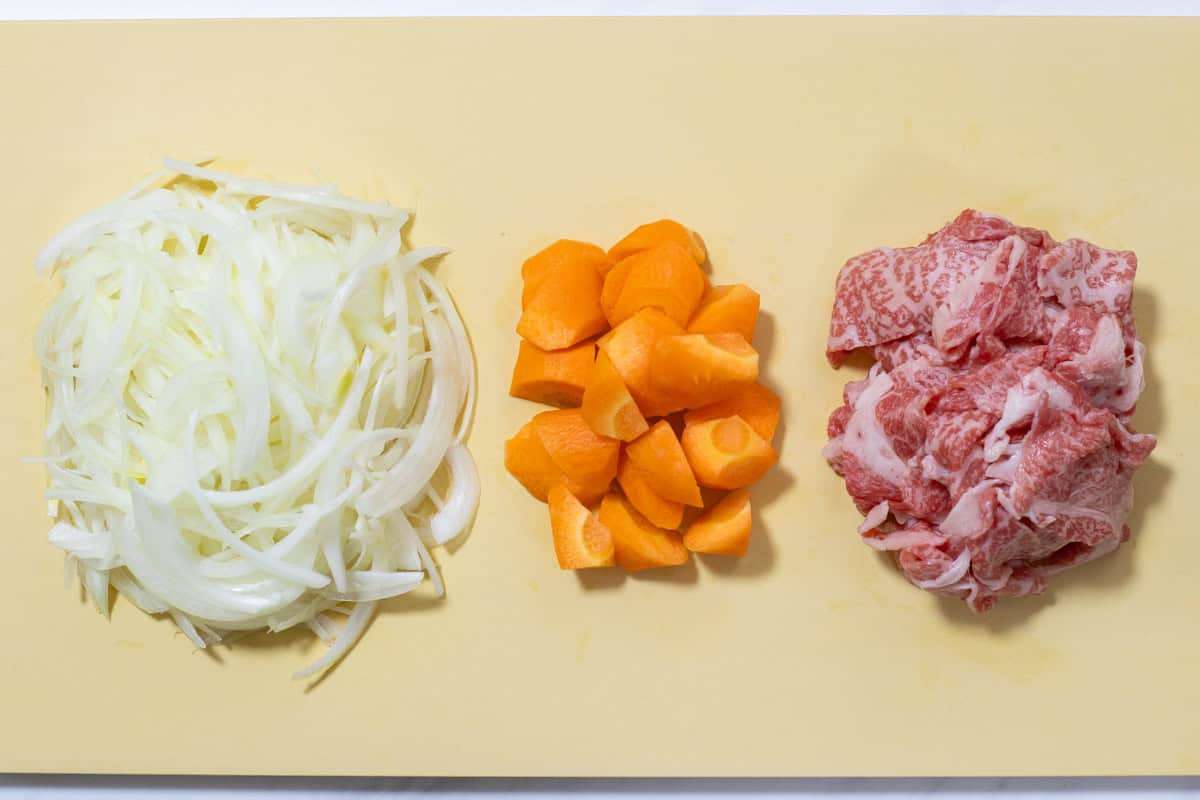
Step 1
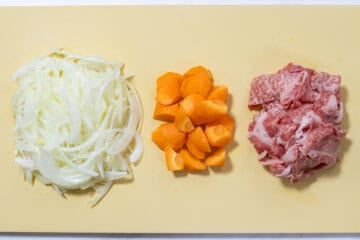
Thinly slice the onions. Cut the carrots and beef into bite-sized pieces.
Step 2
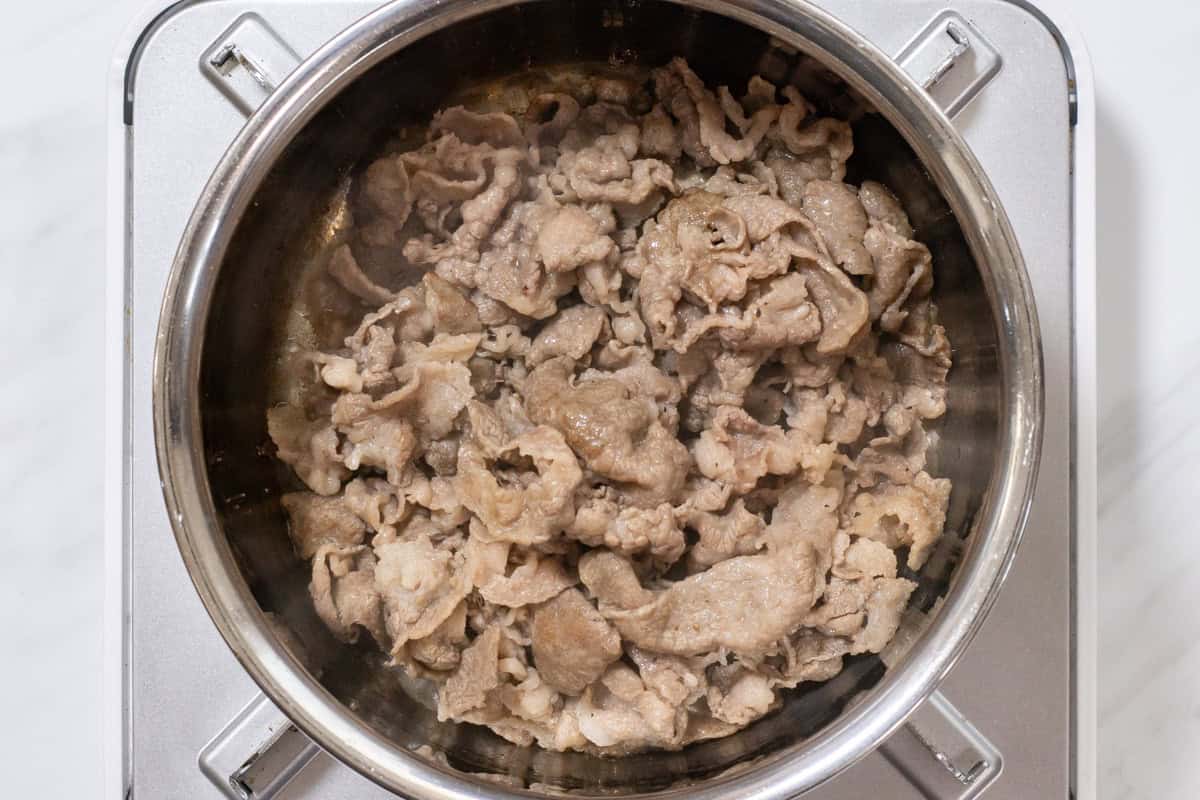
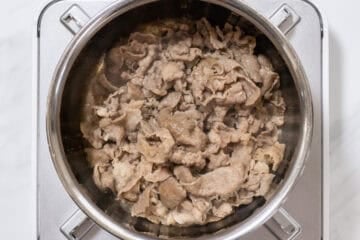
Heat some oil or butter in a large pot. Once the oil is hot, add the beef, season with salt and black pepper, and sauté over medium heat until cooked through. Then, remove the beef from the pot and set it aside on a plate.
Step 3
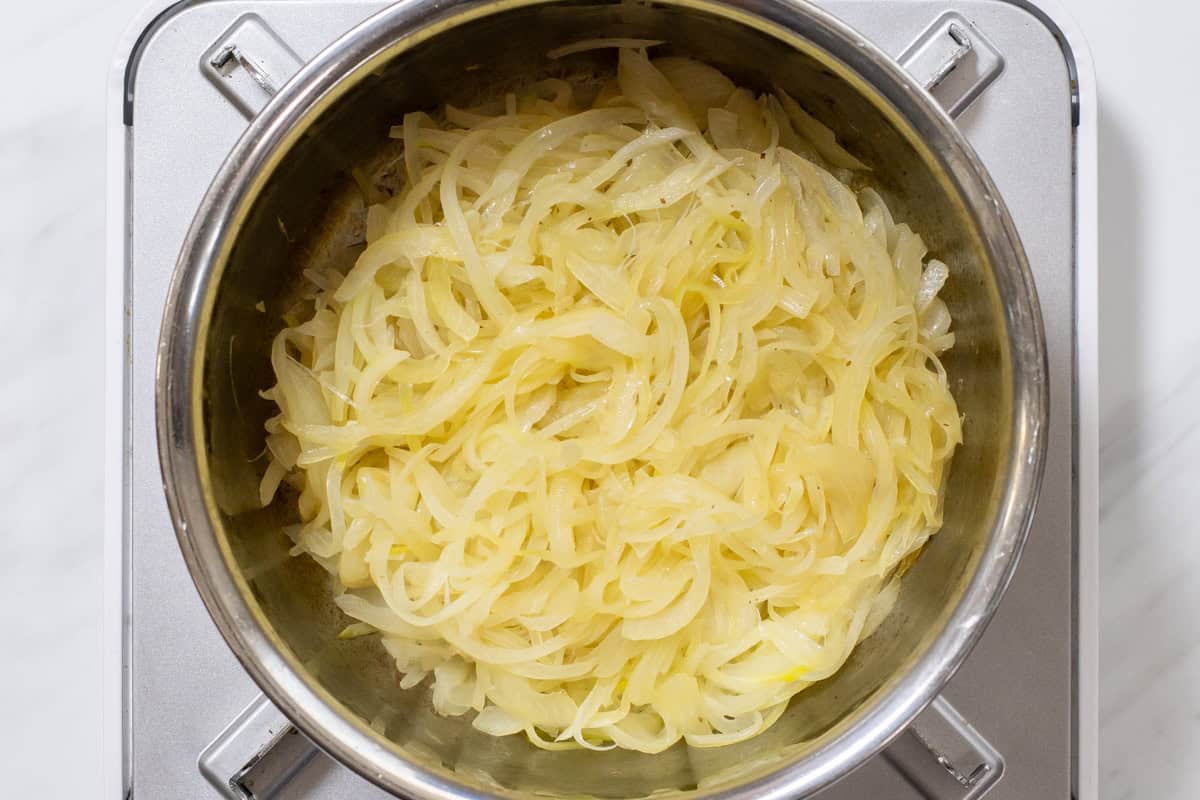
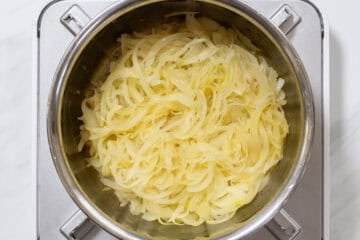
Add the onions to the same pot and sauté over medium heat, stirring occasionally, until they become translucent or lightly browned (this will take about 5-10 minutes).
Step 4
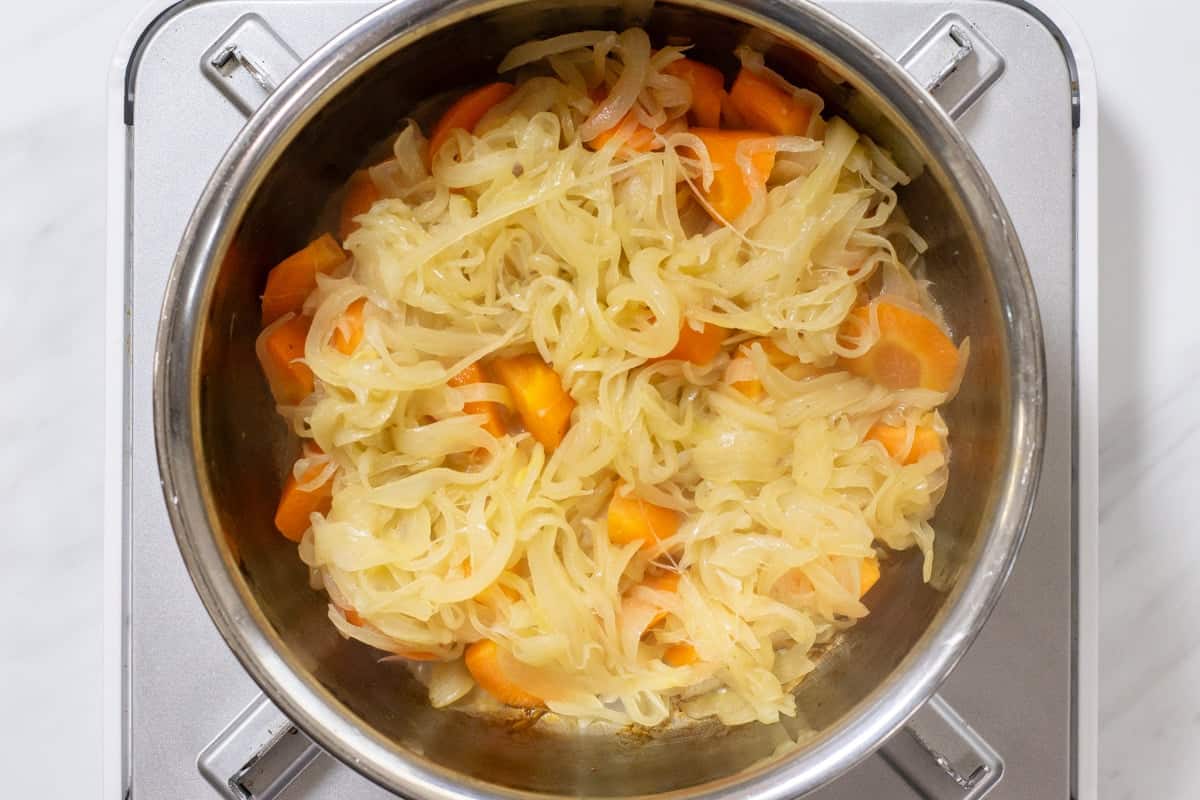
Add the carrots to the pot and cook briefly with the onions.
Step 5
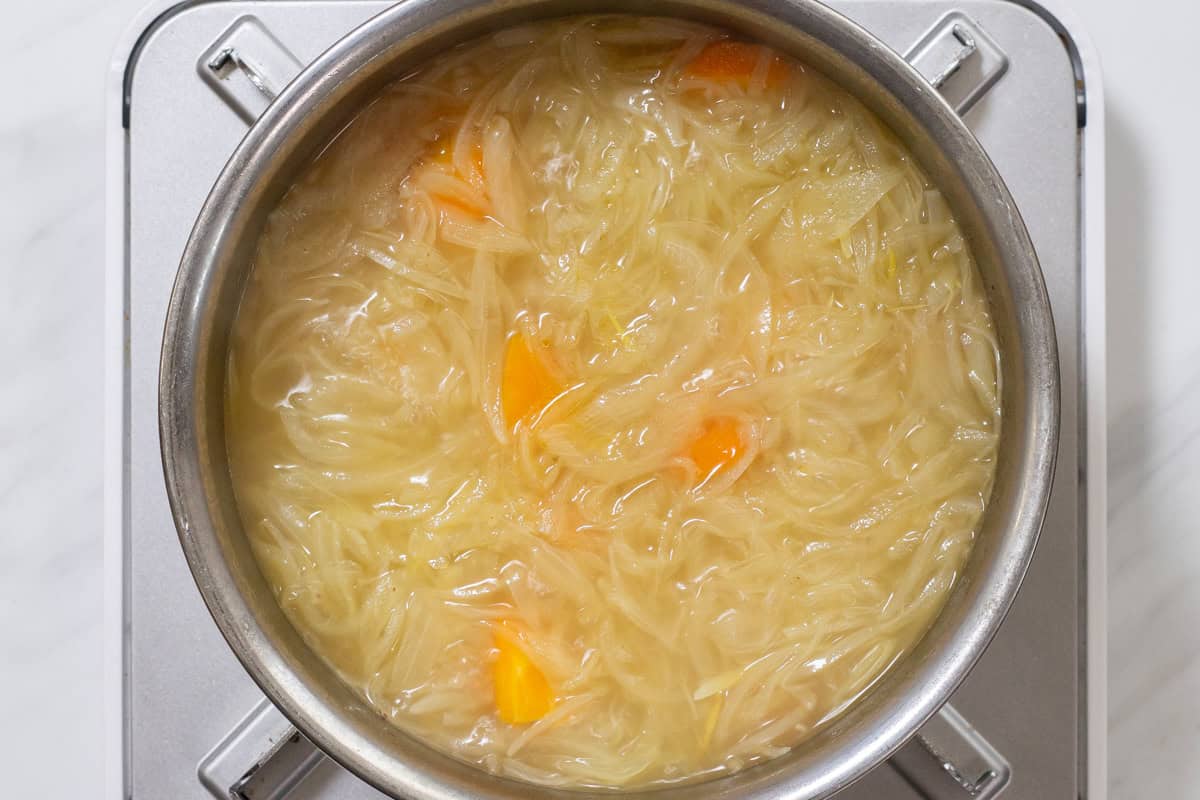
Pour in the amount of water specified on the curry roux package and bring it to a boil. Once boiling, skim off any foam that rises to the surface and let it simmer over low heat for 15-20 minutes. At this point, whether or not to cover it depends on the instructions on the roux package you are using.
Step 6
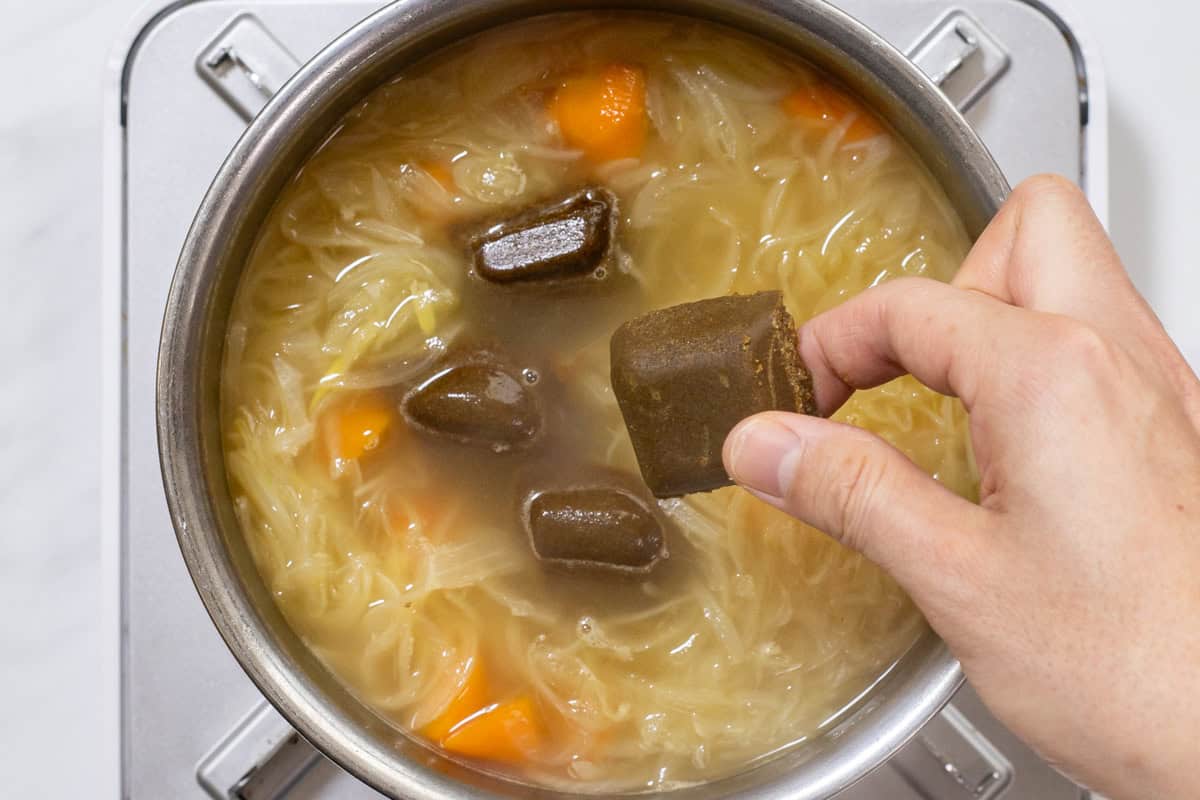
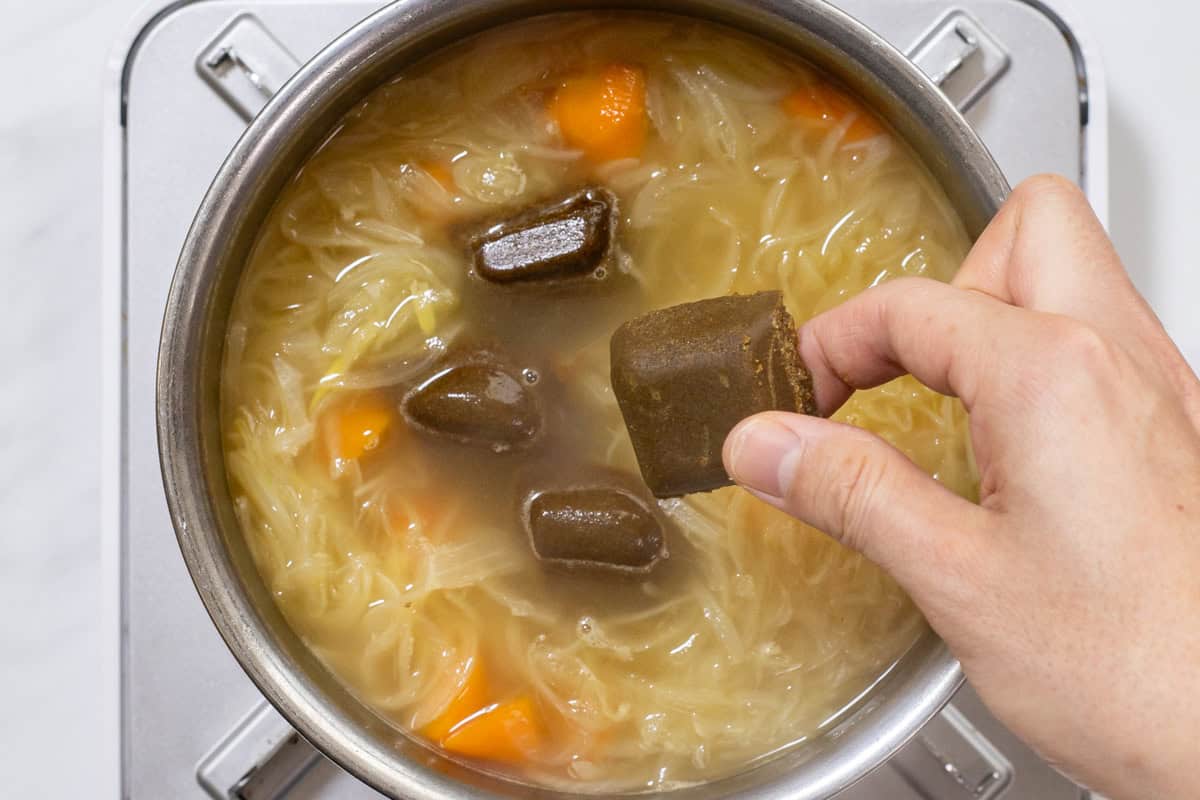
Turn off the heat, then add the curry roux to the pot, stirring with a ladle or spoon until completely dissolved.
Step 7
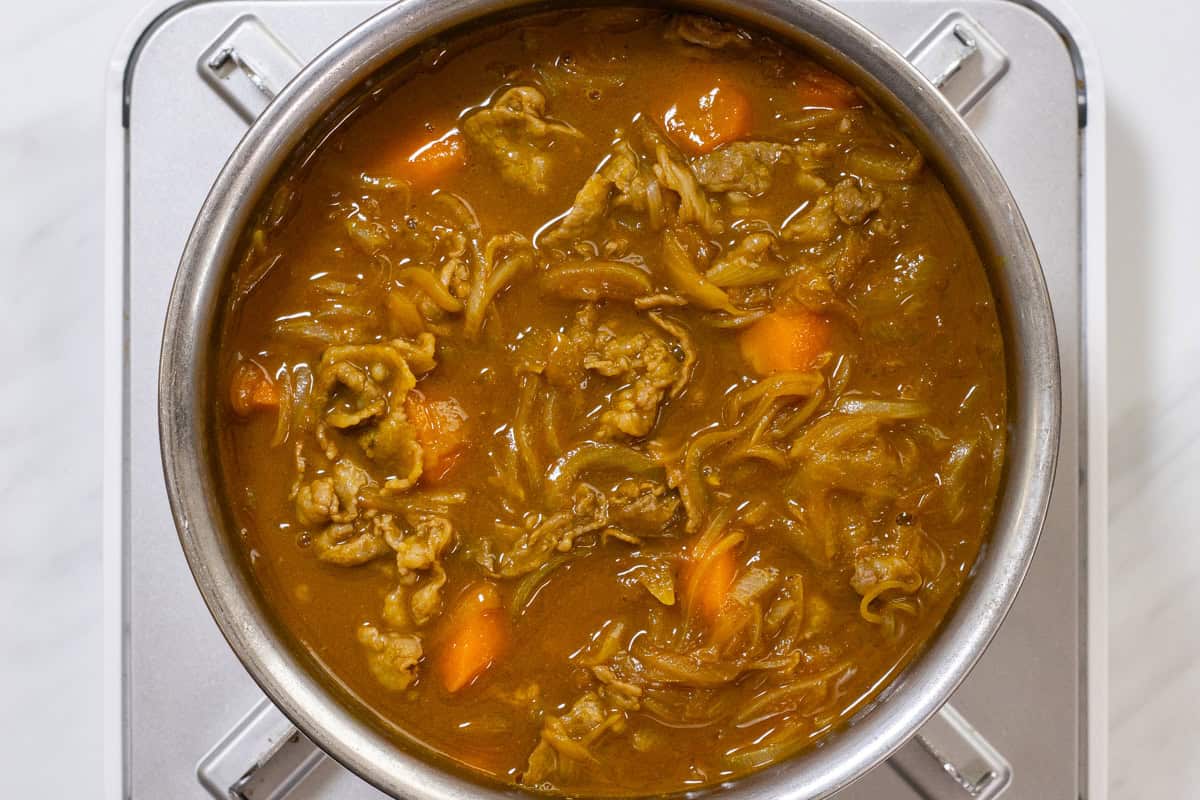
Return the beef to the pot. Heat the pot again over low heat and simmer for about 5 minutes, stirring occasionally to prevent scorching, until the sauce thickens.
Step 8
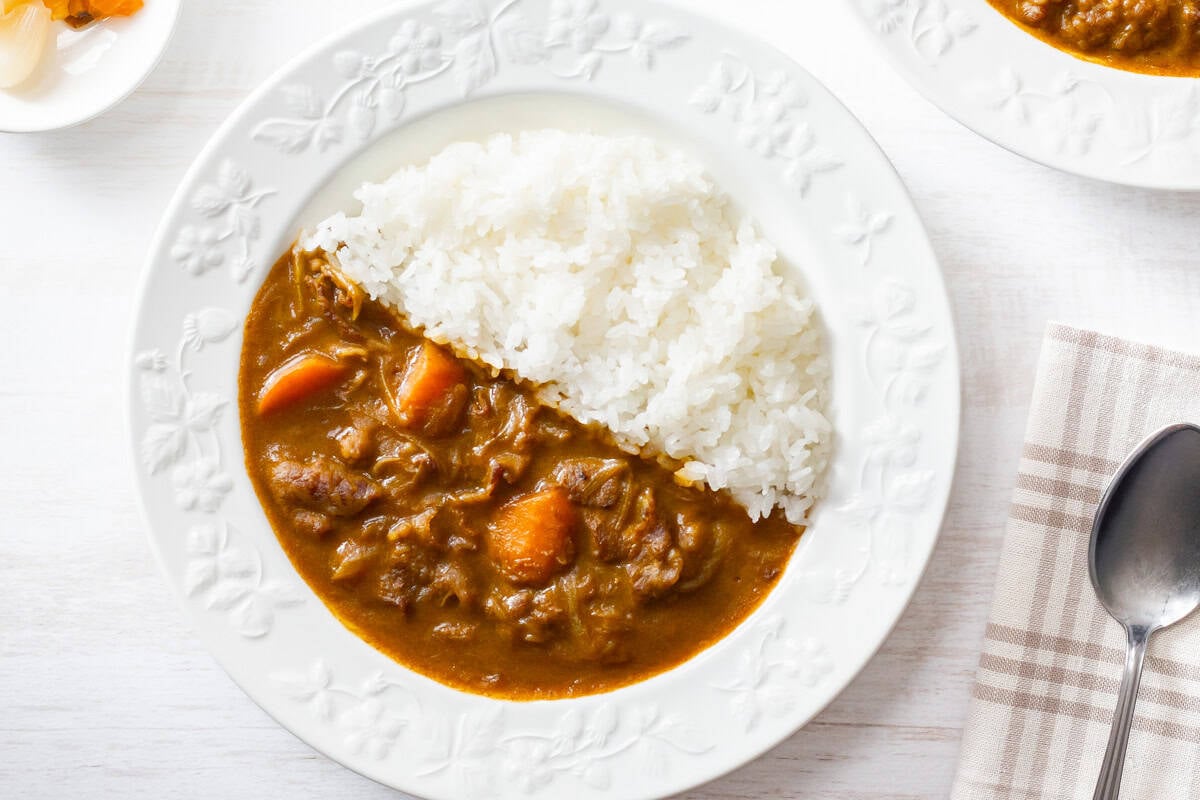
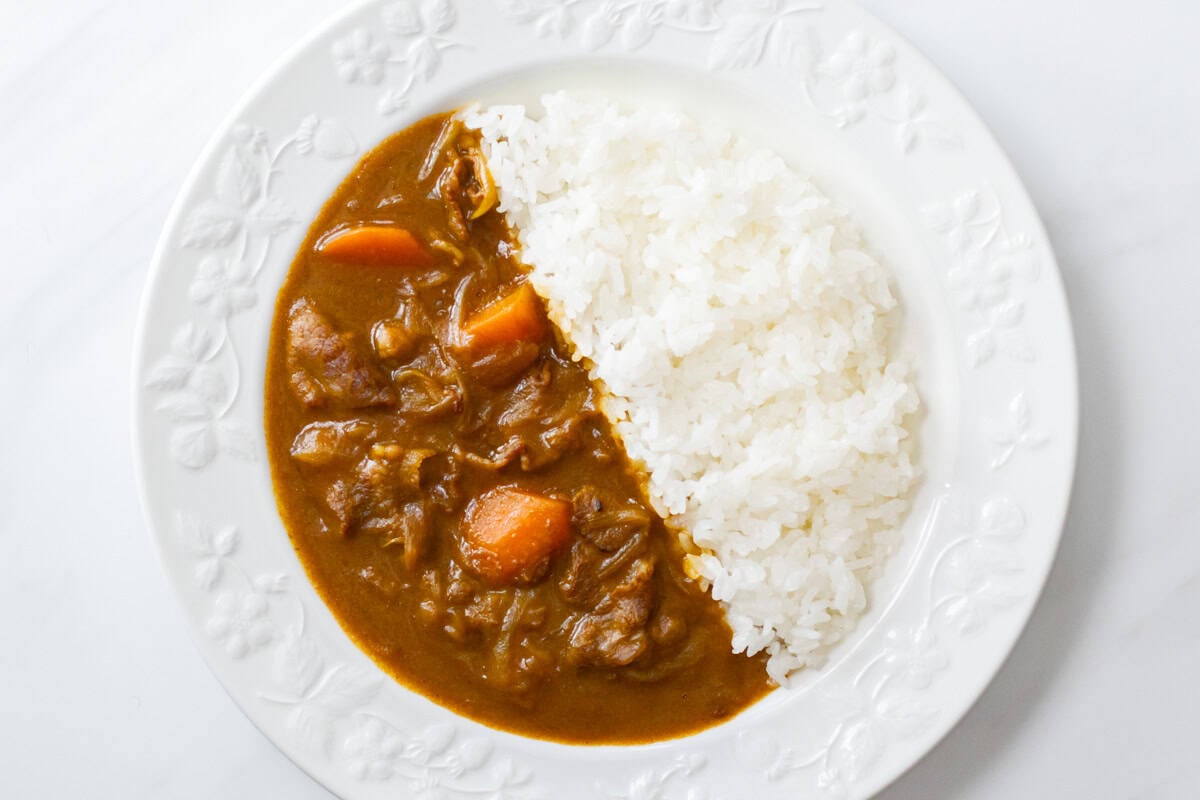
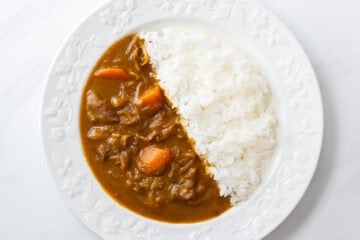
Serve the curry with rice.
To store
You can store it in the refrigerator for up to 2 days. Once the curry has cooled to room temperature, refrigerate it as soon as possible. Leaving it at room temperature allows Clostridium perfringens bacteria to multiply, increasing the risk of food poisoning. Also, be sure to reheat the stored curry thoroughly before eating.
If you try this recipe, I’d love to hear what you think. Please consider leaving a review and star rating in the comments below. If you enjoyed it, I’d really appreciate it if you shared it with your friends.
More recipes you'll love
FAQ
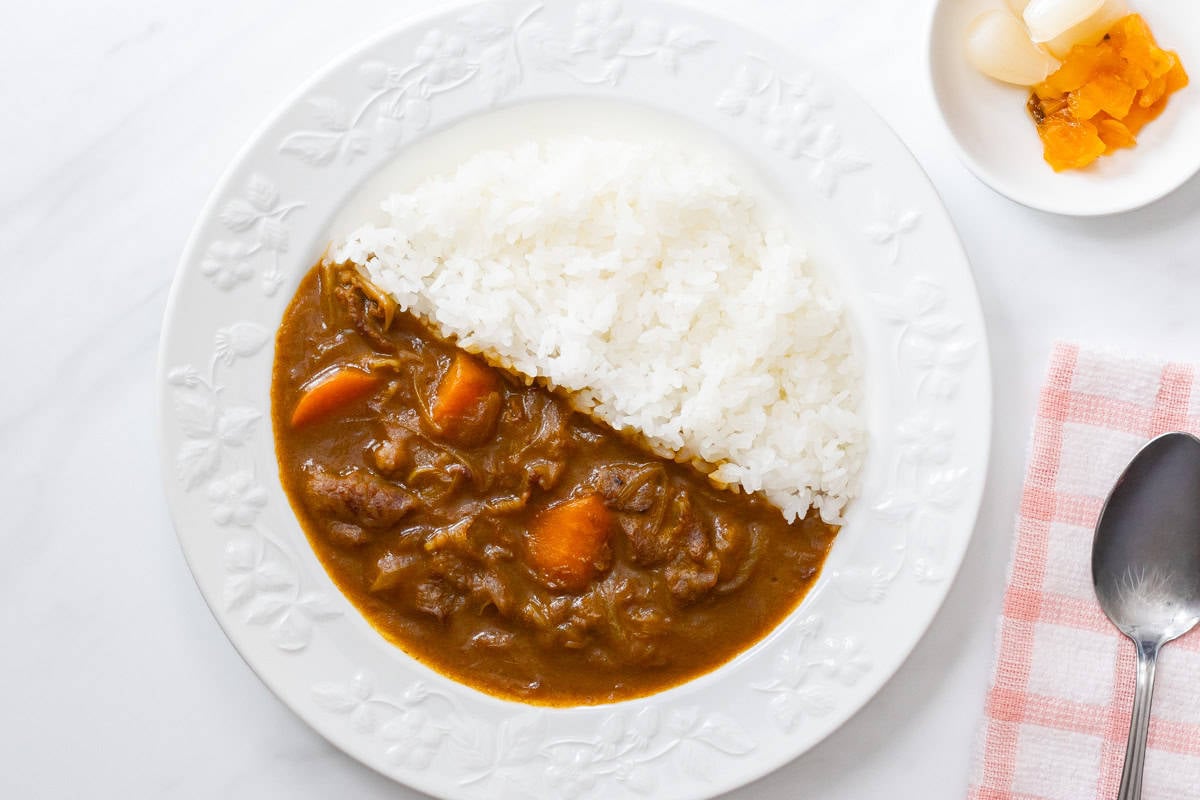
What is on the small dish next to the curry?
They are rakkyo (small white pickled bulbs) and fukujinzuke (a brown mix of pickled vegetables). Rakkyo has a mildly tangy flavor, while fukujinzuke is slightly sweet. In Japan, both are commonly served with curry as palate cleansers.
Recipe card
How to Make Delicious Japanese Curry Using Curry Roux
Ingredients
- 5 servings cooked Japanese short-grain rice (about 5.6 oz / 160 g per serving)
- 0.66 lb thinly sliced beef or beef chunks (You can also use other types of meat, such as chicken or pork. Well-marbled or fatty cuts are recommended.)
- 0.9 lb onions
- 5 oz carrots
- a pinch of salt (for the beef)
- a pinch of ground black pepper (for the beef)
- water (as specified on the curry roux package)
- ½ package Japanese curry roux
Instructions
- Thinly slice the onions. Cut the carrots and beef into bite-sized pieces.

- Heat some oil or butter in a large pot. Once the oil is hot, add the beef, season with salt and black pepper, and sauté over medium heat until cooked through. Then, remove the beef from the pot and set it aside on a plate.
- Add the onions to the same pot and sauté over medium heat, stirring occasionally, until they become translucent or lightly browned (this will take about 5-10 minutes).
- Add the carrots to the pot and cook briefly with the onions.
- Pour in the amount of water specified on the curry roux package and bring it to a boil. Once boiling, skim off any foam that rises to the surface and let it simmer over low heat for 15-20 minutes. At this point, whether or not to cover it depends on the instructions on the roux package you are using.
- Turn off the heat, then add the curry roux to the pot, stirring with a ladle or spoon until completely dissolved.
- Return the beef to the pot. Heat the pot again over low heat and simmer for about 5 minutes, stirring occasionally to prevent scorching, until the sauce thickens.
- Serve the curry with rice.




Notes
- You can store it in the refrigerator for up to 2 days. Once the curry has cooled to room temperature, refrigerate it as soon as possible. Leaving it at room temperature allows Clostridium perfringens bacteria to multiply, increasing the risk of food poisoning. Also, be sure to reheat the stored curry thoroughly before eating.




Leave a Rating and a Comment