

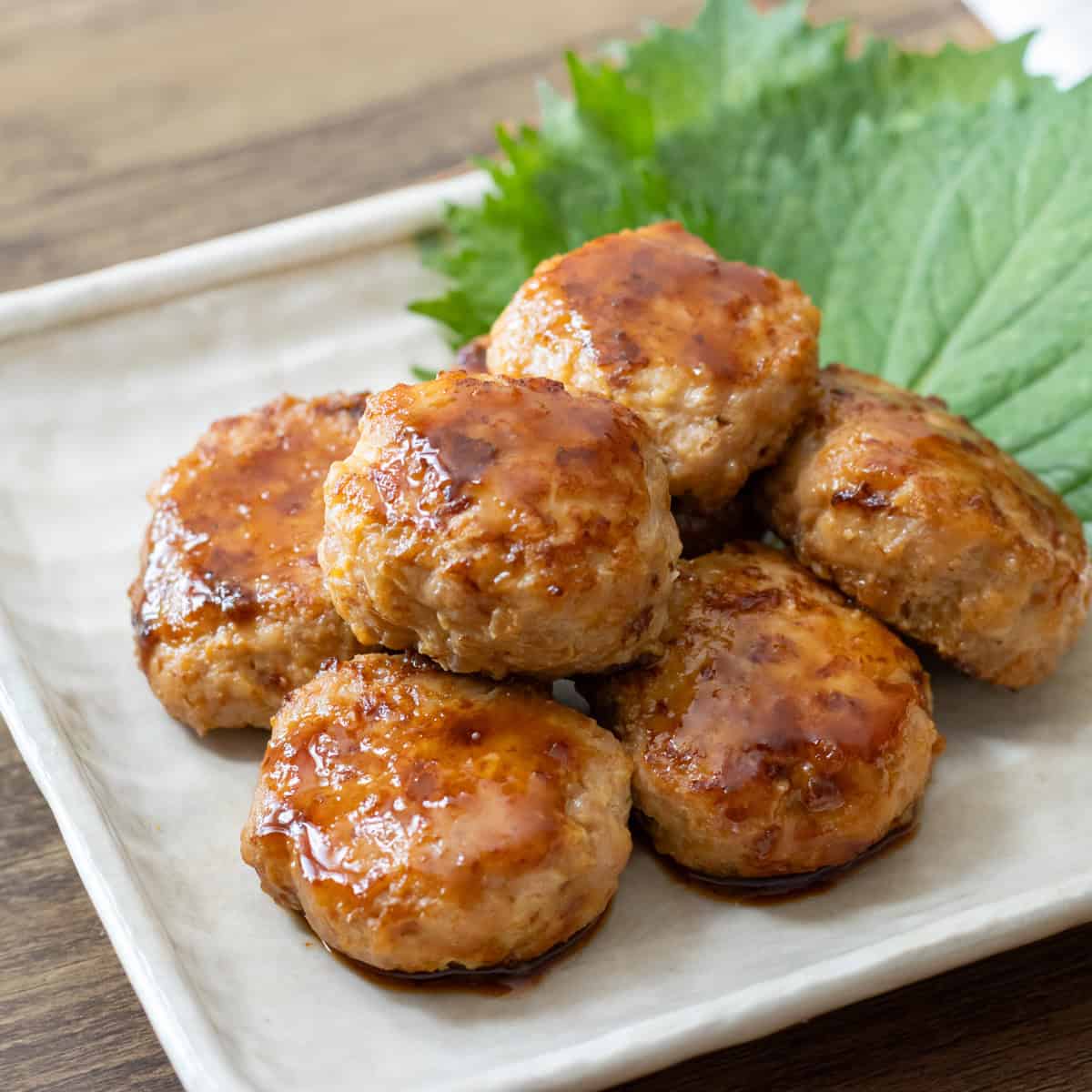
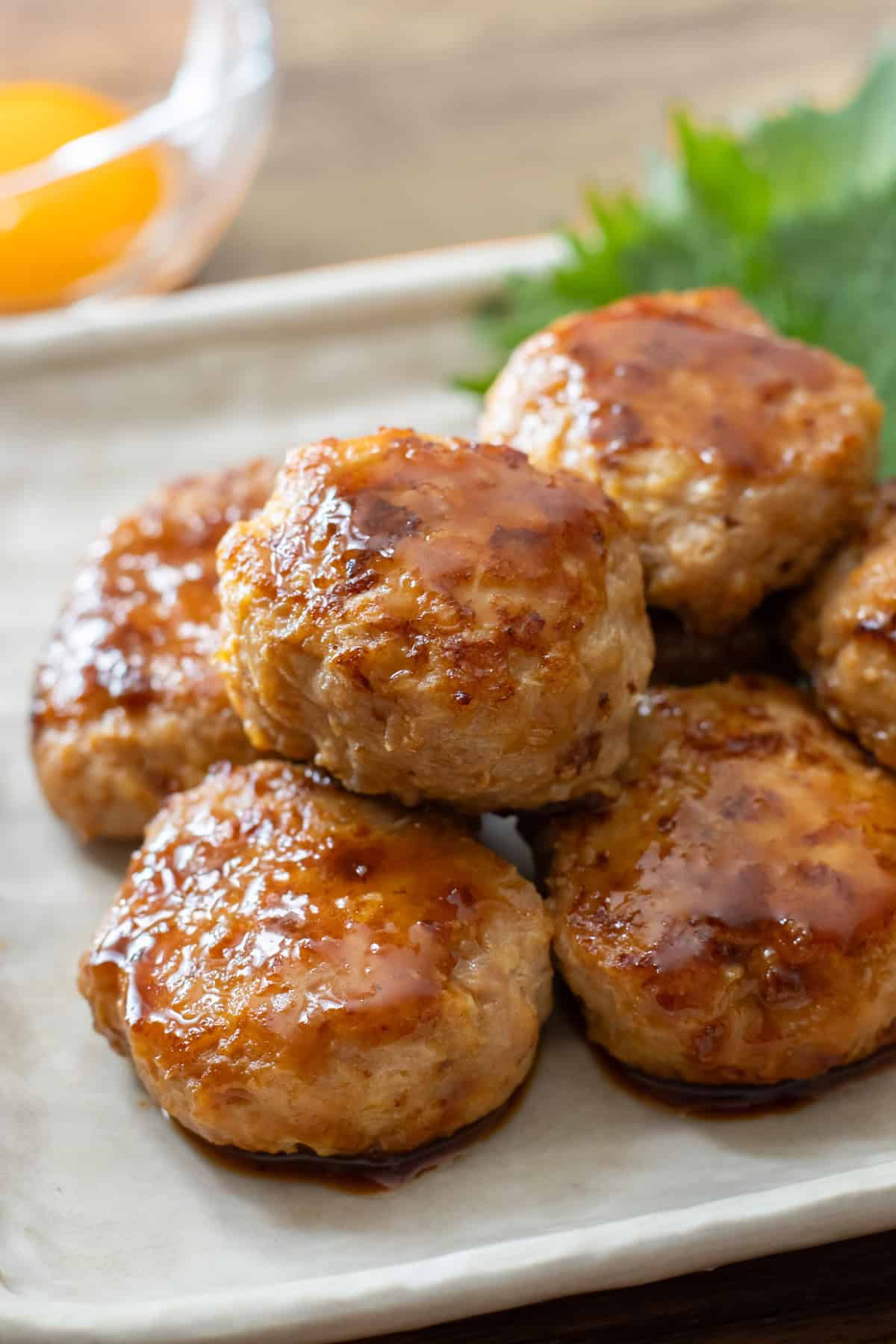
Light, tender, and packed with rich chicken flavor, Tsukune is a beloved favorite enjoyed by people of all ages throughout Japan. The sweet and savory glaze coats the lightly charred exterior, and with every bite, the juicy meat fills your mouth with comforting flavor.
Jump to:
What is Tsukune?
Tsukune is a classic Japanese dish made by combining ground meat—most commonly chicken, though sometimes seafood—with seasonings and other ingredients, kneading the mixture until it becomes sticky, and shaping it into balls or oval patties before cooking. The name "tsukune" comes from the Japanese verb "tsukuneru," which means to knead and shape ingredients into a ball or lump. Outside Japan, it is often described as "Japanese chicken meatballs" and is widely known as a popular dish served on skewers at yakitori restaurants (restaurants specializing in grilled chicken skewers).
What makes this dish so appealing is its light, tender texture and comforting, meaty flavor. Kneading the ground meat incorporates air into the mixture, making it tender while also developing the protein network that helps it retain moisture and fat. It is also highly versatile: adding other ingredients to the meat creates different textures and layers of flavor, and it can be enjoyed simply seasoned with salt or glazed with a sweet and savory sauce.
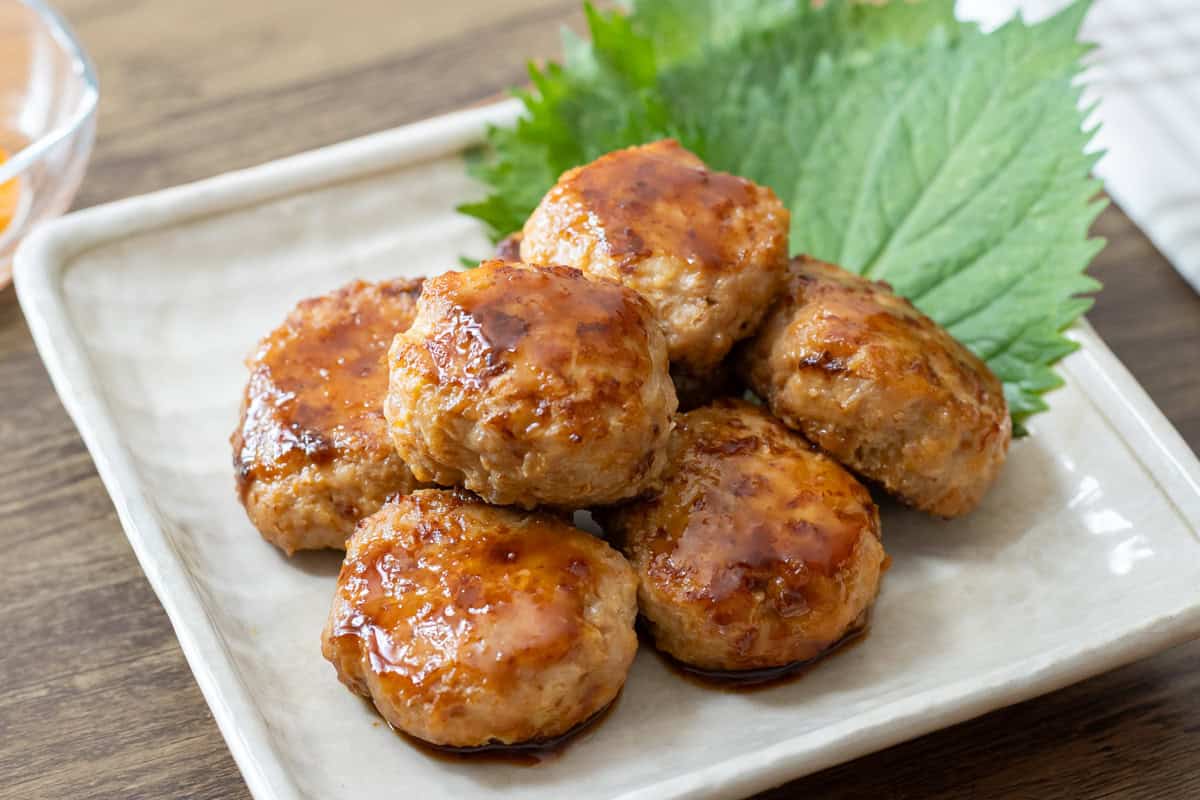
In this recipe, I'm sharing a classic style of tsukune commonly enjoyed in Japanese households. In other words, the chicken meatballs are cooked to bring out their natural flavor, then coated in a sweet and savory glaze. I hope you enjoy this tender, flavorful Japanese dish!
Ingredient choices
To make delicious tsukune, it helps to understand the roles of the ingredients mixed into the ground meat. Here are some of the ingredients commonly added to the dish:
- For a light, juicy texture: onion, naganegi (Japanese leeks), tofu
- For added crunch: chicken cartilage, lotus root, gobo (burdock root), bamboo shoots, carrot
- For extra flavor: shiso leaves (perilla), ginger, shiitake mushrooms, black pepper, yuzu kosho (a condiment made with green chili peppers and yuzu citrus)
- For binding: egg, starch, panko breadcrumbs
Each ingredient has a specific role, and depending on how you combine them, you can customize your tsukune to suit your taste—for example, by adding a satisfying crunch or creating a more distinctive flavor profile. Among these, onion and naganegi are particularly popular additions. As they cook, they release moisture that helps keep the meat tender and juicy while also adding a subtle natural sweetness.
The exact ingredients and quantities vary from household to household and from region to region, so there is no single "correct" way to make tsukune. That said, adding too many ingredients can throw off the balance of flavors. Since the ground meat is the star of the dish, it is best to enhance its flavor without overpowering it.
This recipe uses just two mix-ins: onion and egg. These ingredients highlight the chicken's natural flavor while creating a light, tender texture. It may seem very simple, but I highly encourage you to give this combination a try, even if you already have experience making tsukune.
Key techniques for perfect Tsukune
There are also a few key techniques used throughout the cooking process that make all the difference.
The first is kneading the ground meat.
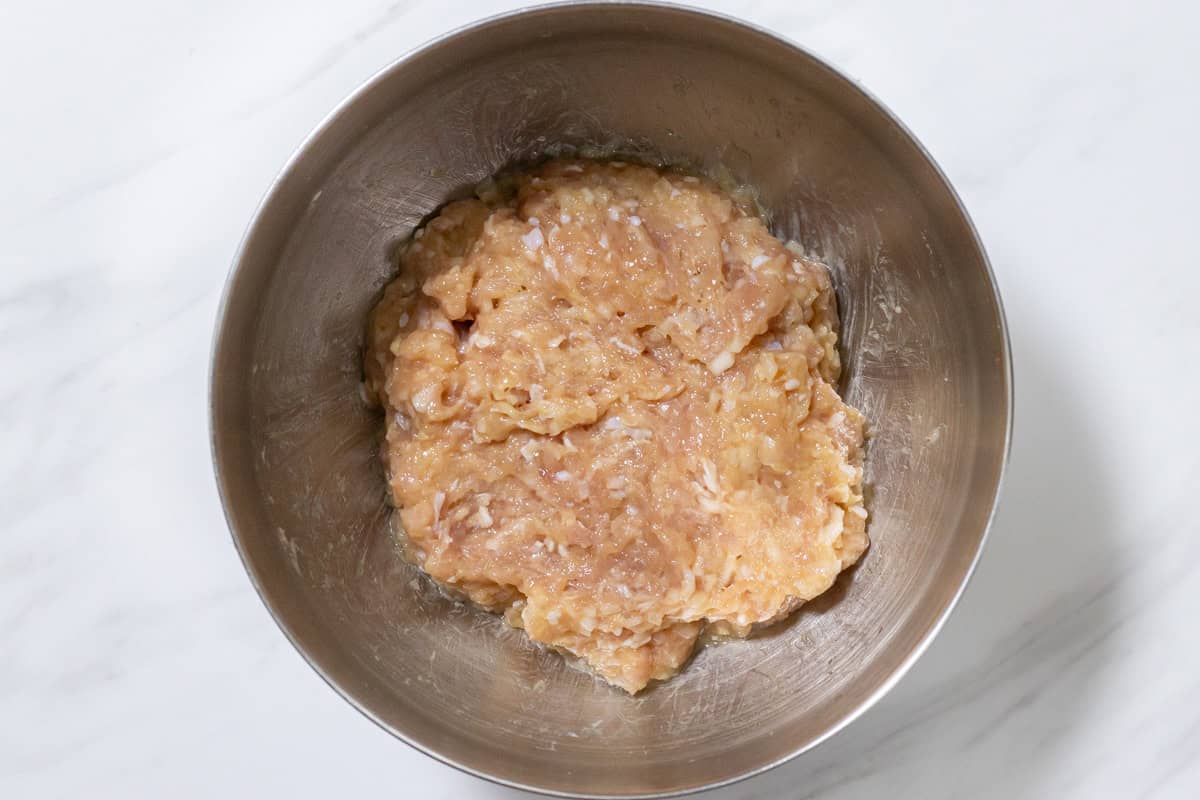
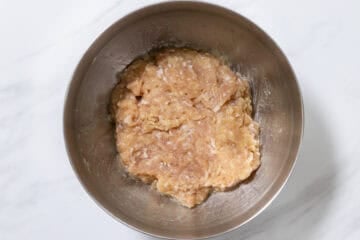
Place the ground meat in a bowl, add salt, and knead it until it becomes sticky and holds together. The key is to use salt equal to about 0.7-1% of the meat's weight and knead the mixture thoroughly until it develops a sticky consistency. Adding salt and kneading the meat thoroughly helps release proteins from the meat, allowing them to form a strong protein network that helps retain moisture and fat. This results in a light, tender, and pleasantly springy texture.
For dishes where you want to preserve a looser, meatier texture, it is best to knead the meat only briefly. For tsukune, however, creating a sticky meat mixture will give you better results.
Next comes shaping the meat mixture.
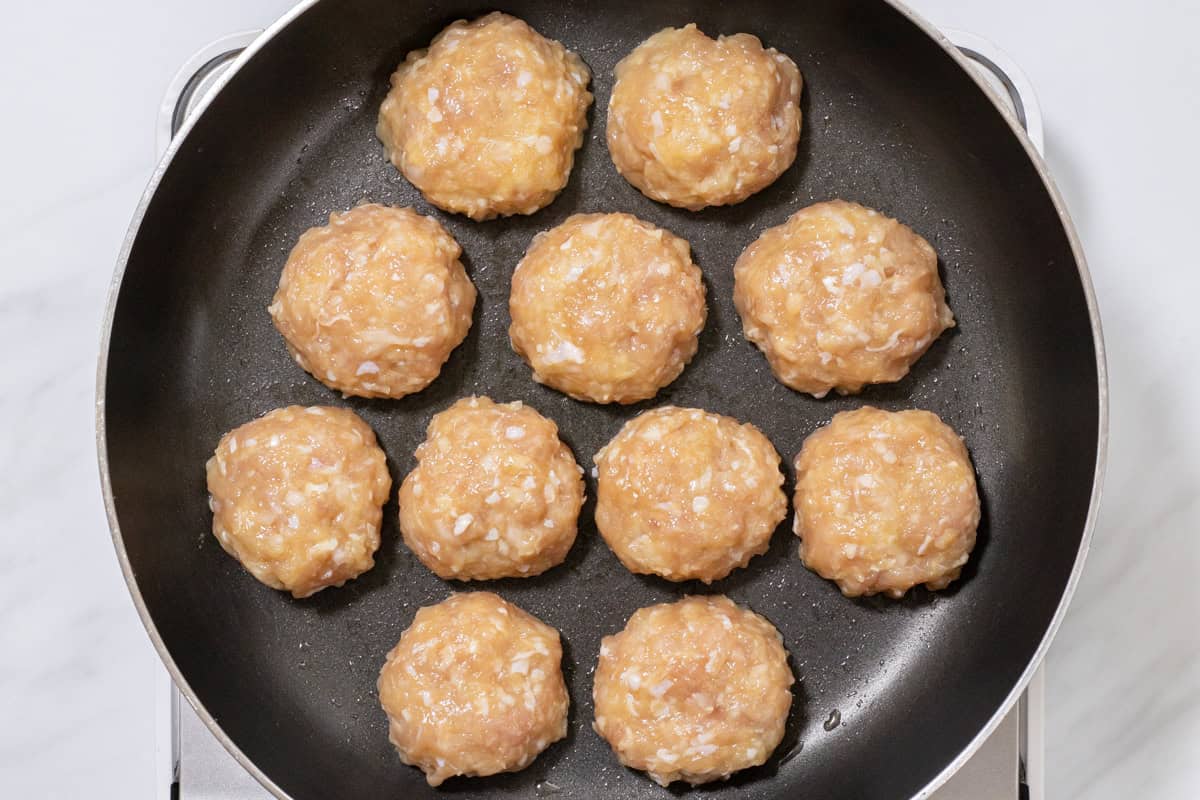
You can shape it however you like, such as into balls or oval patties, but making each piece about 1 inch (2.5 cm) thick or less is recommended. If the pieces are too thick, the outside may overcook while the center takes longer to cook through, which can result in a slightly tough texture. Therefore, even if you are making your tsukune into balls, it is better to shape them into slightly flattened rounds rather than perfectly round balls so that they cook more evenly.
Finally, it is time to cook the tsukune.
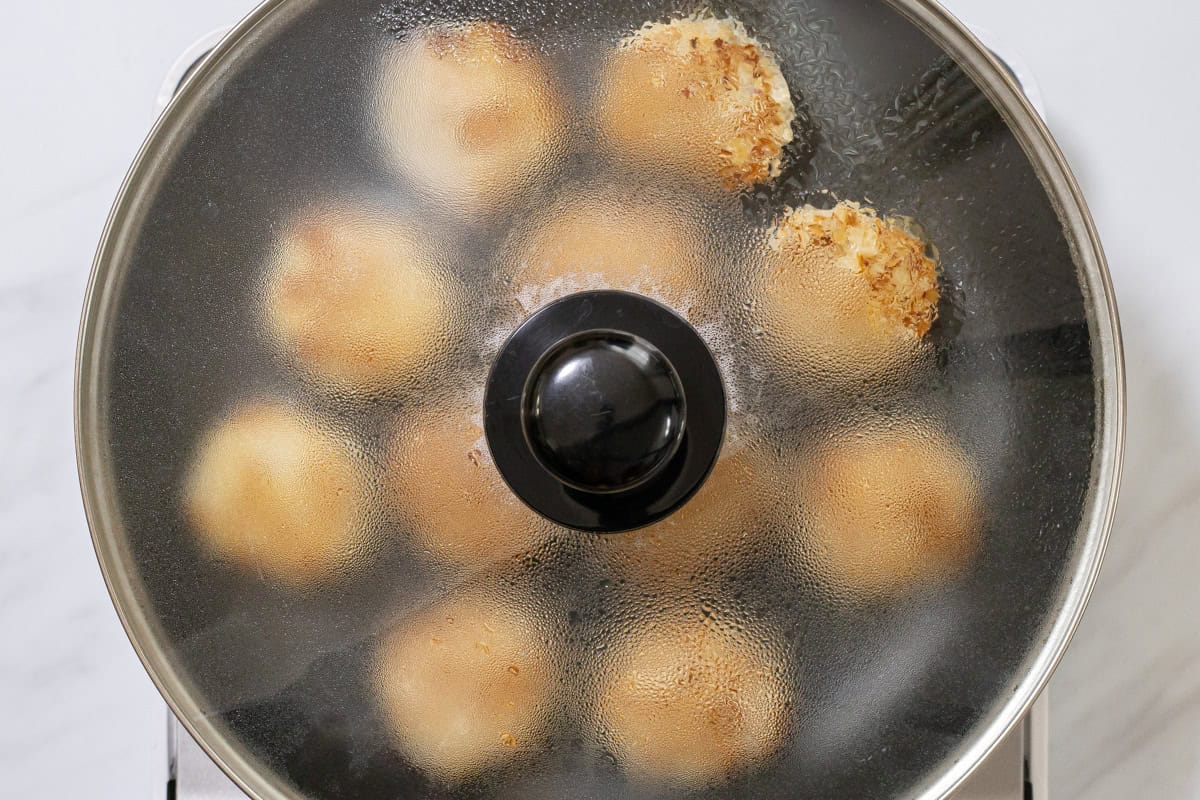
Once both sides are nicely browned, reduce the heat to medium-low and let them cook through gently. If the heat is too high, the outside may burn while the inside remains undercooked. You should also be careful not to overcook them. Overcooking causes moisture and fat to escape from the meat, leaving it dry and tough.
To check for doneness, insert a skewer or chopstick into the center. If the juices run clear, your tsukune is cooked through. If you are still unsure, simply cut one open and check the inside. Once the center is fully cooked, they are done.
Traditional Japanese teriyaki sauce
Let's also take a closer look at the sauce used to season tsukune.
The sauce commonly used for this dish is a traditional Japanese teriyaki sauce made with sake, mirin, sugar, and soy sauce. It has a sweet and savory flavor with a relatively rich profile, but it also allows the natural flavors of the ingredients to shine through, as it doesn't contain spices or acidic ingredients.
Although teriyaki sauce is also widely available in the U.S., many American versions tend to be sweeter, thicker, and often contain additional ingredients compared to traditional Japanese versions. The style commonly found in the U.S. developed under American culinary influences. For an authentic experience, try using Japanese teriyaki sauce with this dish.
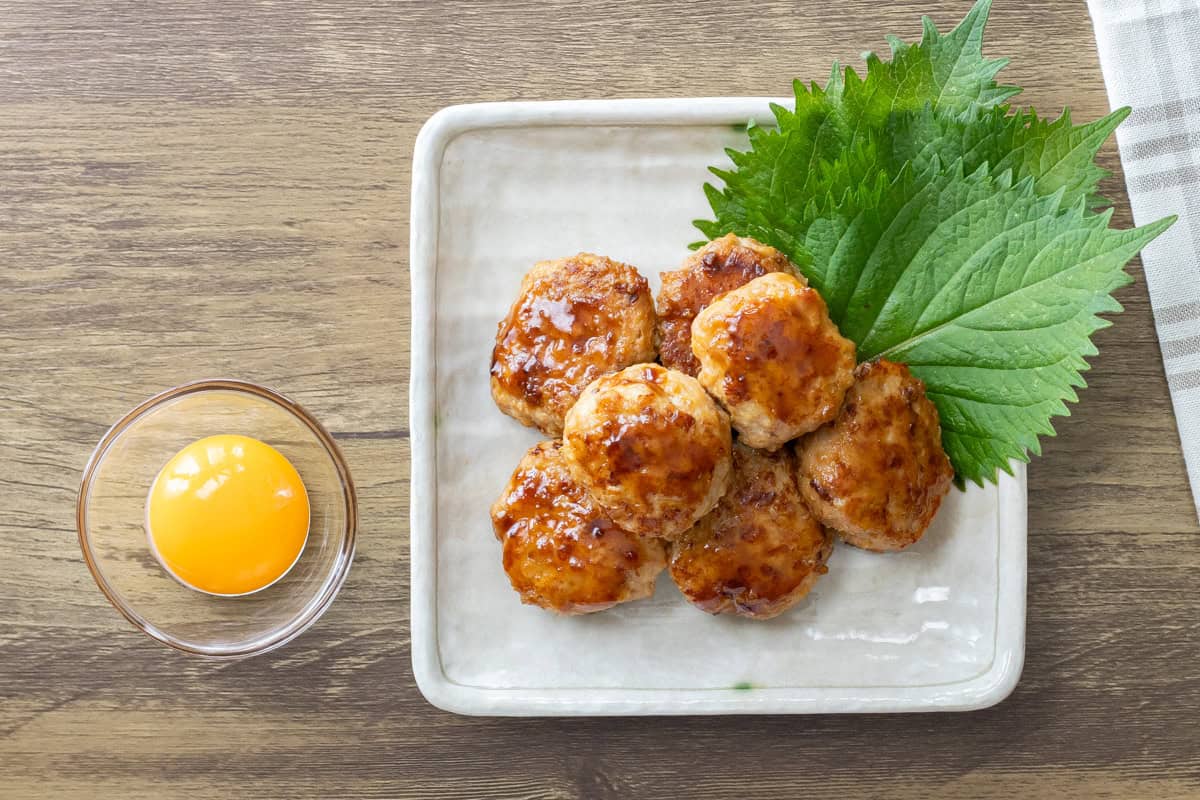
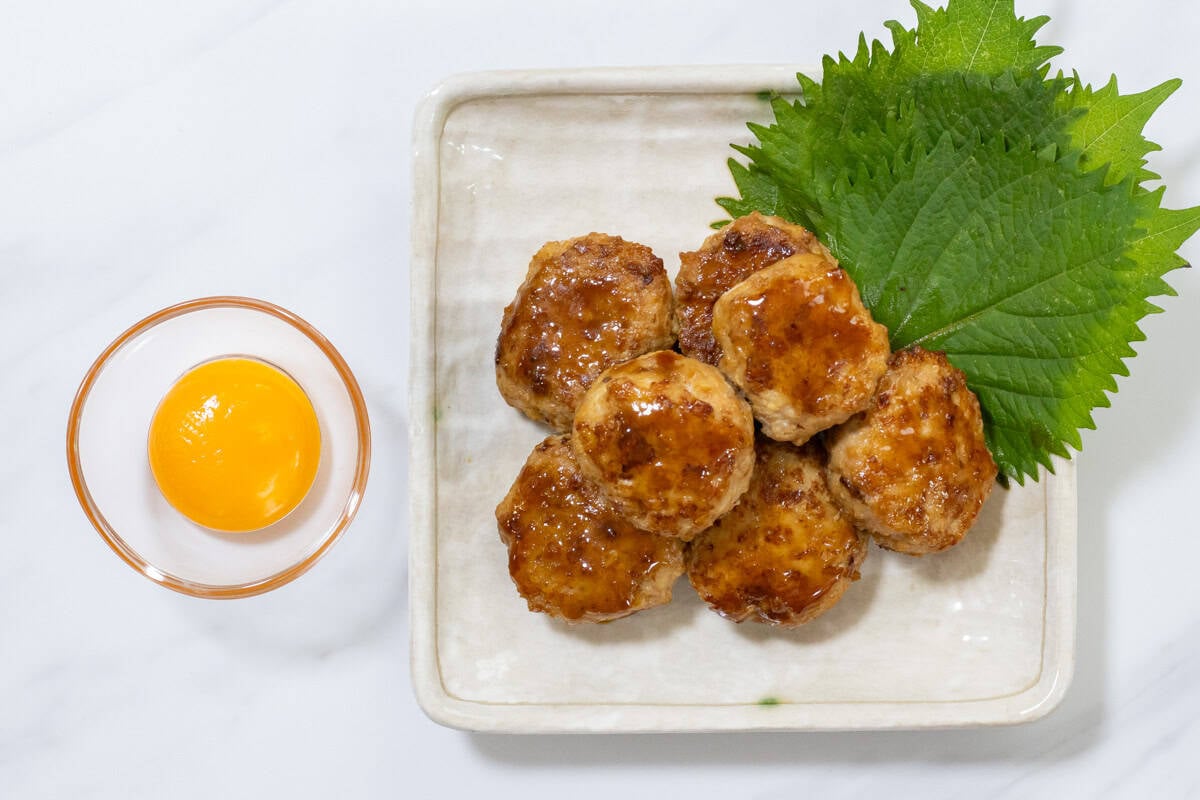
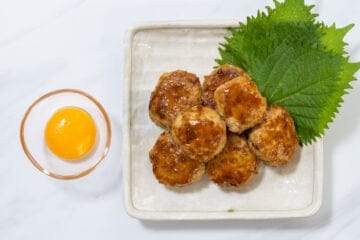
In Japan, people often dip tsukune coated with this sauce into raw egg yolk before eating. The combination of the sweet-savory glaze and the mellow, creamy yolk creates a smooth, layered flavor with depth. If pasteurized eggs are available in your area, feel free to give this popular way of enjoying tsukune a try.
📋Step-by-step recipe
Ingredients
- 10.6 oz ground chicken thighs
- 3.5 oz onions
- ⅖ tsp salt (about 0.8% of the chicken's weight)
- 1 small egg (about 1.5 oz/42 g, including the shell)
Sauce:
- 1 Tbsp sake
- 1 Tbsp mirin
- 1 tsp sugar
- 1 Tbsp soy sauce
For serving (optional):
- pasteurized egg yolks
- shiso leaves (perilla)
Instructions
🕒 Total: 20 mins
Step 1
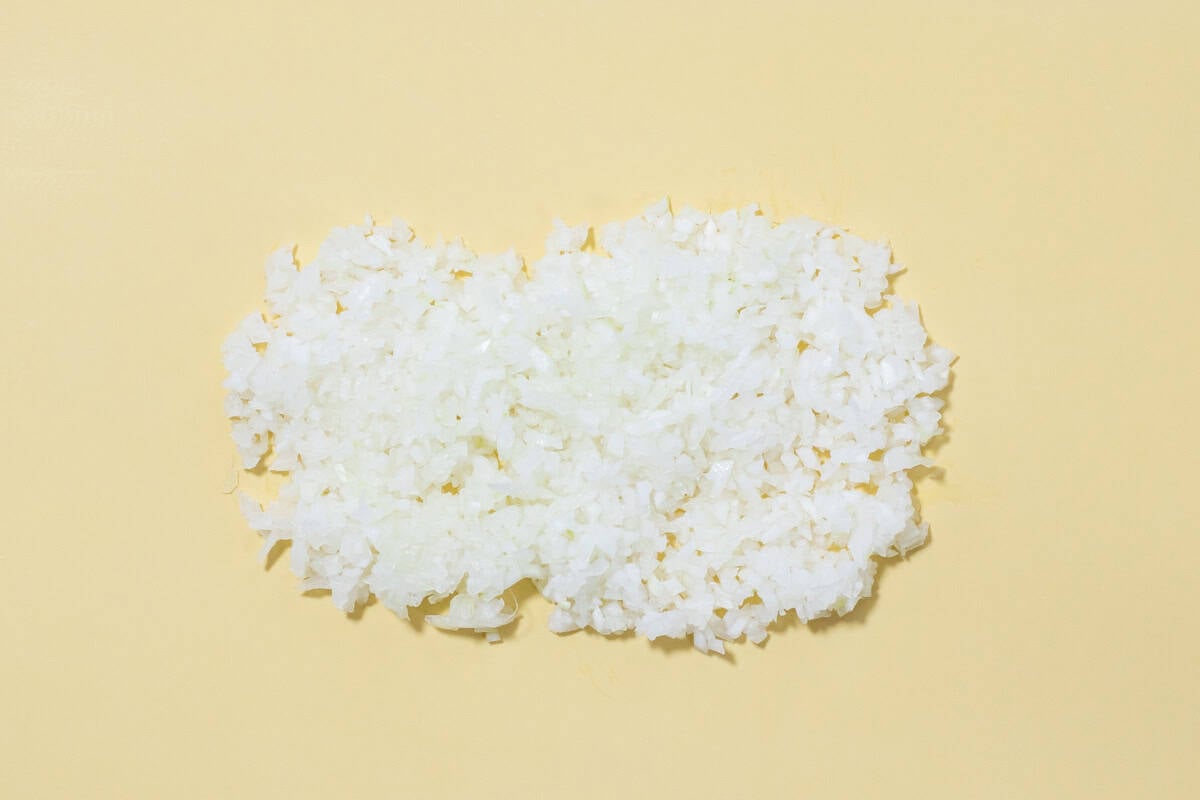
Finely chop the onions.
Step 2
Place the ground chicken and salt in a bowl and knead the mixture thoroughly for a few minutes, until it becomes sticky and holds together. Then, add the chopped onions and egg, and mix well until combined.
Step 3
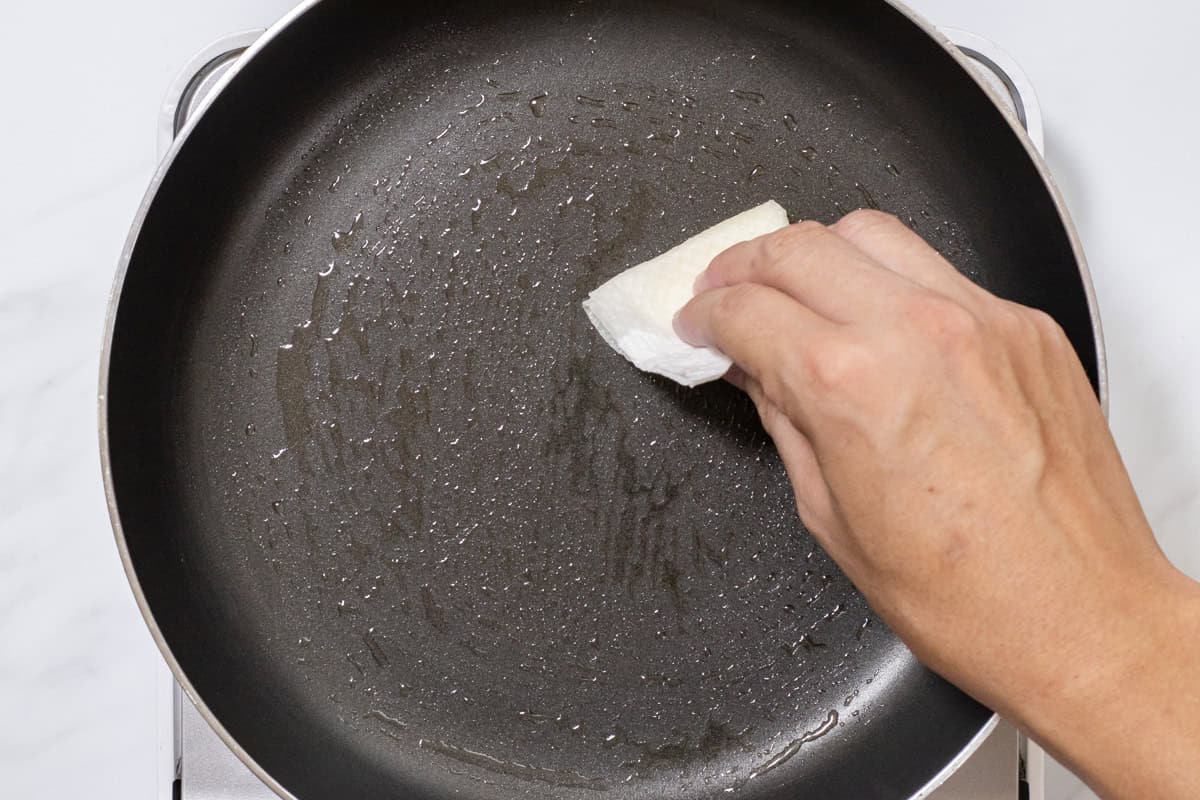
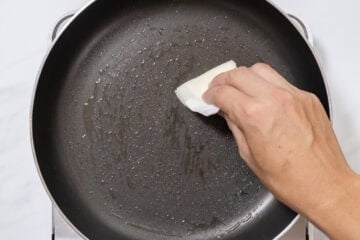
Lightly coat a pan with oil, using a paper towel to spread it evenly over the entire surface.
Step 4
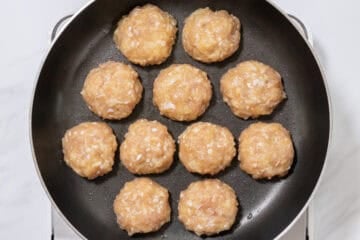
Take a portion of the chicken mixture and shape it into a ball or an oval patty about 1 inch (2.5 cm) thick. Place the shaped pieces in the pan as you make them, making sure they don't touch.
Step 5
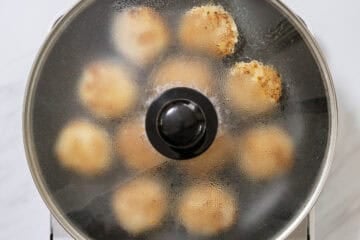
Carefully flip them to help them keep their shape, and cook the other side until browned as well. Then cover the pan, reduce the heat to medium-low, and cook for about 4 minutes.
Step 6
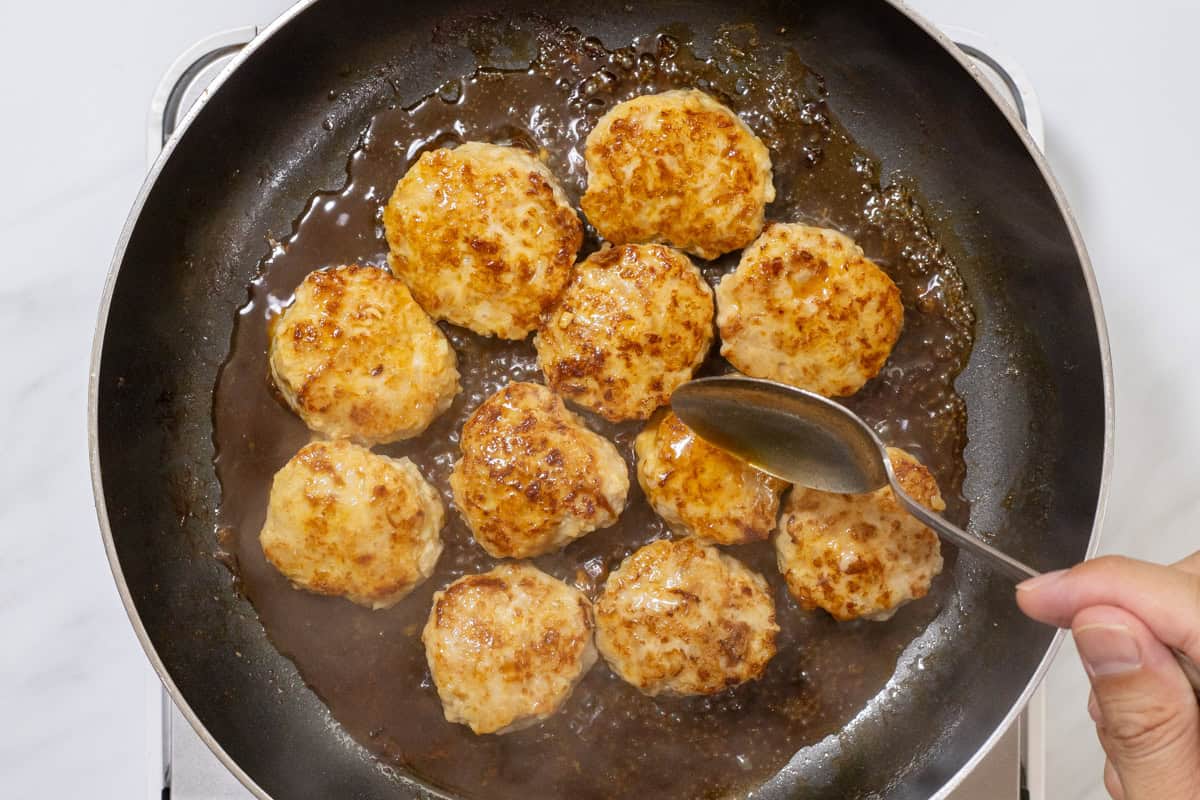
Remove the lid and turn off the heat. Add the sauce ingredients (sake, mirin, sugar, and soy sauce), then return the pan to medium heat. Simmer until the sauce has slightly thickened, occasionally spooning it over the tsukune (meatballs).
Step 7
Transfer the tsukune to a serving plate. They are delicious on their own, but you can also enjoy them wrapped in shiso leaves or dipped in raw egg yolk, if desired.
How to store
The dish will keep in the refrigerator for up to 2 days.
Cooking tips
- After adding salt to the ground chicken, knead it thoroughly until it becomes sticky and holds together.
- Shape the ground chicken into balls or oval patties, making sure they are not too thick.
- Once the tsukune (meatballs) are nicely browned, reduce the heat to medium-low and cook them gently until they are cooked through.
The many faces of Tsukune
Tsukune is a classic item on the menu at Japanese yakitori restaurants. Perhaps for this reason, many people outside Japan tend to associate tsukune with skewered and grilled chicken meatballs.
However, this is simply one way tsukune is served at yakitori restaurants, and it generally differs from how it is prepared and enjoyed in Japanese households. At home, it is more commonly prepared without skewers.
As this example shows, there are some differences in how tsukune is perceived in Japan and abroad. Here are some other examples:
- Tsukune must be made with chicken.
Chicken is by far the most common choice, but tsukune can also be made with other types of meat or even minced seafood.
- Tsukune must be grilled.
Although grilling is certainly the most familiar cooking method, the dish is still considered tsukune when it is steamed or boiled.
- Tsukune must be cooked over charcoal.
At yakitori restaurants, tsukune is often grilled over charcoal or on a gas grill. In Japanese homes, however, it is usually cooked in a frying pan.
- Tsukune is always coated with a sweet and savory glaze.
Tsukune can also be served with ponzu sauce or simply seasoned with salt.
The common image of tsukune outside Japan certainly reflects a classic style, but it represents only one aspect of the dish. By learning about the many different ways tsukune is prepared and enjoyed in Japan, I hope you will gain a deeper appreciation for Japanese food culture.
I hope you enjoy this recipe!
If you try it, I’d love to hear how it turned out. Please leave a review 💬 and a star rating ⭐ in the comment below. Your support and feedback means so much to me!
More recipes you'll love
Printable Recipe Card
Tsukune (Japanese Chicken Meatballs)
Ingredients
- 10.6 oz ground chicken thighs
- 3.5 oz onions
- ⅖ tsp salt (about 0.8% of the chicken's weight)
- 1 small egg (about 1.5 oz/42 g, including the shell)
Sauce:
- 1 Tbsp sake
- 1 Tbsp mirin
- 1 tsp sugar
- 1 Tbsp soy sauce
For serving (optional):
- pasteurized egg yolks
- shiso leaves (perilla)
Instructions
- Finely chop the onions.

- Place the ground chicken and salt in a bowl and knead the mixture thoroughly for a few minutes, until it becomes sticky and holds together. Then, add the chopped onions and egg, and mix well until combined.
- Lightly coat a pan with oil, using a paper towel to spread it evenly over the entire surface.
- Take a portion of the chicken mixture and shape it into a ball or an oval patty about 1 inch (2.5 cm) thick. Place the shaped pieces in the pan as you make them, making sure they don't touch.
- Carefully flip them to help them keep their shape, and cook the other side until browned as well. Then cover the pan, reduce the heat to medium-low, and cook for about 4 minutes.
- Remove the lid and turn off the heat. Add the sauce ingredients (sake, mirin, sugar, and soy sauce), then return the pan to medium heat. Simmer until the sauce has slightly thickened, occasionally spooning it over the tsukune (meatballs).
- Transfer the tsukune to a serving plate. They are delicious on their own, but you can also enjoy them wrapped in shiso leaves or dipped in raw egg yolk, if desired.

Notes
- The dish will keep in the refrigerator for up to 2 days.
Leave a Rating and a Comment