

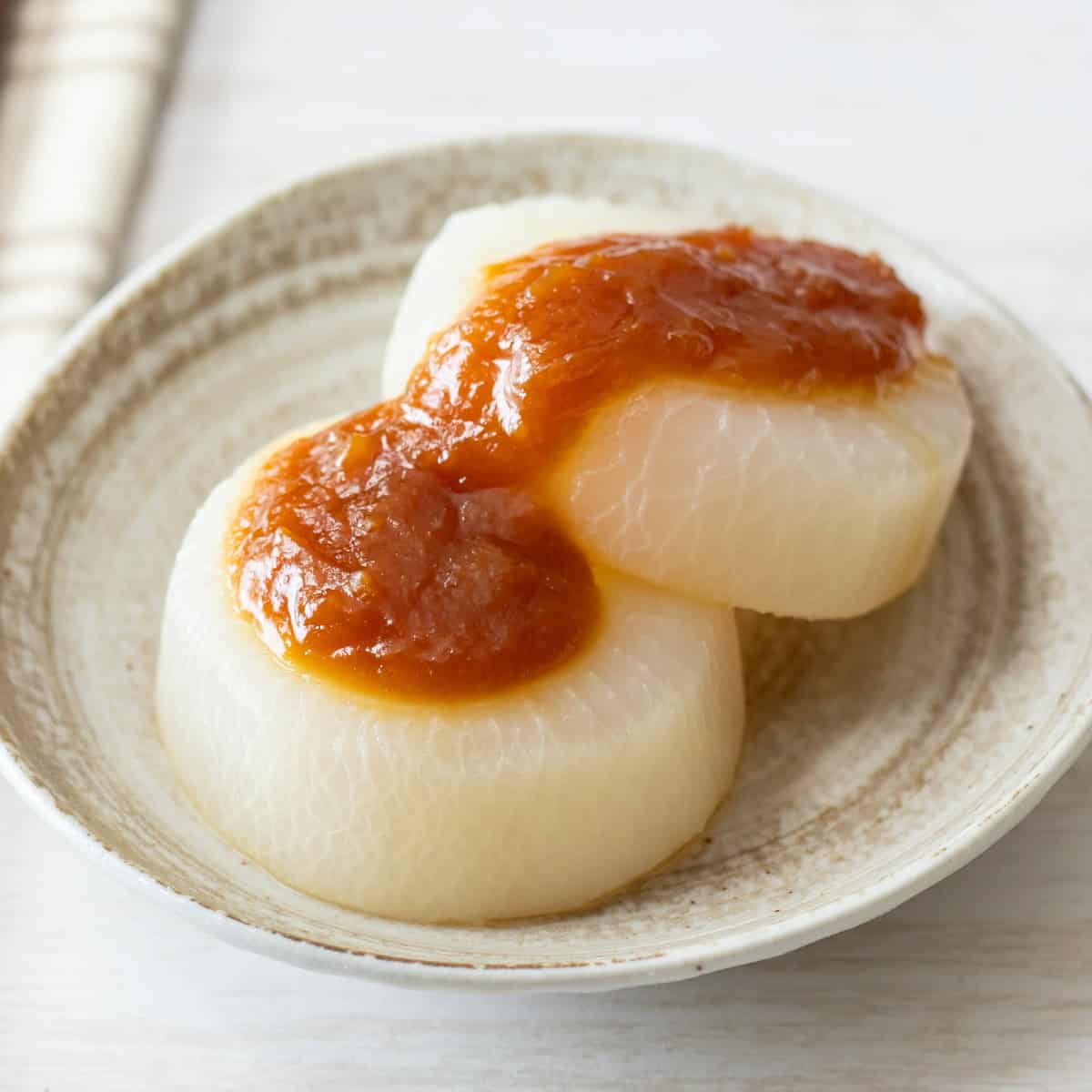
Furofuki Daikon is a traditional Japanese dish featuring daikon radish slowly simmered until tender and topped with flavorful miso sauce. Simple yet full of flavor, this dish brings together the daikon's natural sweetness and the savory richness of miso in perfect harmony, offering a comforting experience with every bite.
Jump to:
What is Furofuki Daikon?
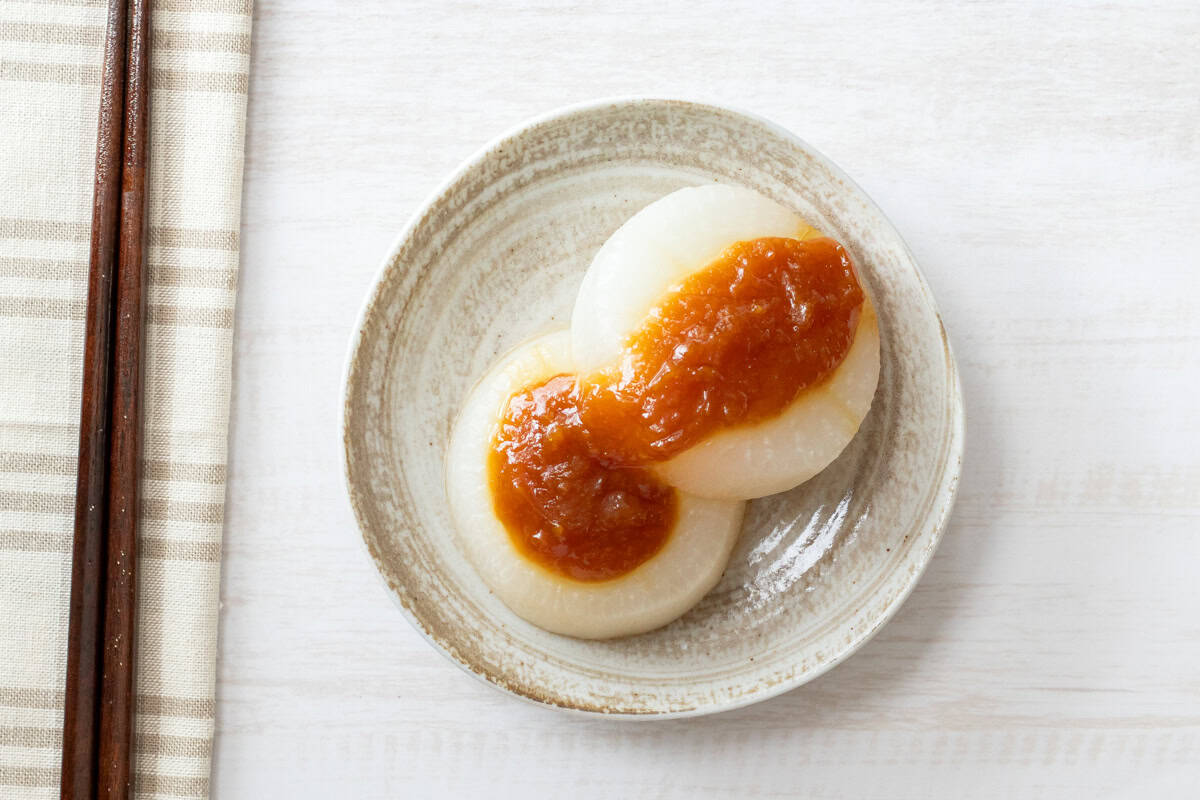
Furofuki Daikon is a traditional Japanese dish made by simmering thick rounds of daikon radish in dashi broth and serving them topped with miso sauce. Slowly simmering the daikon allows it to absorb the umami of the dashi, while the rich miso sauce complements its delicate flavor, resulting in a simple yet satisfying dish.
There are several theories about the origin of the name "Furofuki." One popular explanation is that it comes from the resemblance between two scenes: people blowing on their skin (fuki) to remove grime in a traditional steam bath (furo), and someone blowing on a hot piece of daikon to cool it down before eating it.
What makes this dish special is how it brings out the daikon's natural flavor. As it simmers slowly, the daikon loses its sharp, peppery bite, allowing its natural sweetness to shine through. The flavorful miso sauce pairs beautifully with the tender daikon, making it a wonderful side dish to serve with rice or a delicious accompaniment to drinks.
Although it takes a little time to prepare, most of that time is spent simply letting the daikon simmer, so the hands-on effort is minimal. Give this classic comfort food a try and bring a taste of traditional Japan to your table.
Four essential steps to prepare daikon
To make delicious furofuki daikon, proper preparation of the daikon is essential. Here are four key steps to follow.
-
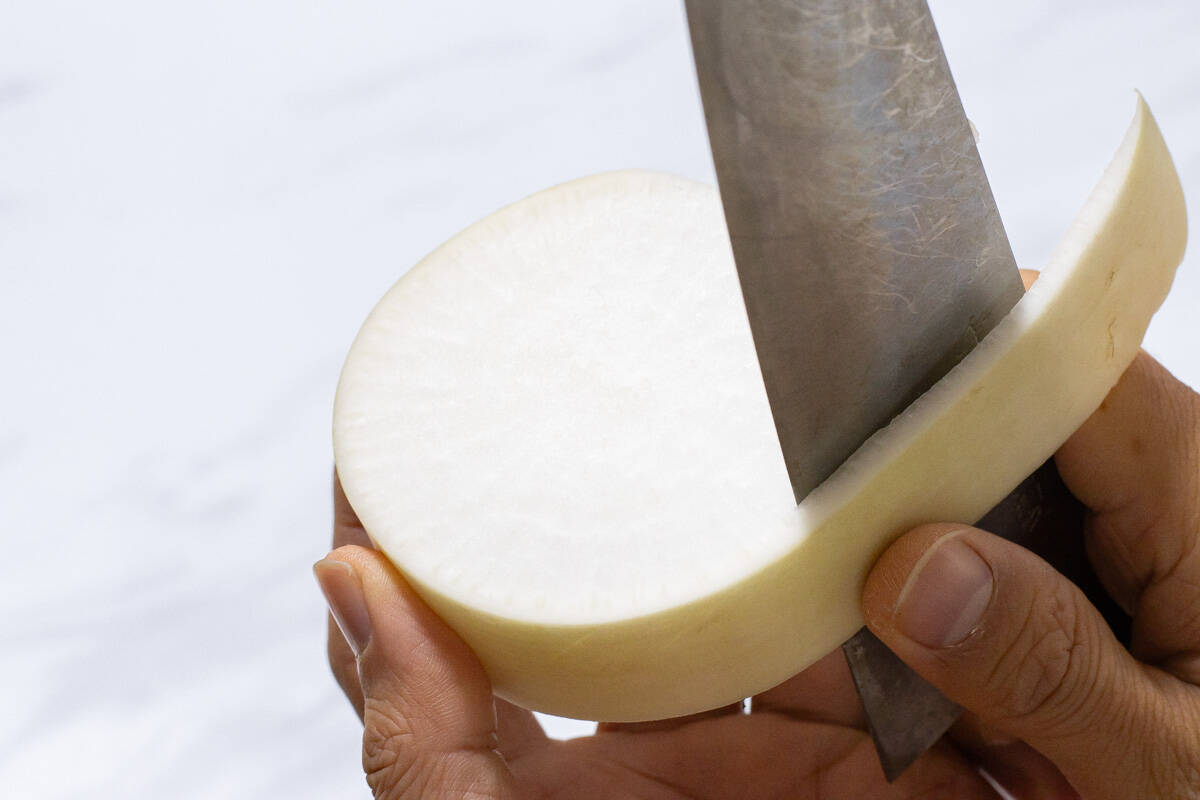
Peeling thickly.
Daikon has a tough, fibrous layer just beneath the skin. If you leave this layer on, the daikon can have a stringy texture and may not absorb the flavors of the dashi broth as well. To avoid this, peel the daikon thickly, removing about ¼ inch (5 mm) of the outer layer along with the skin.
-
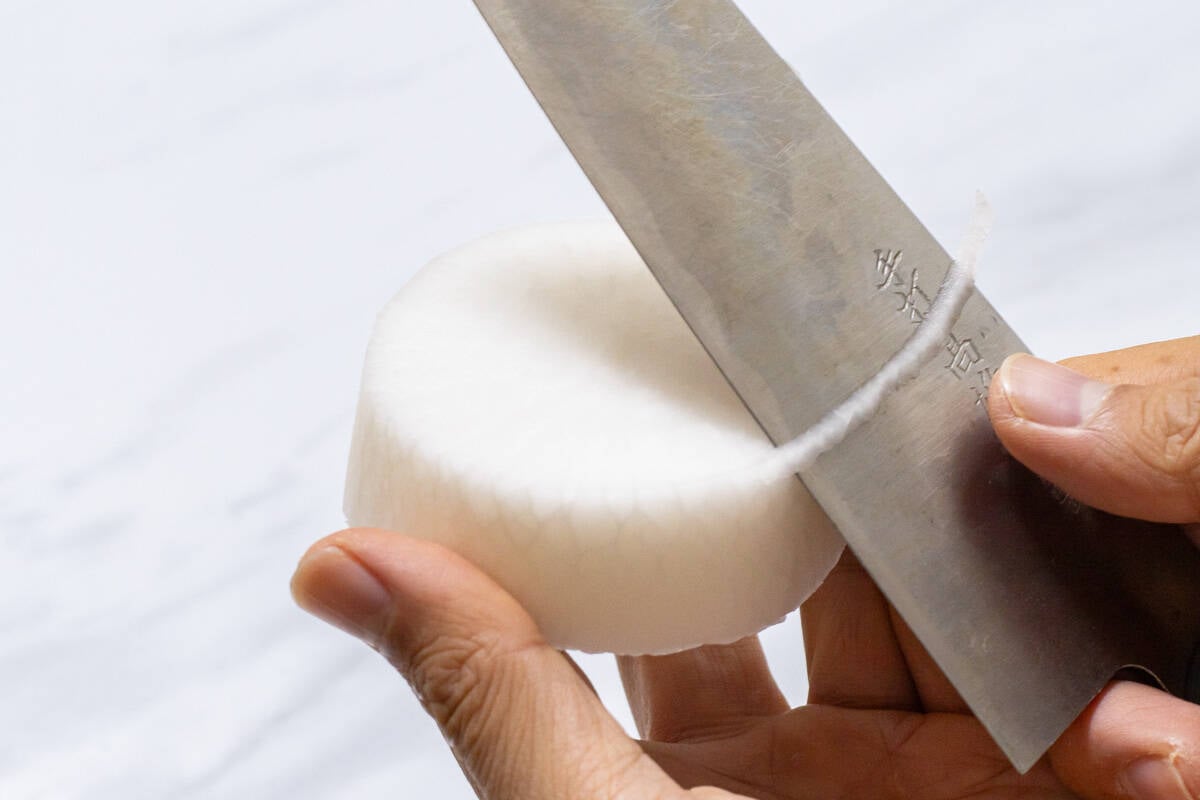
Rounding off the edges.
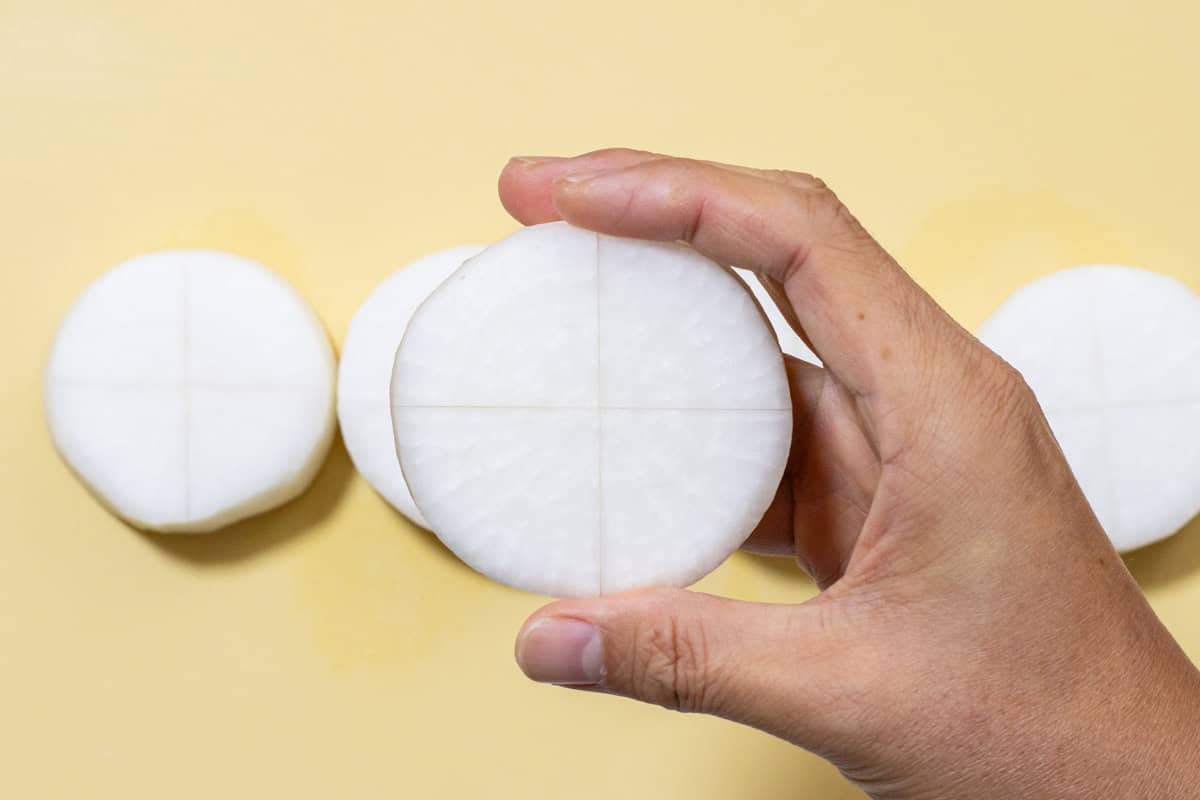
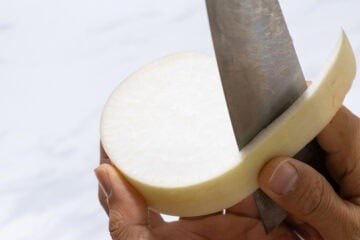
Rounding off the edges, a traditional technique known as mentori in Japanese cooking, helps give the daikon a smoother texture. It also prevents the pieces from chipping when they bump against one another in the pot during simmering.
After cutting the daikon into thick rounds and peeling them, use a knife to trim the sharp edges around the circumference of each piece on both sides, creating a slightly rounded shape.
-
Scoring.
On one cut side of each daikon round, make a shallow cross-shaped incision about one-fourth to one-third of the way through the piece. This helps the dashi penetrate the center of the daikon, allowing it to absorb more flavor as it simmers.
-
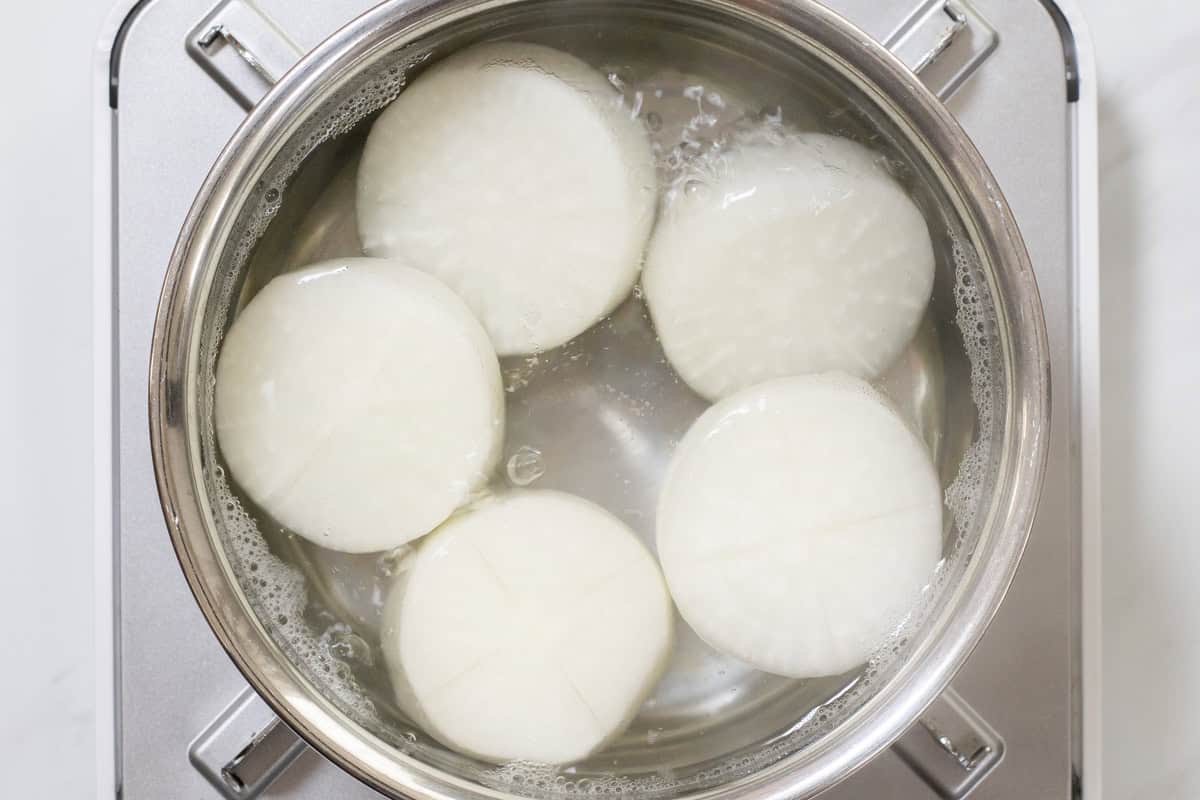
Parboiling.
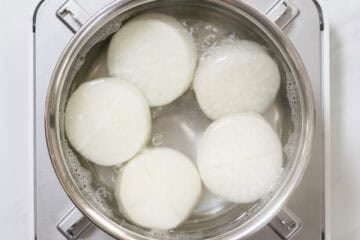
Parboiling the daikon before simmering it in dashi helps reduce bitterness and unpleasant odors, resulting in a cleaner, more delicate flavor.
In Japan, it is common to parboil daikon in either the starchy water left over from rinsing rice or fresh water with a small amount of rice added. This is because the starch in the rice is thought to interact with compounds in the daikon, helping bring out its natural sweetness.
However, this effect is quite subtle, so if you are making this dish at home, plain water will work just fine. That's what I use in this recipe, too. What matters most isn't what you use to parboil the daikon, but the parboiling process itself.
Once the daikon is tender, you can move on to simmering it in dashi in the next step.
Simmering daikon in dashi
The parboiled daikon is gently simmered in dashi for about 30 minutes, allowing it to absorb the umami.
For this step, kombu dashi is the preferred choice. You can also use other types of dashi, such as bonito dashi or awase dashi, a combination of bonito and kombu. However, for this particular dish, leaving out the bonito allows the daikon's natural sweetness and delicate flavor to shine through, resulting in a more refined taste.
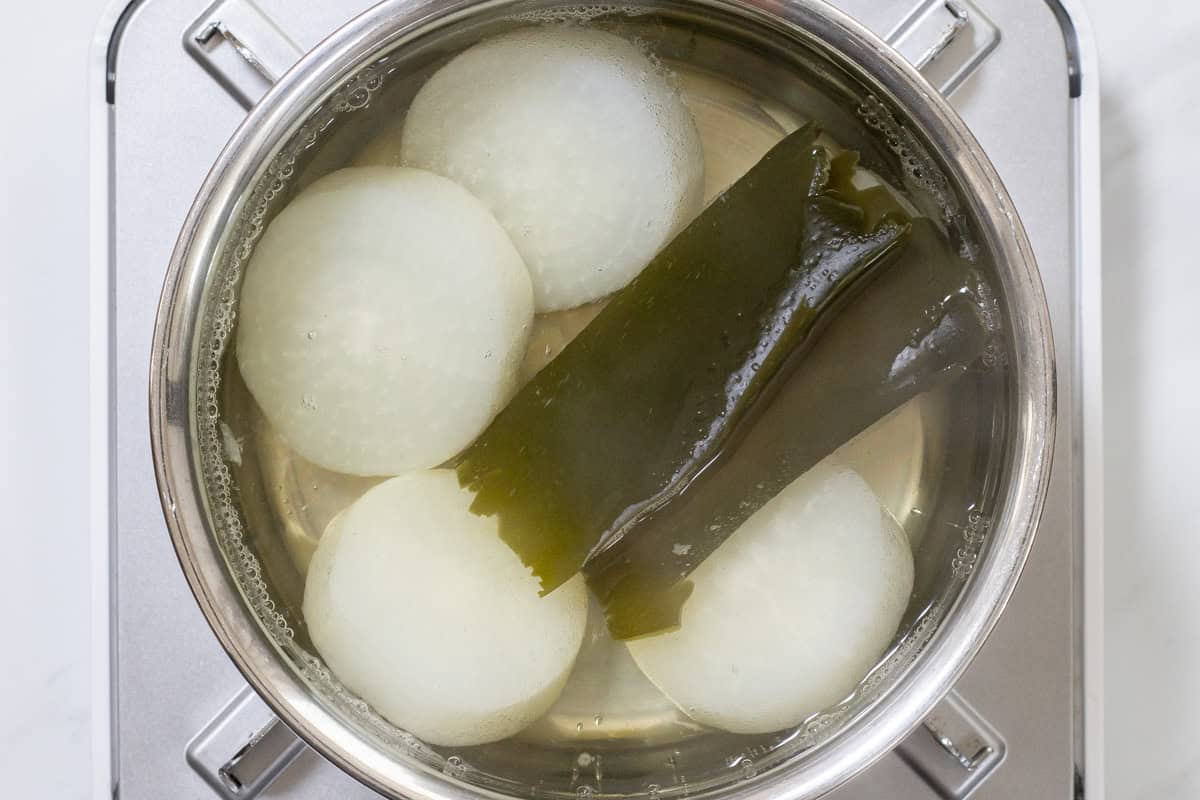
Making kombu dashi for this dish is incredibly simple. Just add a piece of kombu to the pot along with the daikon and let them simmer together. Keep the heat low enough to maintain a gentle simmer without bringing the liquid to a boil. This helps prevent the daikon pieces from bumping into one another and breaking apart or chipping, while also keeping the kombu from releasing strong odors or making the liquid slimy.
If you don't have kombu on hand and need to use another type of dashi, be sure to keep the flavor light. Since the daikon will be seasoned with the miso sauce described in the next section, the goal at this stage is to bring out the daikon’s natural flavor rather than overpower it.
Making the miso sauce
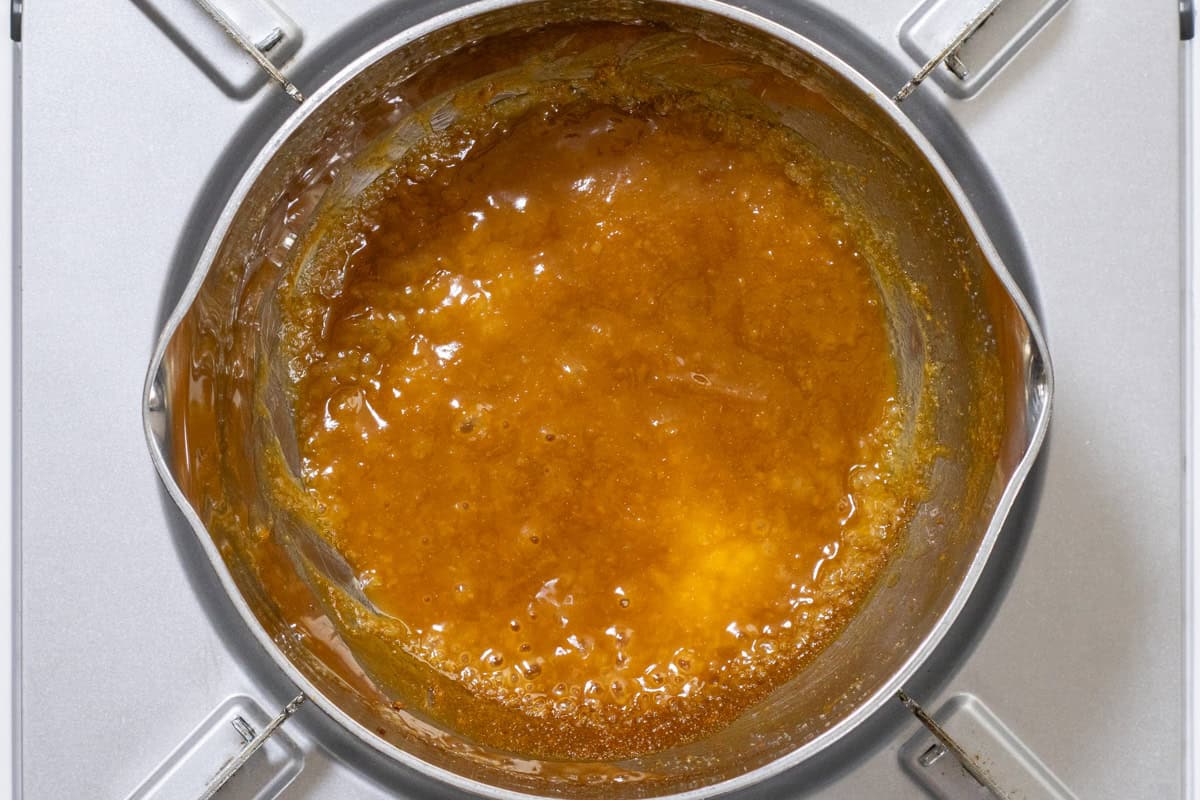
While the daikon is simmering in the dashi, let's make the miso sauce. It's very simple to prepare: just combine the miso, sake, mirin, and sugar in a saucepan and cook over medium heat until most of the liquid has evaporated and the sauce has thickened.
You can use any type of miso you have on hand, but keep in mind that the flavor will vary slightly depending on which type you choose. Different regions of Japan have their own miso traditions.
For example, in Aichi Prefecture, red miso is commonly used to create a rich, deep flavor, while in Kyoto, sweet white miso is the traditional choice. For a twist, you can also use niku miso (miso-flavored ground meat) or garlic miso instead of the basic miso sauce. Alternatively, you can add a little yuzu (Japanese citrus) zest or juice to the sauce for a lighter, more refreshing flavor.
One of the great things about furofuki daikon is that you can adjust the flavor of the sauce to suit your taste. Start by following the recipe with whatever miso you have on hand, then try different varieties or flavor combinations next time to find your favorite.
📋Step-by-step recipe
Ingredients
- 1.3 lb daikon radish
- 0.2 oz kombu (dried kelp)
Miso sauce:
- 2 Tbsp miso
- 1 Tbsp sake
- 1 Tbsp mirin
- 2 tsp sugar
Instructions
🕒 Total: 1 hr 20 mins
Step 1
Cut the daikon into rounds about 1-1 ¼ inches (2.5-3 cm) thick. Peel each piece thickly, removing about ¼ inch (5 mm) of the outer layer along with the skin.
Step 2
Trim the sharp edges around the circumference of each daikon round on both sides to create a slightly rounded shape. On one cut side of each piece, make a shallow cross-shaped incision about ¼-⅓ of the way through.
Step 3
Arrange the daikon rounds in a pot and add enough water to fully submerge them, leaving enough room for the pieces to move freely. Bring the water to a boil, then reduce the heat to low to maintain a gentle simmer, with small bubbles continuously rising to the surface. Cook for about 30-40 minutes, until the daikon is tender. (To check for doneness, insert a skewer into a piece of daikon. It should slide in easily.)
Step 4
Carefully remove the daikon from the pot, taking care not to break the pieces, and discard the cooking water. Return the daikon to the pot and add enough fresh water to fully cover the pieces, along with the kombu. Bring to a boil, then reduce the heat to very low, keeping the water just below a simmer. Cook for about 30 minutes to allow the daikon to gradually absorb the umami from the kombu.
Step 5
Meanwhile, combine the miso, sake, mirin, and sugar in a saucepan, stirring until the miso is dissolved. Place the saucepan over medium heat and bring the mixture to a gentle simmer. Once it begins to simmer, reduce the heat to low and cook for about 3 minutes, stirring occasionally with a spatula, until the sauce thickens.
Step 6
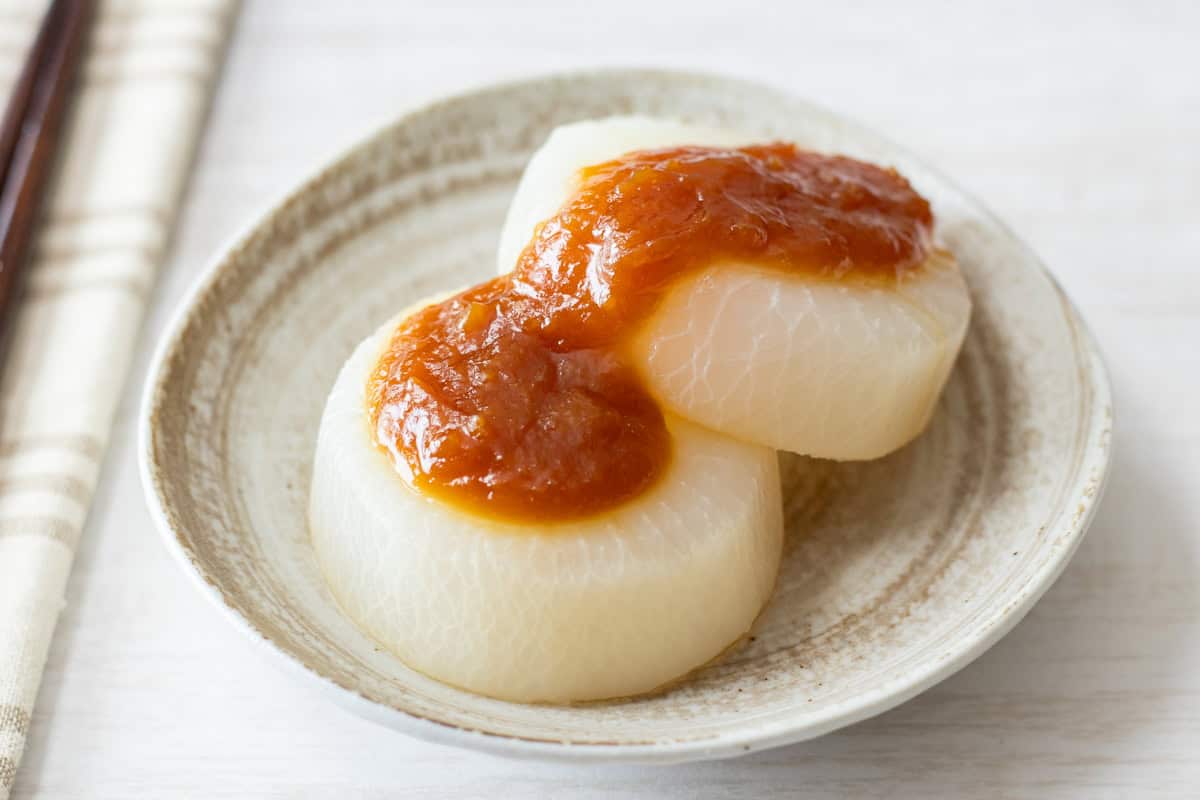
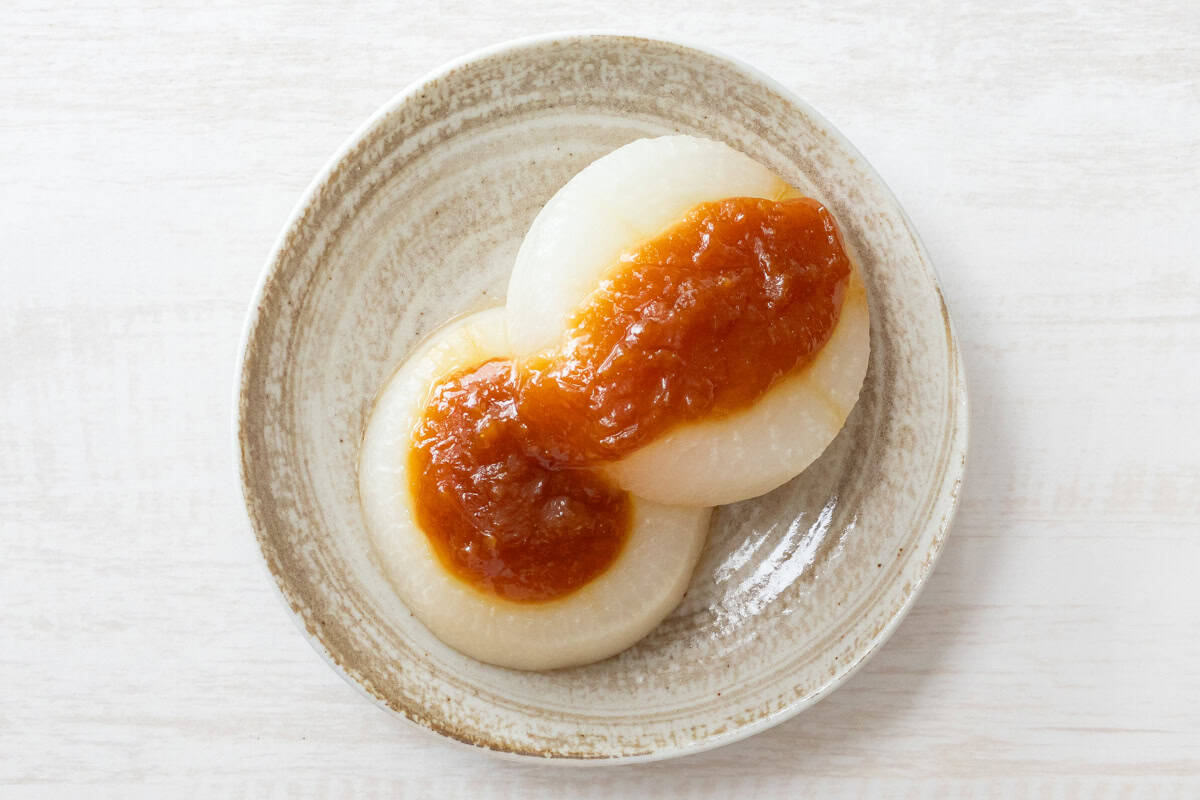
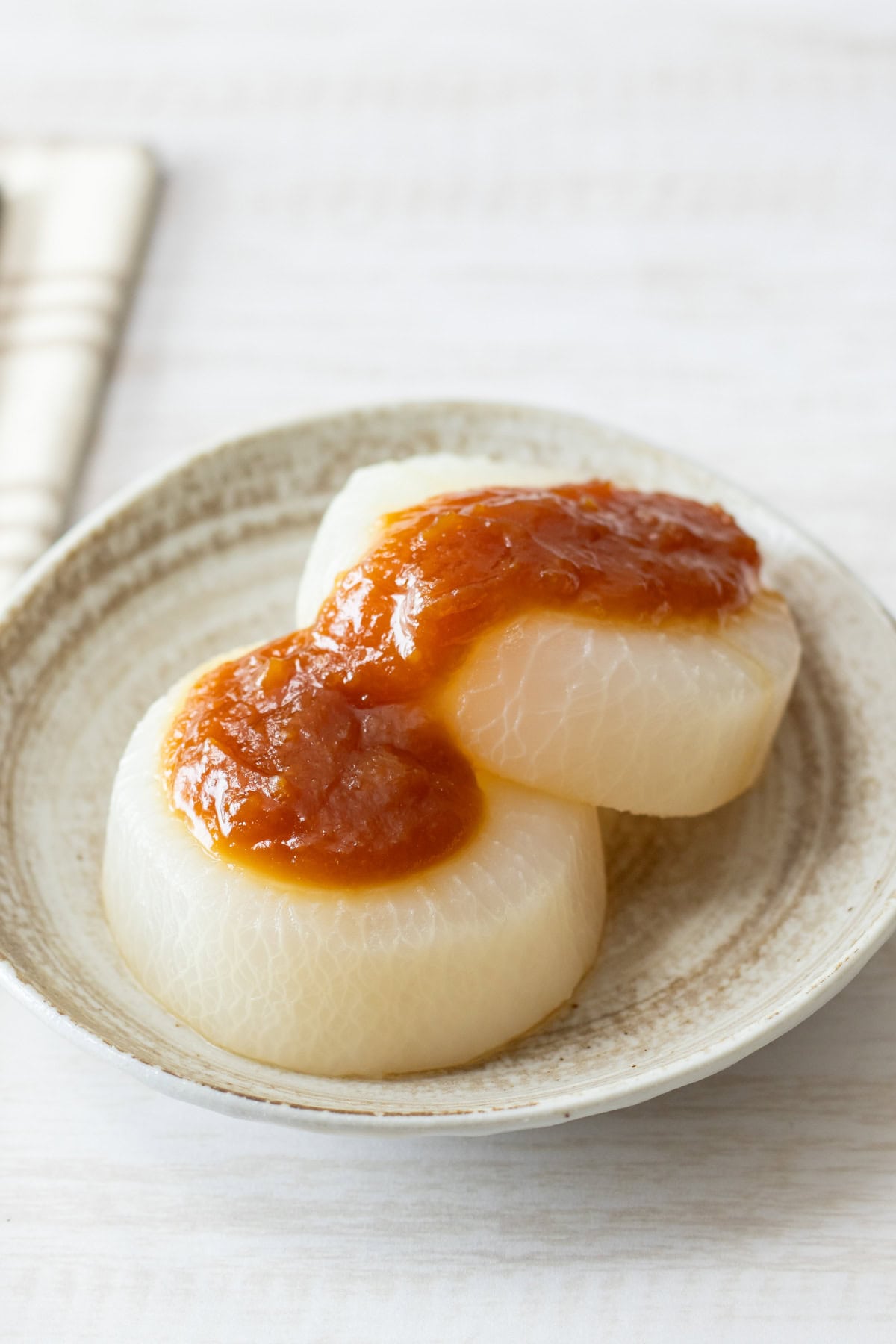
Carefully transfer the daikon to serving plates and spoon the miso sauce over the top.
How to store
The dish will keep in the refrigerator for up to 3 days.
Cooking tips
- Always start cooking daikon radish in cold water. Adding it directly to boiling water can prevent it from cooking evenly all the way through and may cause it to fall apart.
- If you use rice-rinsing water or water with a small amount of rice added instead of plain water to parboil the daikon, give both the daikon and the pot a quick rinse under running water afterward.
I hope you enjoy this recipe!
If you try it, I’d love to hear how it turned out. Please leave a review 💬 and a star rating ⭐ in the comment below. Your support and feedback means so much to me!
More daikon recipes you'll love



Printable Recipe Card
Furofuki Daikon (Simmered Daikon with Miso Sauce)
Ingredients
- 1.3 lb daikon radish
- 0.2 oz kombu (dried kelp)
Miso sauce:
- 2 Tbsp miso
- 1 Tbsp sake
- 1 Tbsp mirin
- 2 tsp sugar
Instructions
- Cut the daikon into rounds about 1-1 ¼ inches (2.5-3 cm) thick. Peel each piece thickly, removing about ¼ inch (5 mm) of the outer layer along with the skin.

- Trim the sharp edges around the circumference of each daikon round on both sides to create a slightly rounded shape. On one cut side of each piece, make a shallow cross-shaped incision about ¼-⅓ of the way through.
- Arrange the daikon rounds in a pot and add enough water to fully submerge them, leaving enough room for the pieces to move freely. Bring the water to a boil, then reduce the heat to low to maintain a gentle simmer, with small bubbles continuously rising to the surface. Cook for about 30-40 minutes, until the daikon is tender. (To check for doneness, insert a skewer into a piece of daikon. It should slide in easily.)
- Carefully remove the daikon from the pot, taking care not to break the pieces, and discard the cooking water. Return the daikon to the pot and add enough fresh water to fully cover the pieces, along with the kombu. Bring to a boil, then reduce the heat to very low, keeping the water just below a simmer. Cook for about 30 minutes to allow the daikon to gradually absorb the umami from the kombu.
- Meanwhile, combine the miso, sake, mirin, and sugar in a saucepan, stirring until the miso is dissolved. Place the saucepan over medium heat and bring the mixture to a gentle simmer. Once it begins to simmer, reduce the heat to low and cook for about 3 minutes, stirring occasionally with a spatula, until the sauce thickens.
- Carefully transfer the daikon to serving plates and spoon the miso sauce over the top.




Notes
- The dish will keep in the refrigerator for up to 3 days.

Leave a Rating and a Comment