

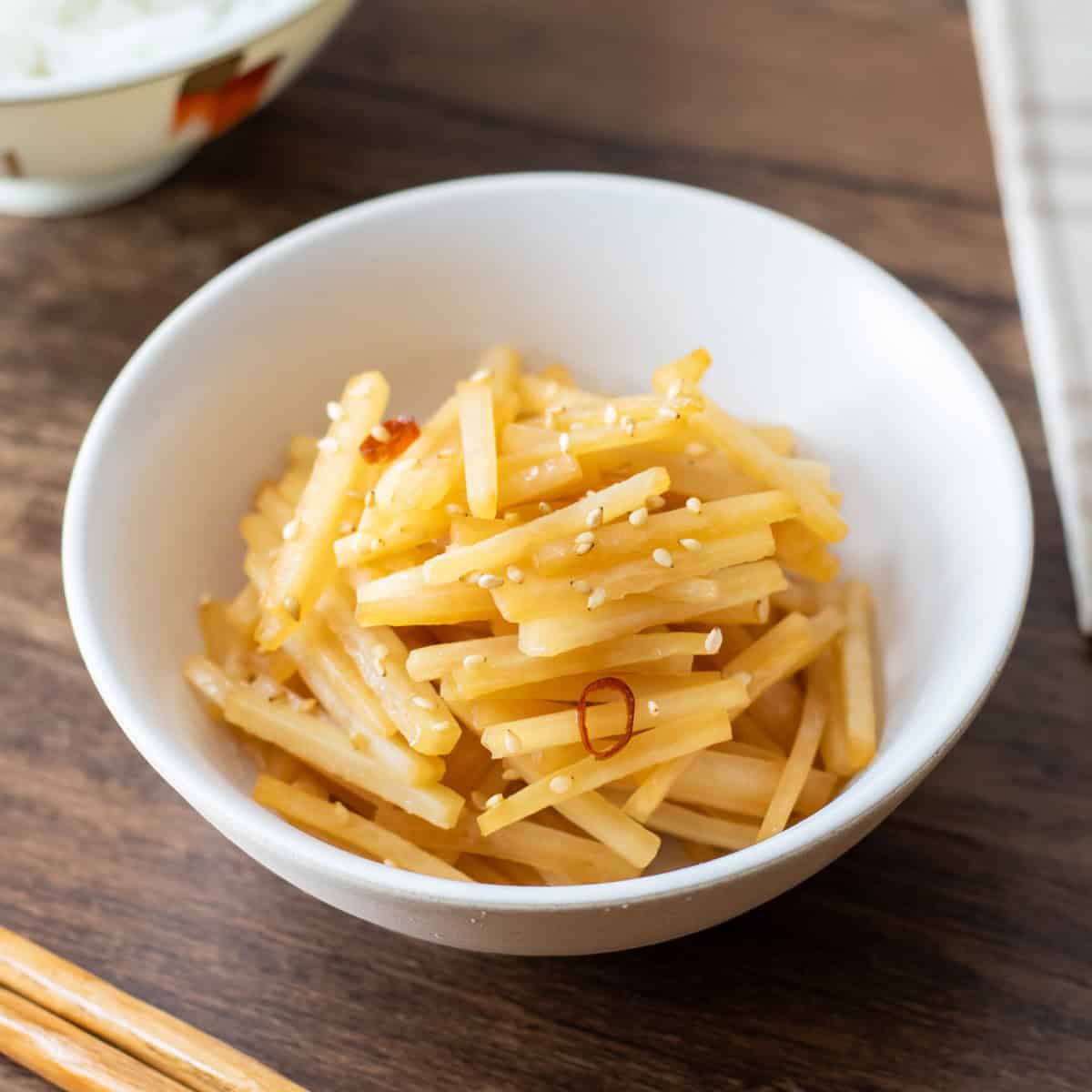
Don't throw away daikon radish peels! Put their satisfying crunch to good use by turning them into Daikon Peel Kinpira. This Japanese side dish is a great way to reduce food waste while enjoying the delicious sweet-and-savory flavors of Japanese cuisine.
Jump to:
What is Daikon Peel Kinpira?
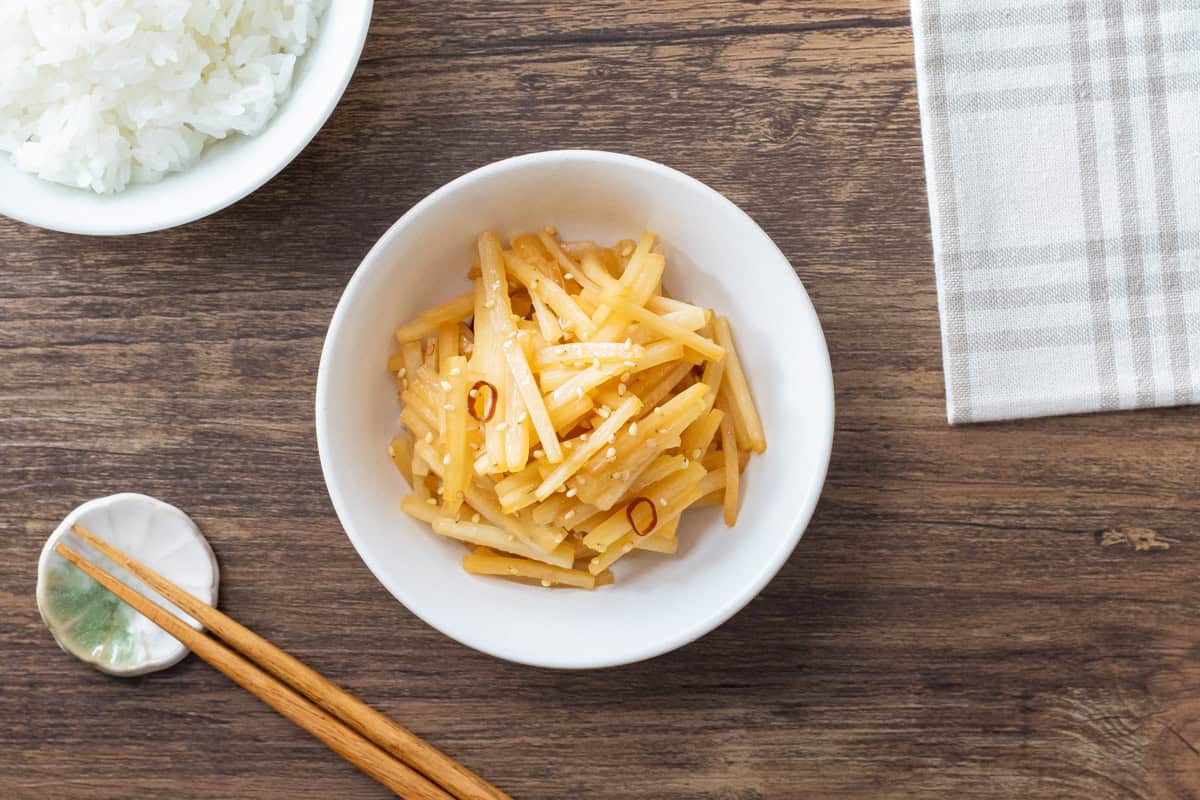
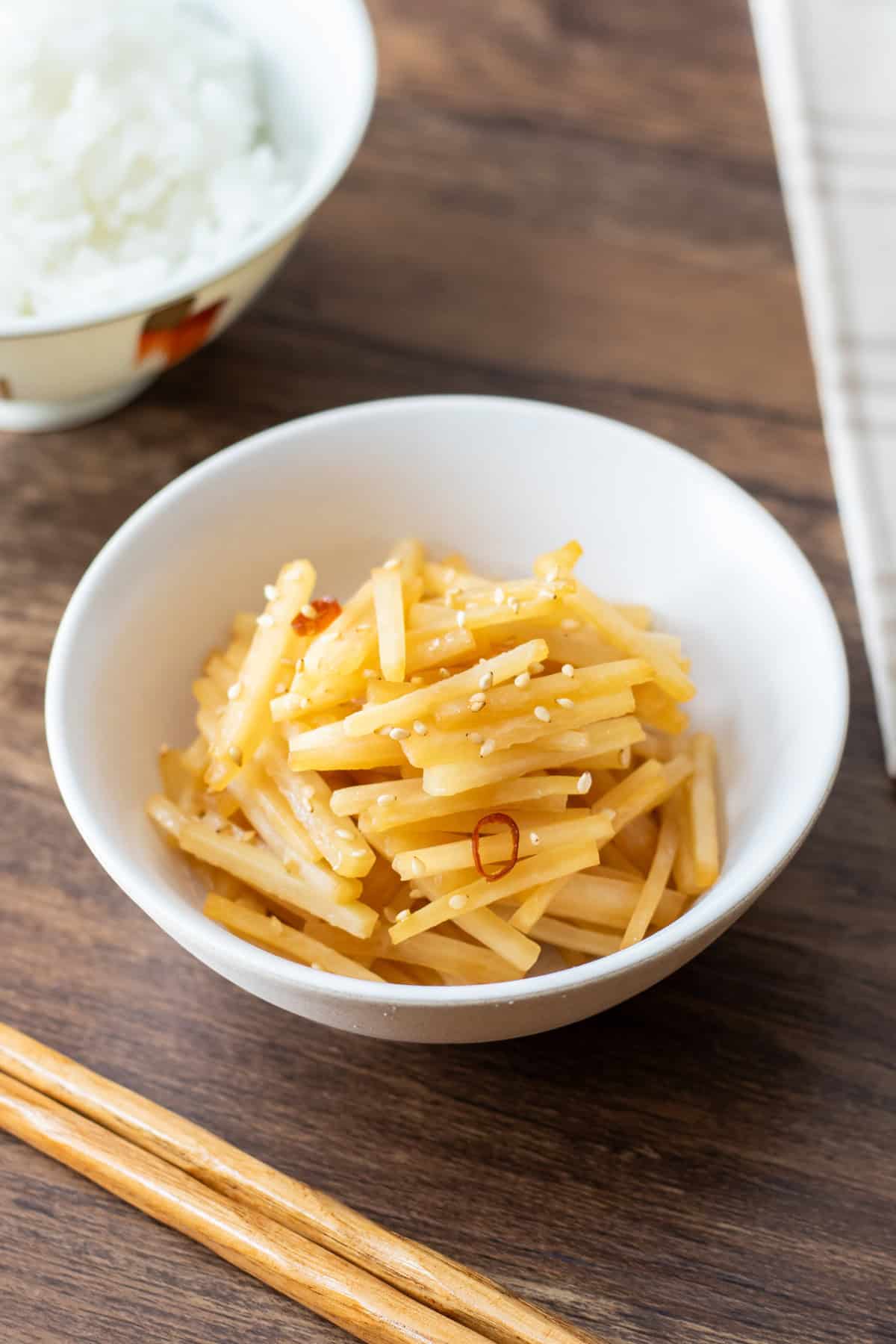
Daikon Peel Kinpira is a Japanese side dish made by cutting daikon radish peels into thin strips and stir-frying them in a sweet and savory sauce. "Kinpira" refers to a Japanese cooking method in which thinly sliced or shredded vegetables are stir-fried and seasoned with ingredients such as mirin, sugar, and soy sauce. It's a great way to reduce food waste by making delicious use of daikon peels, which are often discarded.
Just because this dish uses the peel doesn't mean you have to sacrifice flavor or texture. Daikon peels are rich in dietary fiber and have a firmer, crunchier texture than the flesh, making them particularly well-suited for stir-frying. They also have a naturally robust flavor and readily absorb seasonings, making them a perfect match for the sweet and savory sauce.
This dish is delicious whether served warm or cold, making it a great make-ahead side dish. When you buy a whole daikon, use the flesh in simmered dishes or salads, and turn the peels into kinpira. It's a simple and delicious way to make use of the entire daikon while minimizing food waste!
How to prepare daikon peels
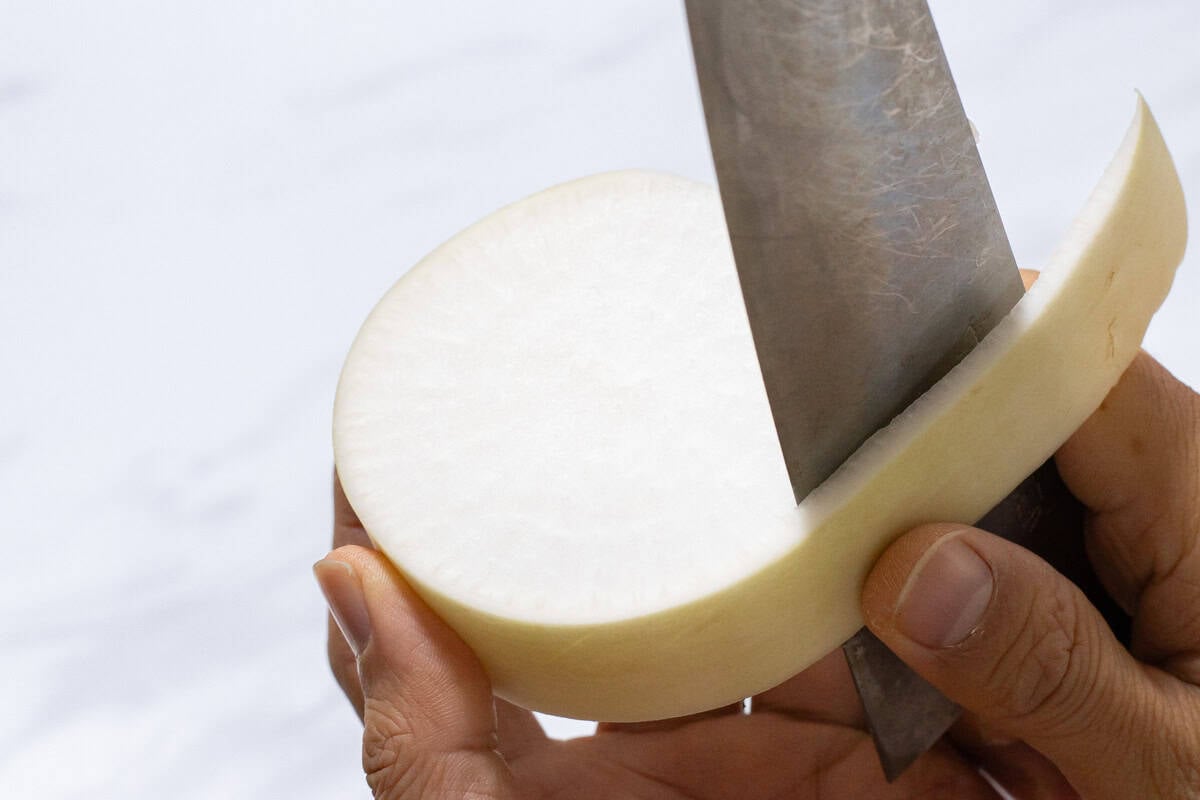
Daikon has a tough, fibrous layer just beneath the skin. If you leave this layer on, the daikon can have a stringy texture and may not absorb flavors as well. Therefore, peeling the daikon thickly, removing about ¼ inch (5 mm) of the outer layer along with the skin, is key to making delicious daikon dishes.
When making daikon peel kinpira, you should use the thickly peeled outer layer. Its fibrous texture gives the dish a satisfying crunch. One reason daikon peels are used in this dish rather than the peels of other vegetables is that both the skin and the fibrous layer just beneath it contribute to the dish's distinctive texture.
You don't have to make this dish on the same day you use the daikon flesh. The peels will keep for 3-4 days in the refrigerator, so save them and feel free to make the dish whenever you are ready.
Cooking tips
In addition to using the thickly peeled outer layer of daikon, there are a few other tips that can make your daikon peel kinpira even more delicious. For the best results, be sure to follow these steps:
-
Cut the daikon peels into evenly sized strips.
When cutting the daikon peels into thin strips, try to make them as uniform in size as possible. This ensures that they cook evenly and gives the dish a more appealing appearance.
-
Avoid overcooking.
If you stir-fry the daikon peels for too long, they may lose their satisfying crunch and become too soft. To preserve their texture, stir-fry them just until the strips begin to soften.
-
Cook off any excess liquid.
After adding the seasonings, continue cooking until the daikon peels are evenly coated and any excess moisture has evaporated. Leaving too much liquid in the pan can dilute the flavor.
Different ways to enjoy
Daikon peel kinpira is a versatile side dish that can be enjoyed in many different ways:
- When you want to add one more side dish to your meal.
- As a make-ahead side dish.
- As a tasty addition to your bento (lunch box).
- Or simply when you have leftover daikon peels.
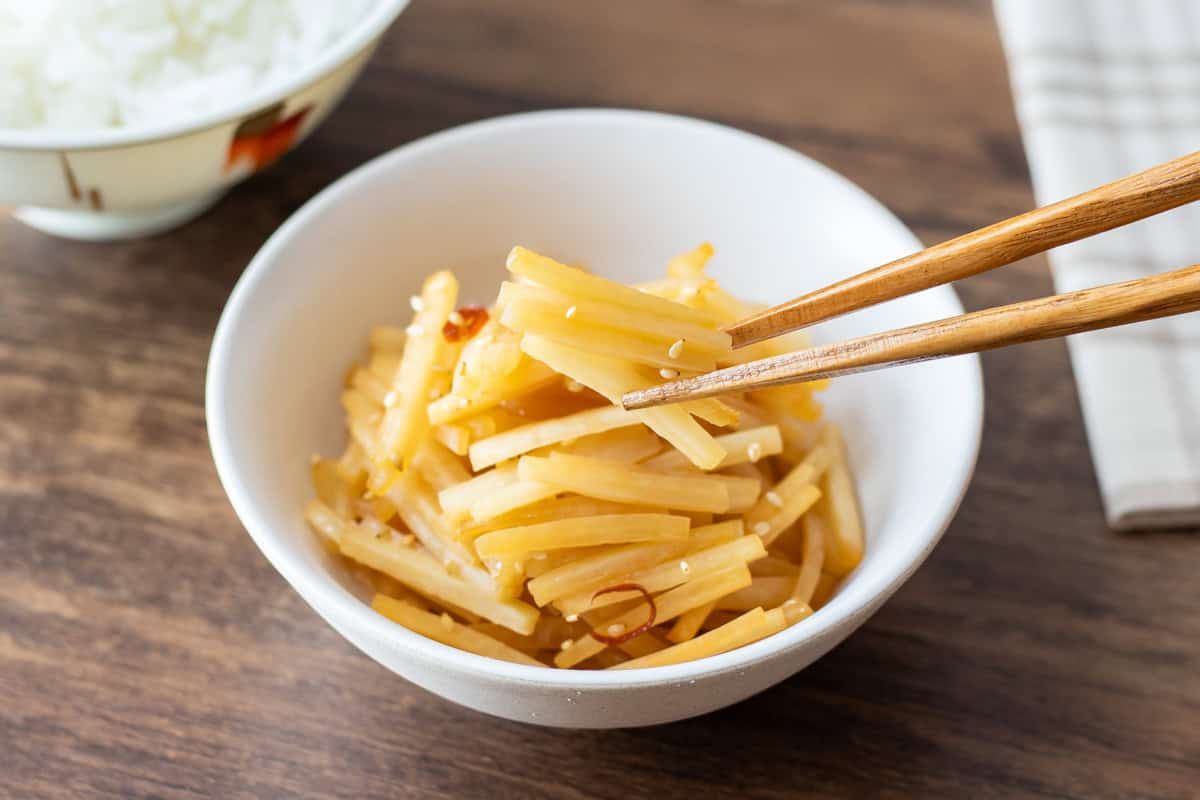
This dish is quick and easy to make, and it tastes great even when served cold, making it perfect for busy days. While it's delicious on its own, its rich, savory flavor makes it an especially good accompaniment to a bowl of rice.
If you have daikon on hand, be sure to try this dish instead of throwing away the peels. It's a great way to reduce food waste and make the most of your daikon.
📋Step-by-step recipe
Ingredients
- 7 oz daikon radish peels (from about one medium-sized daikon)
- ½ Tbsp toasted sesame oil (neutral oil can be substituted)
- ⅓ small dried chili pepper
Seasonings:
- 1 Tbsp sake
- 1 Tbsp mirin
- 1 tsp sugar
- 1 Tbsp soy sauce
Topping (optional):
- toasted sesame seeds
Instructions
🕒 Total: 10 mins
Step 1
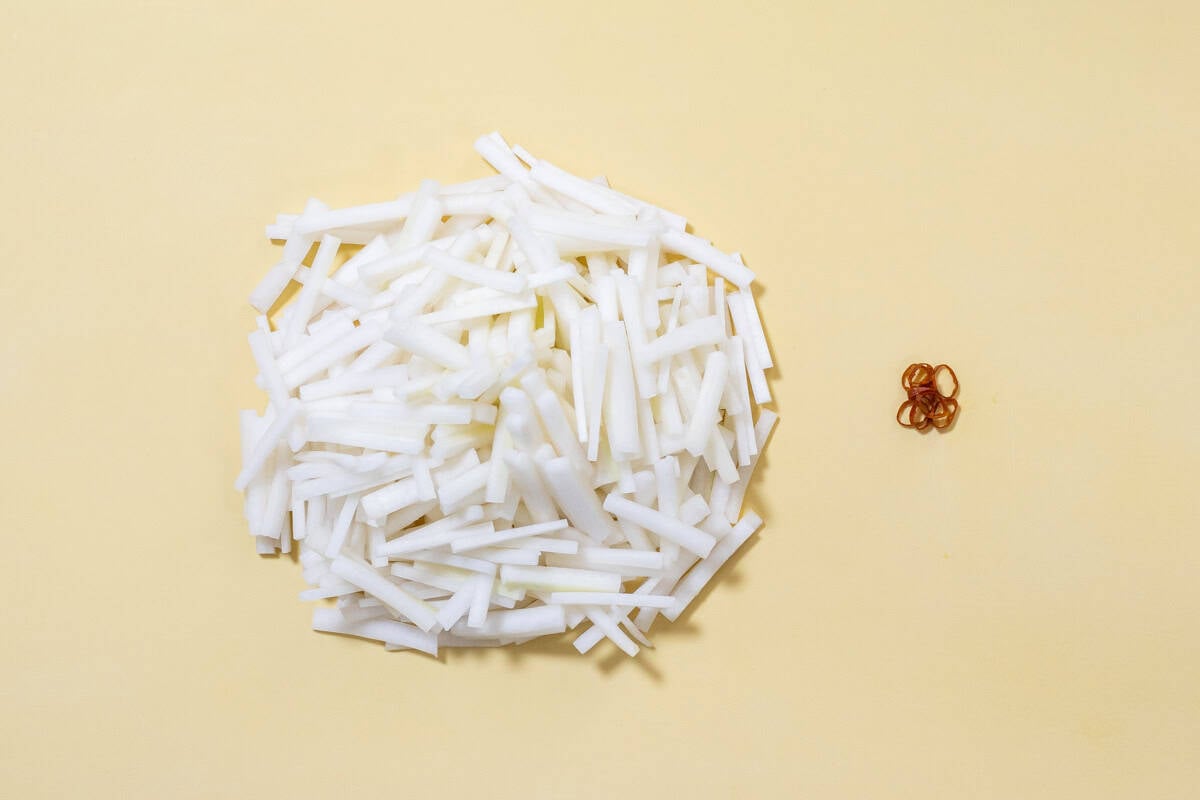
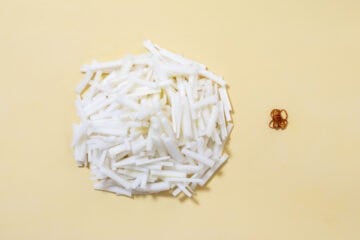
Wash the daikon peels thoroughly under running water. Pat them dry with paper towels, then cut them into thin strips about ¼ inch (5 mm) wide, following the fibers. Remove the seeds from the chili pepper and slice it into thin rings.
Step 2
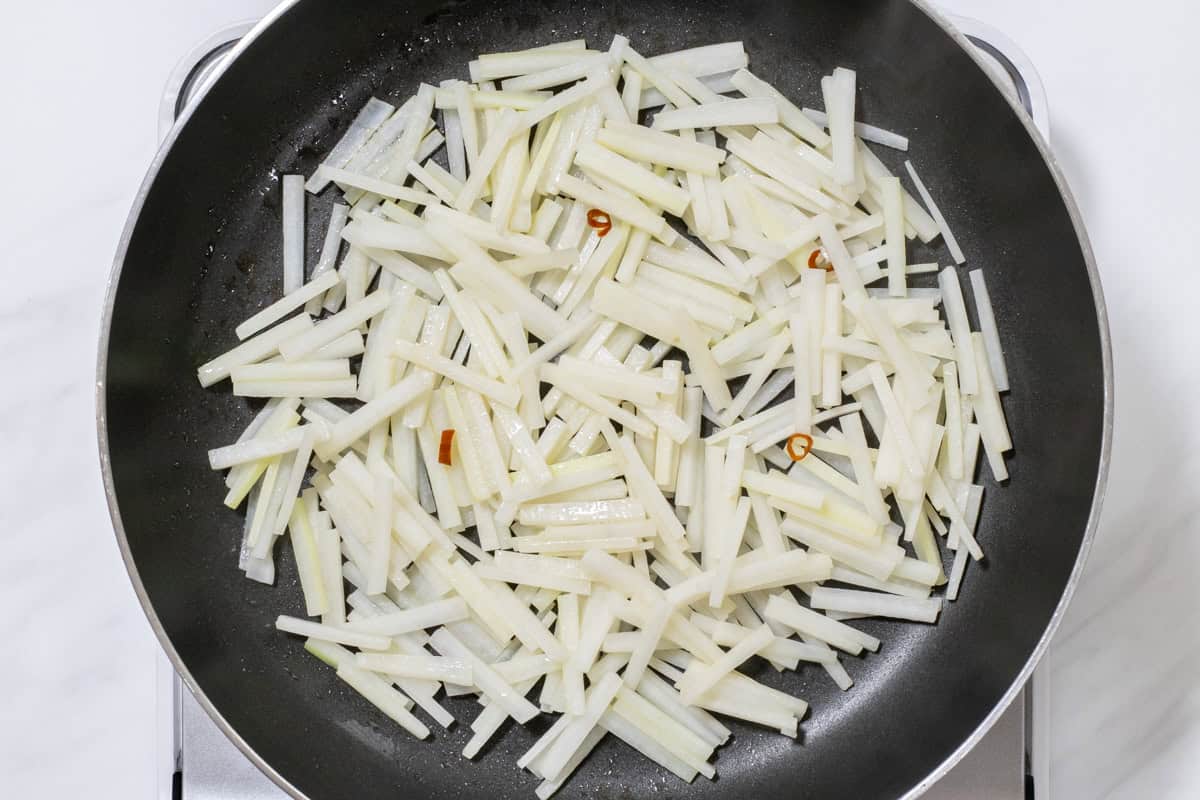
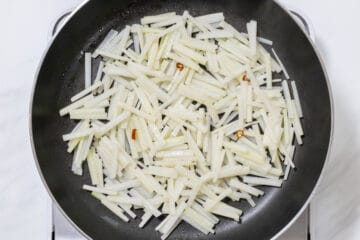
Heat sesame oil in a pan. Once the pan is hot, add the daikon peels and chili pepper and stir-fry over medium heat for a few minutes, until slightly tender.
Step 3
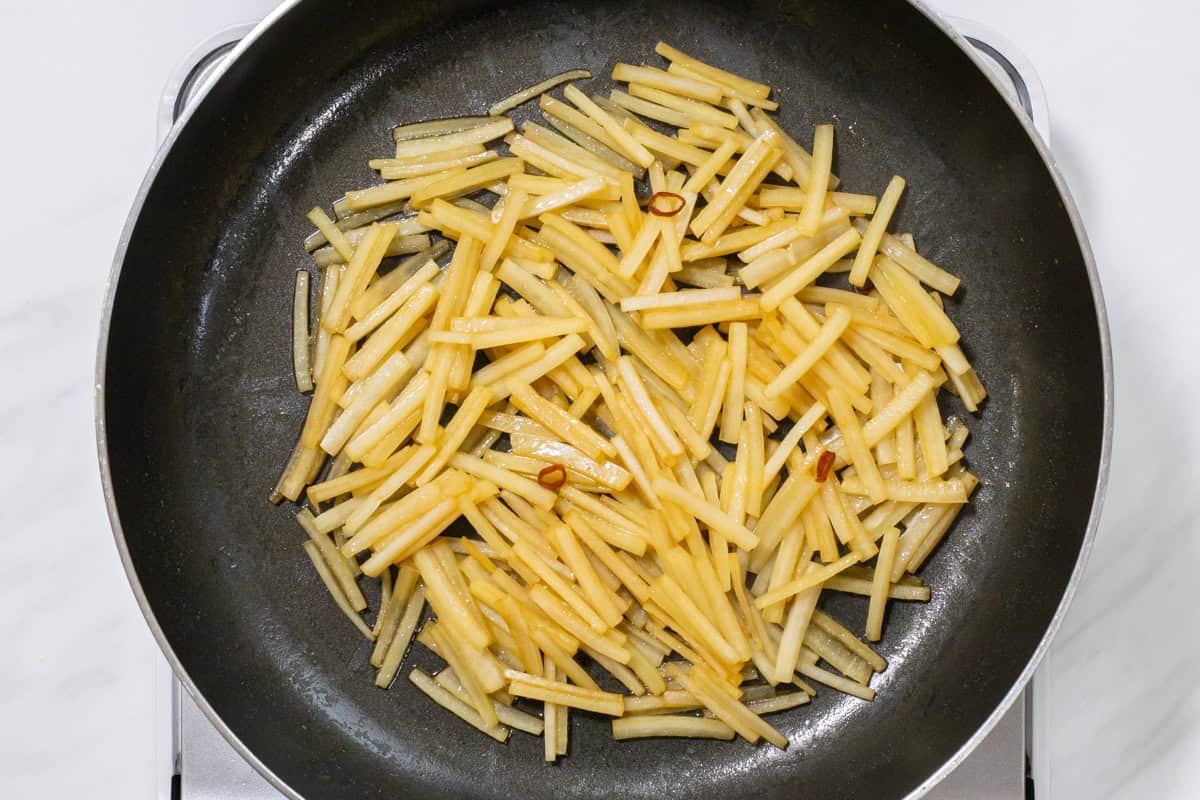
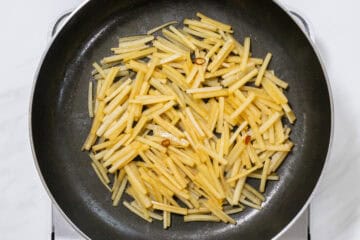
Add the seasonings (sake, mirin, sugar, and soy sauce) to the pan and toss to coat the daikon peels evenly. Continue cooking, stirring occasionally, until most of the liquid has evaporated.
Step 4
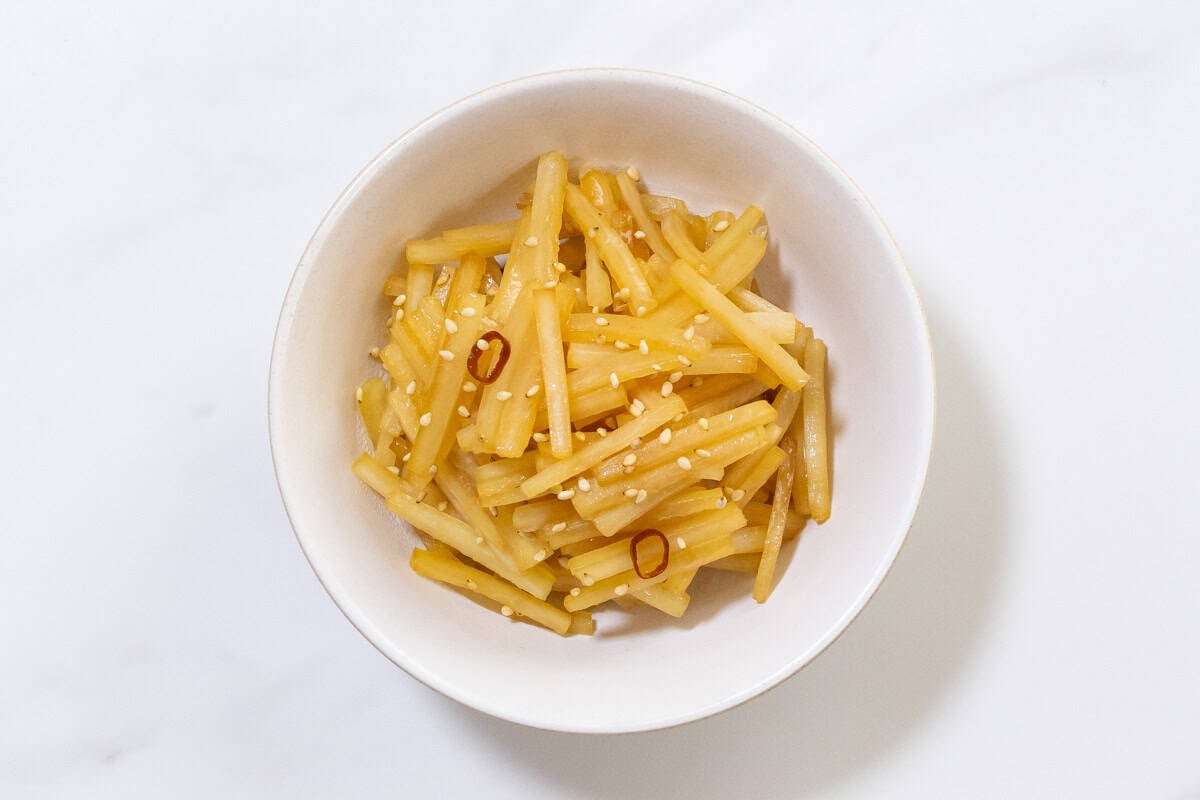
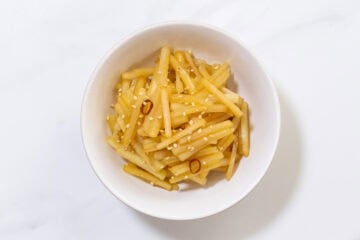
Transfer to serving dishes and sprinkle with toasted sesame seeds to taste.
How to store
The dish will keep in the refrigerator for up to 4 days.
I hope you enjoy this recipe!
If you try it, I’d love to hear how it turned out. Please leave a review 💬 and a star rating ⭐ in the comment below. Your support and feedback means so much to me!
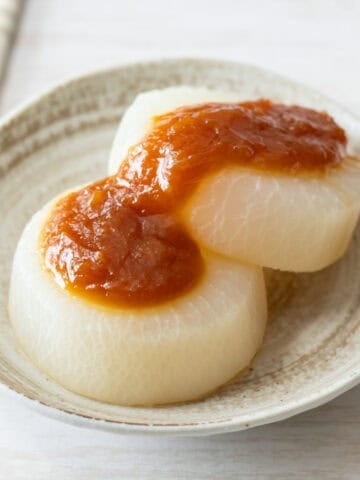
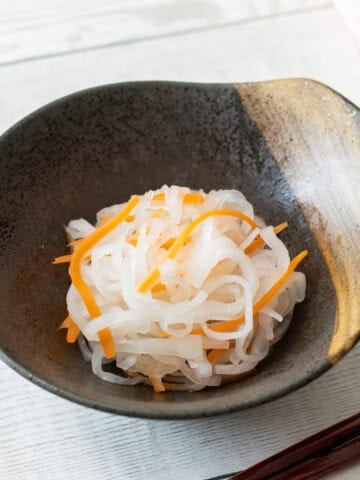
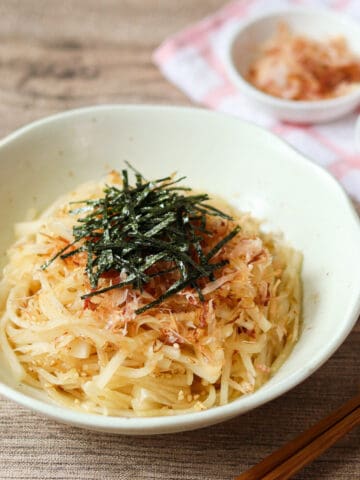
daikon recipes you'll love

Printable Recipe Card
Daikon Peel Kinpira (Japanese Stir-Fry)
Ingredients
- 7 oz daikon radish peels (from about one medium-sized daikon)
- ½ Tbsp toasted sesame oil (neutral oil can be substituted)
- ⅓ small dried chili pepper
Seasonings:
- 1 Tbsp sake
- 1 Tbsp mirin
- 1 tsp sugar
- 1 Tbsp soy sauce
Topping (optional):
- toasted sesame seeds
Instructions
- Wash the daikon peels thoroughly under running water. Pat them dry with paper towels, then cut them into thin strips about ¼ inch (5 mm) wide, following the fibers. Remove the seeds from the chili pepper and slice it into thin rings.

- Heat sesame oil in a pan. Once the pan is hot, add the daikon peels and chili pepper and stir-fry over medium heat for a few minutes, until slightly tender.
- Add the seasonings (sake, mirin, sugar, and soy sauce) to the pan and toss to coat the daikon peels evenly. Continue cooking, stirring occasionally, until most of the liquid has evaporated.
- Transfer to serving dishes and sprinkle with toasted sesame seeds to taste.
Notes
- The dish will keep in the refrigerator for up to 4 days.
Leave a Rating and a Comment