

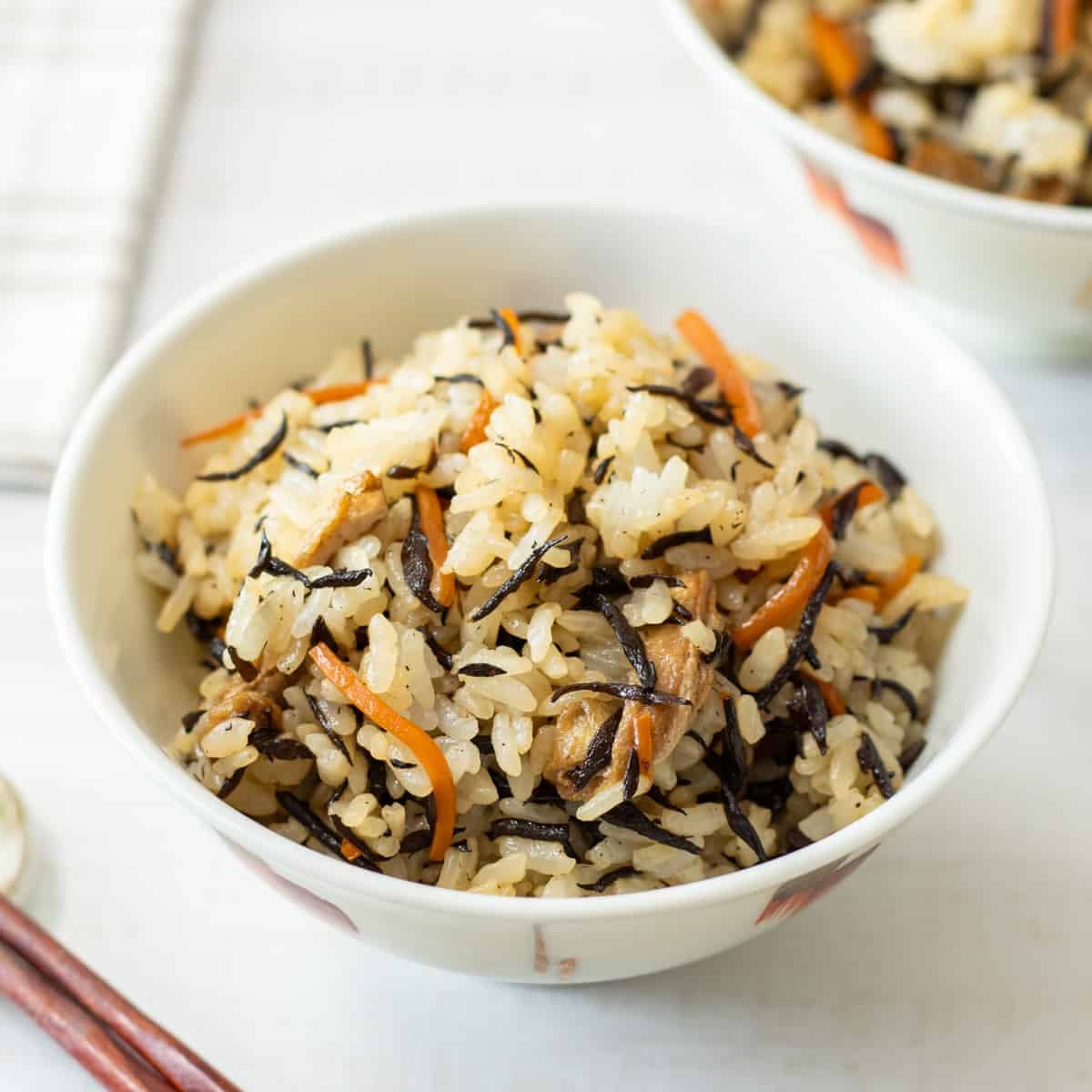
Hijiki Gohan is a traditional Japanese dish that brings together the natural flavor of hijiki seaweed and the rich flavors of other ingredients and seasonings, all mixed with freshly cooked rice. Simple yet deeply satisfying, it offers a comforting taste of Japanese home cooking in every bite.
Jump to:
What is Hijiki Gohan?
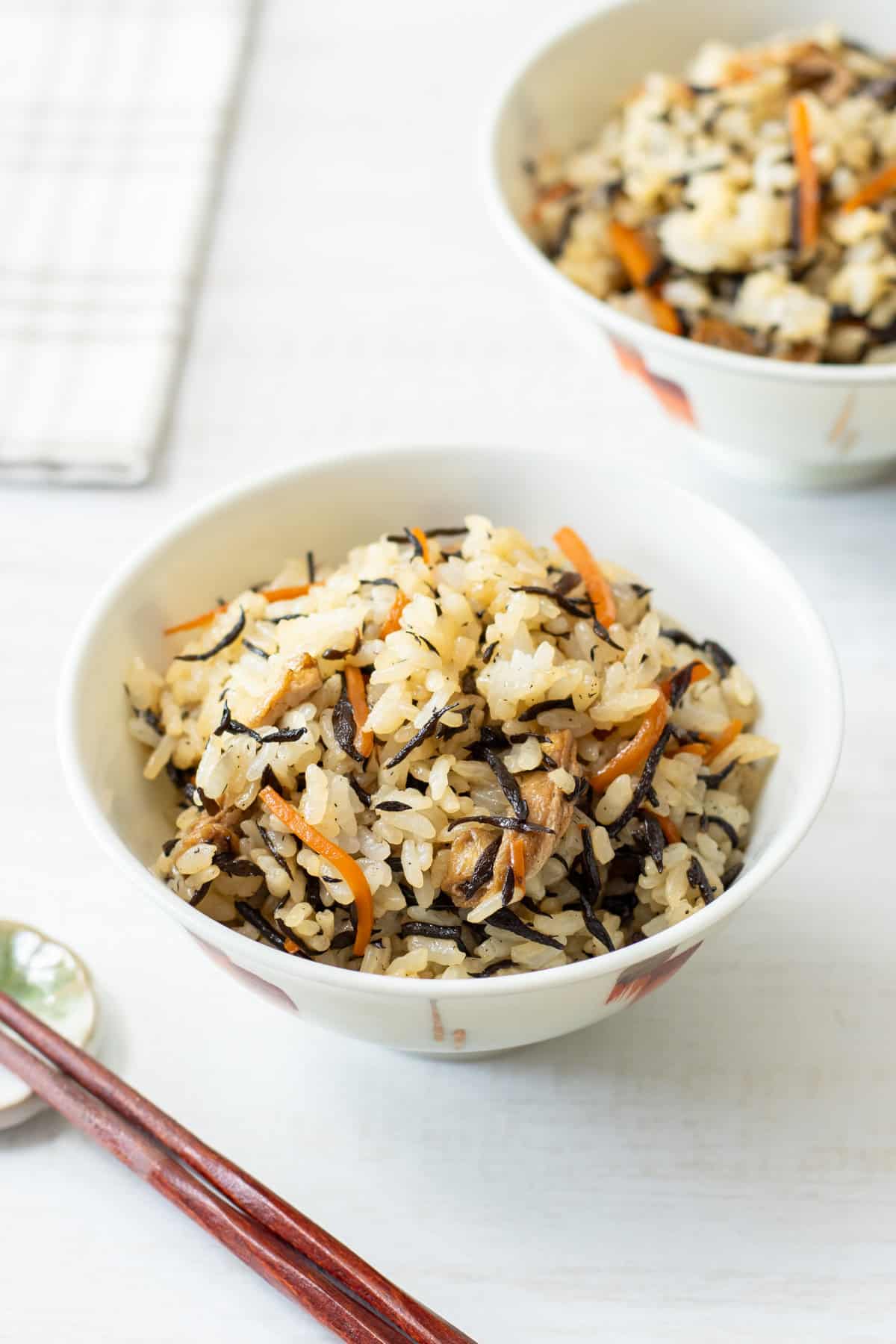
Hijiki Gohan is a Japanese rice dish made by combining short-grain rice with rehydrated hijiki seaweed and other ingredients, such as carrots and aburaage (fried tofu), all seasoned with dashi stock and other seasonings.
"Hijiki" refers to a type of seaweed that is dark brown to black and has a thin, thread-like shape, while "Gohan" means rice. In Japan, one of the best-known dishes made with hijiki is hijiki-ni, a traditional simmered dish made with hijiki and other ingredients. Hijiki gohan is essentially a rice dish made with the same ingredients commonly used in hijiki-ni.
Hijiki has a distinctive flavor that pairs beautifully with rice. By seasoning the ingredients a little more generously, you can bring out hijiki's natural flavor while creating a savory dish that is sure to whet your appetite. Hijiki is also rich in dietary fiber and minerals, making this rice dish a great choice for health-conscious people. It's easy to make, so give it a try and enjoy its traditional flavors.
Incidentally, this article is intended for readers who are already familiar with hijiki. If you'd like to learn more about hijiki itself, check out my article on hijiki-ni.
Optional additions
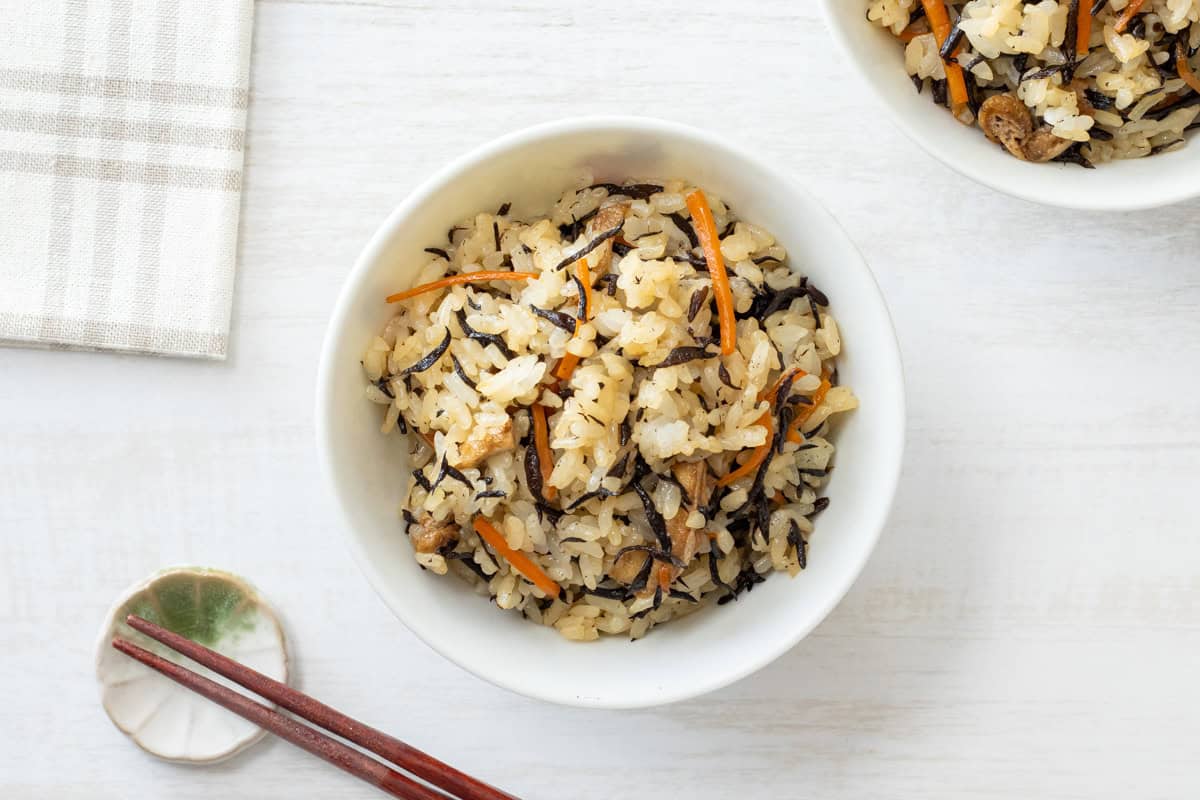
In addition to hijiki seaweed and rice, hijiki gohan typically includes carrots and aburaage (fried tofu). Carrots add color and nutritional value, while aburaage gives the dish a richer flavor.
These are the classic ingredients commonly used to make hijiki gohan in Japan, but other ingredients are sometimes added as well, such as:
- Chicken
- Gobo (burdock root)
- Shiitake mushrooms
- Shimeji mushrooms
- Konjac
This recipe sticks to the two most common additions, carrots and aburaage, but feel free to add any of the ingredients listed above to suit your taste. These additions are especially recommended if you want to make the dish heartier or add more depth of flavor. Just keep in mind that hijiki and rice should remain the stars of the dish, so be careful not to add so much of the other ingredients that they overpower the flavors and textures of the hijiki and rice.
Two ways to make Hijiki Gohan
There are actually two main ways to make hijiki gohan. One is to cook the hijiki and other ingredients together with the rice, while the other involves preparing them separately and then mixing them into the rice at the end.
Both methods are common in Japan, but this recipe focuses on the latter: the mixed-rice version. Although it takes a little more effort, this method allows the flavors of the hijiki and seasonings to come through more distinctly than when everything is cooked together. This is definitely the method I recommend.
Heat oil in a pan, then briefly stir-fry the hijiki, carrots, aburaage, and any other ingredients you like. Add dashi stock and seasonings, and let everything simmer until most of the liquid has evaporated. Finally, stir the hijiki mixture into freshly cooked rice, and the dish is ready to serve.
Since the hijiki absorbs the flavors of the seasonings, it develops a rich, savory flavor that pairs perfectly with the rice. The rice also retains its distinct texture, allowing its natural flavor to shine rather than being overshadowed by the other ingredients.
Cooking tips
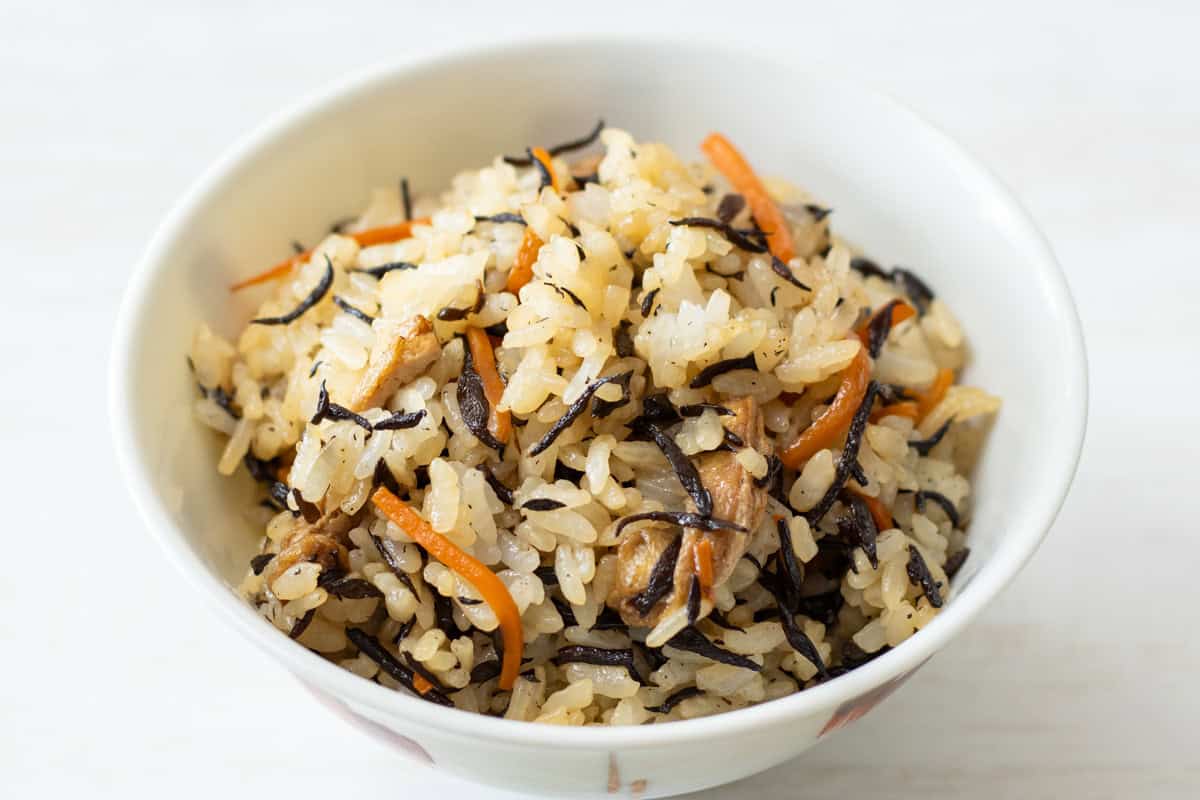
There are a few tips worth keeping in mind when making hijiki gohan. They are all easy to follow, so be sure not to skip any of them. These small details can make a big difference in the final result.
- Discard the soaking water after rehydrating the hijiki.
Hijiki seaweed contains small amounts of naturally occurring inorganic arsenic.
For this reason, always soak it in water and discard the soaking water before using it. Since inorganic arsenic is water-soluble, soaking helps remove much of it.
- Cut the ingredients into thin strips.
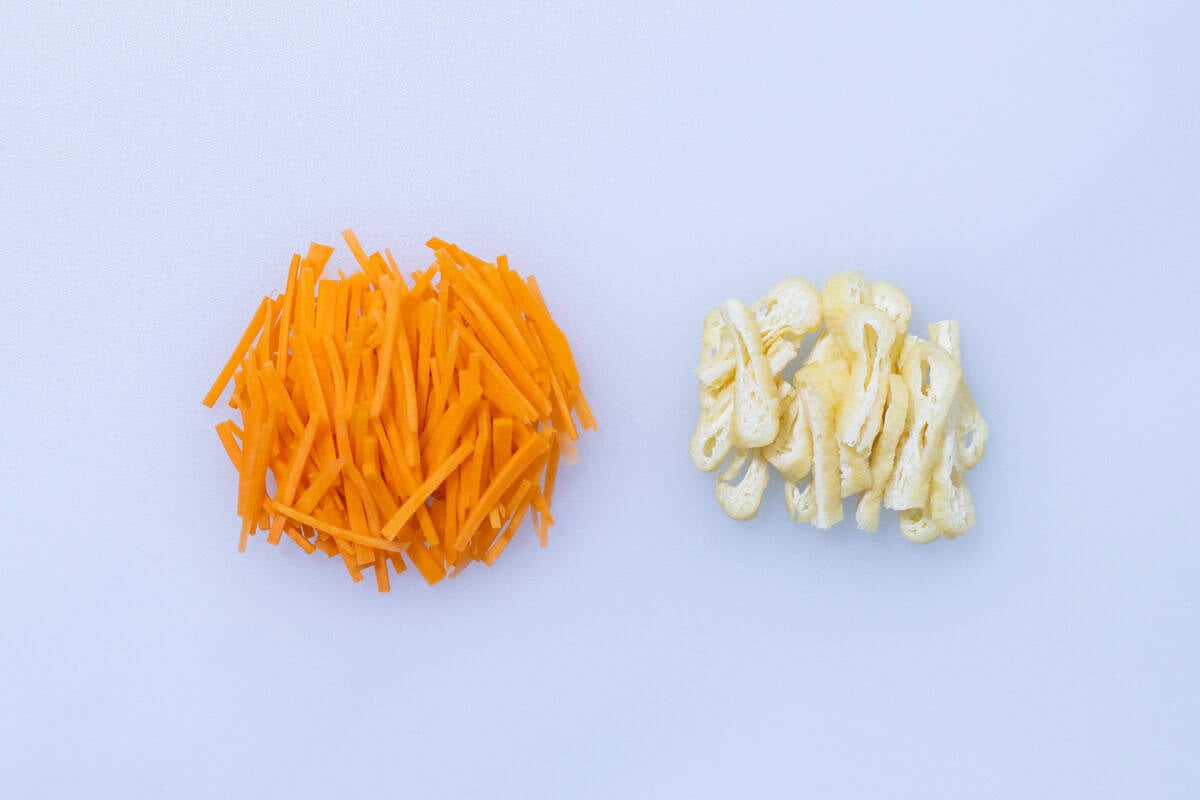
Cut ingredients such as carrots and aburaage into thin, bite-sized strips. Avoid cutting them into large pieces, as smaller pieces mix better with the rice and hijiki, creating a more balanced texture and a more appealing appearance.
- Briefly stir-fry the hijiki before simmering.
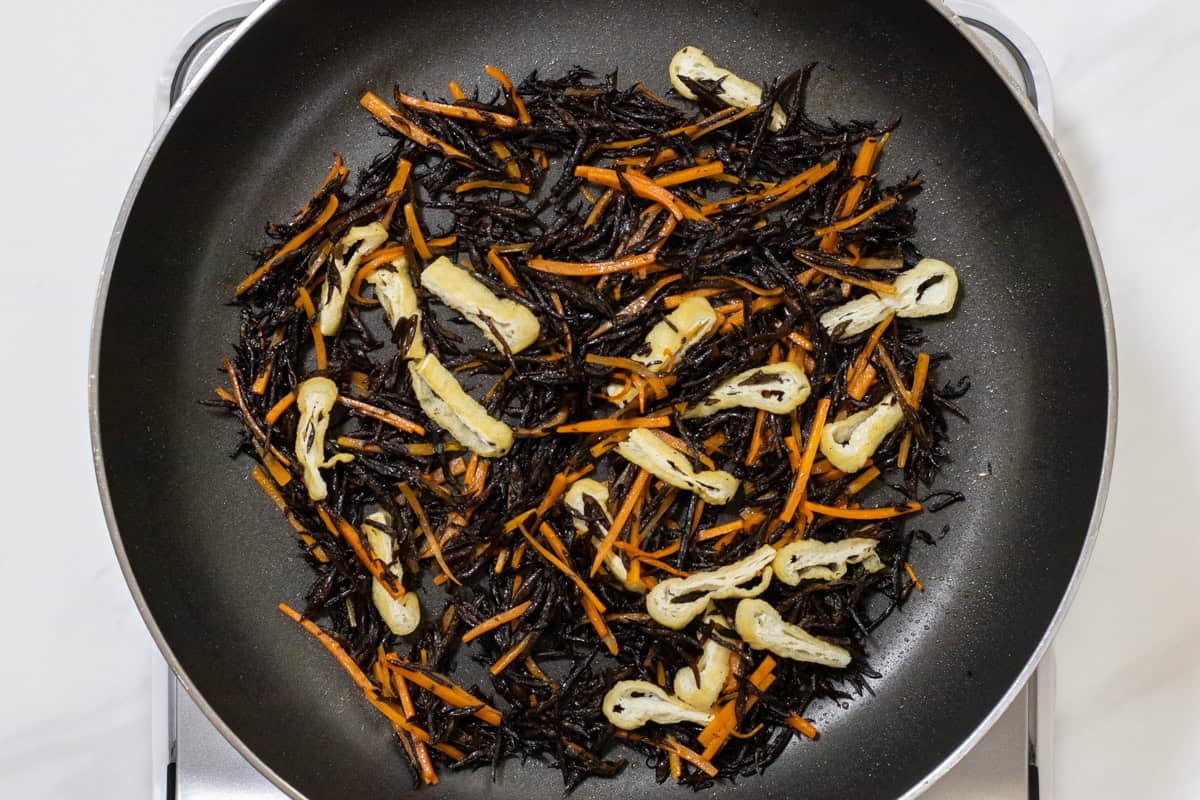
Rehydrated hijiki retains excess moisture. Briefly stir-frying it first helps evaporate some of this excess moisture, allowing the hijiki to absorb the flavors of the seasonings more effectively.
Additionally, for a richer, more savory flavor, it is best to stir-fry the other prepared ingredients as well. When stir-frying, add the ingredients in order of cooking time, starting with those that take the longest to cook.
📋Step-by-step recipe
Ingredients
- 11.3 oz cooked Japanese short-grain rice (about 2 Japanese-style rice bowls)
- 0.3 oz dried hijiki seaweed
- 1 oz carrot
- 0.3 oz aburaage (fried tofu pouches)
Seasonings:
- ½ cup dashi stock (Please refer to the linked page for instructions on how to make it. For plant-based options, see the pages on Kombu Dashi and Shiitake Dashi.)
- 1 Tbsp mirin
- 1 tsp sugar
- 1 ½ Tbsp soy sauce
Instructions
🕒 Total: 45 mins
Step 1
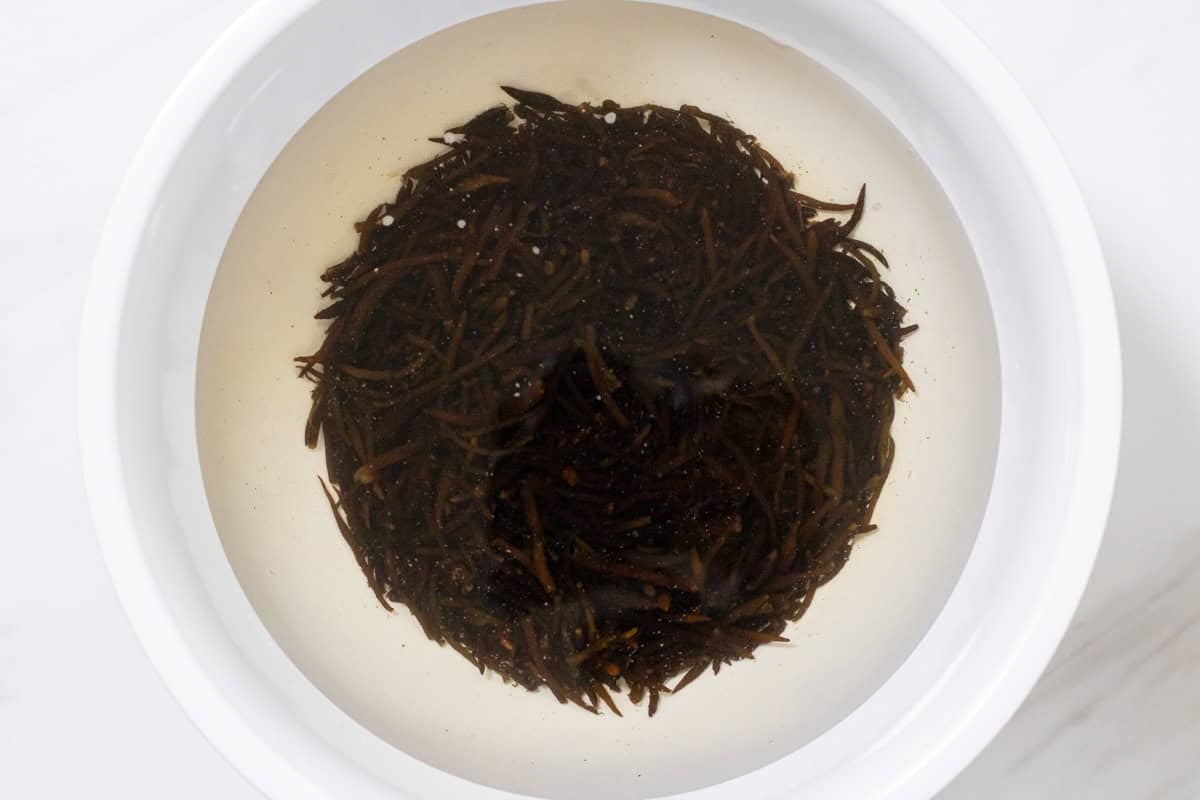
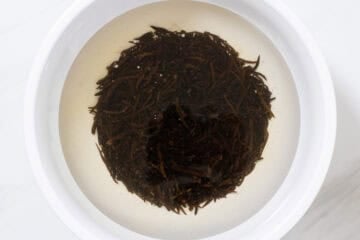
In a large bowl, combine the dried hijiki with plenty of water and let it soak for about 30-60 minutes. (If the package specifies a soaking time, follow those instructions.) Once the hijiki is rehydrated, drain it in a fine-mesh strainer, rinse it under running water, and drain well.
Step 2
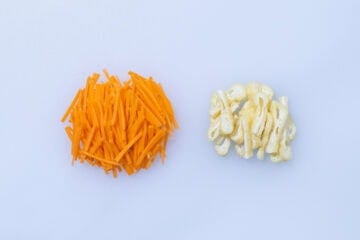
Cut the carrot into thin strips. Pat the aburaage dry with paper towels to remove any excess oil, then cut it into thin, bite-sized strips.
Step 3
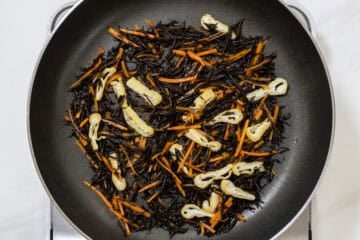
Heat oil in a pan. Once the pan is hot, add the carrot and stir-fry briefly over medium heat until evenly coated with oil. Add the hijiki and continue cooking for about 1-2 minutes to cook off any excess moisture. Then, add the aburaage and stir-fry briefly to combine.
Step 4
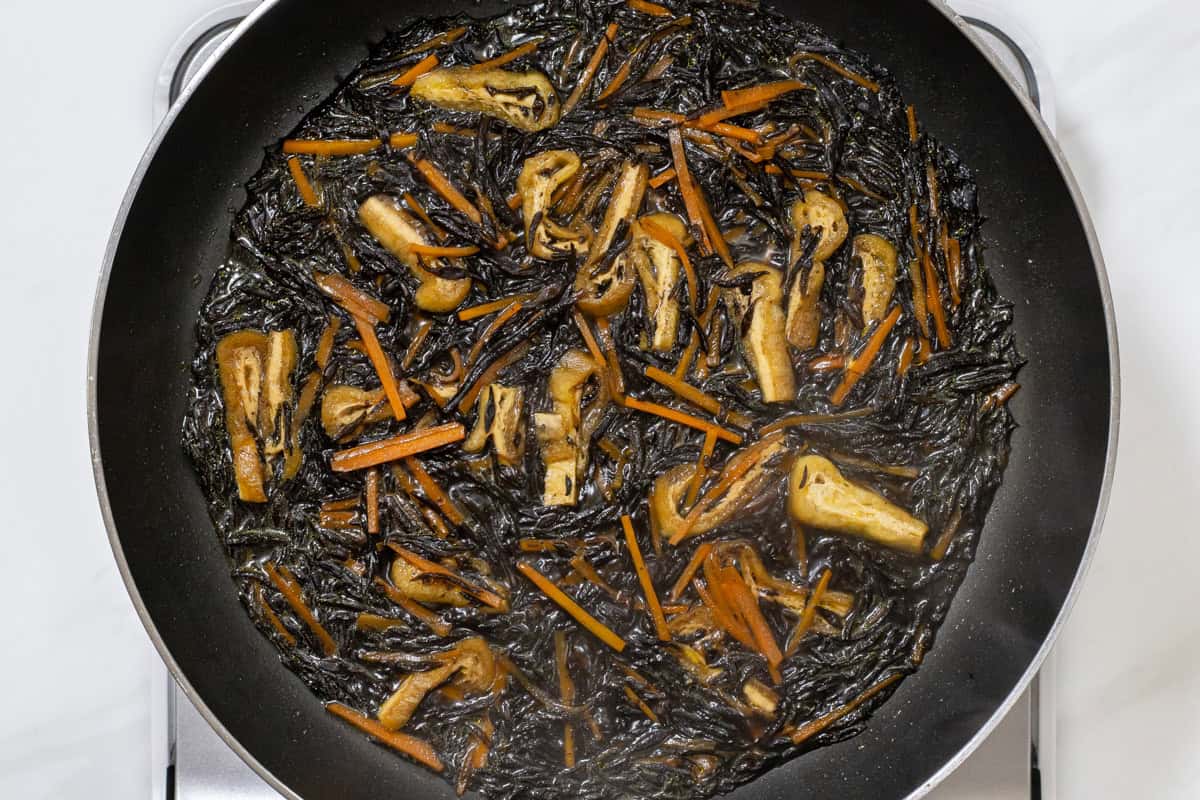
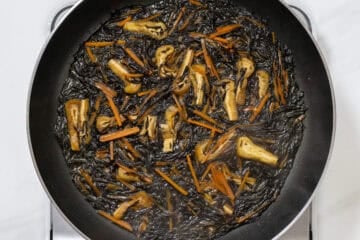
Add the seasonings (dashi, mirin, sugar, and soy sauce) to the pan and bring to a boil. Once boiling, reduce the heat to medium-low and simmer for about 5-10 minutes, stirring occasionally, until only a small amount of liquid remains.
Step 5
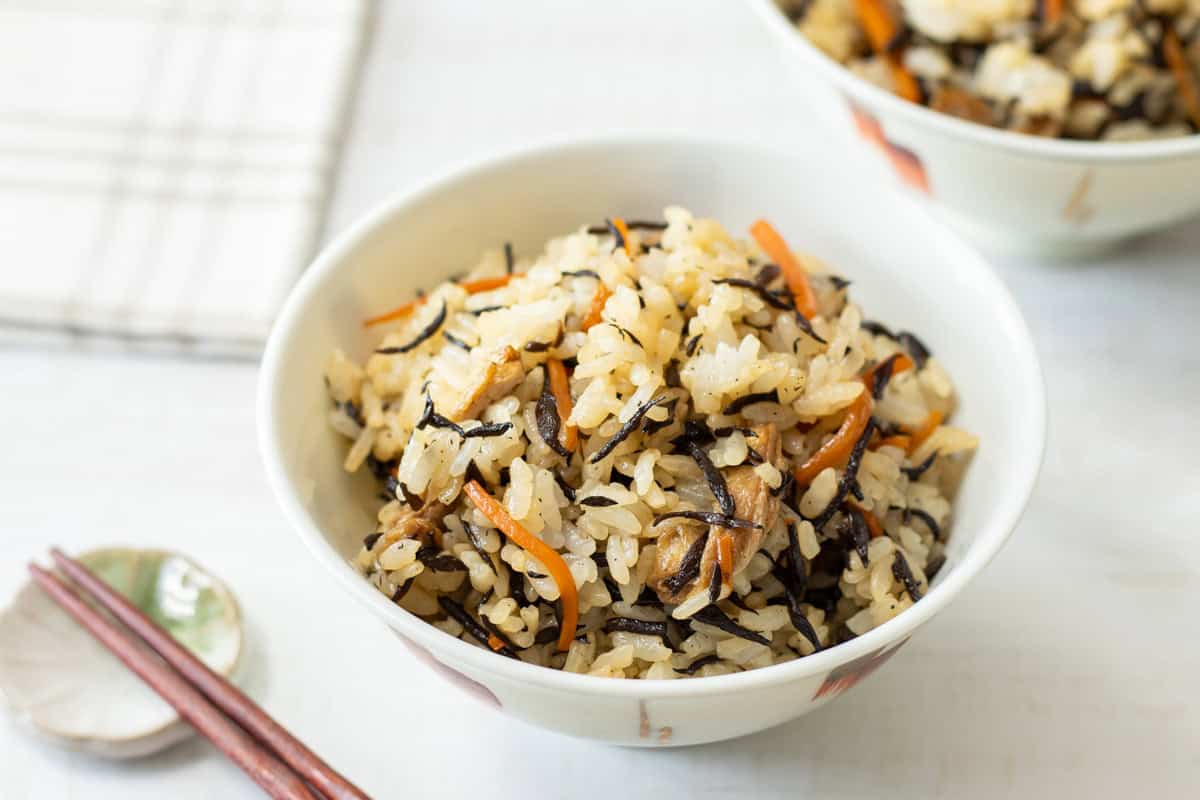
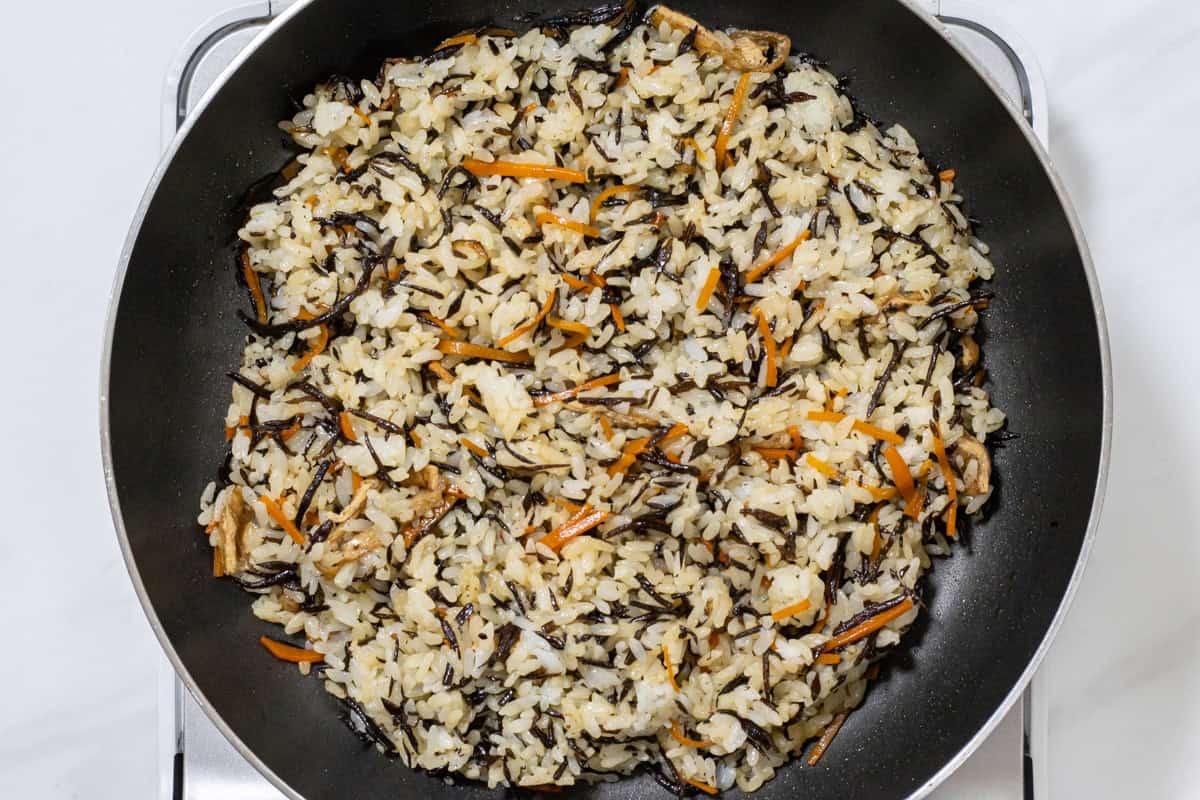
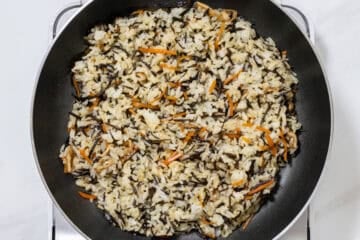
Remove the pan from the heat and add the freshly cooked rice. Mix everything thoroughly until the rice is evenly coated with the hijiki mixture.
How to store
The dish will keep in the refrigerator for up to 2 days.
I hope you enjoy this recipe!
If you try it, I’d love to hear how it turned out. Please leave a review 💬 and a star rating ⭐ in the comment below. Your support and feedback means so much to me!
More recipes you'll love

Printable Recipe Card
Hijiki Gohan (Hijiki Seaweed Rice)
Ingredients
- 11.3 oz cooked Japanese short-grain rice (about 2 Japanese-style rice bowls)
- 0.3 oz dried hijiki seaweed
- 1 oz carrot
- 0.3 oz aburaage (fried tofu pouches)
Seasonings:
- ½ cup dashi stock (Please refer to the linked page for instructions on how to make it. For plant-based options, see the pages on Kombu Dashi and Shiitake Dashi.)
- 1 Tbsp mirin
- 1 tsp sugar
- 1 ½ Tbsp soy sauce
Instructions
- In a large bowl, combine the dried hijiki with plenty of water and let it soak for about 30-60 minutes. (If the package specifies a soaking time, follow those instructions.) Once the hijiki is rehydrated, drain it in a fine-mesh strainer, rinse it under running water, and drain well.

- Cut the carrot into thin strips. Pat the aburaage dry with paper towels to remove any excess oil, then cut it into thin, bite-sized strips.
- Heat oil in a pan. Once the pan is hot, add the carrot and stir-fry briefly over medium heat until evenly coated with oil. Add the hijiki and continue cooking for about 1-2 minutes to cook off any excess moisture. Then, add the aburaage and stir-fry briefly to combine.
- Add the seasonings (dashi, mirin, sugar, and soy sauce) to the pan and bring to a boil. Once boiling, reduce the heat to medium-low and simmer for about 5-10 minutes, stirring occasionally, until only a small amount of liquid remains.
- Remove the pan from the heat and add the freshly cooked rice. Mix everything thoroughly until the rice is evenly coated with the hijiki mixture.
Notes
- The dish will keep in the refrigerator for up to 2 days.

Leave a Rating and a Comment