

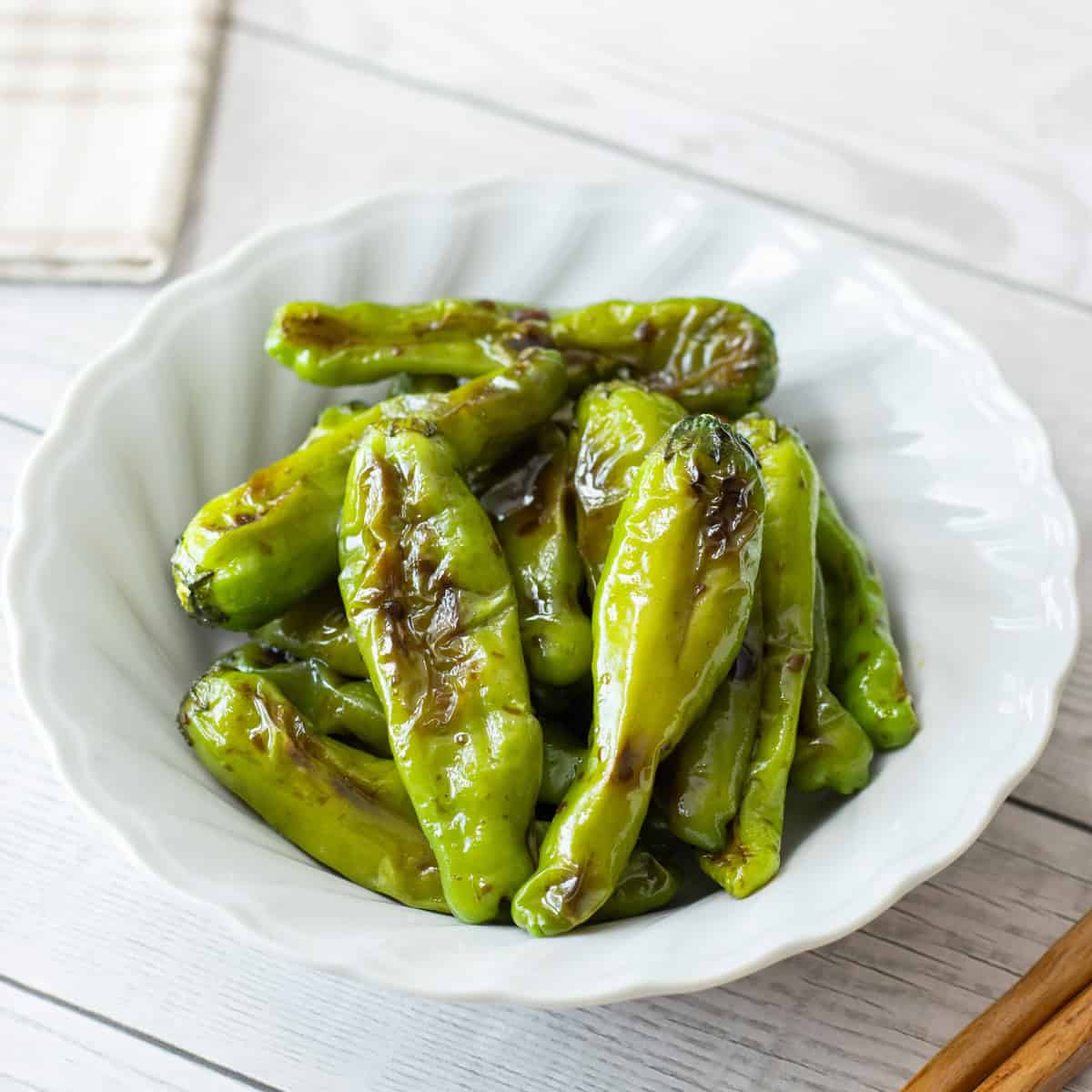
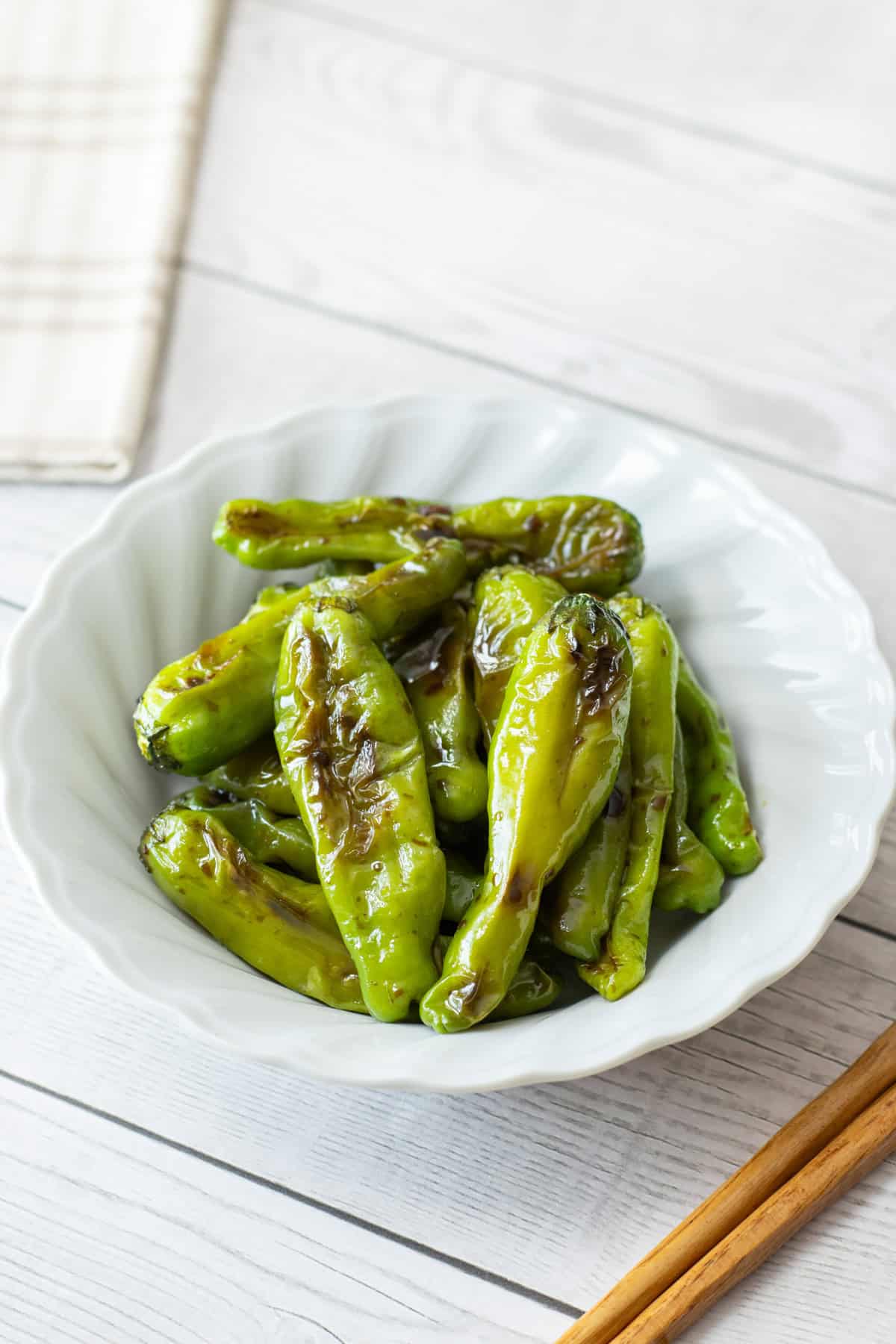
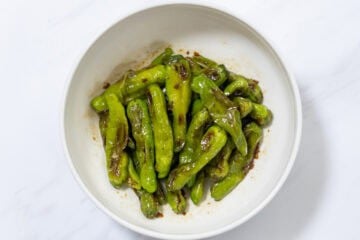
Why not try shishito peppers the Japanese way? Blistered Shishito Peppers with Ginger Soy Sauce is a simple yet flavorful dish that combines lightly charred shishito peppers with the bright, refreshing flavor of ginger soy sauce.
Jump to:
What are Blistered Shishito Peppers with Ginger Soy Sauce?
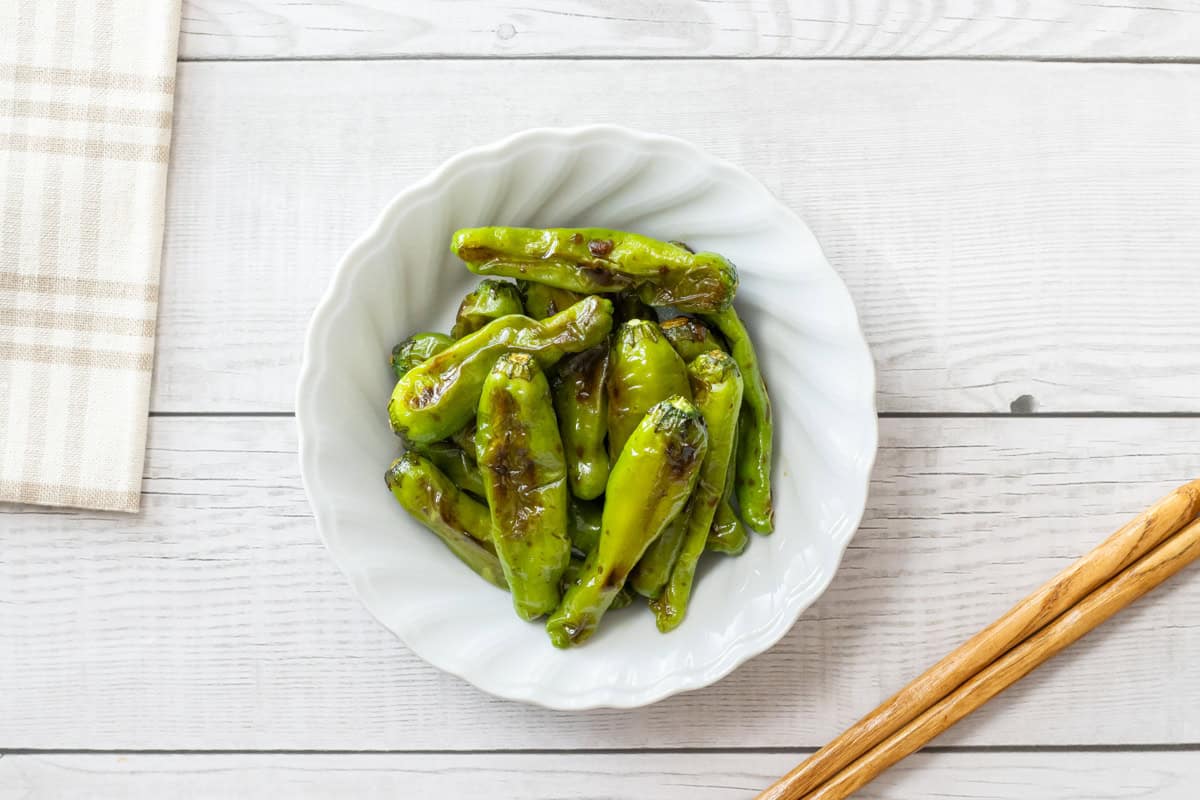
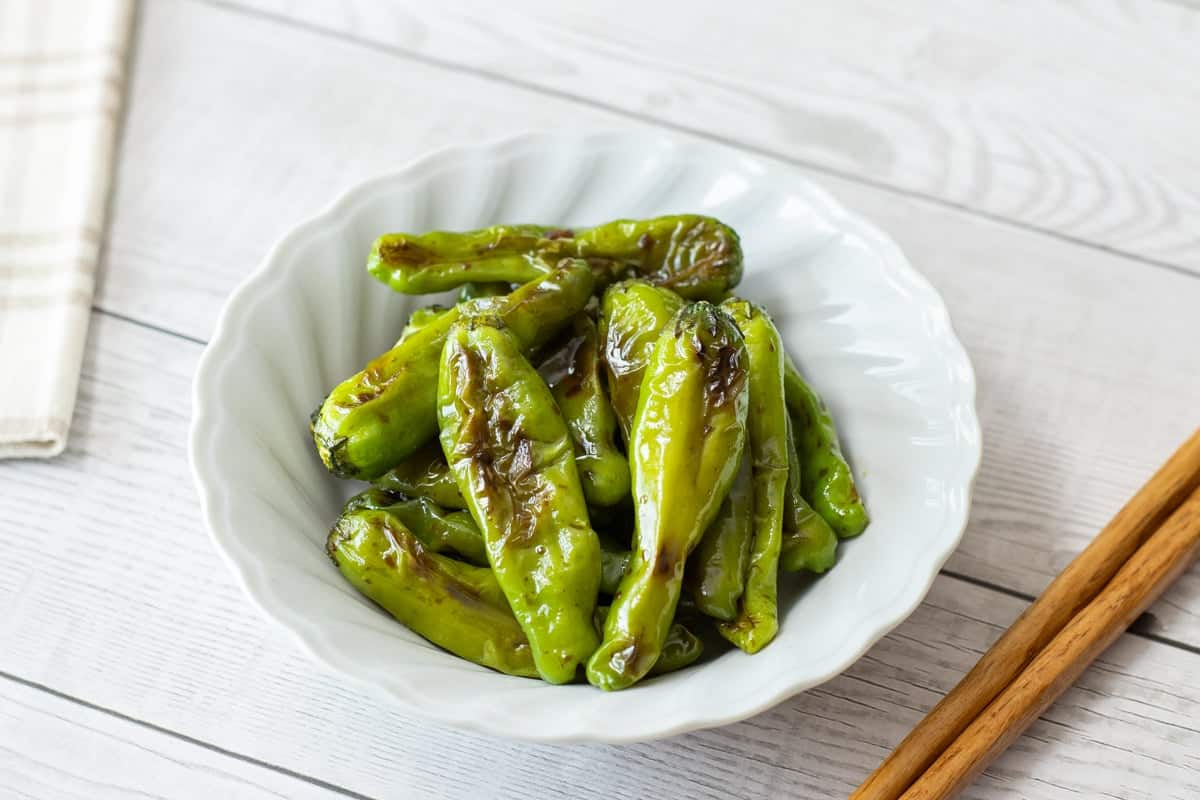
Blistered Shishito Peppers with Ginger Soy Sauce is a Japanese dish made by blistering shishito peppers until lightly charred, then tossing them in ginger soy sauce. In Japan, the appeal of shishito peppers lies in their distinctive mild bitterness and fresh, green aroma, and they are often prepared in ways that highlight these natural flavors. Tossing them with ginger soy sauce is a classic example of this approach.
The refreshing ginger soy sauce pairs beautifully with the flavor that develops as the shishito peppers blister in oil. The dish highlights the peppers' naturally subtle bitterness, followed by a bright, lingering ginger kick. If you have only ever seasoned shishito peppers with salt, this is definitely a combination worth trying.
So, what are shishito peppers
Some of you may not be familiar with shishito peppers.
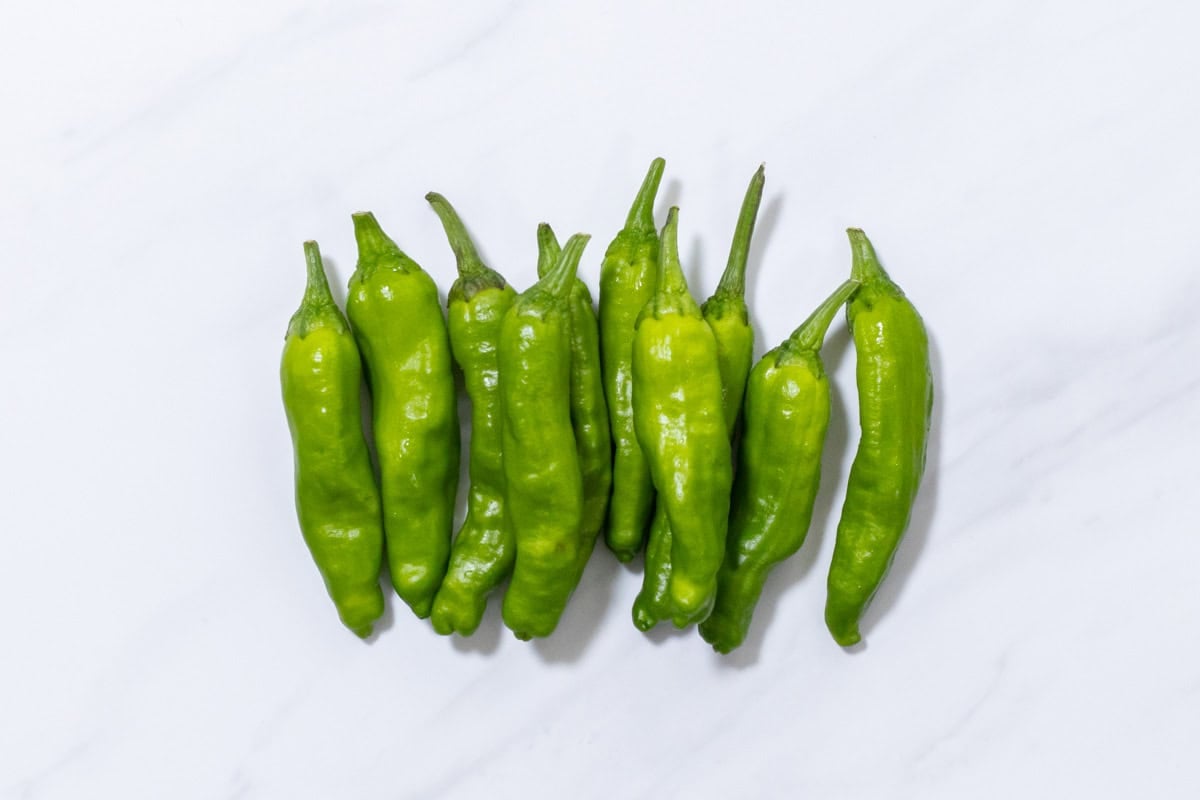
Shishito peppers are a mild variety of chili pepper that are bright green, slender, about the length of a finger, and slightly wrinkled. "Shishi" means lion, while "to" comes from "togarashi," the Japanese word for chili pepper. The name comes from the shape of the tip, which resembles a lion's head.
They have a subtle bitterness and sweetness, as well as a distinctive fresh, green aroma. Much like bell peppers, they are generally not spicy, but about one in ten peppers may have some heat. That element of surprise is part of the fun.
They are also rich in nutrients such as beta-carotene, vitamins B6, C, and E, and potassium. Since fat-soluble nutrients such as beta-carotene and vitamin E are better absorbed when consumed with oil, the peppers are especially well suited to cooking methods such as stir-frying and deep-frying.
When grilled, their skins become blistered, allowing them to absorb seasonings more readily. Cooking them slowly also brings out their natural sweetness, so it is best to cook them over medium-low heat until the skins are blistered and the peppers are tender.
Preparing shishito peppers for cooking
When preparing shishito peppers, there are two simple steps you can add to your prep routine.
The first is to pat the peppers dry after rinsing them.
Since shishito peppers have a slightly wrinkled surface, moisture can remain in the small crevices after rinsing. Cooking them while they are still wet can cause the oil to splatter, so it is best to pat them dry before cooking.
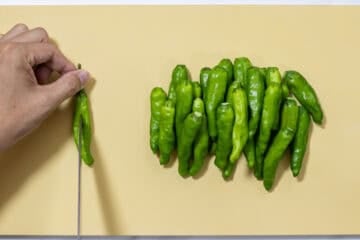
The second is to make a small slit in each pepper.
Shishito peppers are hollow inside, so the moisture inside the peppers turns into steam when heated. If the skin remains completely intact, the steam has nowhere to escape, which can cause the peppers to burst during cooking. To prevent this, make a small slit in the skin. This significantly reduces the risk of the peppers bursting. (You can also prick them with a fork instead.)
By the way, in Japan, it is also common to remove the stems from shishito peppers when making these slits. This is mainly done to make them easier to eat whole with chopsticks. I removed the stems this time as well, but since doing so doesn't affect the flavor, feel free to leave them on if you prefer.
Other Japanese ways to enjoy shishito peppers
In addition to blistered shishito peppers with ginger soy sauce, there are several other classic ways to enjoy shishito peppers in Japan. Some of the most popular ways to prepare them include:
- Stir-fried
- Simmered in a sweet and savory sauce
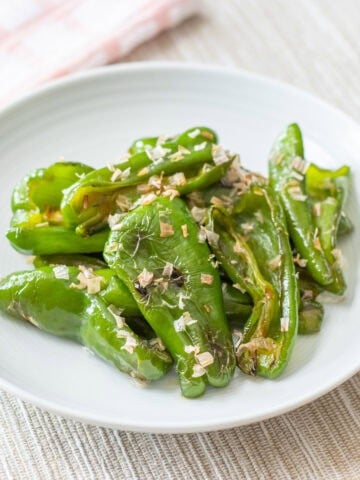
- Yakibitashi (grilled and soaked in dashi broth)
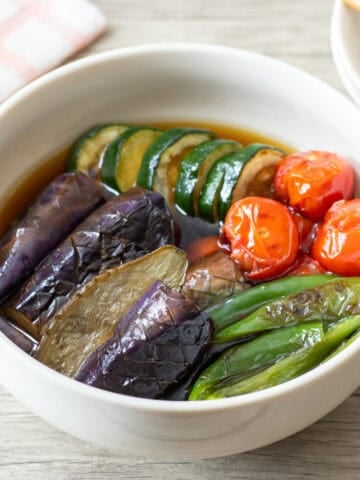
- Agebitashi (deep-fried and soaked in dashi broth)
- Tempura
For the dishes linked above, I have published the full recipes. Each one is a delicious way to enjoy the unique flavor of shishito peppers. If you'd like to explore more Japanese ways of preparing shishito peppers, be sure to check out these recipes as well. (Simply substitute shishito peppers for the vegetables called for in the original recipes.)
📋Step-by-step recipe
Ingredients
- 4.2 oz shishito peppers
- 1 Tbsp soy sauce
- 1 tsp grated ginger
Instructions
🕒 Total: 10 mins
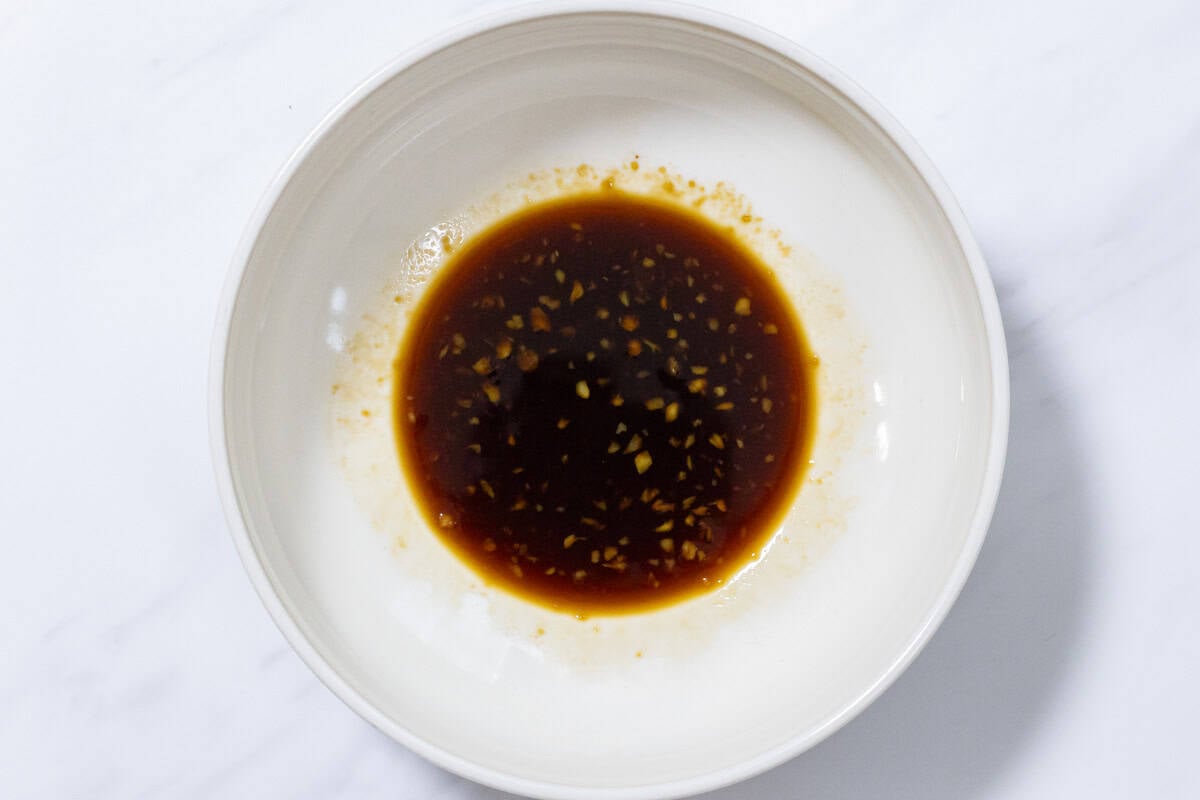
Step 1
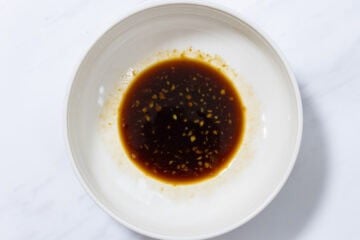
In a bowl, combine the soy sauce and grated ginger, and mix well.
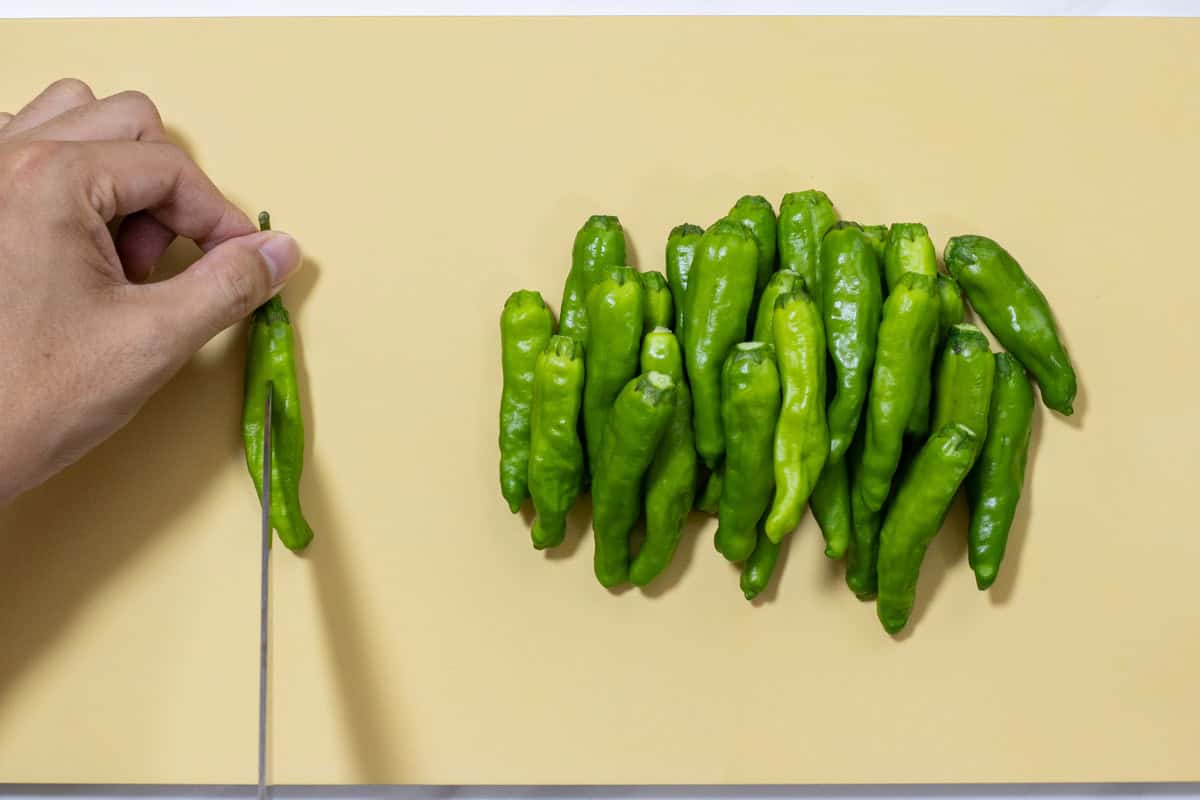
Step 2
Make a small slit in each shishito pepper using the tip of a knife (or prick each one with a fork). Remove the stems so the peppers can be eaten whole with chopsticks. (If eating them by hand, you can leave the stems on.)
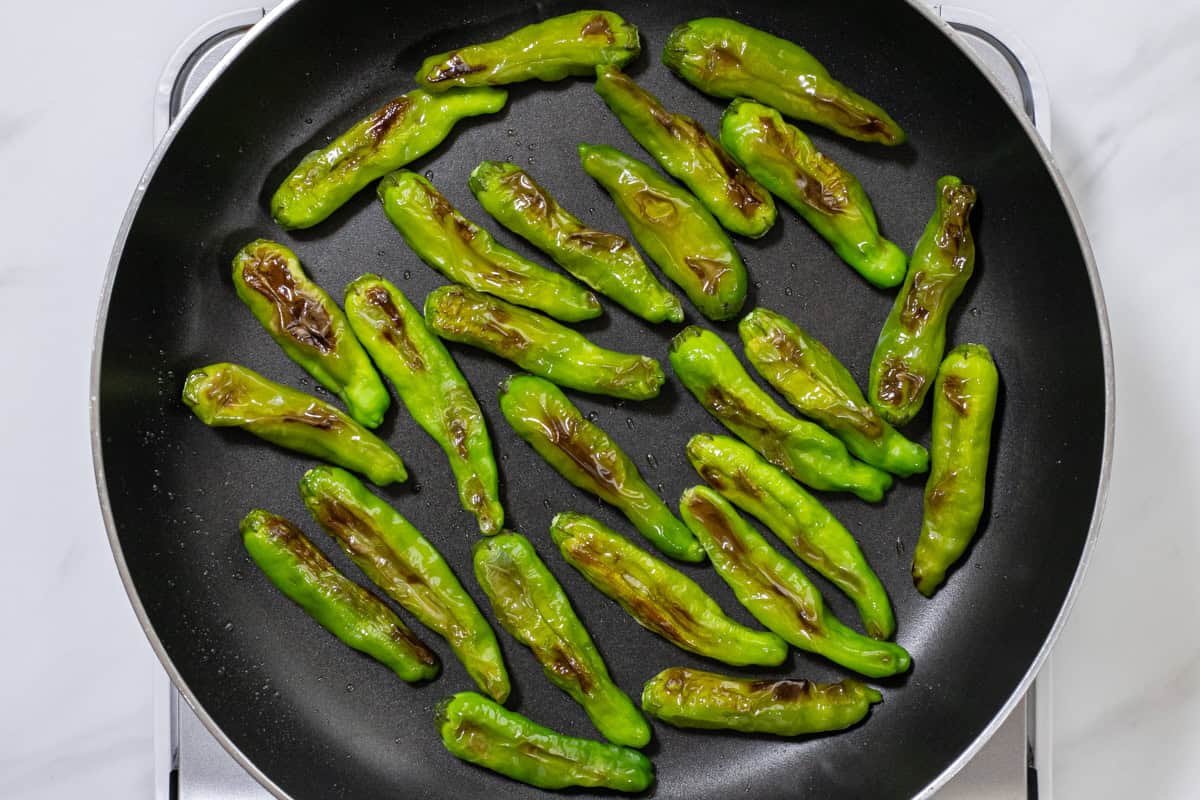
Step 3
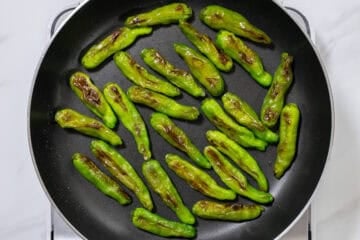
Heat oil in a pan. Once the pan is hot, add the shishito peppers in a single layer and cook over medium-low heat until blistered on both sides and tender.
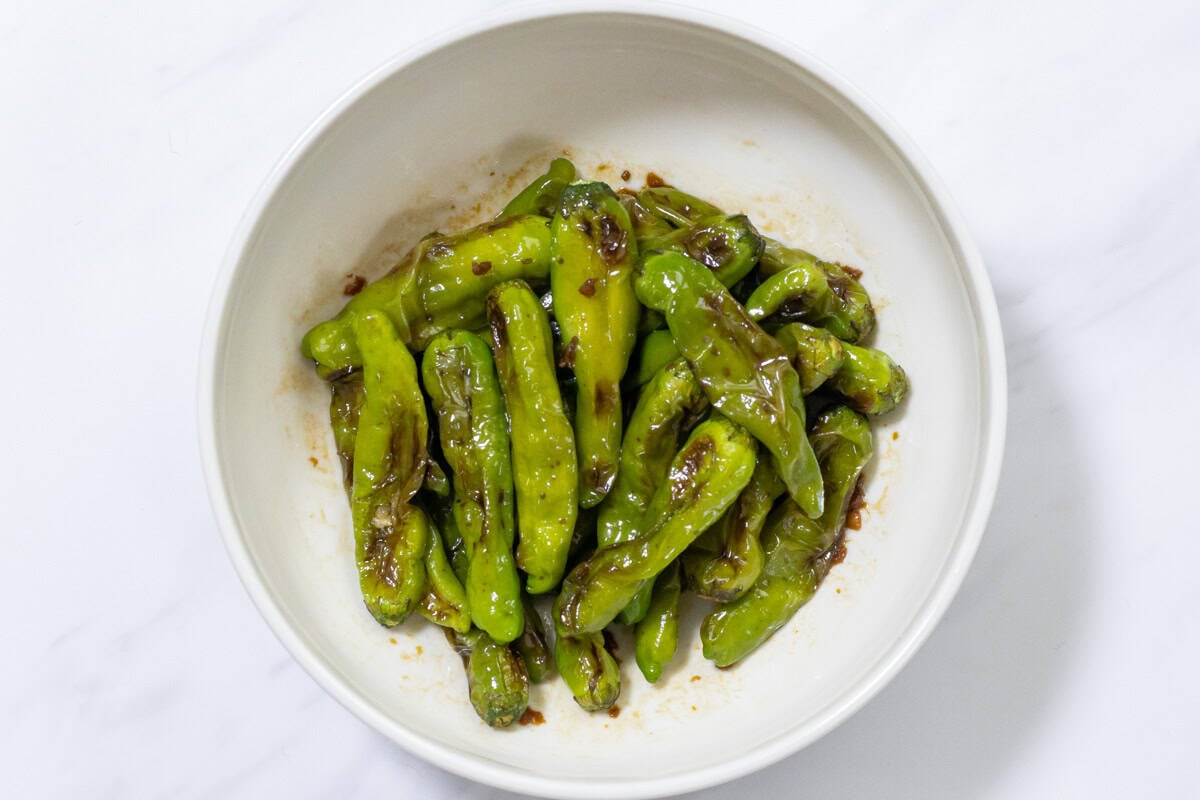
Step 4
Transfer the peppers to the bowl and toss them with the ginger soy sauce. Let them sit for a few minutes to allow the flavors to meld.
How to store
The dish will keep in the refrigerator for up to 3 days.
Cooking tips
- To prevent oil from splattering, be sure to pat the shishito peppers dry after rinsing.
- To keep the shishito peppers from bursting, be sure to make a small slit in each pepper.
- Cook the shishito peppers over medium-low heat to gradually bring out their natural sweetness.
I hope you enjoy this recipe!
If you try it, I’d love to hear how it turned out. Please leave a review 💬 and a star rating ⭐ in the comment below. Your support and feedback means so much to me!
More recipes you'll love
Printable Recipe Card
Blistered Shishito Peppers with Ginger Soy Sauce
Ingredients
- 4.2 oz shishito peppers
- 1 Tbsp soy sauce
- 1 tsp grated ginger
Instructions
- In a bowl, combine the soy sauce and grated ginger, and mix well.

- Make a small slit in each shishito pepper using the tip of a knife (or prick each one with a fork). Remove the stems so the peppers can be eaten whole with chopsticks. (If eating them by hand, you can leave the stems on.)
- Heat oil in a pan. Once the pan is hot, add the shishito peppers in a single layer and cook over medium-low heat until blistered on both sides and tender.
- Transfer the peppers to the bowl and toss them with the ginger soy sauce. Let them sit for a few minutes to allow the flavors to meld.
Notes
- The dish will keep in the refrigerator for up to 3 days.
Leave a Rating and a Comment