

Kinshi Tamago is a Japanese garnish that adds vibrant color to dishes. Beyond its visual appeal, it also helps balance flavors, which is one reason it has long been cherished in Japanese cuisine.
Jump to:
What is Kinshi Tamago?
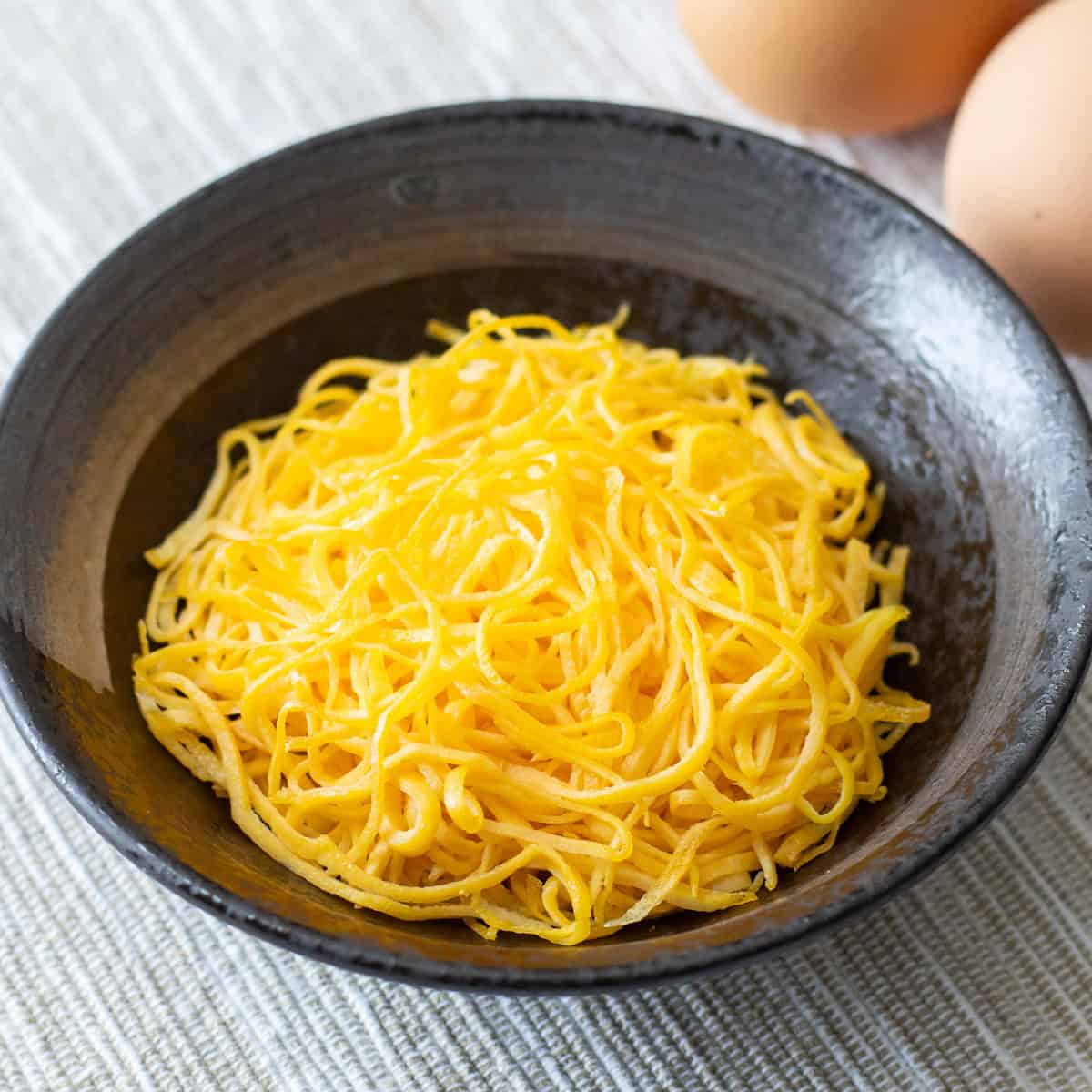
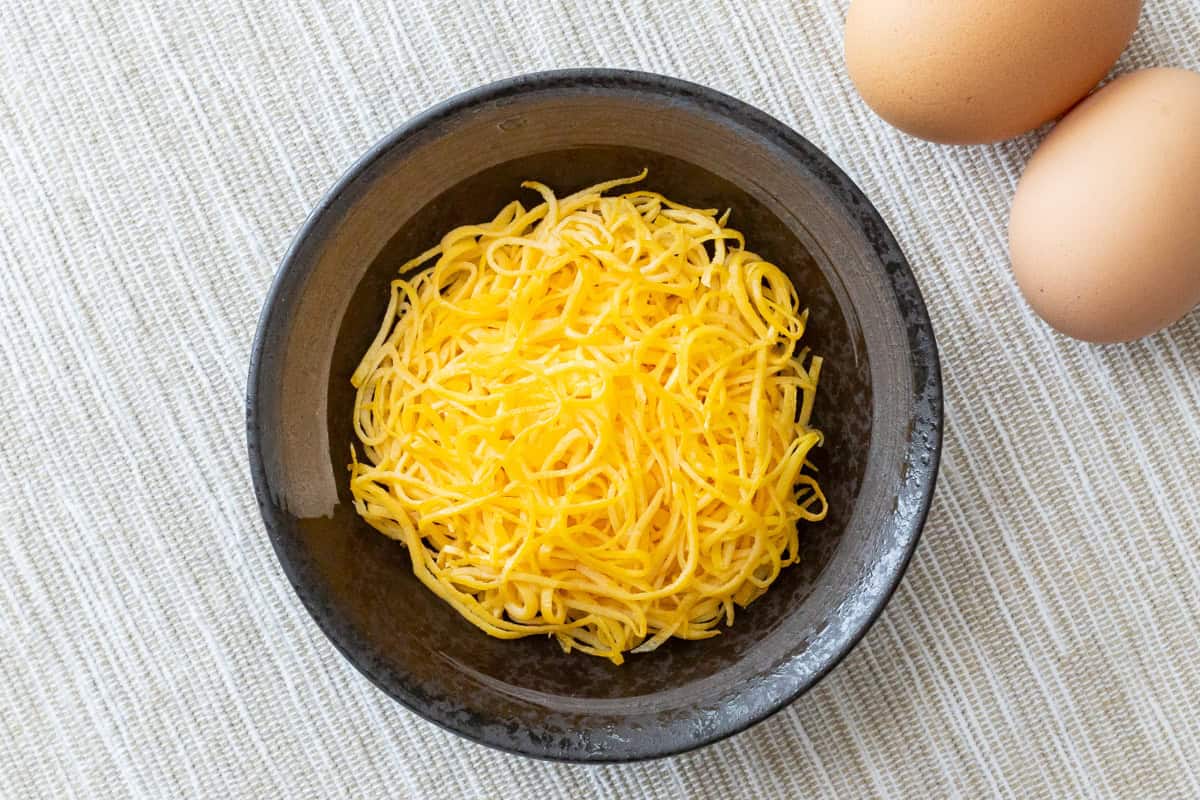
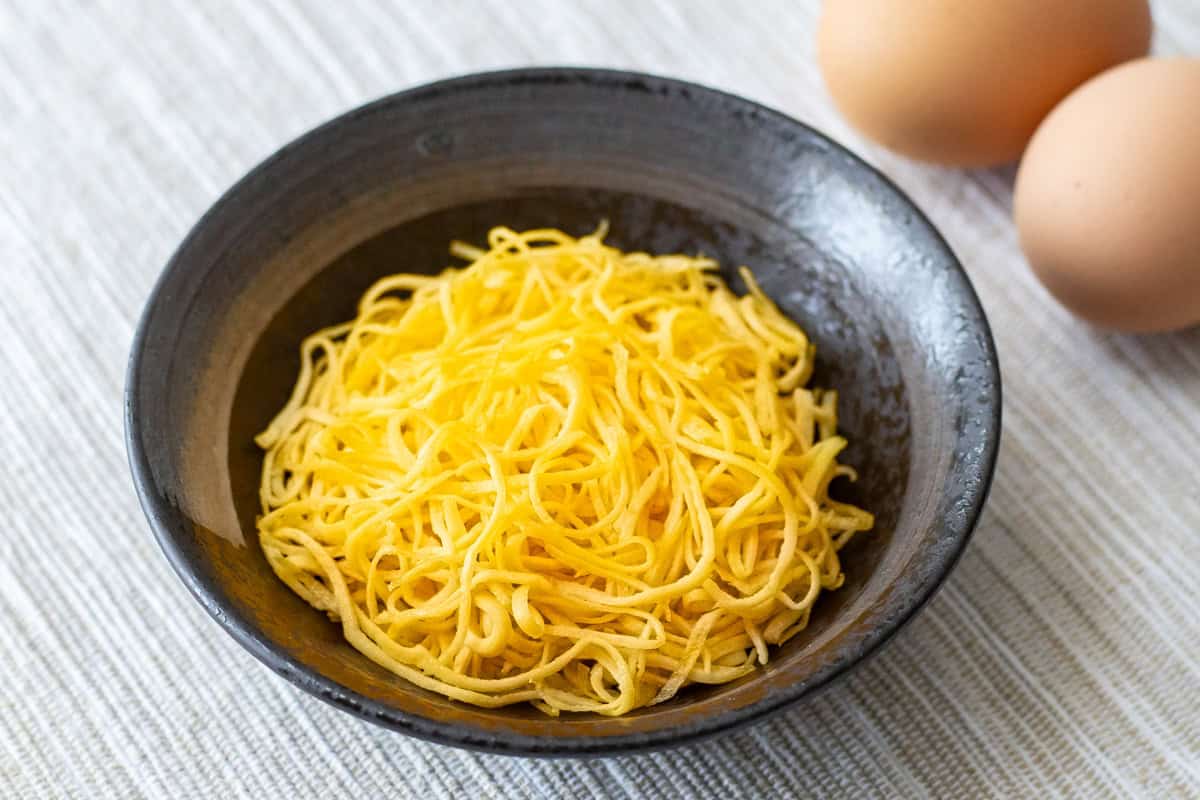
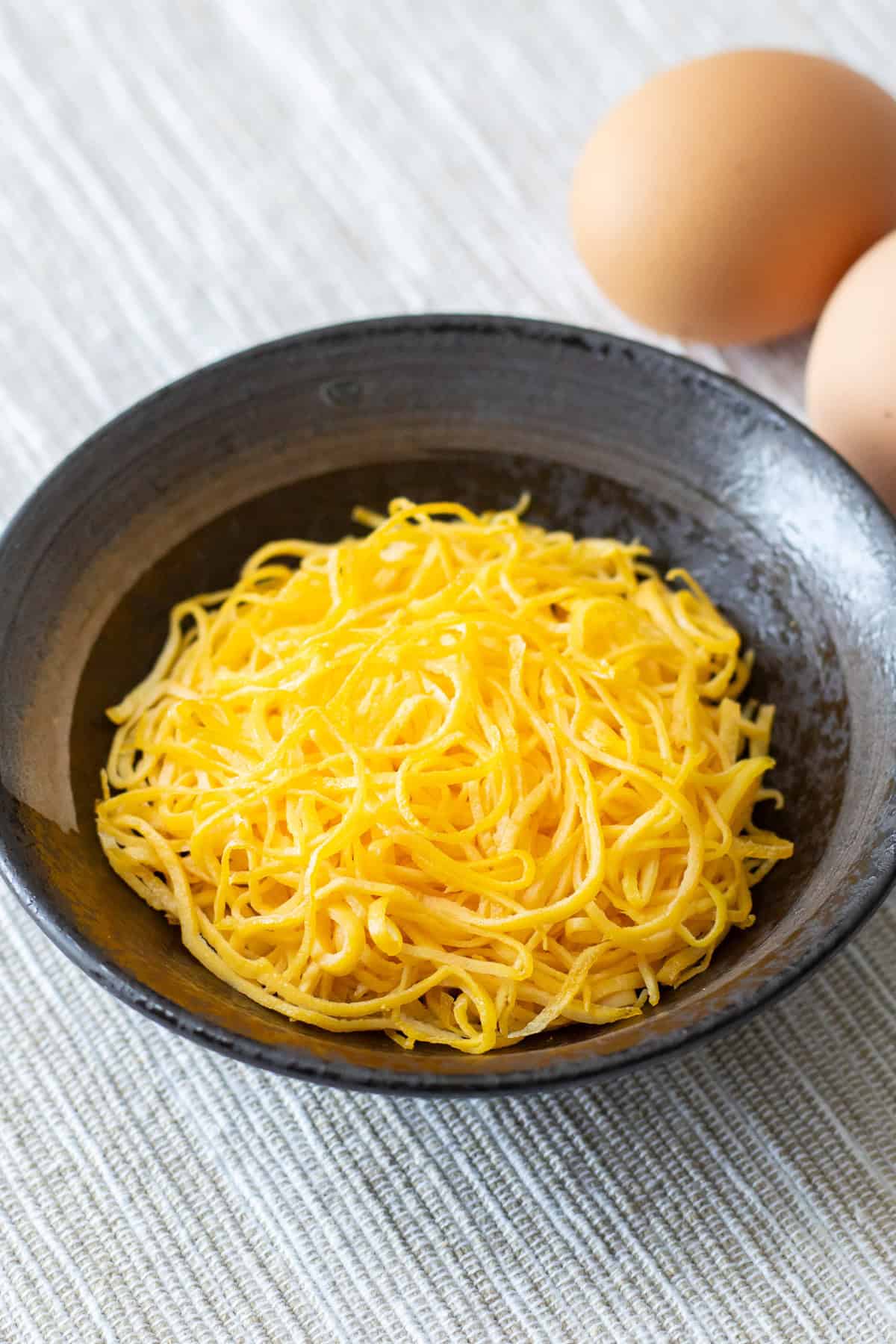
Kinshi Tamago is a traditional Japanese garnish made by cooking eggs into very thin sheets in a pan and then cutting them into fine strips. “Kinshi” refers to something as thin and beautiful as golden threads, while “tamago” means egg. As the name suggests, it is called this because the thinly sliced eggs resemble golden threads.
Its bright yellow color adds an elegant and visually appealing touch to dishes without overpowering their flavor. In Japan, it is especially well-known as a topping for hiyashi chuka (cold ramen salad), chirashizushi (scattered sushi), and rice bowls.
You can make it in under ten minutes with just a pan and a few ingredients, but there are some tricks to making thin, beautiful egg sheets without tearing them. Keep the following tips in mind to add a pop of color to your dishes.
4 key steps and tips to perfect Kinshi Tamago
Making kinshi tamago involves the following four simple steps:
- Prepare the egg mixture
- Heat the pan
- Cook the egg mixture into thin sheets
- Slice the egg into fine strips
Each step includes helpful tips to ensure this garnish turns out beautifully, so be sure to keep them in mind.
Prepare the egg mixture
The key to this step is thoroughly breaking up the egg whites.
Kinshi tamago is known for its vibrant yellow color. If chunks of egg white remain, the final result may show uneven white streaks running through the yellow.
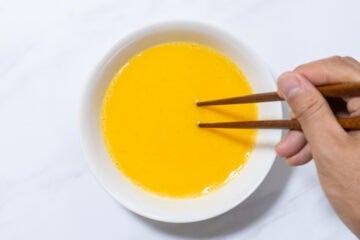
To prevent this, lightly beat the eggs in a bowl, then place the tips of the chopsticks against the bottom of the bowl and move them quickly back and forth. Keep the tips of the chopsticks in contact with the bottom at all times. This simple technique helps break up the egg whites easily while mixing the eggs.
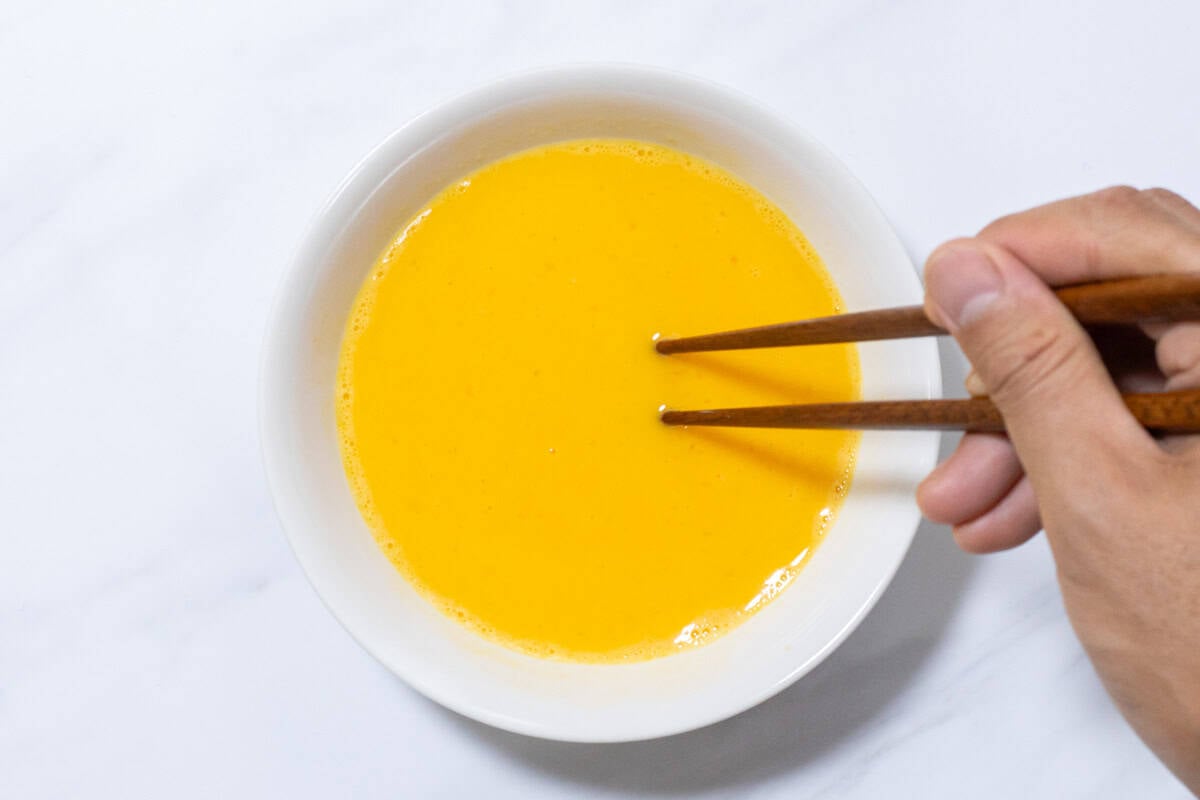
For an even smoother, more refined finish, strain the egg mixture through a fine-mesh sieve. This adds an extra step, but it is especially worth doing if you are aiming for a restaurant-quality presentation or an Instagram-worthy finish.
Heat the pan
In this step, it is important to heat the pan as evenly as possible. This ensures the egg mixture cooks uniformly and helps prevent any spots from browning.
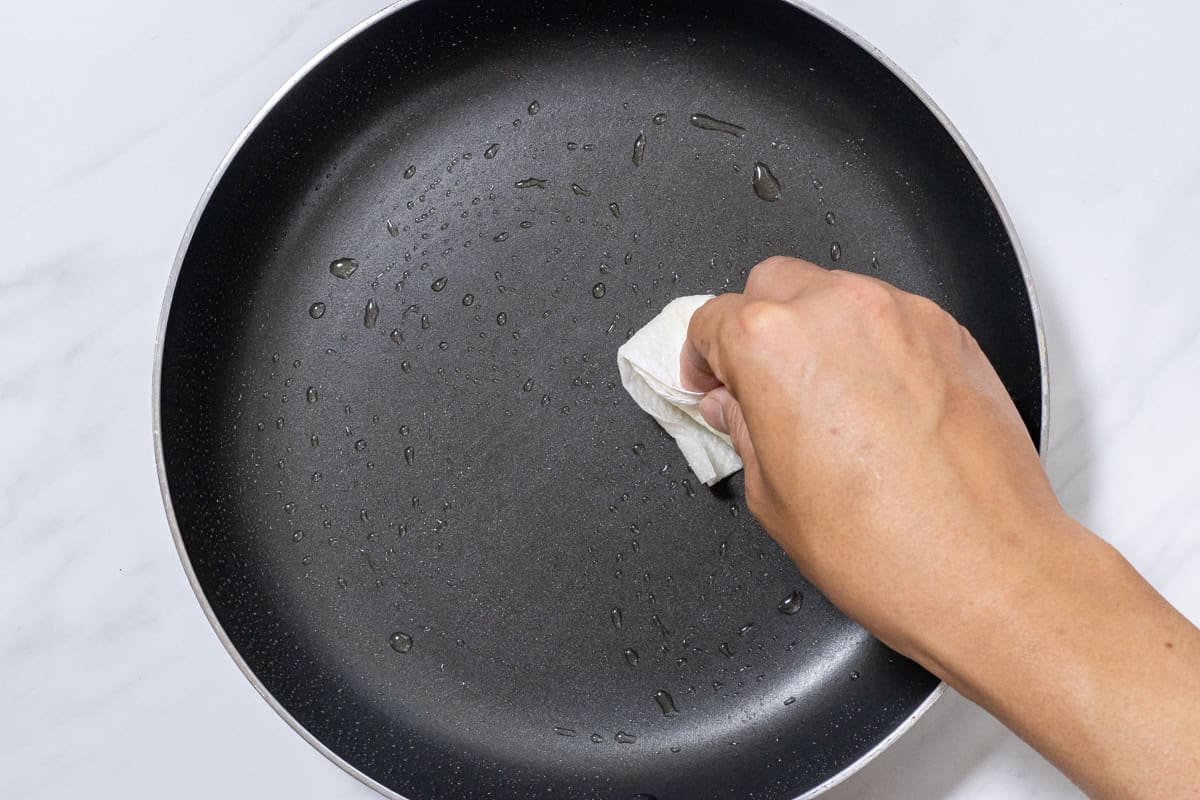
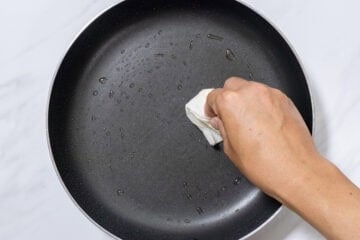
Heat the pan thoroughly and coat it with oil all the way to the edges, then remove it from the heat. Let it sit for about 30 seconds. This pause helps even out the temperature across the pan, as the center can become hotter than the edges. Alternatively, you can place the pan on a damp towel for a few seconds to achieve a similar effect.
You should also add the egg mixture while the pan is still off the heat. If the pan remains over the heat, the egg is more likely to cook unevenly or start to bubble.
Cook the egg mixture into thin sheets
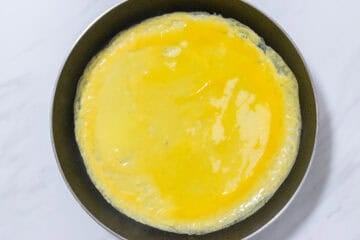
Once you pour the egg mixture into the pan, swirl the pan so that the egg spreads into a thin, even layer.
Use just enough egg mixture to spread evenly from the center of the pan to the edges. The egg mixture will begin to set from the residual heat, so use only enough that it barely moves when you tilt the pan. If you add too much, you can pour the excess back into the bowl.
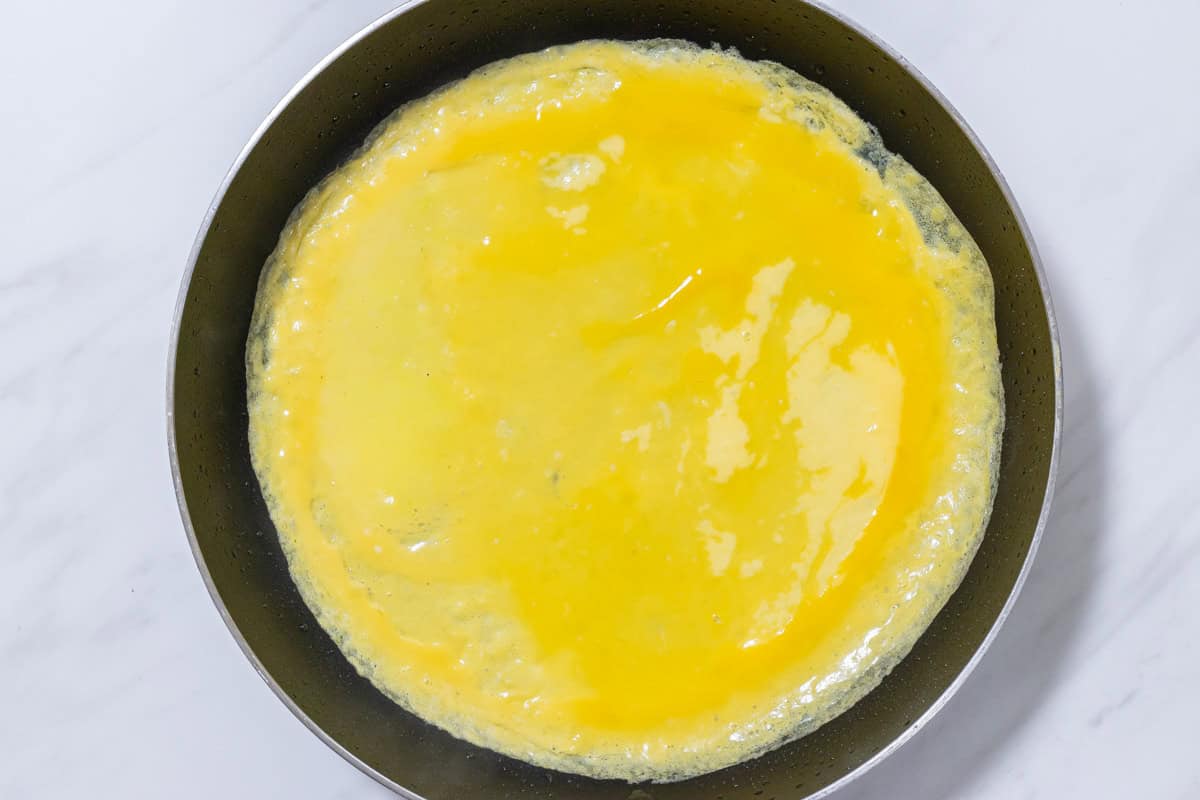
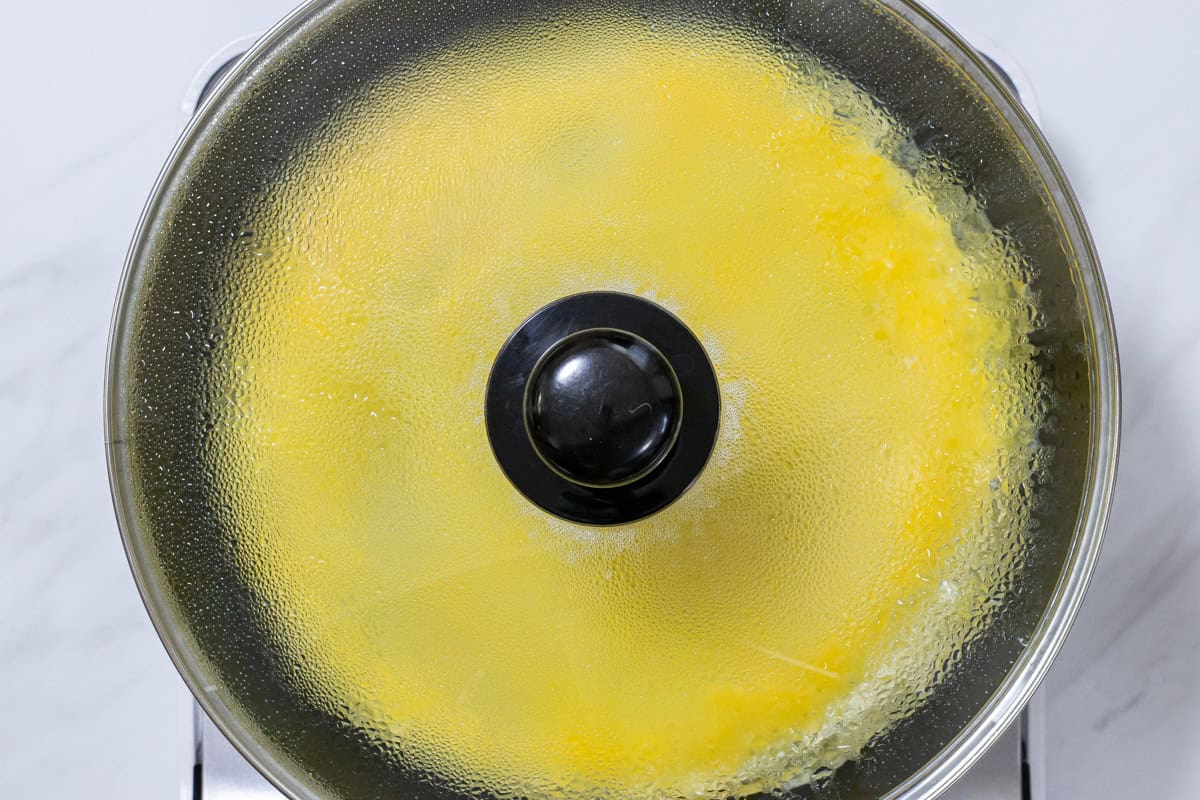
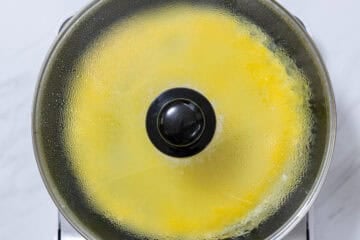
Return the pan to the stove and cook over medium-low heat until about 80% of the surface looks set. Then, turn off the heat, cover the pan, and let the egg steam for 1 to 2 minutes. This steaming helps the surface of the egg set. Alternatively, if you are comfortable using chopsticks, you can carefully flip the egg over and let the residual heat finish cooking it without steaming.
The keys here are using the right amount of egg mixture and cooking it gently over medium-low heat with residual heat. If the layer is thick, the egg loses the light, delicate texture that defines kinshi tamago. Likewise, if the heat is too high, the egg will brown and lose its beautiful yellow appearance.
Slice the egg into fine strips
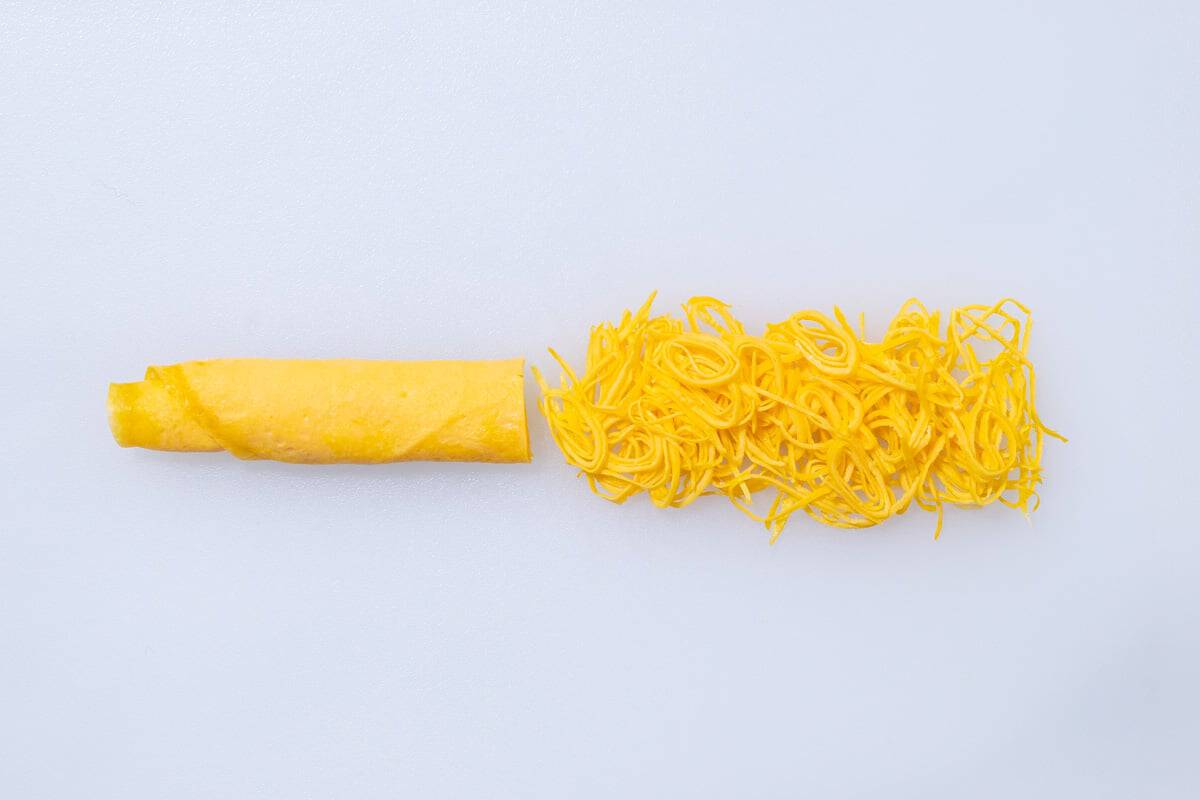
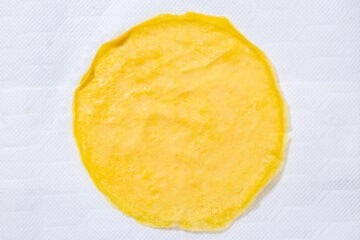
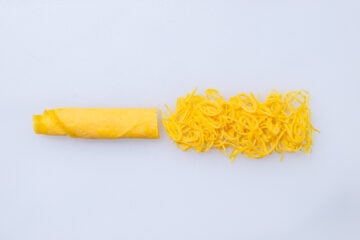
Once the egg is cooked, carefully remove it from the pan, taking care not to tear it, and let it cool. After it has cooled, fold it in half, then gently roll it into a loose cylinder. Slice it into thin strips about 1/16 inch (1-2 mm) wide, and your kinshi tamago is ready.
When slicing, focus on making the strips thin and uniform. Consistent width gives the garnish a much more polished appearance. The reason for letting the egg cool is that when it is warm, it is soft and more likely to tear.
Serving suggestions
The kinshi tamago you made can be used in dishes such as:
- Hiyashi chuka (cold ramen salad)
- Chirashizushi (scattered sushi)
- Bento (lunch boxes)
- Soboro don (ground meat rice bowl)
- Unagi don (eel rice bowl)
- Udon or soba noodle dishes
- Salad toppings
Simply adding it to a dish makes the presentation more colorful and visually appealing, which is why it is widely used in Japan—from home cooking to high-end restaurants. Why not try adding it to dishes from your own country to give them a pop of color?
📋Step-by-step recipe
Ingredients
- 2 large eggs (about 2.1 oz/60 g each, including the shell)
- ½ tsp sugar
- ¼ tsp salt
Instructions
🕒 Total: 10 mins
Step 1
Crack the eggs into a bowl, add sugar and salt, and beat well until the egg whites are fully broken up.
To break up the egg whites thoroughly, place the tips of your chopsticks against the bottom of the bowl and move them quickly back and forth without lifting them. For an even smoother, more refined finish, strain the egg mixture through a fine-mesh sieve.
Step 2
Heat oil in a pan over medium-low heat. Once the oil is hot, use a paper towel to spread it evenly across the entire surface of the pan, including the edges. Then, remove the pan from the heat and let it sit for about 30 seconds.
Step 3
Pour the egg mixture into the pan and swirl it so that the egg spreads into a thin, even layer. Use just enough to cover the pan from center to edges. The egg mixture will begin to set from the residual heat, so use only enough that it barely moves when you tilt the pan.
Step 4
Return the pan to the stove and cook over medium-low heat. Once about 80% of the surface looks set, turn off the heat, cover the pan, and let it steam for 1-2 minutes.
Step 5
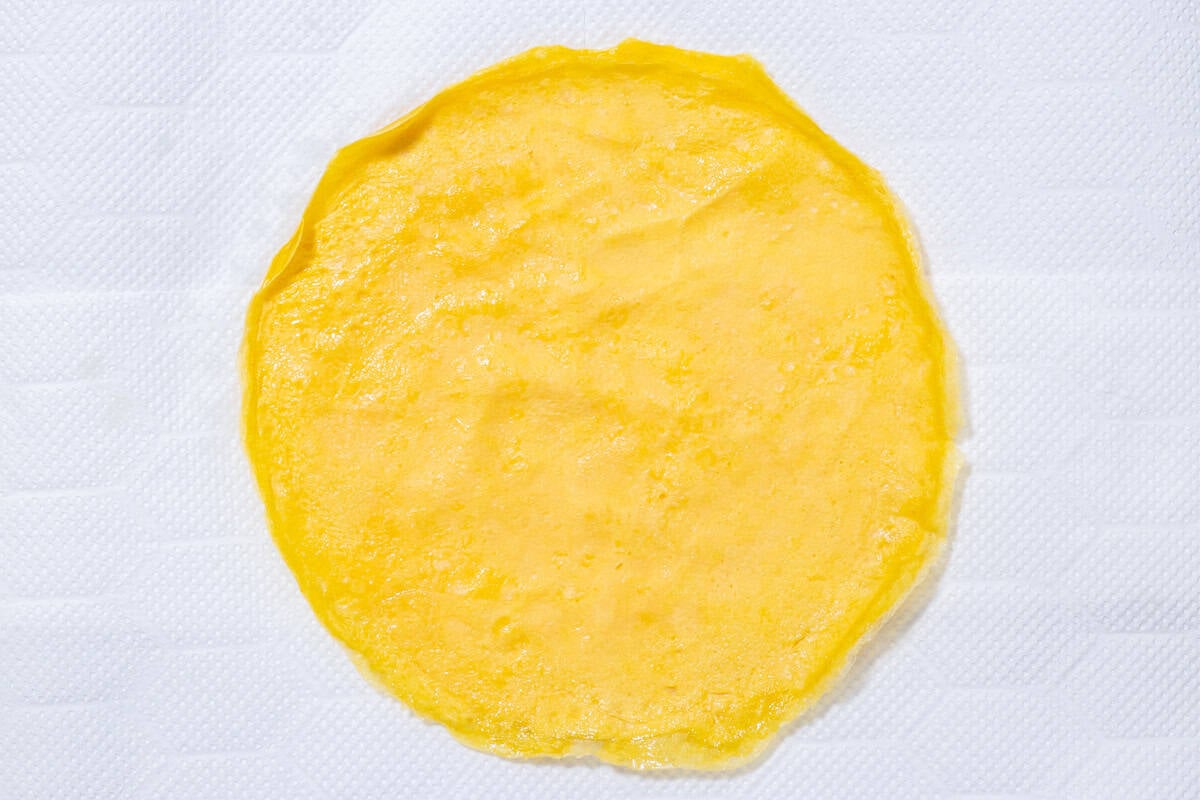
Carefully remove the egg sheet from the pan, taking care not to tear it, and let it cool. Repeat the process, starting from Step 2 (beginning with oiling the pan), until all of the egg mixture is used up.
Step 6
Once all of the egg sheets have been cooked and cooled, fold each one in half, then gently roll it into a loose cylinder. Slice into thin strips about 1/16 inch (1-2 mm) wide.
How to store
The kinshi tamago will keep in the refrigerator for up to 2 days or in the freezer for up to 2 weeks. Dividing it into smaller portions and wrapping each one in plastic wrap makes it easier to use.
I hope you enjoy this recipe!
If you try it, I’d love to hear how it turned out. Please leave a review 💬 and a star rating ⭐ in the comment below. Your support and feedback means so much to me!
More egg recipes you'll love
Printable Recipe Card
Kinshi Tamago (Japanese Thin Egg Strips)
Ingredients
- 2 large eggs (about 2.1 oz/60 g each, including the shell)
- ½ tsp sugar
- ¼ tsp salt
Instructions
- Crack the eggs into a bowl, add sugar and salt, and beat well until the egg whites are fully broken up.To break up the egg whites thoroughly, place the tips of your chopsticks against the bottom of the bowl and move them quickly back and forth without lifting them. For an even smoother, more refined finish, strain the egg mixture through a fine-mesh sieve.

- Heat oil in a pan over medium-low heat. Once the oil is hot, use a paper towel to spread it evenly across the entire surface of the pan, including the edges. Then, remove the pan from the heat and let it sit for about 30 seconds.
- Pour the egg mixture into the pan and swirl it so that the egg spreads into a thin, even layer. Use just enough to cover the pan from center to edges. The egg mixture will begin to set from the residual heat, so use only enough that it barely moves when you tilt the pan.
- Return the pan to the stove and cook over medium-low heat. Once about 80% of the surface looks set, turn off the heat, cover the pan, and let it steam for 1-2 minutes.
- Carefully remove the egg sheet from the pan, taking care not to tear it, and let it cool. Repeat the process, starting from Step 2 (beginning with oiling the pan), until all of the egg mixture is used up.
- Once all of the egg sheets have been cooked and cooled, fold each one in half, then gently roll it into a loose cylinder. Slice into thin strips about 1/16 inch (1-2 mm) wide.
Notes
- The kinshi tamago will keep in the refrigerator for up to 2 days or in the freezer for up to 2 weeks. Dividing it into smaller portions and wrapping each one in plastic wrap makes it easier to use.
Leave a Rating and a Comment