

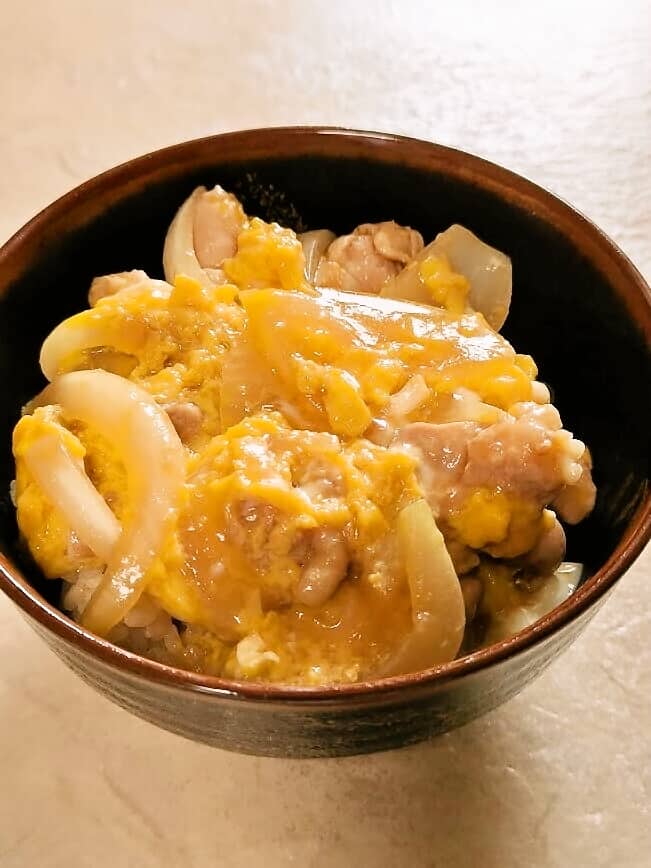
Indulge in the delightful flavor of Oyakodon, a dish that is immensely popular in Japan. It features tender chicken and fluffy eggs, embodying traditional Japanese flavors.
Jump to:
What is Oyakodon?
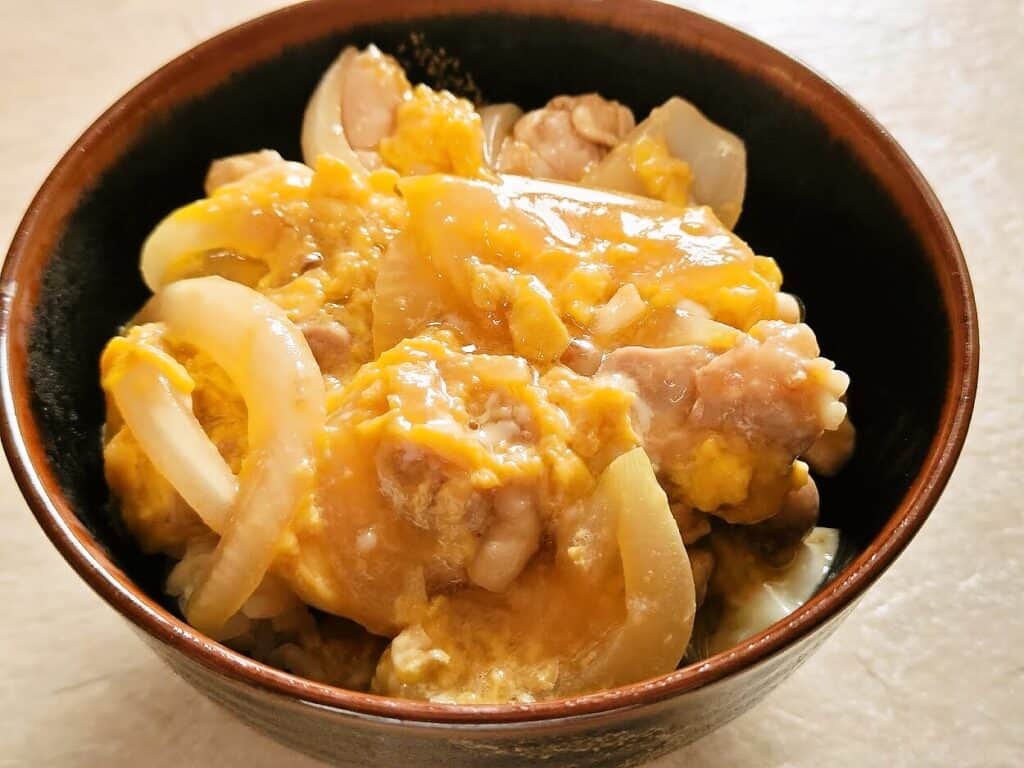
Oyakodon is a rice bowl topped with chicken and eggs, flavored with traditional Japanese seasonings such as dashi stock, mirin, and soy sauce. "Oyako" means parent and child, and "don" refers to a rice bowl. This dish is named "oyakodon" because it features chicken as the parent and eggs as the child. The combination of chicken, eggs, and dashi creates a delightful flavor beloved throughout Japan.
This dish originated at the restaurant "Tamahide," which has been around for a long time and is located in Tokyo. It gained popularity and spread throughout Japan, resulting in various regional variations. Today, it is one of the iconic dishes of Japanese rice bowl cuisine.
Choosing the suitable cut of chicken
Oyakodon is a dish in which the chicken flavor permeates the entire dish. You can use any part of the chicken, but juicy thigh meat is more suitable than bland breast meat for this dish. Using chicken thigh provides a richer amount of fat and a more satisfying texture. It is highly recommended.
By the way, if you substitute pork or beef for chicken in this dish, it becomes another dish known as "Tanindon." While 'oyako' represents the parent-child relationship between chicken and eggs, the term 'tanin' here refers to using meat unrelated to eggs.
Regional variations
The flavor of oyakodon varies depending on the region in Japan. In eastern Japan, it is common to use onions to create a slightly sweet and rich flavor, while in western Japan, naganegi (Japanese leeks) is usually used instead to give it a refreshing taste.
Both variations offer delicious flavors, but here, I share a recipe closer to the original flavor using onions, which is more appealing to everyone. Enjoy the authentic flavor of oyakodon, rich in taste and perfectly paired with rice.
Quick guide to making dashi
The key to enhancing the flavor of oyakodon is the dashi stock. Dashi is a staple ingredient in Japanese cuisine, and the umami components in it give the dish depth and richness. To achieve an authentic taste for this dish, the use of dashi is essential.
In this section, I provide a simple guide on how to make bonito dashi for readers who may not be familiar with Japanese cuisine but want to try making oyakodon. All you need is water (⅓ cup/80 ml) and bonito flakes (0.03 oz/1 g), which is about 1% of the water's weight (the quantities in parentheses are for 2 servings). It should only take about 5 minutes to prepare, so why not give it a try?
Step 1
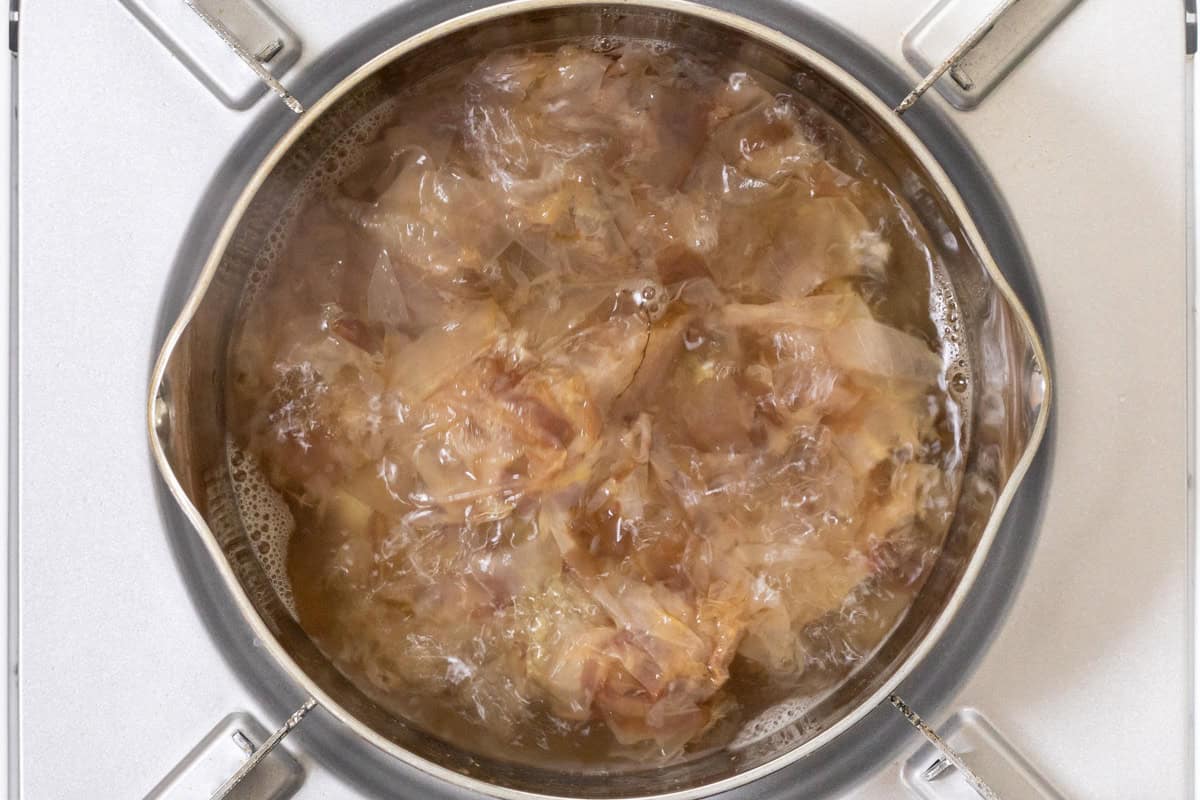
Fill a pot with the water and bring it to a boil. Once boiling, reduce the heat to low, add bonito flakes, and let it simmer for 3 minutes.
Step 2
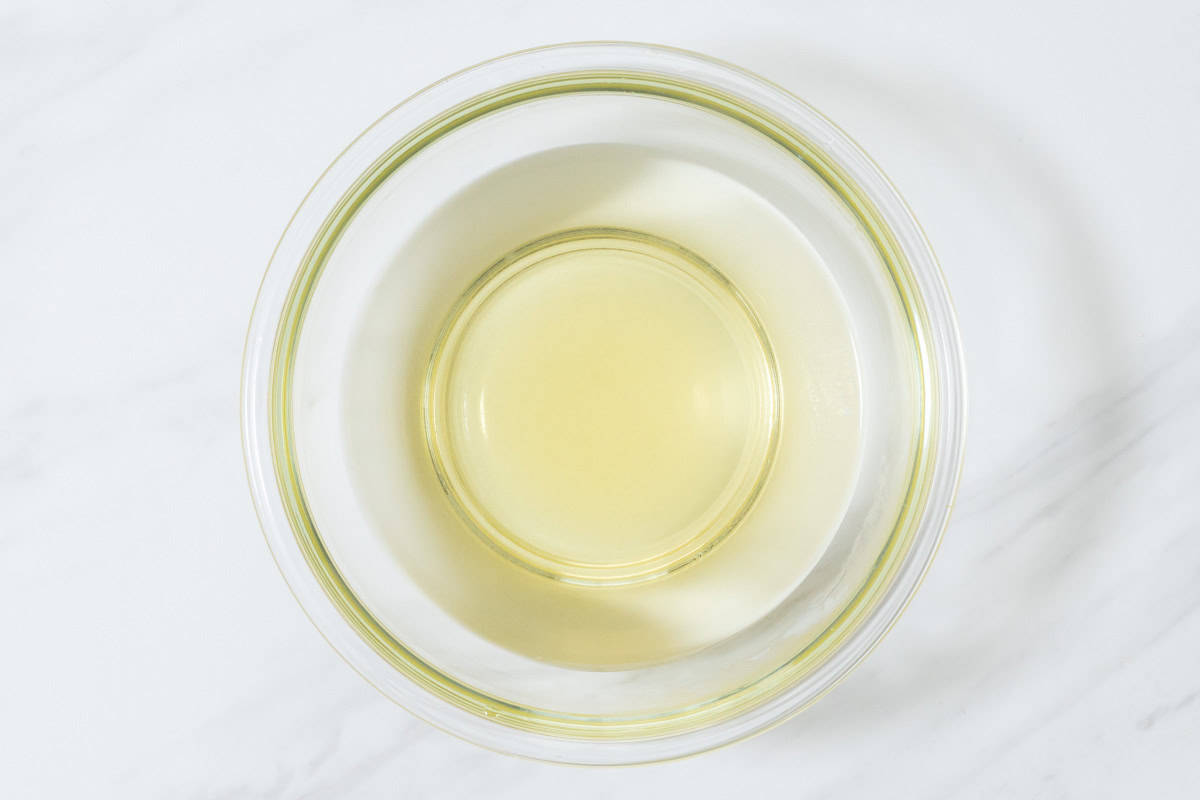
Turn off the heat and strain the mixture through a sieve lined with paper towels or a cloth (such as cheesecloth). Alternatively, if you don't mind a few fine bonito flakes remaining, you can simply use a fine-mesh strainer.
For more detailed information on how to make bonito dashi, please refer to the linked page. I hope this dish will spark your interest in other Japanese dishes as well. Japanese cuisine offers many healthy and delicious options.
📋Step-by-step recipe
Ingredients
- 11.3 oz cooked Japanese short-grain rice (2 servings)
- 3.5 oz boneless chicken thigh
- 3.5 oz onion
- 4 large eggs (about 2.1 oz/60 g each, including the shell)
Seasonings:
- ¼ cup dashi stock (Please refer to the linked page for instructions on how to make it. For plant-based options, see the pages on Kombu Dashi and Shiitake Dashi.)
- 4 Tbsp mirin
- 1 tsp sugar
- 2 Tbsp soy sauce
Instructions
🕒 Total: 15 mins
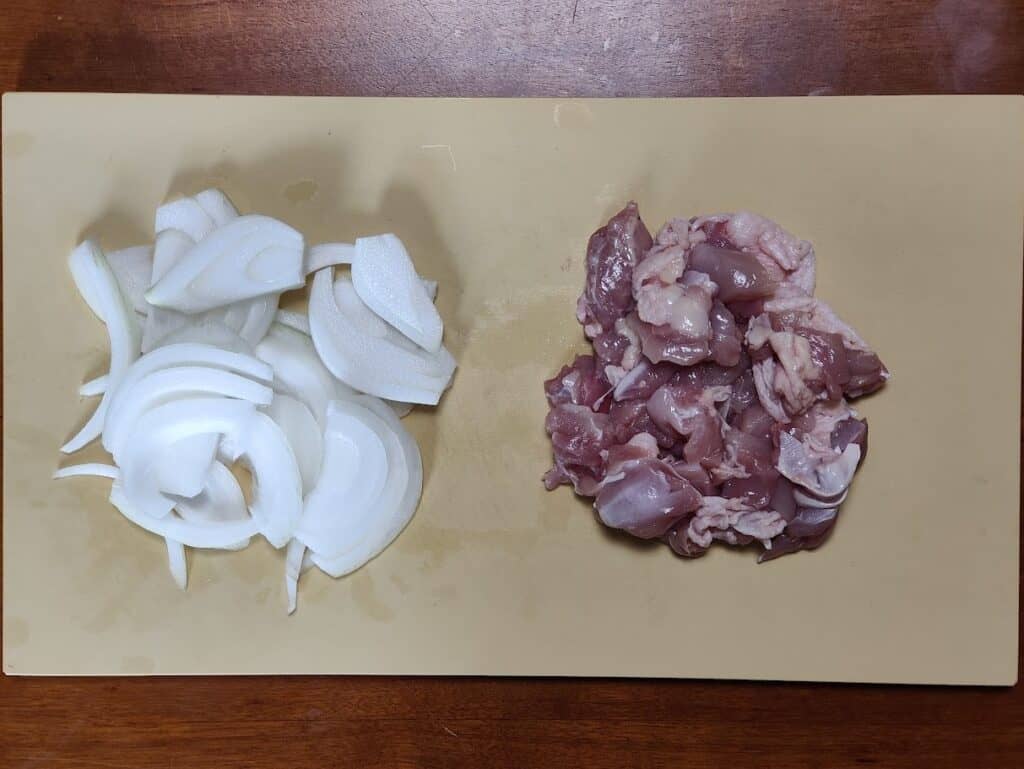
Step 1
Cut chicken thigh into ½-inch (1.3 cm) cubes. Slice onion into ¼-inch (6 mm) pieces. Crack eggs into a bowl and beat them.
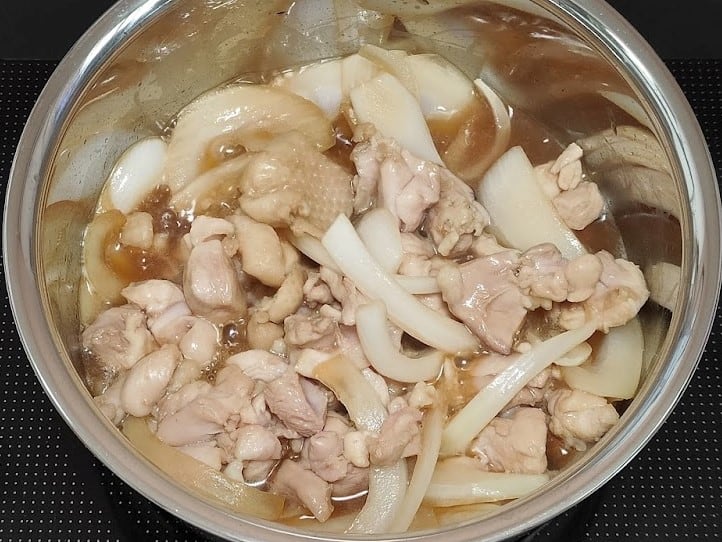
Step 2
Add seasonings (dashi, mirin, sugar, and soy sauce) to a pot and bring it to a boil. Once boiling, add the chicken thighs and onions, and let the mixture simmer over medium heat until the chicken changes color.
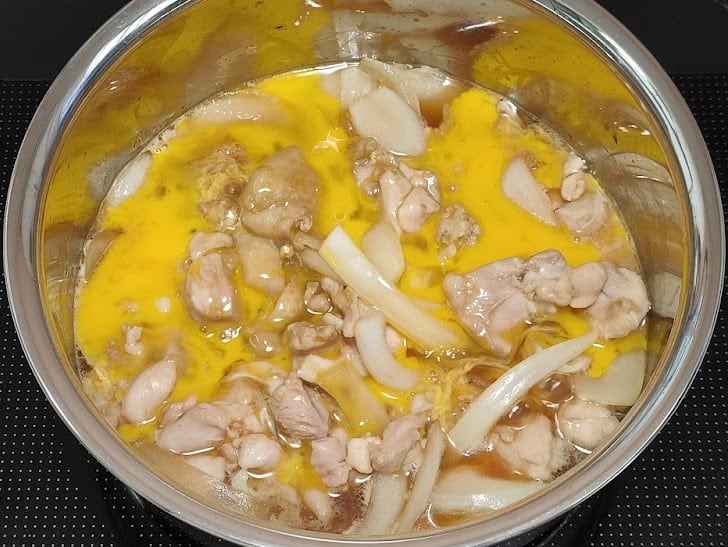
Step 3
Pour ¾ of the beaten eggs into the mixture and continue heating for a minute.
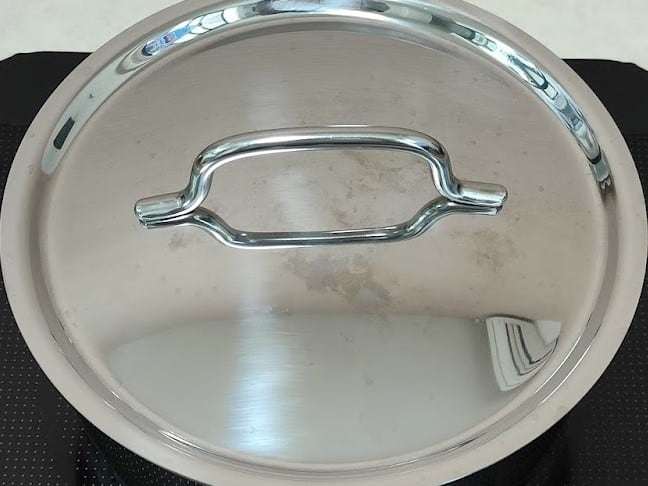
Step 4
Add the remaining ¼ of the beaten eggs and cook for an additional 30 seconds. Then, turn off the heat, cover the pot, and let it steam for a minute.
Step 5
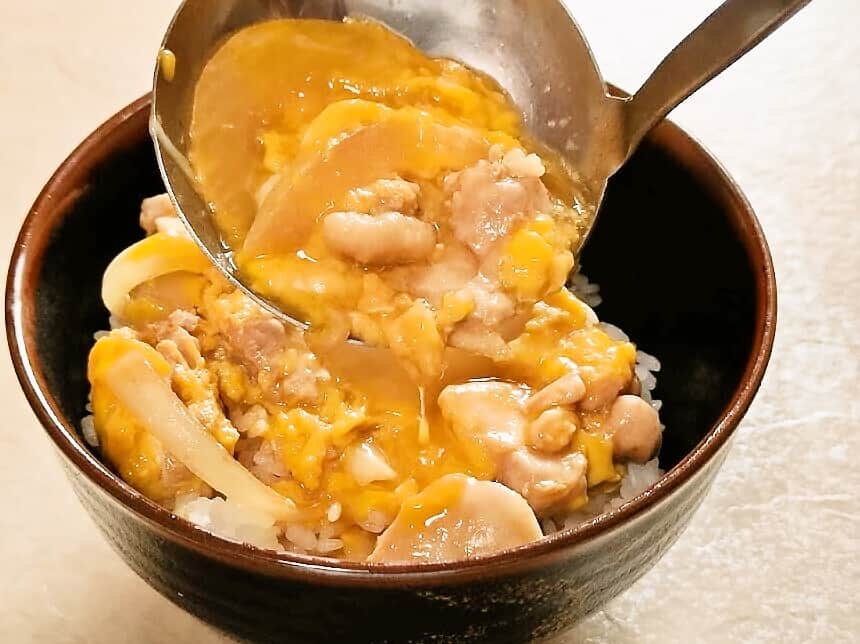
Serve rice in each bowl and pour the mixture from the pot over each bowl.
How to store
You can store it in the refrigerator for up to 2 days.
Tips on how to make
- Simmer the chicken thighs and onions in the seasoned liquid first. This will allow you to focus on cooking the beaten eggs in a later step.
- Pour the beaten eggs into the pot in two separate batches, ensuring that you briefly cook the second batch. This will result in a delightful finish with a fluffy egg texture.
I hope you enjoy this recipe!
If you try it, I’d love to hear how it turned out. Please leave a review 💬 and a star rating ⭐ in the comment below. Your support and feedback means so much to me!
More recipes you'll love
Printable Recipe Card
Authentic Oyakodon (Japanese Chicken and Egg Rice Bowl)
Ingredients
- 11.3 oz cooked Japanese short-grain rice (2 servings)
- 3.5 oz boneless chicken thigh
- 3.5 oz onion
- 4 large eggs (about 2.1 oz/60 g each, including the shell)
Seasonings:
- ¼ cup dashi stock (Please refer to the linked page for instructions on how to make it. For plant-based options, see the pages on Kombu Dashi and Shiitake Dashi.)
- 4 Tbsp mirin
- 1 tsp sugar
- 2 Tbsp soy sauce
Instructions
- Cut chicken thigh into ½-inch (1.3 cm) cubes. Slice onion into ¼-inch (6 mm) pieces. Crack eggs into a bowl and beat them.
- Add seasonings (dashi, mirin, sugar, and soy sauce) to a pot and bring it to a boil. Once boiling, add the chicken thighs and onions, and let the mixture simmer over medium heat until the chicken changes color.
- Pour ¾ of the beaten eggs into the mixture and continue heating for a minute.
- Add the remaining ¼ of the beaten eggs and cook for an additional 30 seconds. Then, turn off the heat, cover the pot, and let it steam for a minute.
- Serve rice in each bowl and pour the mixture from the pot over each bowl.
Notes
- You can store it in the refrigerator for up to 2 days.

Leave a Rating and a Comment