

Want to make ramen but can’t find ramen noodles where you live? Give this simple hack a try to turn spaghetti into ramen-style noodles. You'll be amazed at how easy it is to get the texture and flavor surprisingly close to the real thing.

Jump to:
Can you really turn spaghetti into ramen-style noodles?
You may be wondering whether it is really possible to turn spaghetti into ramen-style noodles. However, it actually is. While they won't be exactly the same as authentic ramen noodles, you can get surprisingly close in texture and flavor.
The method is incredibly simple. Bring a large pot of water to a boil, add 1 tablespoon of baking soda per quart (4 cups) or liter of water, and then cook the spaghetti for about 30% longer than the package's recommended cooking time. That's all it takes to give the spaghetti the color, aroma, and chewy texture of traditional ramen noodles.
I first learned about this hack from a Japanese TV show more than a decade ago, and I still remember how surprised I was when I tried it myself. If you can't find ramen noodles where you live, this simple trick is definitely worth trying. In this article, I will explain how adding baking soda transforms spaghetti into ramen-style noodles, as well as what you should keep in mind when using this method.
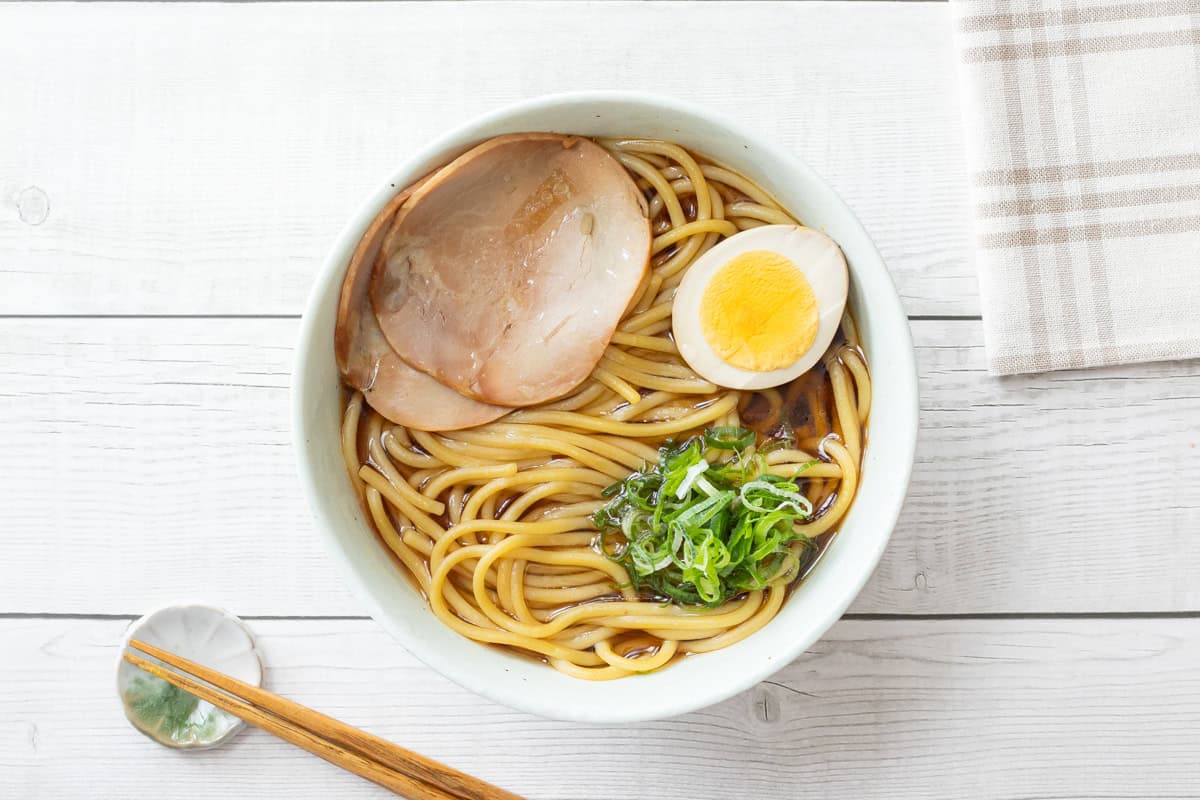
Why does adding baking soda make spaghetti more like ramen noodles?
The secret to turning spaghetti into ramen-style noodles lies in alkalinity.
Ramen noodles are made by mixing wheat flour with salt and kansui, an alkaline solution, then kneading the dough and cutting it into thin strands. The addition of kansui alters the gluten in the wheat flour, giving the noodles their characteristic yellowish color, distinctive flavor, and chewy texture.
Spaghetti, on the other hand, contains no kansui. In other words, to make spaghetti more like ramen noodles, you need to expose it to an alkaline environment. That's where baking soda comes in. Since baking soda makes water mildly alkaline when dissolved, adding it to the boiling water used to cook the spaghetti creates alkaline conditions similar to those produced by kansui. As a result, the spaghetti takes on characteristics similar to those of ramen noodles as it cooks.
For comparison, I cooked spaghetti in two different types of water: "plain water" and "water with baking soda."
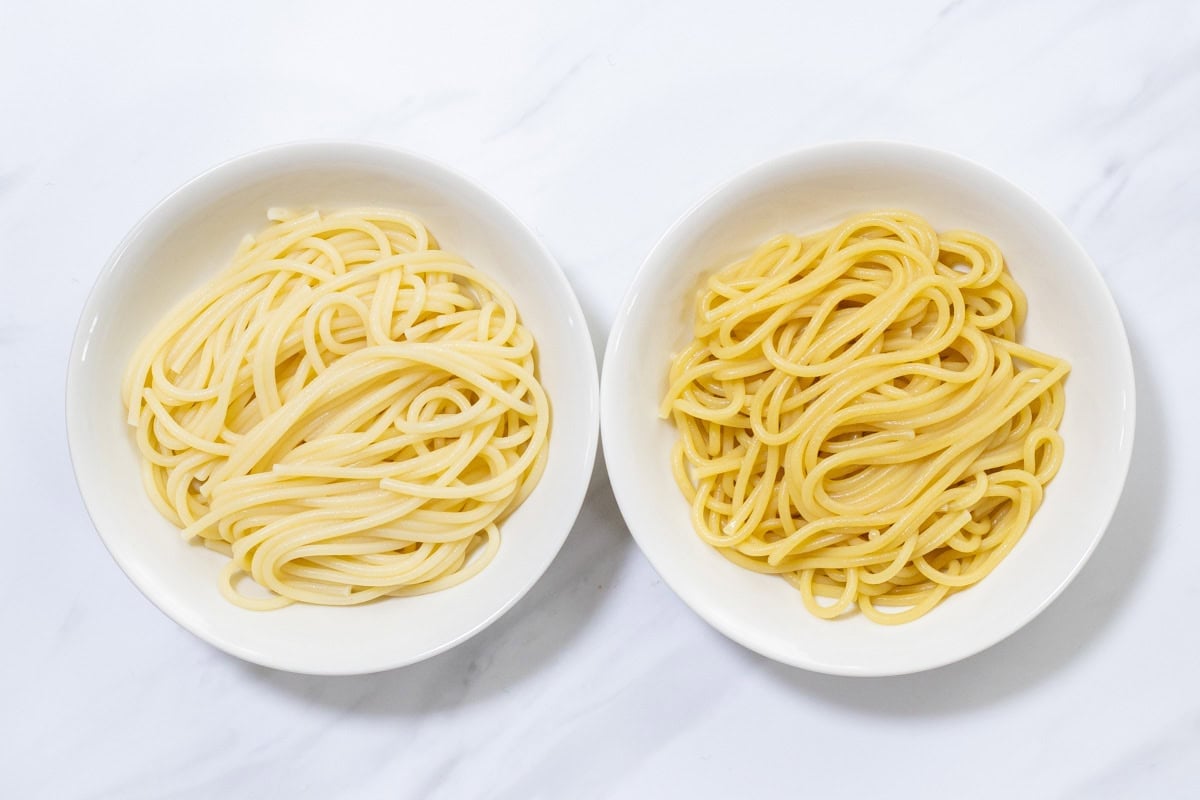
The noodles on the left were cooked in plain water, while the ones on the right were cooked in water with baking soda. You can clearly see that the noodles on the right have developed a deeper yellow color.
The difference becomes even more obvious when you taste them. The noodles cooked in water with baking soda have a flavor and texture reminiscent of ramen noodles.
How much spaghetti should you use?
When trying this hack, it is important to keep in mind that ramen noodles and spaghetti absorb different amounts of water as they cook.
When you cook 5.3 oz (150 g) of ramen noodles—a typical serving size—the noodles absorb water during cooking, resulting in roughly 8-9.5 oz (230-270 g) of cooked noodles. In other words, their cooked weight is about 1.5 to 1.8 times their original weight. Spaghetti, on the other hand, weighs roughly 11.5-13 oz (330-370 g) when cooked from 5.3 oz (150 g). That means its cooked weight is about 2.2 to 2.5 times its original weight.
So, if a recipe calls for 5.3 oz (150 g) of ramen noodles, you shouldn't simply substitute 5.3 oz (150 g) of spaghetti. You could end up with a significantly larger portion of noodles than the recipe calls for.
Taking the difference in water absorption into account, about 3.5 oz (100 g) of spaghetti is equivalent to 5.3 oz (150 g) of ramen noodles. Once cooked, 3.5 oz (100 g) of spaghetti will yield roughly 8-9 oz (220-250 g) of cooked noodles, which is about the same amount you would get from cooking 5.3 oz (150 g) of ramen noodles. When substituting spaghetti for ramen noodles, a good rule of thumb is to use about two-thirds as much spaghetti as the recipe calls for.
Incidentally, while spaghetti contains no added salt, ramen noodles contain a small amount of salt—about 0.5 g per 9 oz (250 g) of cooked ramen noodles. So, when cooking spaghetti, adding a small amount of salt to the cooking water can make the finished noodles taste a little more like ramen noodles. That said, baking soda also contributes a slightly savory flavor, so even if you leave the salt out, the difference in flavor shouldn't be significant.
Things to keep in mind when using baking soda
There are a few important things to keep in mind when using this hack.
- Do not use an aluminum pot.
Water mixed with baking soda becomes alkaline, and prolonged exposure to alkaline water can cause aluminum to discolor or corrode. So, use a pot made of a material other than aluminum.
- Turn off the heat before adding baking soda, and add it gradually.
When heated, baking soda can undergo a chemical reaction that releases carbon dioxide. Adding it to boiling water, or adding a large amount all at once, can cause the water to foam up and boil over. To reduce the risk of this happening, turn off the heat before adding baking soda, then add it a little at a time.
- The noodles may have a slightly bitter taste.
Baking soda has a distinctive bitter taste, so spaghetti cooked in water with it may have a slightly bitter flavor. If you use these noodles in a rich, strongly flavored ramen soup, you probably won't notice the bitterness. However, if you use them in a more delicate, mild-flavored ramen soup, the bitterness may be noticeable.
If you want to reduce the bitterness, drain the noodles and give them a quick rinse with hot water to remove any baking soda left on the surface, being careful not to rinse away too much of the noodles' wheat flavor. (If you are serving the noodles cold, rinse them with cold water instead.)
- Do not use more baking soda than necessary.
This is probably the easiest mistake to make. Adding extra baking soda won't make the spaghetti more ramen-like. In fact, it increases the chances of the water boiling over and makes the finished noodles more likely to have a bitter taste. So, don't overdo it.

As long as you keep these points in mind, you should be able to turn spaghetti into ramen-style noodles without any trouble. It is an easy way to get flavor and texture that are much closer to those of traditional ramen noodles than you would get from instant ramen noodles or udon. Give it a try at home and see what you think!
📋Step-by-step recipe
Ingredients
- 4 cups water
- 3.5 oz spaghetti
- ½ tsp salt
- 1 Tbsp food-grade baking soda
Instructions
🕒 Total: 20 mins
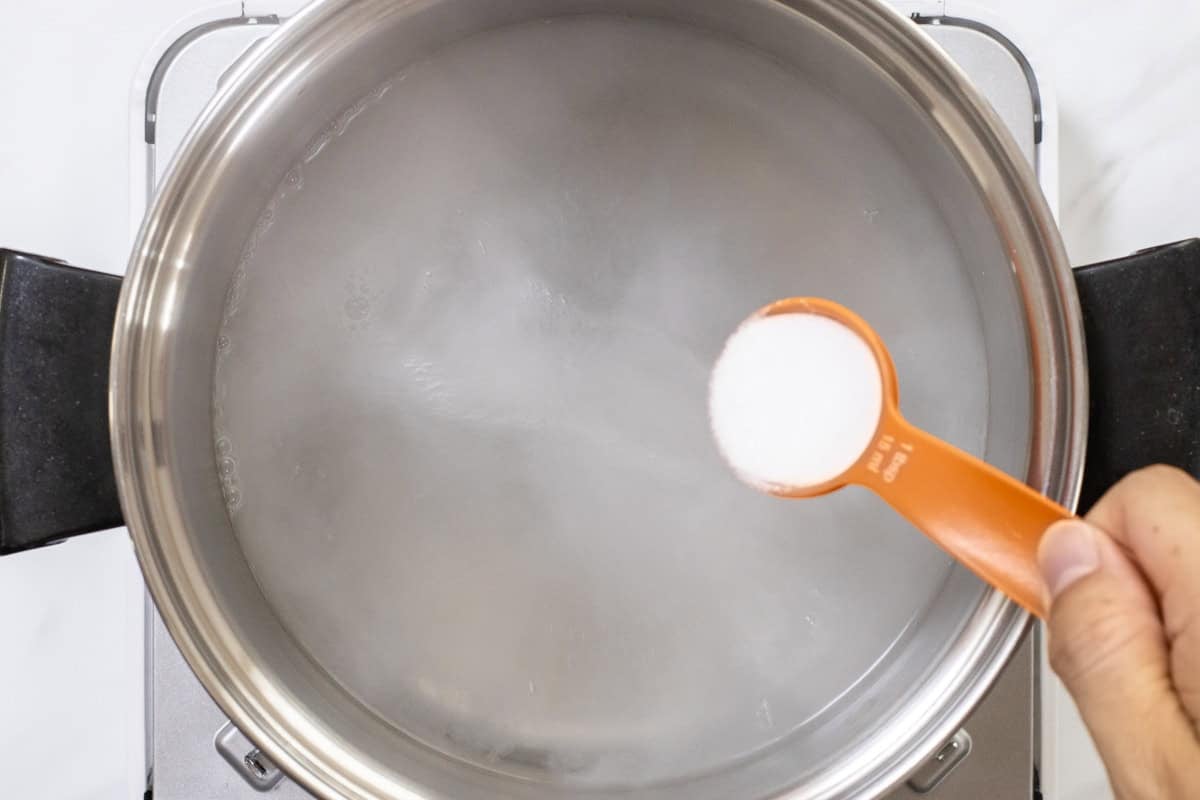
Step 1
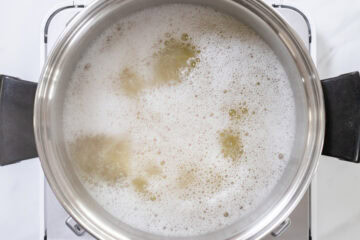
Bring a large pot of water to a boil. Once boiling, turn off the heat, then add salt and gradually add baking soda, a little at a time, to prevent the water from boiling over.
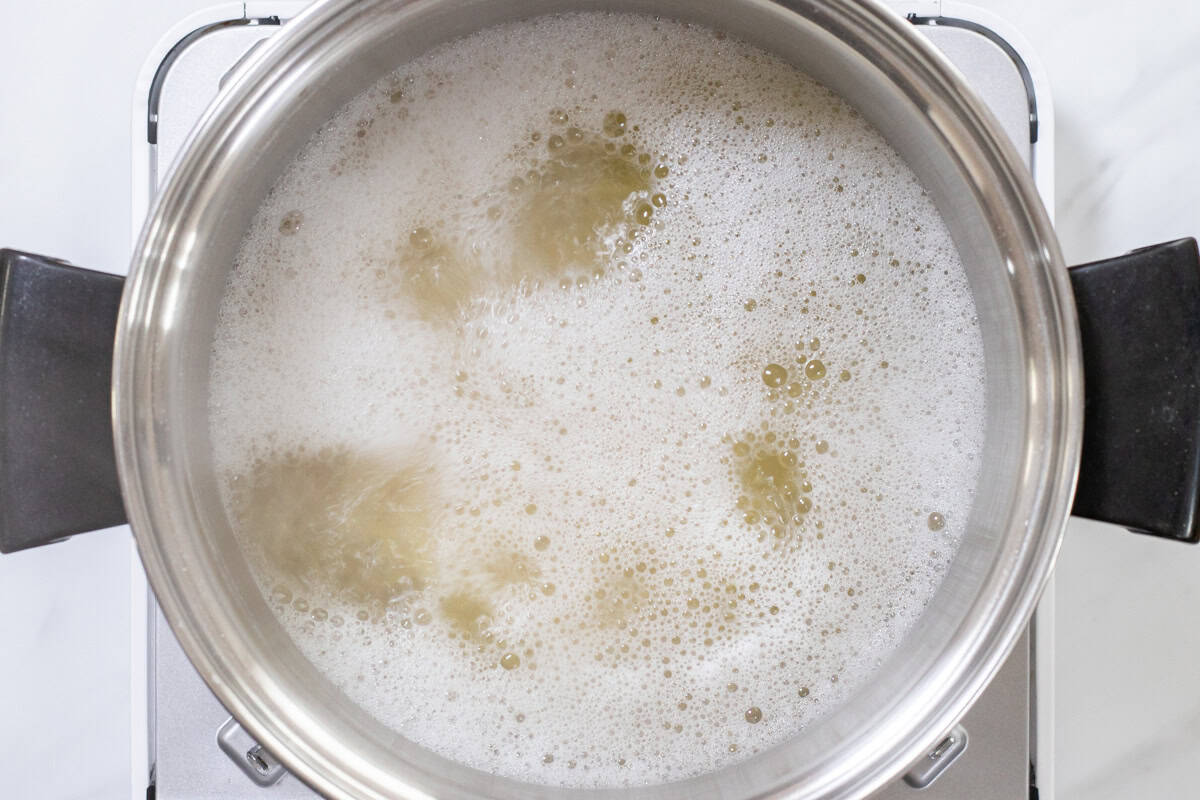
Step 2
Turn the heat back on and bring the water back to a boil. Add the spaghetti and cook it for about 30% longer than the time recommended on the package. (For example, if the package says 8 minutes, cook for about 10½ minutes; if it says 10 minutes, cook for about 13 minutes. If the package gives a range, such as 8-10 minutes, it works better to cook for 13 minutes rather than 10½ minutes.)
Step 3
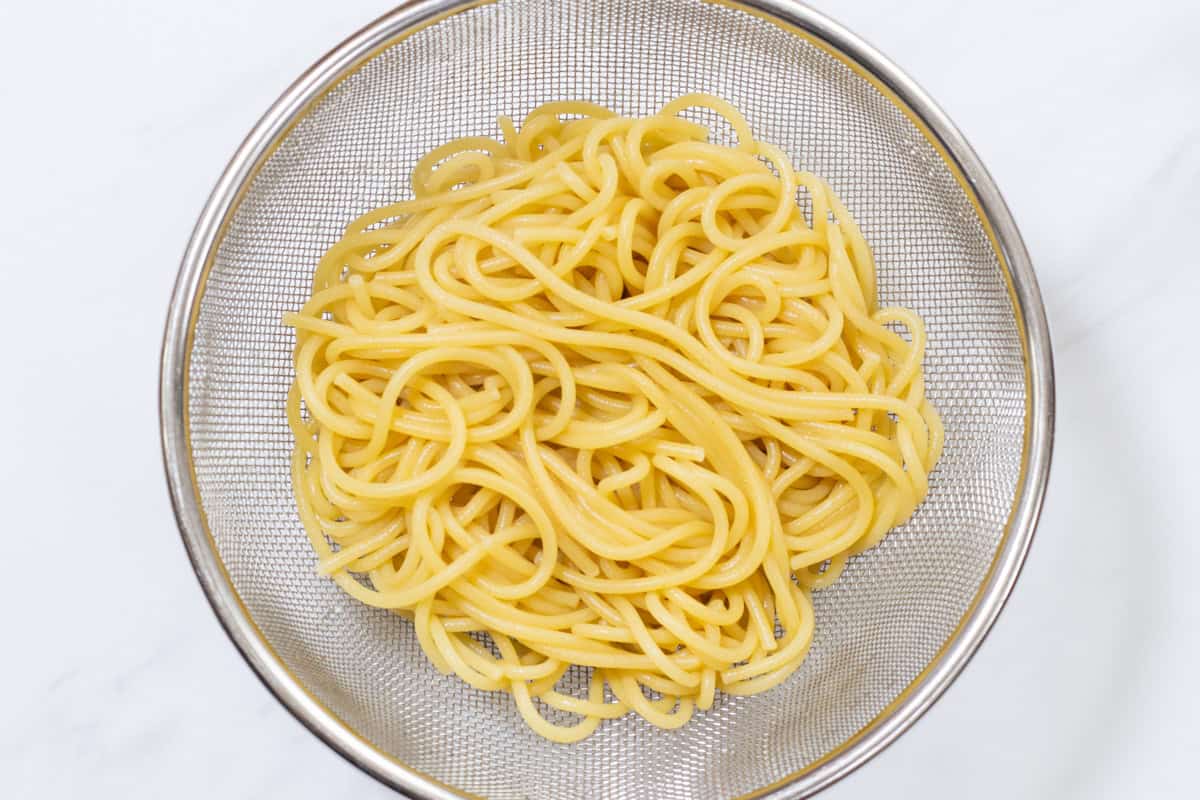
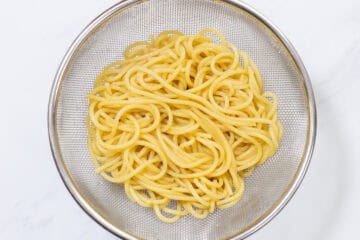
Drain the spaghetti in a colander.
Typically, you can add the noodles directly to your ramen soup. However, if you are using them in a delicate, mild-flavored ramen soup, it is best to quickly rinse them with hot water to remove any baking soda left on the surface and reduce the bitterness it can cause. (If you are serving the noodles cold, rinse them with cold water instead.)
Step 4
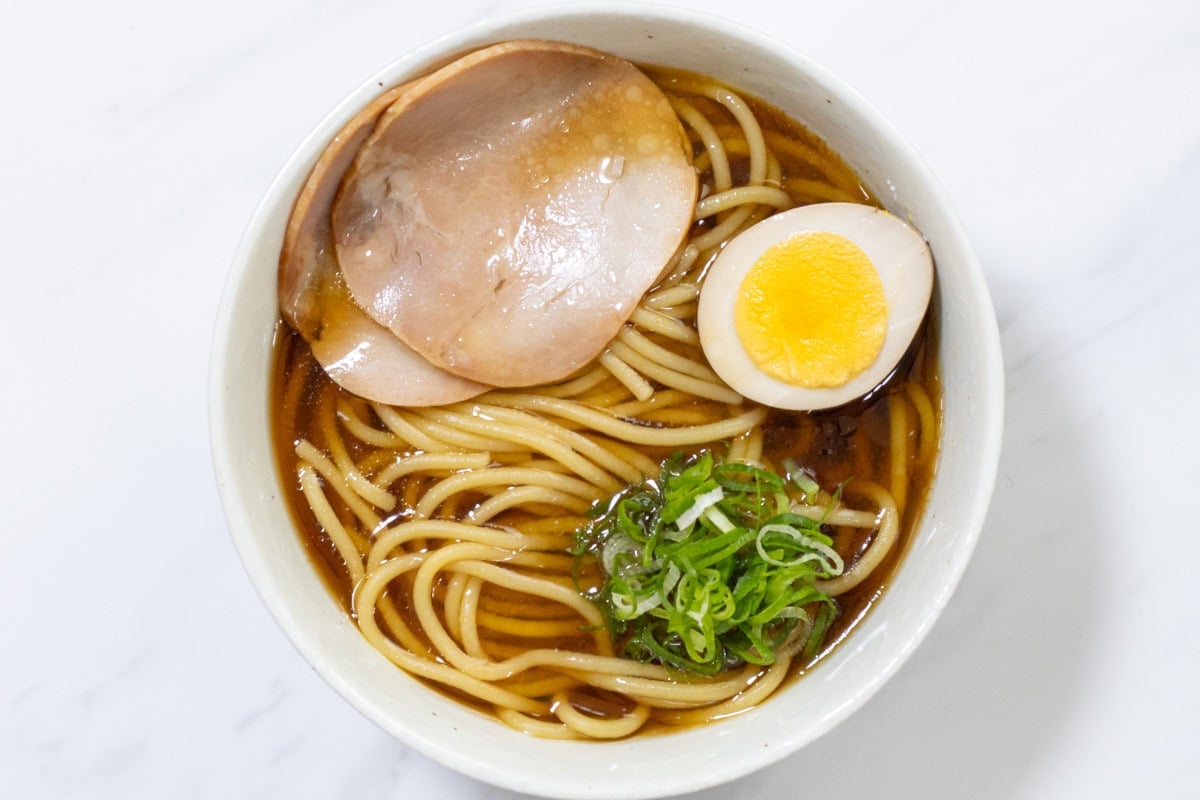
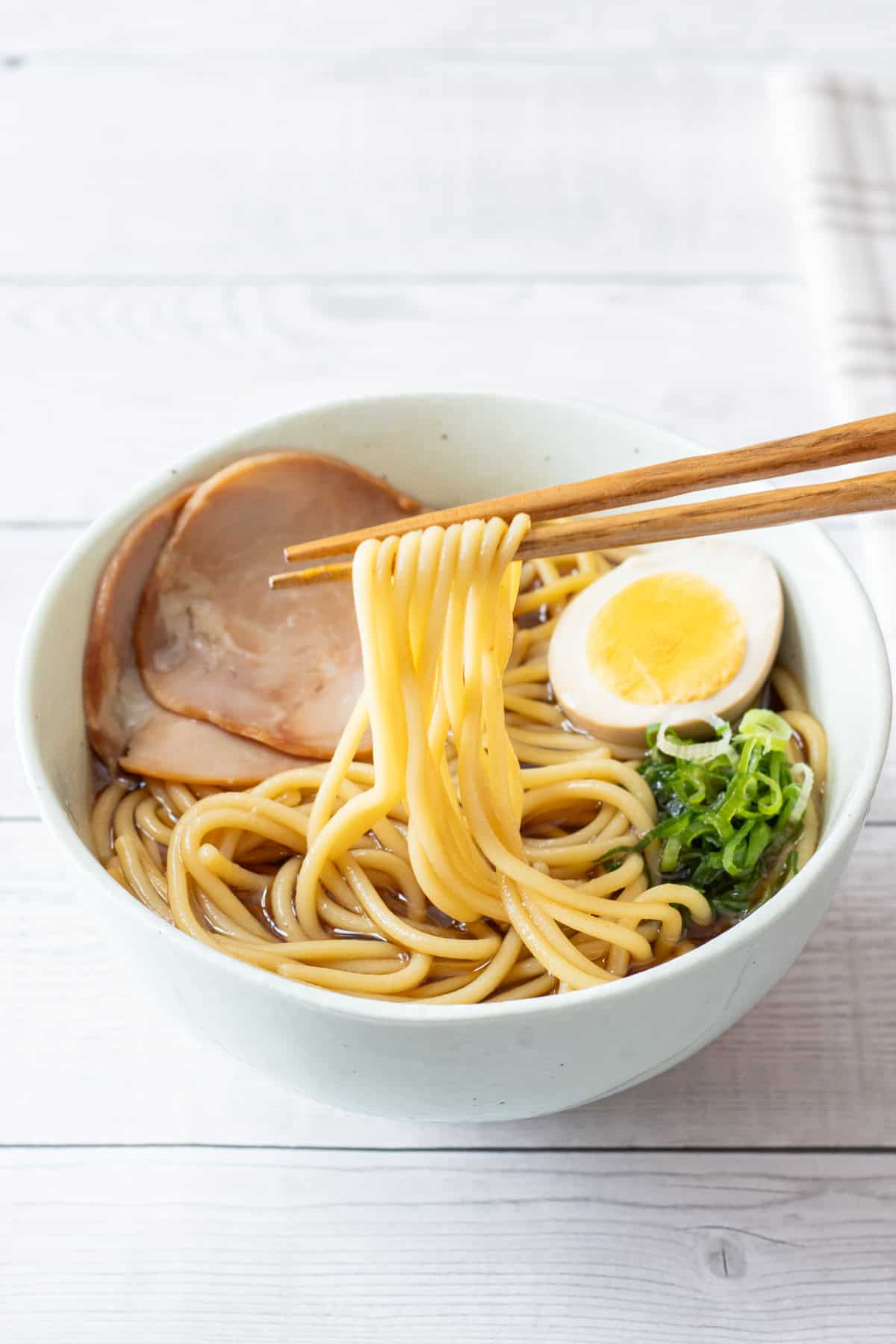
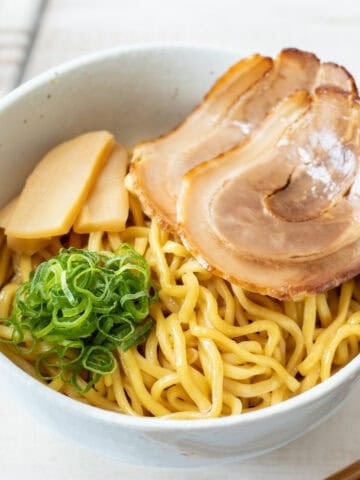
Add the spaghetti to your bowl of ramen soup, top with your favorite toppings, and enjoy.
How to store
These ramen-style noodles are not suitable for storage because cooked noodles tend to lose their texture over time, making them less enjoyable.
I hope you enjoy this recipe!
If you try it, I’d love to hear how it turned out. Please leave a review 💬 and a star rating ⭐ in the comment below. Your support and feedback means so much to me!
More Japanese noodle recipes you'll love



FAQ
Not particularly. Spaghetti that is 1.6-1.8 mm thick is about the same thickness as traditional ramen noodles. If you prefer thinner noodles, try thinner pasta (spaghettini); for thicker noodles, use thicker pasta (spaghettoni).
Either is fine. Just use whichever you have on hand.
Yes, you can. The ramen-style noodles made using this hack can be used as a substitute for yakisoba noodles.
Printable Recipe Card
How to Turn Spaghetti into Ramen-Style Noodles
Ingredients
- 4 cups water
- 3.5 oz spaghetti
- ½ tsp salt
- 1 Tbsp food-grade baking soda
Instructions
- Bring a large pot of water to a boil. Once boiling, turn off the heat, then add salt and gradually add baking soda, a little at a time, to prevent the water from boiling over.

- Turn the heat back on and bring the water back to a boil. Add the spaghetti and cook it for about 30% longer than the time recommended on the package. (For example, if the package says 8 minutes, cook for about 10½ minutes; if it says 10 minutes, cook for about 13 minutes. If the package gives a range, such as 8-10 minutes, it works better to cook for 13 minutes rather than 10½ minutes.)
- Drain the spaghetti in a colander.Typically, you can add the noodles directly to your ramen soup. However, if you are using them in a delicate, mild-flavored ramen soup, it is best to quickly rinse them with hot water to remove any baking soda left on the surface and reduce the bitterness it can cause. (If you are serving the noodles cold, rinse them with cold water instead.)
- Add the spaghetti to your bowl of ramen soup, top with your favorite toppings, and enjoy.

Notes
- These ramen-style noodles are not suitable for storage because cooked noodles tend to lose their texture over time, making them less enjoyable.

Leave a Rating and a Comment