

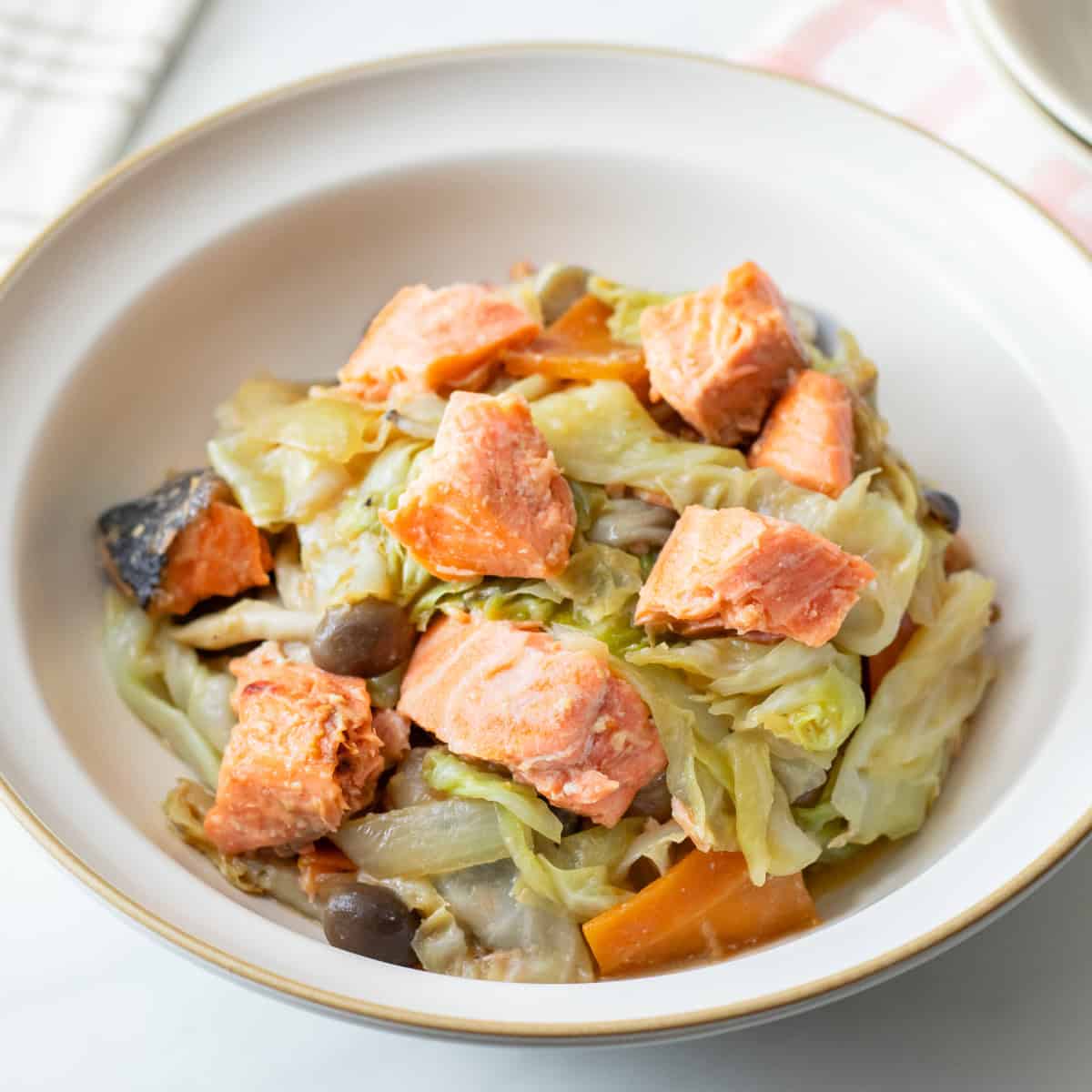
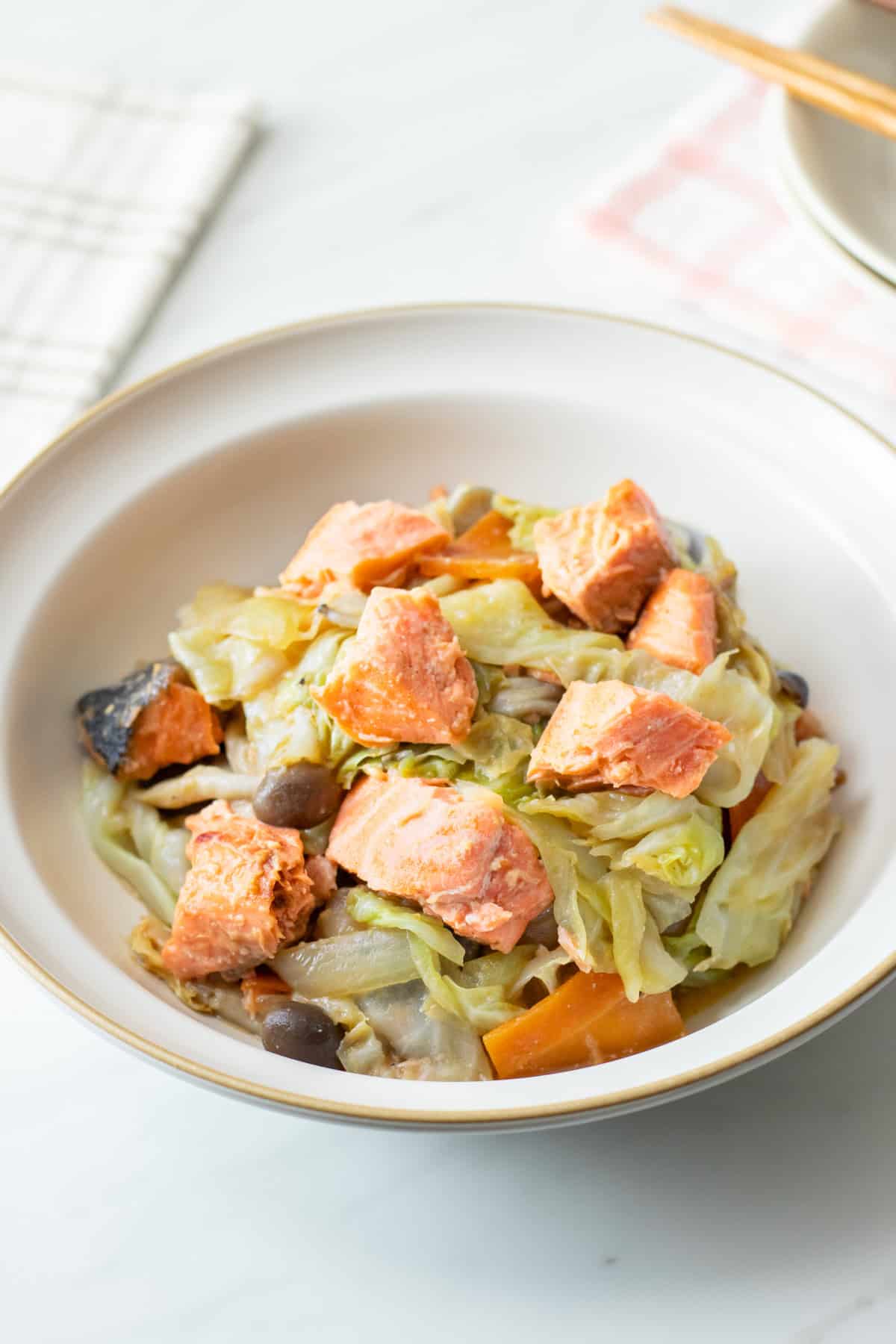
Enjoy tender salmon infused with the rich umami of miso and the irresistible creaminess of butter! Chan Chan Yaki is a traditional Japanese regional dish featuring perfectly cooked salmon served with a delicious medley of vegetables, savory miso, and creamy butter. Every bite offers a delightful balance of flavors, bringing you the comforting taste of Japan.
Jump to:
What is Chan Chan Yaki?
Chan Chan Yaki is a Japanese regional dish made by cooking salmon or other fish on a griddle or in a frying pan with vegetables and mushrooms, all seasoned with a miso-based sauce. Butter is almost always added to enhance the flavor. The dish originated in fishing communities in Hokkaido, Japan's northernmost prefecture. This delicious combination of salmon, miso, and butter gradually gained popularity, and today, it is enjoyed throughout Japan.
There are several theories about the origin of the name "Chan Chan." One theory suggests that fishermen could prepare the dish quickly ("cha-cha-tto"), whether aboard their boats or on the shore. Another theory is that it was traditionally prepared by fishermen's fathers, who were affectionately called "oto-chan." Yet another explanation is that the name comes from the rhythmic "chan-chan" sound made by the griddle and spatula as the dish is cooked. Whatever its true origin, each theory captures the lively spirit of Hokkaido's fishing communities. By the way, "Yaki" means grilled or cooked.
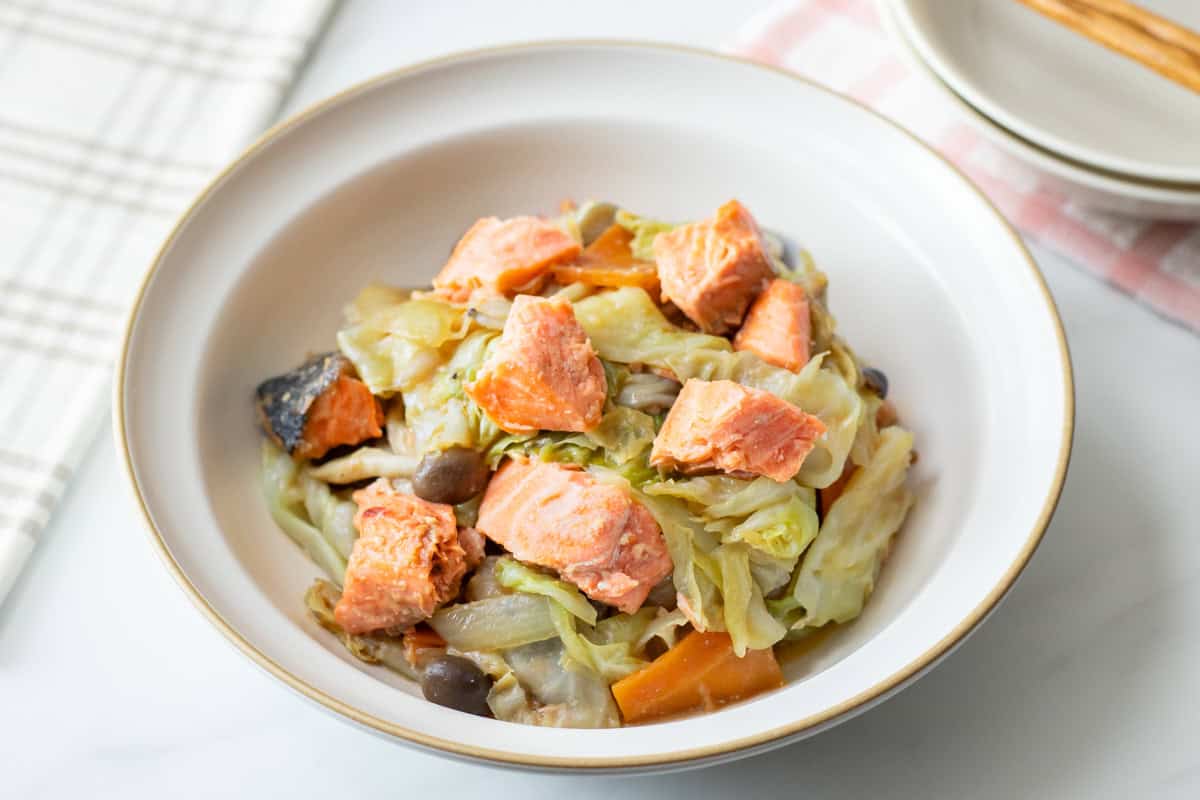
What makes this dish truly special is the wonderful harmony of its ingredients and seasonings. Tender salmon is complemented by the natural sweetness of the vegetables, while the rich flavors of miso and butter infuse all the ingredients, bringing everything together beautifully. It's also a delicious way to enjoy plenty of vegetables in one meal. It's easy to make, so give this flavorful dish a try at home!
Commonly used vegetables
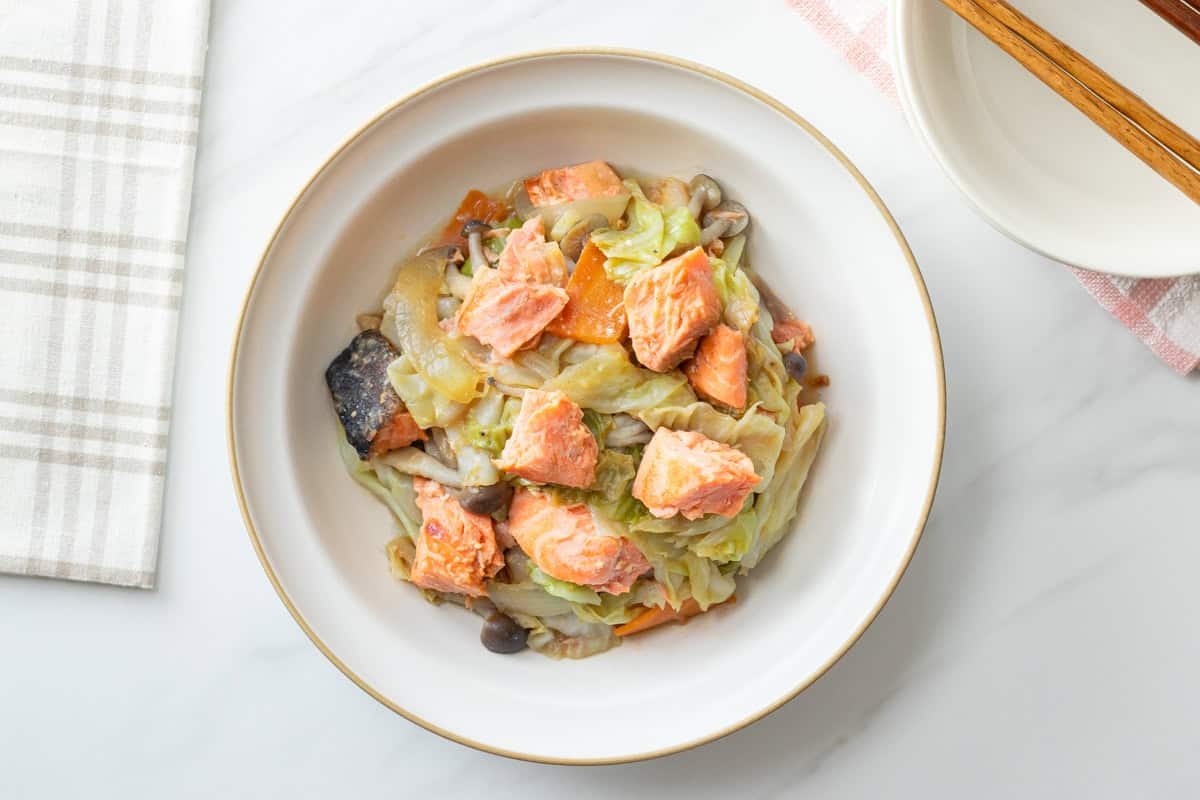
Chan chan yaki is made by cooking salmon together with vegetables. The vegetables are essential because the salmon is steamed primarily by the moisture released from them. Some of the most commonly used vegetables include:
- Cabbage
- Onion
- Carrot
- Bean sprouts
- Green bell pepper
- Potato
For this recipe, I used cabbage, onion, and carrot, which is the most commonly used combination of vegetables in Japan. In particular, cabbage and onion have a high water content, so I highly recommend including both to help steam the salmon.
In addition to these vegetables, shimeji mushrooms (brown beech mushrooms) or enoki mushrooms are also commonly added to this dish. They enhance the umami flavor and add textural variety. They also pair well with the miso-based sauce, so if you can find either type of mushroom locally, I highly recommend adding them.
Cooking tips
To make delicious chan chan yaki, keep the following tips in mind:
-
Prepare the salmon before cooking.
Fresh fish can have a distinctive fishy smell, so it's best to remove as much of it as possible before cooking. Sprinkle salt over the salmon fillets and let them sit for about 10 minutes. This helps draw out excess moisture along with some of the unpleasant fishy odor. Pat the fillets dry with paper towels. The salt also helps firm up the salmon slightly, bringing out its natural flavor.
-
Cut the vegetables into appropriately sized pieces.
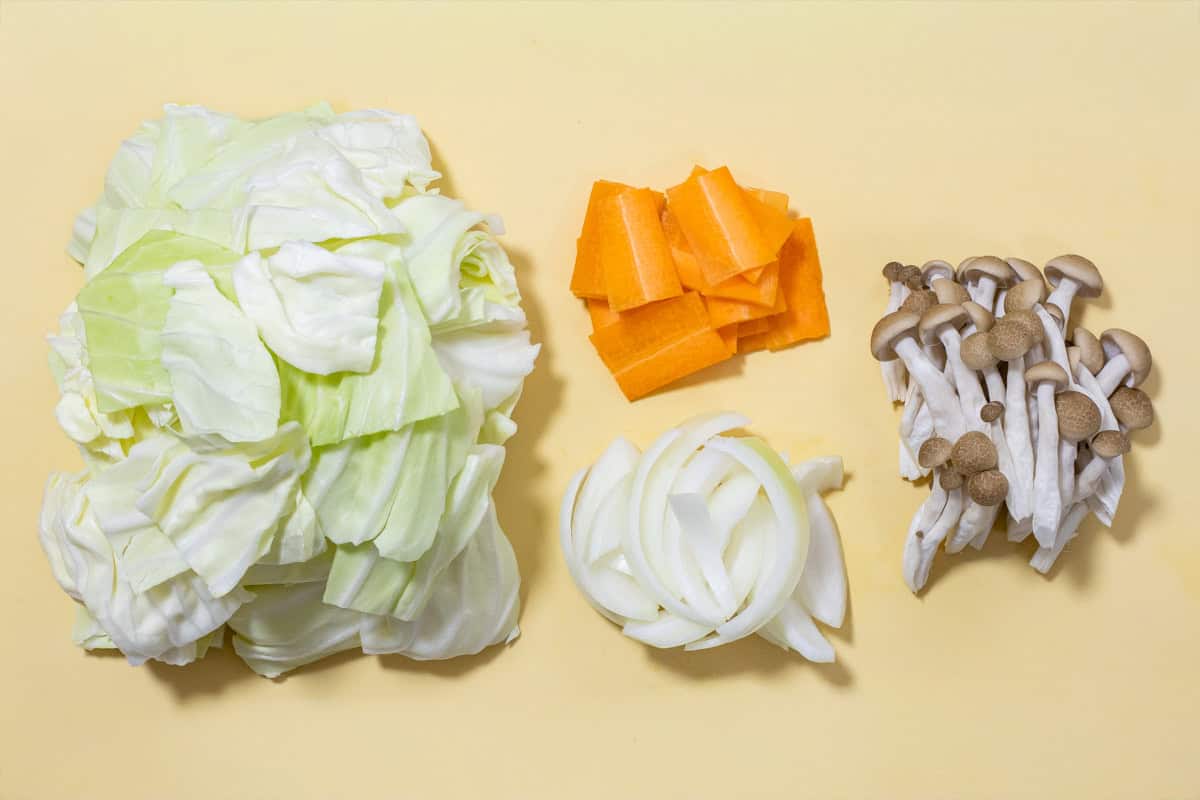
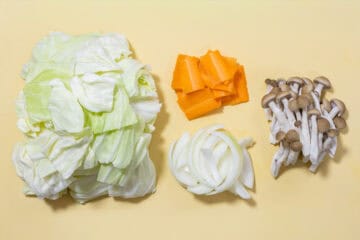
For vegetables that cook quickly, such as cabbage, cut them into slightly larger pieces. For firmer vegetables that take longer to cook, such as carrots, slice them thinly. This helps ensure that all the vegetables cook evenly while maintaining a good balance of textures.
-
Prepare the miso sauce in advance.
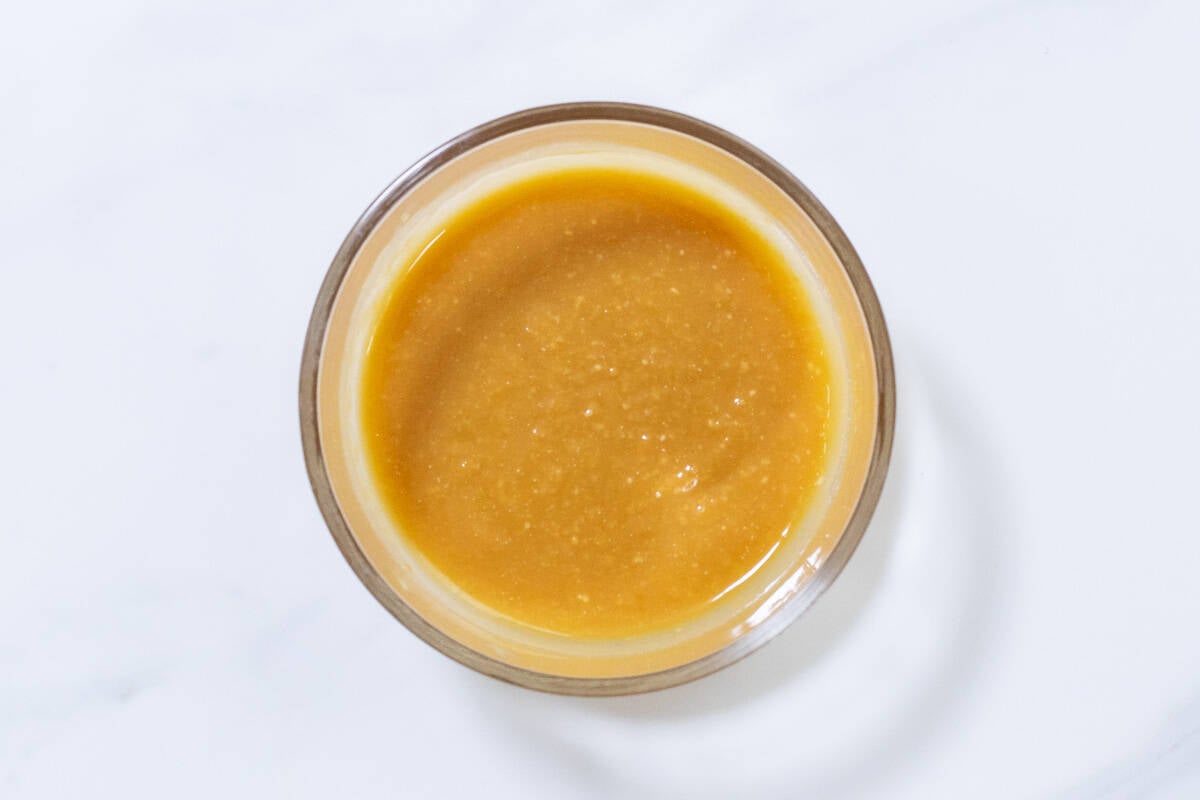
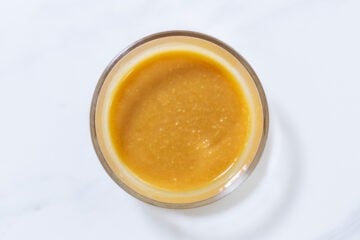
Combine all the ingredients for the miso sauce in a bowl before you start cooking. Adding the ingredients one at a time directly to the pan while cooking can make it difficult to fully dissolve the miso, resulting in an uneven distribution of flavor throughout the dish.
-
Lightly sear the salmon before steaming.
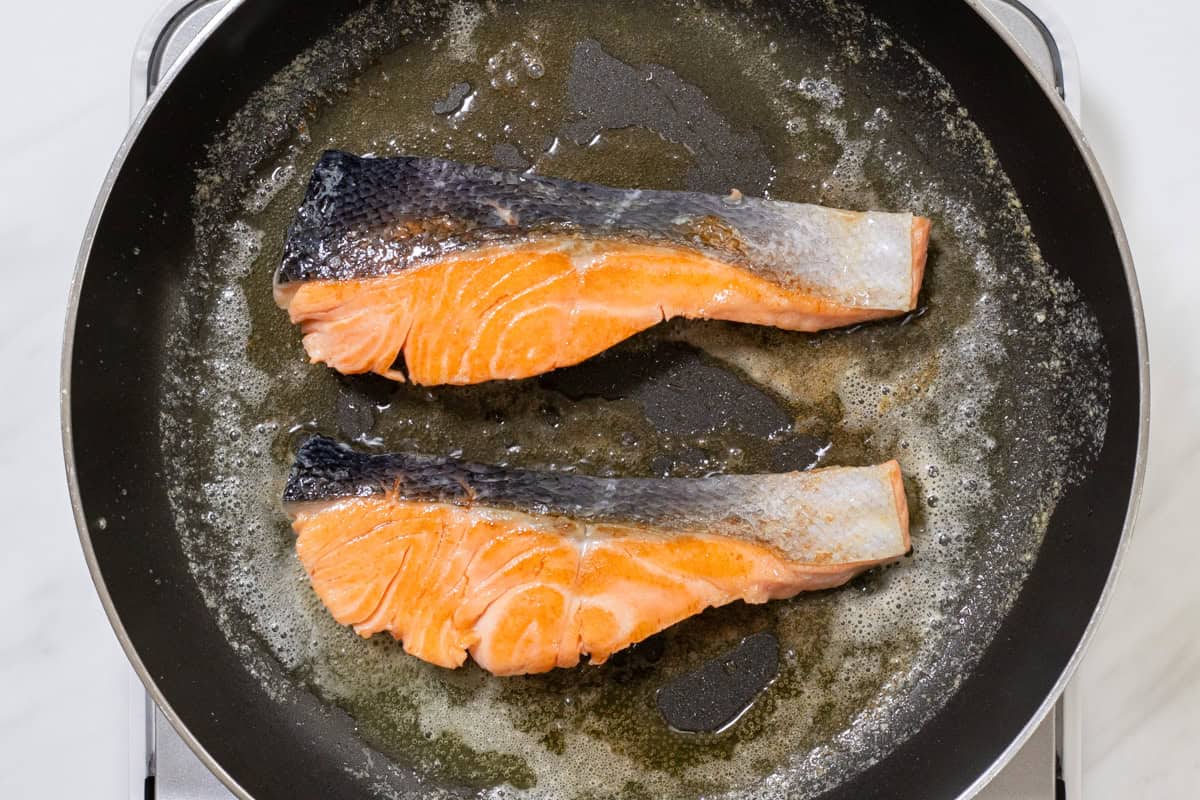
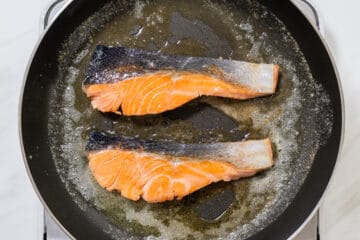
Lightly searing the salmon helps develop a golden-brown crust and adds a savory aroma.
-
Cook the salmon on top of vegetables.
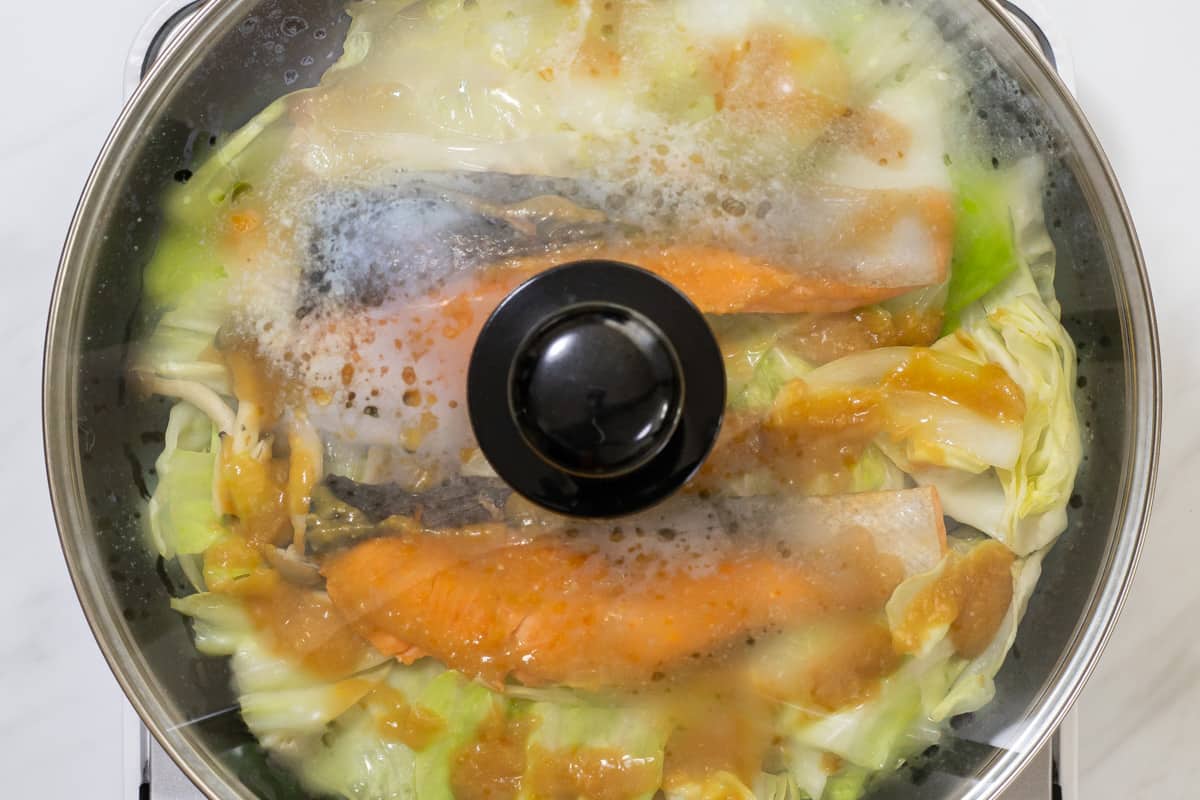
If the salmon is cooked directly on a griddle or in a frying pan for too long, it can become tough and dry. Instead, place the salmon on top of the vegetables and let it steam. This allows the salmon to cook more gently, helping it stay moist and tender.
Optional flavor variations
You can also enjoy chan chan yaki by customizing the flavors to your liking.
If you like a little heat, try adding some chili powder or doubanjiang (Chinese chili bean paste) to the miso sauce. If you prefer a milder flavor, try drizzling some Japanese mayonnaise over the dish as a finishing touch. For a refreshing twist, add a squeeze of lemon juice, or for a richer, more indulgent flavor, try adding some cheese.
I'd recommend trying the recipe as written the first time. Then, the next time you make it, it might be fun to experiment with different ingredients to suit your taste.
📋Step-by-step recipe
Ingredients
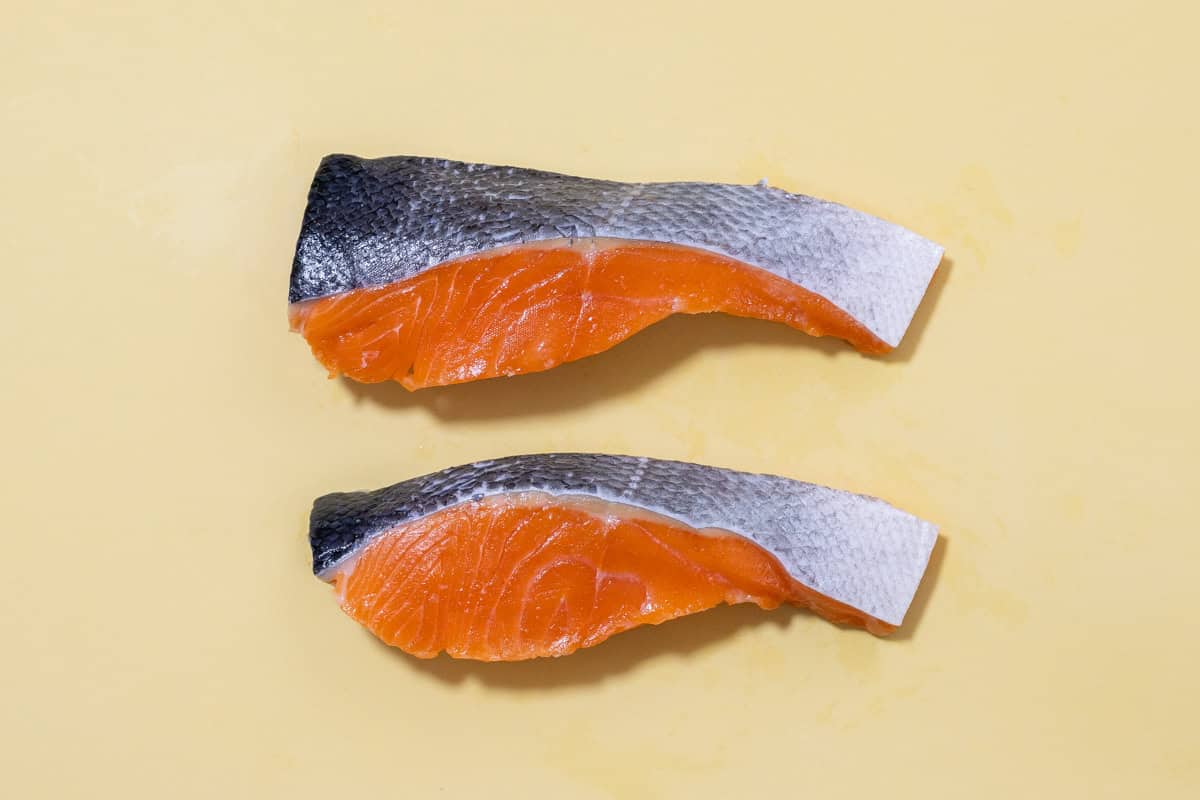
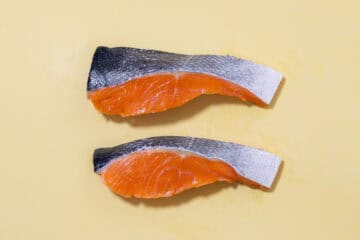
- 2 salmon fillets (about 3.2 oz/90 g each)
- ¼ tsp salt (for the salmon)
- 9 oz green cabbage (trimmed and cored)
- 2 oz onion
- 1 oz carrot
- 2 oz shimeji mushrooms (brown beech mushrooms) or enoki mushrooms
- 1 ½ Tbsp salted butter (0.5 oz/14 g per Tbsp)
Miso sauce:
- 2 Tbsp miso
- 1 Tbsp sake
- 1 Tbsp mirin
- 1 tsp sugar
Instructions
🕒 Total: 20 mins
Step 1
Sprinkle salt over the salmon fillets and let them sit for about 10 minutes. Then, pat them dry with paper towels.
Step 2
Cut the cabbage into bite-sized pieces, about 2 inches (5 cm) wide. Slice the onion into ¼-½-inch (5 mm-1 cm) thick slices. Cut the carrot into thin slabs. Trim off the root ends of the shimeji mushrooms and separate them into small clusters.
Step 3
In a small bowl, combine the miso, sake, mirin, and sugar, and stir until the miso is fully dissolved.
Step 4
Melt the butter in a pan over medium heat. Once melted, place the salmon fillets in the pan, skin-side down, and cook until lightly browned. Flip the fillets and lightly brown the other side, then remove them from the pan and set aside.
Step 5
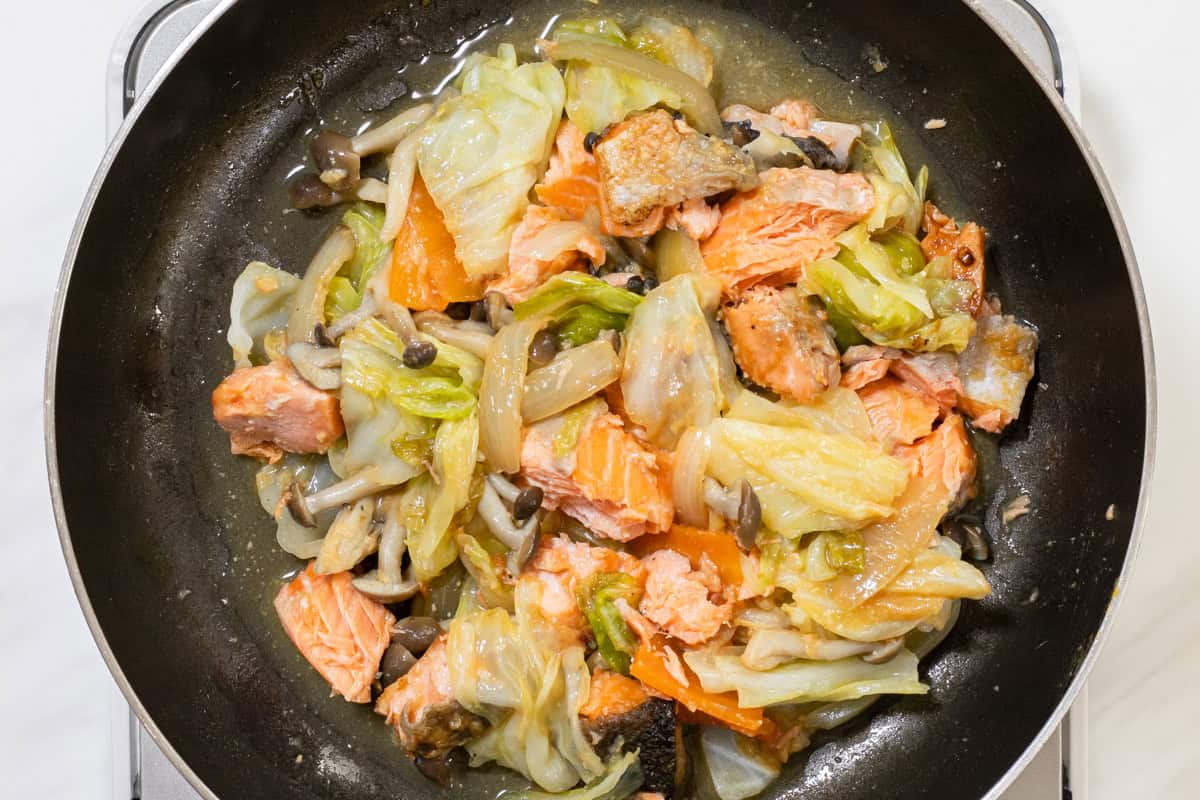
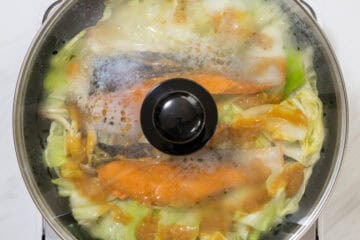
Add the cabbage, onion, carrot, and shimeji mushrooms to the pan and stir-fry briefly to combine. Place the salmon on top of the vegetables, then pour the miso sauce evenly over everything. Cover the pan and cook over medium-low heat for about 7 minutes, or until the salmon is cooked through.
Step 6
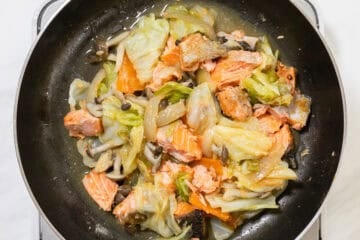
Turn off the heat, remove the lid, and gently break the salmon into chunks while mixing everything together.
How to store
The dish will keep in the refrigerator for up to 1 day.
I hope you enjoy this recipe!
If you try it, I’d love to hear how it turned out. Please leave a review 💬 and a star rating ⭐ in the comment below. Your support and feedback means so much to me!
More salmon recipes you'll love


FAQ
Sure! Salmon is the classic choice for chan chan yaki, but other types of seafood work well, too. Cod, Atka mackerel, Spanish mackerel, squid, and scallops are also sometimes used.
Printable Recipe Card
Chan Chan Yaki (Miso Butter Salmon)
Ingredients
- 2 salmon fillets (about 3.2 oz/90 g each)
- ¼ tsp salt (for the salmon)
- 9 oz green cabbage (trimmed and cored)
- 2 oz onion
- 1 oz carrot
- 2 oz shimeji mushrooms (brown beech mushrooms) or enoki mushrooms
- 1 ½ Tbsp salted butter (0.5 oz/14 g per Tbsp)
Miso sauce:
- 2 Tbsp miso
- 1 Tbsp sake
- 1 Tbsp mirin
- 1 tsp sugar
Instructions
- Sprinkle salt over the salmon fillets and let them sit for about 10 minutes. Then, pat them dry with paper towels.

- Cut the cabbage into bite-sized pieces, about 2 inches (5 cm) wide. Slice the onion into ¼-½-inch (5 mm-1 cm) thick slices. Cut the carrot into thin slabs. Trim off the root ends of the shimeji mushrooms and separate them into small clusters.
- In a small bowl, combine the miso, sake, mirin, and sugar, and stir until the miso is fully dissolved.
- Melt the butter in a pan over medium heat. Once melted, place the salmon fillets in the pan, skin-side down, and cook until lightly browned. Flip the fillets and lightly brown the other side, then remove them from the pan and set aside.
- Add the cabbage, onion, carrot, and shimeji mushrooms to the pan and stir-fry briefly to combine. Place the salmon on top of the vegetables, then pour the miso sauce evenly over everything. Cover the pan and cook over medium-low heat for about 7 minutes, or until the salmon is cooked through.
- Turn off the heat, remove the lid, and gently break the salmon into chunks while mixing everything together.
Notes
- The dish will keep in the refrigerator for up to 1 day.

Leave a Rating and a Comment